
Steady, low-maintenance heat for Gallatin County winters.
With a solid winter heating season and winter lows near 19°F, Gallatin County homes need dependable, hands-off warmth. Find the right pellet stove or insert and connect with a trusted local dealer who can install it correctly.
Every Project Starts From One of These Five Situations
A practical middle ground between wood and gas.
Gallatin County sits along the Ohio River in a Zone 4A climate, with a solid winter heating season and average winter lows around 19°F—comparable in severity to a mild winter in Madison, WI, though Gallatin's cold snaps are shorter and less consistent. With no air quality restrictions in the county, homeowners here have flexibility in fuel choice, and pellet stoves have become a popular option for those who want consistent heat without the daily labor of cutting, hauling, and stacking cordwood from local oak, hickory, or maple.
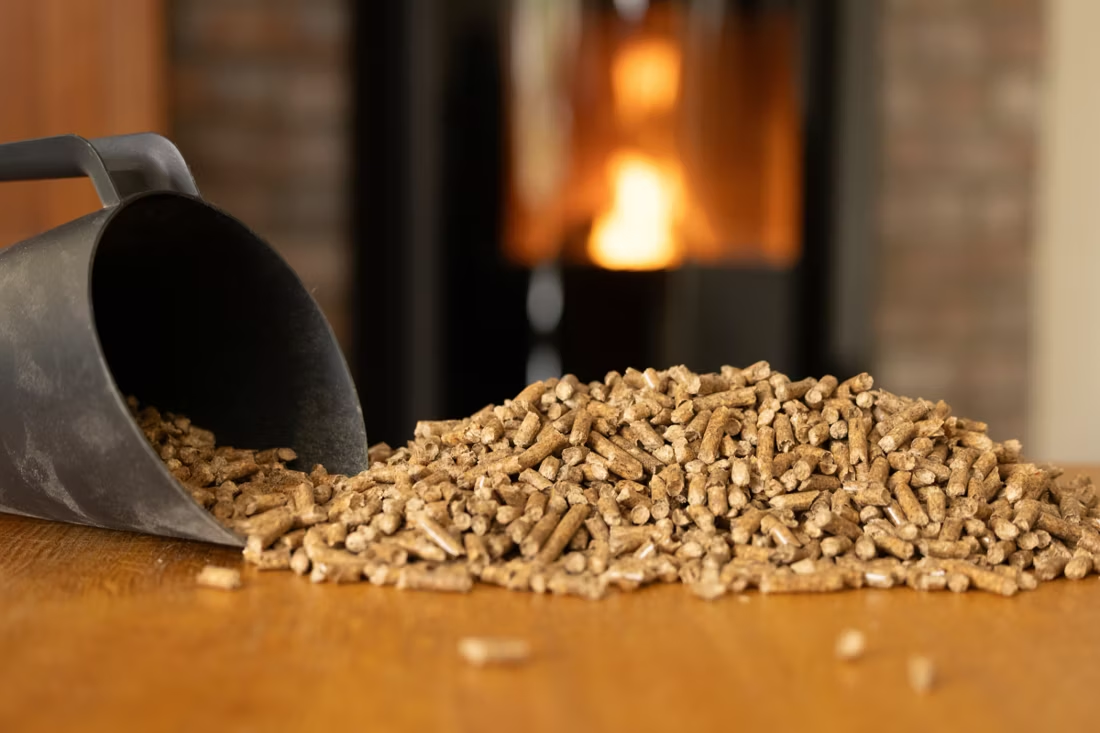
Regional pellet supply is solid: Lignetics, Hamer Pellet Fuel, and Greenway Renewable Energy all distribute into this part of Kentucky, so homeowners aren't relying on long-haul shipping or seasonal shortages. A pellet stove loads from a hopper, runs on a thermostat, and produces far less ash than a wood stove—a real advantage for smaller households or anyone managing the stove around a work schedule. The tradeoff is that pellet stoves need electricity to run the auger and blower, which matters if you're weighing backup heat during an ice storm outage against the convenience of day-to-day operation.
Three steps. No salesperson until you're ready.
Tell us about your project
Your zip code, your situation, and the fuel you're leaning toward—or let the answers point you to one.
See what's actually available
The brands dealers within 100 miles genuinely carry—real options, never a catalog mirage.
Get your dealer & Project Guide
A trusted local dealer, plus the free Project Guide & Parts List that names every component of the job.
Frequently Asked Questions
How much does a pellet stove installation cost in Gallatin County?
Pellet stove and insert installations in Gallatin County typically run in the range that applies across most of rural Kentucky—expect the bulk of the cost tied to the unit itself, venting through an exterior wall, and any electrical work needed to bring a dedicated outlet to the appliance location. Homes converting an existing masonry fireplace to a pellet insert generally land on the lower end, since the chimney chase can sometimes be reused for the vent pipe. New freestanding installations away from an existing hearth run higher due to added wall penetration and hearth pad work. A local dealer will give you a firm number after seeing your specific setup.
What size pellet stove do I need for my Gallatin County home?
Sizing depends on square footage, ceiling height, and how well-insulated the home is—older farmhouses along the river bottoms often lose more heat than newer construction closer to Warsaw or Sparta. As a general guide, smaller units suit a single large room or a compact home under 1,000 square feet, while mid-size units handle 1,000 to 2,000 square feet of open living space. Given Gallatin County's solid winter heating season, it's worth sizing slightly generous rather than marginal, since pellet stoves run most efficiently at a steady mid-range setting rather than maxed out around the clock. A local dealer can size your home properly during an in-home visit.
Where can I find pellet fuel near Gallatin County?
Pellet supply into this part of Kentucky comes primarily through Lignetics, Hamer Pellet Fuel, and Greenway Renewable Energy, all of which distribute regionally rather than requiring long-distance shipping. Farm supply stores and hardware retailers in and around Warsaw commonly stock bagged pellets in season, and many local hearth dealers sell pellets by the ton or by the pallet directly. Buying ahead of the winter season—rather than waiting for the first cold snap—tends to get better pricing and avoids the local supply crunch that can happen when demand spikes county-wide.
What's the difference between a pellet stove and a pellet insert?
A pellet stove is a freestanding appliance that sits on its own hearth pad and vents through a wall or existing chimney chase—it can go almost anywhere with proper clearances. A pellet insert is built to slide into an existing masonry fireplace opening, using a vent liner run up through the original chimney. For Gallatin County homes with an older fireplace that's rarely used, an insert is often the more efficient upgrade since it repurposes existing masonry. Homes without an existing fireplace, or those wanting the unit in a different room, are usually better suited to a freestanding stove.
Do I need a permit to install a pellet stove in Gallatin County?
Most pellet stove and insert installations require a building permit, since the work involves wall penetration for venting and sometimes new electrical circuits. Requirements are handled at the local building department level in Gallatin County, and most established hearth dealers include permit pulling as part of the installation service, so homeowners typically don't have to navigate it themselves. Because Gallatin County has no air quality restrictions on wood or biomass heating, there are no curtailment periods or emissions-based operating limits to worry about once the stove is installed and permitted.
Is a pellet stove a good fit for Gallatin County's climate?
Yes—with average winter lows around 19°F and a solid winter heating season, Gallatin County sees a real heating season without the extreme, sustained cold of somewhere like Duluth, MN or Fargo, ND. That makes pellet stoves a good fit as either a primary heat source for a well-insulated home or supplemental heat alongside a central furnace on the coldest days. Because the county has no air quality non-attainment issues, homeowners can run a pellet appliance daily through the winter without worrying about advisory-driven burn restrictions that exist in some other regions.
How often does a pellet stove need cleaning and maintenance?
Pellet stoves need regular but relatively light maintenance compared to wood stoves—most manufacturers recommend cleaning the burn pot and ash pan weekly during heavy use, and a full professional inspection and cleaning once a year, typically before the start of the heating season. The exhaust venting should also be checked annually for creosote or ash buildup, even though pellet systems produce far less residue than cordwood. Local hearth dealers serving Gallatin County generally offer this annual service, and staying current on it keeps the stove running efficiently and protects the manufacturer warranty.
Can a pellet stove run during a power outage?
Not without a backup power source. Pellet stoves rely on an electric auger to feed fuel and a blower to distribute heat, so a power outage stops the stove even if pellets remain in the hopper. For Gallatin County homeowners concerned about ice storm outages along the Ohio River corridor, some owners pair a pellet stove with a small battery backup or generator to keep it running, while others keep a wood-burning option in reserve specifically for outages. This is worth discussing with a local dealer if backup heat during storms is a priority.
Pellet stove vs. wood stove—which is right for my Gallatin County home?
Wood stoves work without electricity, burn abundant local species like oak and hickory, and can be fed with wood cut under a Daniel Boone National Forest permit at roughly $20 per cord during the May-to-October cutting season. Pellet stoves trade that self-sufficiency for convenience—load the hopper, set the thermostat, and let it run with less daily tending and far less ash. For Gallatin County homes where reliable grid power is the norm and convenience matters more than self-cut firewood, pellet is often the easier choice. For homes prioritizing storm-proof backup heat or already set up to process their own wood, a wood stove may make more sense. Both are available through local dealers in the area.
What's the difference between an insert and a zero-clearance fireplace?
An insert is a fireplace that slides into a pre-existing wood-burning fireplace—if you don't have one, there's nothing to insert it into. A zero-clearance fireplace is built into a framed wall, which makes it the answer for remodels and new construction. Simple test: existing masonry fireplace means insert; blank or framed wall means zero-clearance.
Why is a fireplace insert so efficient?
An insert does two things: it seals the chimney completely, so you stop losing air you already paid to heat, and it radiates warmth into the room through the firebox and glass. Most add a heat-exchange fan that pulls cool room air underneath, wraps it around the hot firebox, and pushes it back out warm. Your home is more efficient before you've even lit the first fire.
What is an in-home preview and do I need one?
It's a visit where a hearth professional measures your space, confirms the model you picked actually works in your home, and walks the specs—framing, gas line, venting, finish work—before anything is ordered. Some details you just can't know until you see the house. Never make a down payment without one; it's the single most-skipped step that burns buyers.
Can I install a fireplace myself?
If you're putting a fire in your house on purpose, it's best to work with an expert. Unless you're genuinely experienced in framing, gas line, vent pipe, and the national code on clearances to combustibles, have a professional do it—and ideally the same company that sells you the fireplace, so warranty, service, and liability all live under one roof.
Pellet Brands Stocked Around Gallatin County
Manufacturers will point you to the nearest stocking dealer.
Find your pellet stove in Gallatin County.
Tell us a bit about your home and we'll match you with a trusted local dealer and a free Project Guide & Parts List—a plan for your pellet project in Gallatin County with the exact parts, including the vent kit, and a recommended installer.
Find Your Fireplace →