
Zone heat and ambiance, no chimney required, in Gallatin County.
From Warsaw to Sparta and the farms along the Ohio River, electric fireplaces deliver instant, controllable heat for Gallatin County homes—no venting, no wood, no propane tank. Find the right unit and connect with a trusted local dealer.
Every Project Starts From One of These Five Situations
Heat without the hassle of venting or fuel storage.
Gallatin County is a small, rural county of roughly 2,800 residents along the Ohio River in northern Kentucky, sitting in climate zone 4A with a winter heating season a bit longer and colder than most, and average winter lows near 19°F—colder than Louisville, though nowhere near the extremes of a place like Duluth, MN. Winters here bring real cold snaps, and plenty of homes rely on wood as supplemental heat, taken from the county's oak, hickory, maple, and cherry stands or cut under a Daniel Boone National Forest permit ($20 per cord, May through October). But not every room, addition, or farmhouse in the county has a chimney or the structural setup for one.
That's where electric fireplaces do their best work. A plug-in unit needs nothing more than an outlet; a built-in model needs a dedicated circuit run by a licensed electrician—either way, there's no flue, no gas line, and no combustion air to plan around. For rural Gallatin County homes served by Owen Electric Cooperative, that means a finished basement, a bedroom without an exterior wall, or an older farmhouse room can get real supplemental heat and the look of a fire without touching the roofline or masonry. It's also the fastest path to warmth for renters and homeowners who want ambiance now, not a multi-week install.
Three steps. No salesperson until you're ready.
Tell us about your project
Your zip code, your situation, and the fuel you're leaning toward—or let the answers point you to one.
See what's actually available
The brands dealers within 100 miles genuinely carry—real options, never a catalog mirage.
Get your dealer & Project Guide
A trusted local dealer, plus the free Project Guide & Parts List that names every component of the job.
Frequently Asked Questions
How much does it cost to install an electric fireplace in Gallatin County?
A freestanding or insert-style plug-in electric fireplace typically runs $150 to $800 for the unit itself, with no additional install cost beyond plugging it into an existing outlet. A built-in electric fireplace or one requiring a new dedicated 20-amp circuit runs $1,200 to $3,000 once you include electrician labor—more if the wire run is long, which is common in older Gallatin County farmhouses where the panel sits far from the room being finished. Either way, costs stay well below a wood stove or gas insert since there's no chimney, gas line, or venting involved.
Do I need a permit to install an electric fireplace in Gallatin County?
A small plug-in unit that runs off an existing outlet doesn't require a permit at all. A built-in unit that needs new wiring behind the wall does—your electrician will typically pull the electrical permit and coordinate the inspection with Gallatin County's building department as part of the job. For anything beyond a simple plug-in, use a licensed electrician rather than a handyman; overloaded or improperly sized circuits are the most common issue we hear about with DIY electric fireplace installs.
What size electric fireplace do I need for my Gallatin County home?
Most electric fireplace inserts put out around 4,600 to 5,200 BTUs, which is enough to comfortably heat a single room of 400 to 1,000 square feet depending on insulation and ceiling height. Given the county's average winter lows near 19°F, plan on electric as strong supplemental heat for a bedroom, sunroom, or finished basement rather than the sole heat source for a whole farmhouse—most Gallatin County homeowners pair it with existing central heat or a wood stove elsewhere in the house.
How does an electric fireplace compare to wood heat, which is common around here?
Wood remains a serious option in Gallatin County—oak, hickory, maple, and cherry are all abundant locally, and a Daniel Boone National Forest cutting permit runs just $20 per cord during the May-to-October season. Wood also keeps working during a power outage, which electric can't do. But wood means chimney maintenance, ash cleanup, and a masonry or Class A venting setup that not every room can accommodate. Electric skips all of that: no cutting, no hauling, no creosote, and it can go in a room a wood stove never could. Many households here end up with both—wood for a primary room and backup heat, electric for convenience elsewhere in the house.
What does an electric fireplace cost to run through Owen Electric Cooperative?
Most electric fireplaces draw around 1,500 watts on the heat setting, which works out to roughly $0.15 to $0.25 per hour of heating at typical Owen Electric Cooperative residential rates—comparable to running a space heater. That's usually less expensive per hour than propane and more predictable than firewood, though it can add up if a unit runs as primary heat for long stretches. Ask your local dealer about models with a flame-only, no-heat setting for ambiance use during warmer months, which draws only a few watts.
How much maintenance does an electric fireplace need?
Very little. There's no chimney to sweep and no annual CSIA inspection required like a wood-burning unit. Maintenance is mostly dusting the unit, occasionally cleaning the glass front, and replacing the LED light strip after several years of heavy use—a job most homeowners handle themselves. This is one of the biggest practical advantages for Gallatin County households who don't want the yearly upkeep that comes with wood or gas appliances.
Where in my home can an electric fireplace go?
Almost anywhere with access to power, since there's no venting or clearance-to-combustibles requirement like a wood or gas unit. Interior bedrooms, finished basements, home offices, and additions without an exterior wall or existing flue are all fair game—a common scenario in Gallatin County's older farmhouses and manufactured homes, where adding a chimney isn't realistic. Just confirm the wall or built-in cabinet you're using has adequate clearance per the manufacturer's spec sheet, which your local dealer can walk you through.
Will an electric fireplace still work if the power goes out?
No—electric fireplaces require power to run the heater and, in most models, the flame effect too. That's an important distinction for rural Gallatin County, where ice storms and downed lines can knock out power for hours or longer during the coldest stretches of winter. If backup heat during an outage matters to you, pair the electric fireplace with a wood stove or a battery-backed gas unit elsewhere in the home rather than relying on electric as your only heat source.
What brands are available through local dealers, and are there any rebates?
Local hearth dealers serving Gallatin County typically carry established electric fireplace brands like Dimplex, Napoleon, and ClassicFlame in both plug-in and built-in configurations. Utility efficiency rebates through Owen Electric Cooperative are generally aimed at heat pumps and whole-home HVAC upgrades rather than supplemental electric fireplaces, so don't expect a rebate check for this particular purchase—the payoff here is the low install cost and simplicity rather than an incentive program. A local dealer can confirm current availability and lead times on specific models.
Can I put a TV above my fireplace?
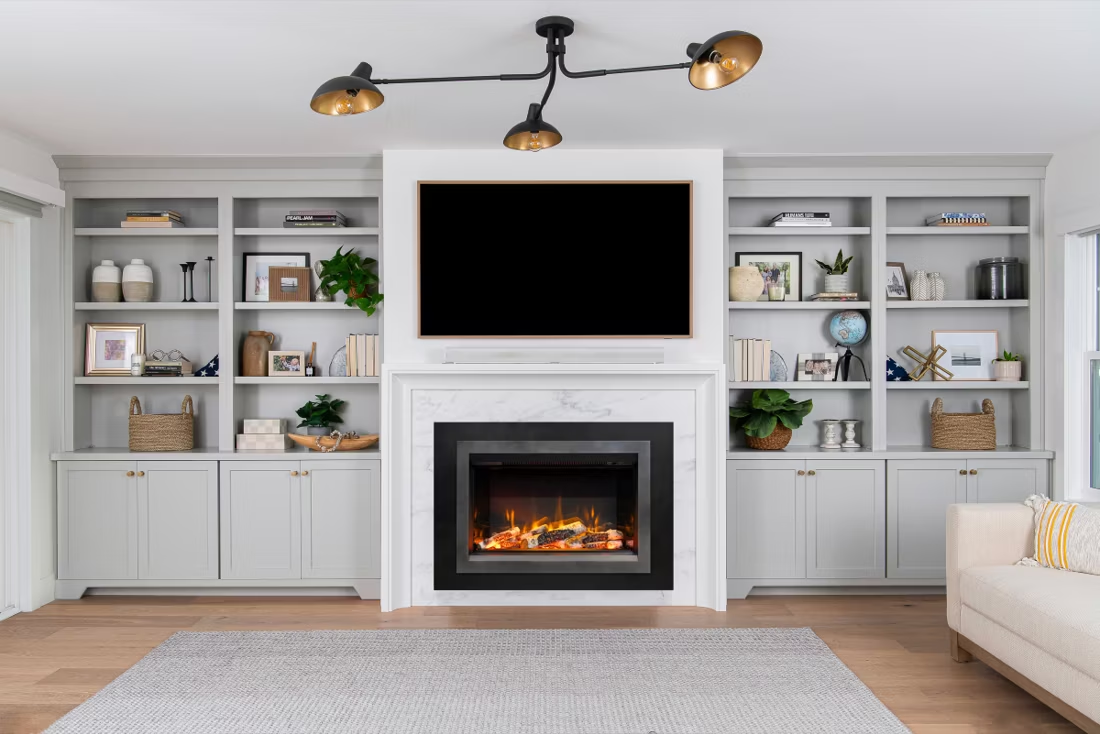
Yes—with an asterisk. Fireplaces are hot and TVs don't like heat. Either put a mantel between them to deflect rising warmth, or choose a fireplace with heat-management technology that creates a cool zone on the wall above—the wall stays around 125 degrees, barely warm, while the room still gets full heat. If you like clean lines and don't want a mantel, heat management is the answer.
Does an electric fireplace need a vent or chimney?
No—that's its superpower. An electric fireplace needs a wall and an outlet, period. No vent pipe, no gas line, no clearances to design around, which is why it works in bedrooms, offices, apartments, and walls where venting a gas or wood unit would be impractical or impossible. Installation is typically the simplest and least expensive of any fireplace type.
Can I install a fireplace myself?
If you're putting a fire in your house on purpose, it's best to work with an expert. Unless you're genuinely experienced in framing, gas line, vent pipe, and the national code on clearances to combustibles, have a professional do it—and ideally the same company that sells you the fireplace, so warranty, service, and liability all live under one roof.
Can a fireplace actually lower my heating bill?
Yes—by creating a comfort zone. A furnace heats every square foot of the house just to warm the one room you're in; a gas fireplace on low burns roughly a sixth of the gas a typical furnace does. Set the furnace around 55–60 degrees as a baseline, then heat the rooms your family actually uses. Families who heat this way commonly save $20–$60 a month.
Find your electric fireplace in Gallatin County.
Tell us about your room and heating goals and we'll match you with the right electric fireplace or insert—plus a free Project Guide & Parts List built around your home and your recommended local dealer.
Find Your Fireplace →