
Pellet heat for Clinton County winters, without cutting a single log.
Set-it-and-forget-it warmth for homes around Albany and the rest of Clinton County—automated feed, steady heat, and a fraction of the mess of splitting wood. Find the right unit and connect with a trusted local dealer.
Every Project Starts From One of These Five Situations
Reliable, low-effort heat for a rural county.
Clinton County sits in south-central Kentucky along the Tennessee border, with a moderate winter heating season and winter lows averaging around 26 degrees—a real but manageable heating season, not the kind of brutal cold that demands an overbuilt system. For a county of about 2,300 people spread across farmland and lake country near Dale Hollow, a pellet stove hits a practical sweet spot: automated enough to run through a workday or a weekend away, hot enough to carry a living area through the coldest stretches of January, and far less labor than the cordwood tradition still common in this part of the state.
Oak, hickory, maple, and cherry are the backbone of local firewood culture here, and plenty of Clinton County households still burn cordwood as their primary or backup heat. Pellet fuel is the lower-maintenance alternative to that tradition rather than a replacement for it—no splitting, no stacking, no creosote buildup to sweep, just bags or bulk pellets from regional suppliers like Lignetics, Hamer Pellet Fuel, and Greenway Renewable Energy loaded into a hopper. For homes that want consistent, thermostat-controlled heat without an all-day fire-tending routine, that trade-off is the whole appeal.
Three steps. No salesperson until you're ready.
Tell us about your project
Your zip code, your situation, and the fuel you're leaning toward—or let the answers point you to one.
See what's actually available
The brands dealers within 100 miles genuinely carry—real options, never a catalog mirage.
Get your dealer & Project Guide
A trusted local dealer, plus the free Project Guide & Parts List that names every component of the job.
Frequently Asked Questions
How much does a pellet stove installation cost in Clinton County?
Most pellet stove installations in this part of Kentucky run in the range of $3,000 to $6,000, including the unit, venting, and a hearth pad if one isn't already in place. Pellet stoves vent through a simple 3- or 4-inch PL-vent pipe rather than a full masonry chimney, which keeps installation labor and materials lower than a comparable wood stove project. Because Clinton County is rural with a small population base, expect a local installer to build a modest travel charge into quotes for homes outside Albany—worth asking about up front when you get an estimate.
Do pellet stoves work during a power outage?
Not without help. Pellet stoves rely on an electric auger to feed pellets and a blower to distribute heat, so they shut down when the power does—a real consideration in a rural county served by South Kentucky RECC, where storm-related outages can stretch longer than they would in town. A battery backup or small generator sized for the stove's low wattage draw solves this for most households, and it's worth discussing with your installer if reliable heat during outages matters to you. Homes that need heat with zero dependence on the grid are usually better served by a wood stove instead.
Where can I buy pellets in or near Clinton County?
Regional pellet mills serve this area, including Hamer Pellet Fuel and Greenway Renewable Energy, both based in Kentucky, along with national brands like Lignetics that are widely stocked at farm supply and hardware retailers across the region. Pellets are typically sold in 40-pound bags (usually 50 bags to a ton) or by bulk ton delivery for larger stoves and higher-volume burners. Buying a season's supply—often 2 to 4 tons for a primary-heat household in this climate—ahead of winter is the standard move locally, since demand and price can tighten once cold weather sets in.
What size pellet stove do I need for my home?
With a moderate winter heating season and winter lows in the mid-20s, Clinton County doesn't require the largest stoves on the market the way a northern climate would. A small to mid-size pellet stove (rated for 1,000 to 1,800 square feet) comfortably heats most single-story homes and farmhouses common in the county, while larger, better-insulated homes or those wanting whole-house heat may want a unit rated closer to 2,000+ square feet. Older farmhouses with less insulation and higher ceilings should size up from the square-footage chart—a local dealer can walk your home and give you an accurate recommendation rather than relying on the box label alone.
Do I need a permit to install a pellet stove in Clinton County?
Most jurisdictions in this part of Kentucky require a building permit for a new pellet stove installation, and Clinton County's building permit office is the right place to confirm current requirements before work begins. Pellet stoves are generally simpler to permit than wood stoves because the venting is smaller-diameter and doesn't require the same chimney clearances, but a permit still typically covers the appliance placement, venting run, and hearth clearances. Most local installers handle this paperwork as part of the installation rather than leaving it to the homeowner.
What's the difference between a pellet stove and a pellet insert?
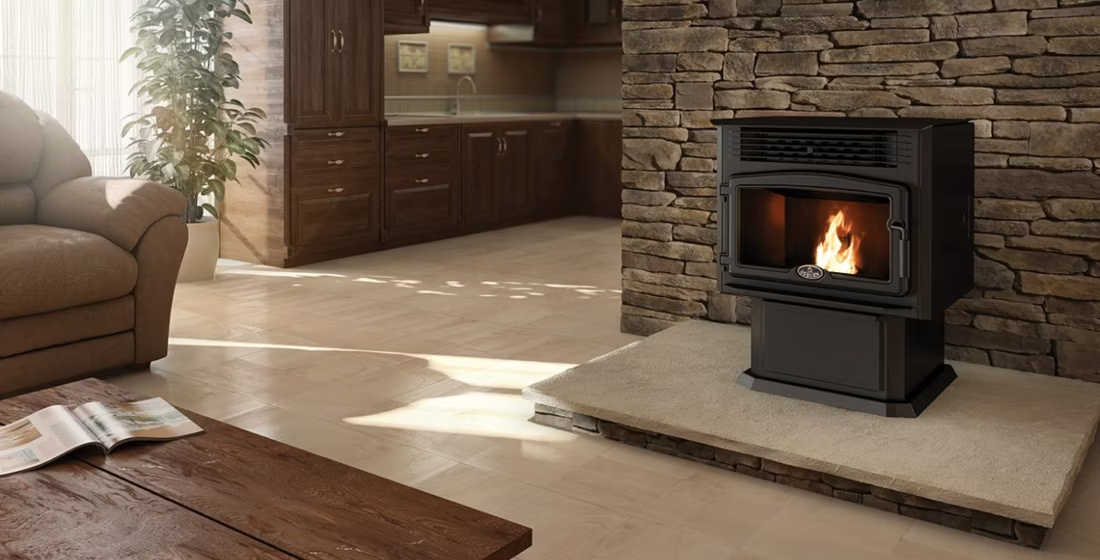
A pellet stove is a freestanding unit that sits on its own hearth pad and can go almost anywhere in a room with the right clearances and a vent run to the outside. A pellet insert is built to slide into an existing masonry fireplace opening, using the existing firebox space (though not the original chimney flue, which gets relined for pellet venting) to convert an old wood-burning fireplace into an automated heat source. For Clinton County homes with an existing but underused masonry fireplace, an insert is often the more cost-effective path since it reuses the opening you already have.
How much maintenance does a pellet stove need?
Pellet stoves need more routine attention than a gas appliance but far less than a wood stove. Expect to empty the ash pan every few days during regular use, clean the burn pot and glass weekly, and run a full venting and exhaust fan cleaning once or twice a season depending on how many tons you burn. An annual professional service—checking the auger motor, gaskets, and exhaust blower—is recommended and typically costs less than a comparable wood stove chimney sweep. Because pellet fuel burns cleaner than cordwood, there's no creosote buildup to worry about, which is one of the trade-offs that makes pellet appealing to households that don't want a yearly chimney project.
Pellet stove vs. wood stove—which makes more sense in Clinton County?
Wood is deeply practical here—oak, hickory, maple, and cherry are all locally abundant, cordwood is often cheap or free if you or a neighbor have land, and a wood stove keeps burning with zero electricity, which matters when rural power lines go down. Pellet stoves trade that self-sufficiency for convenience: load a hopper, set a thermostat, and walk away, with no splitting, stacking, or daily fire-tending. For a household that already has a woodlot and doesn't mind the labor, wood usually wins on cost. For a household that wants consistent, low-maintenance heat and is willing to add a small battery backup for outages, pellet is often the better everyday fit.
How many tons of pellets will I need for a Clinton County winter?
For a primary-heat household in this climate, plan on roughly 2 to 4 tons of pellets for the season, depending on home size, insulation, and how much of the heating load the stove is carrying versus a central system. Households using a pellet stove for supplemental heat in one main living area typically use closer to 1 to 2 tons. Buying early in the fall from regional suppliers like Lignetics, Hamer Pellet Fuel, or Greenway Renewable Energy—before demand peaks in December and January—is the standard way locals avoid running short mid-winter.
Why is a fireplace insert so efficient?
An insert does two things: it seals the chimney completely, so you stop losing air you already paid to heat, and it radiates warmth into the room through the firebox and glass. Most add a heat-exchange fan that pulls cool room air underneath, wraps it around the hot firebox, and pushes it back out warm. Your home is more efficient before you've even lit the first fire.
What's the difference between an insert and a zero-clearance fireplace?
An insert is a fireplace that slides into a pre-existing wood-burning fireplace—if you don't have one, there's nothing to insert it into. A zero-clearance fireplace is built into a framed wall, which makes it the answer for remodels and new construction. Simple test: existing masonry fireplace means insert; blank or framed wall means zero-clearance.
Can a fireplace actually lower my heating bill?
Yes—by creating a comfort zone. A furnace heats every square foot of the house just to warm the one room you're in; a gas fireplace on low burns roughly a sixth of the gas a typical furnace does. Set the furnace around 55–60 degrees as a baseline, then heat the rooms your family actually uses. Families who heat this way commonly save $20–$60 a month.
Can I install a fireplace myself?
If you're putting a fire in your house on purpose, it's best to work with an expert. Unless you're genuinely experienced in framing, gas line, vent pipe, and the national code on clearances to combustibles, have a professional do it—and ideally the same company that sells you the fireplace, so warranty, service, and liability all live under one roof.
Pellet Brands Stocked Around Clinton County
Manufacturers will point you to the nearest stocking dealer.
Get your Clinton County pellet stove Project Guide & Parts List.
Tell us a bit about your home and we'll match you with a trusted local dealer, plus a free Project Guide & Parts List covering the exact stove, vent kit, and parts your pellet install needs.
Find Your Fireplace →