
Wood, Gas, Pellet, or Electric—Find What Fits Your Clinton County Home.
From oak and hickory ridges around Albany to the shoreline of Lake Cumberland, Clinton County homeowners heat with a mix of fuels. Find the right unit for your house and get matched with a local hearth dealer who can actually install it.
Every Project Starts From One of These Five Situations
Heating a rural corner of the Cumberland Plateau.
Clinton County sits in south-central Kentucky along the Tennessee border, in the wooded hill country around Lake Cumberland. At 4A climate zone with a moderate winter heating season, winters here are moderate compared to the northern cold belt—nowhere near what a place like Madison, Wisconsin, or Burlington, Vermont deals with—but with average winter lows around 26°F, a properly sized stove or insert still earns its keep from November into March. The ridges around Albany are thick with oak, hickory, maple, and cherry, and a lot of local households have burned some combination of those species for generations, whether self-cut or bought from a small sawmill down the road.
This hub covers the whole county: hearth retailers, chimney sweeps and gas techs, and fuel suppliers serving Albany and the surrounding rural communities. There's no natural gas utility footprint here the way you'd find in a larger city, so propane fills the role of "gas heat" for most homes. Pick your fuel below to see local dealers, typical installed costs, and the kind of unit that actually makes sense for a county this size and this climate.
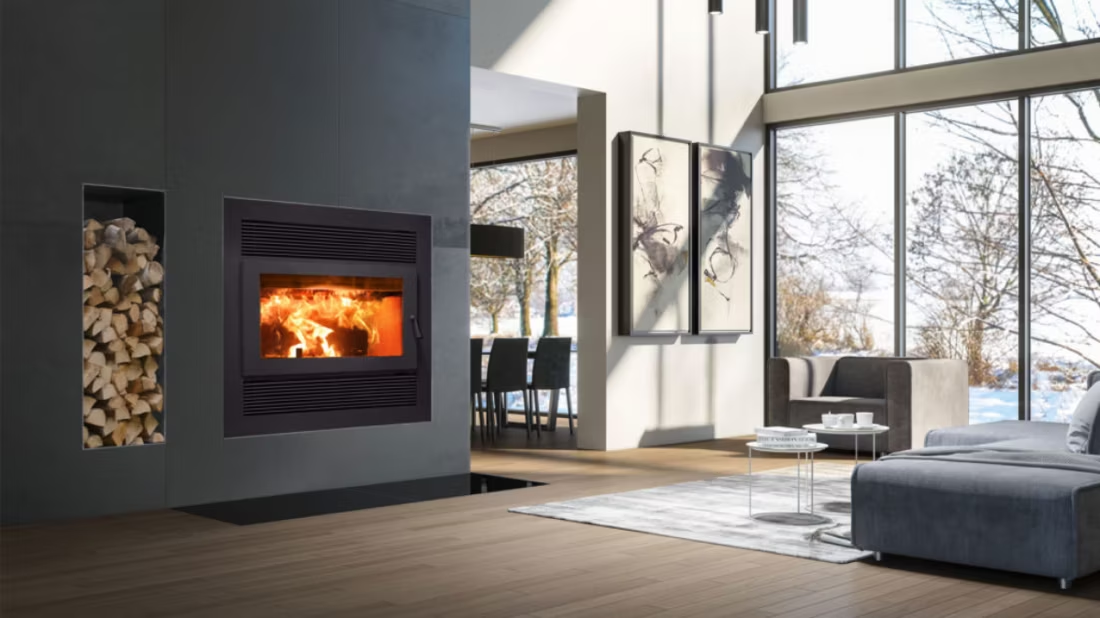
Four fuels. One honest answer for Clinton County.
Three steps. No salesperson until you're ready.
Tell us about your project
Your zip code, your situation, and the fuel you're leaning toward—or let the answers point you to one.
See what's actually available
The brands dealers within 100 miles genuinely carry—real options, never a catalog mirage.
Get your dealer & Project Guide
A trusted local dealer, plus the free Project Guide & Parts List that names every component of the job.
Frequently Asked Questions
Which fuel works best in Clinton County?
It depends on the house and how hands-on you want to be. Wood is the traditional choice here—oak, hickory, maple, and cherry all grow thick on the local ridges, and with average winter lows around 26°F and a moderate winter heating season, a mid-size wood stove or insert handles the season comfortably without needing an all-night marathon burner. Propane fills the role natural gas plays in bigger cities, since there's no gas utility footprint in the county—propane fireplaces and inserts give you instant heat with no wood-hauling. Pellet stoves are a solid middle ground, especially with regional brands like Lignetics and Hamer Pellet Fuel available through area suppliers, though you'll want a backup heat source since pellet stoves need electricity to run. Electric fireplaces work well as supplemental heat in bedrooms or additions, but given the winter lows here, they're rarely anyone's sole heat source. Most Clinton County homes lean on wood or propane as primary heat with something electric in a secondary room.
Do I need a permit to install a fireplace in Clinton County?
It varies more here than in a larger city. Clinton County, like many small rural Kentucky counties, doesn't run a local building permit program for single-family residential work, so permitting for wood stoves, inserts, and gas or propane appliances is generally governed by the Kentucky Residential Code and verified through your installer's code-compliant documentation rather than a county permit desk. If you're inside Albany's city limits, check with the city first, since some municipalities layer on their own inspection requirements. Either way, a reputable local hearth dealer should know exactly what documentation is expected for your address and will typically handle it as part of the installation.
Are there air quality restrictions on wood burning in Clinton County?
No. Clinton County has no non-attainment designation, no winter inversion problems, and no mandatory or voluntary burn-curtailment program of the kind you see in bowl-shaped basin communities out west. That means no red or yellow burn-ban days to track here. It's still worth burning seasoned oak or hickory (below 20% moisture) rather than green wood—it burns cleaner, produces less creosote, and keeps your chimney sweep happy—but there's no regulatory pressure driving that choice, just good practice.
Can one local hearth retailer handle all four fuel types?
In a county this size, it's common to find one or two full-service dealers that carry three or four fuel types—wood, gas or propane, pellet, and electric—rather than separate specialists for each. That's convenient if you're still deciding between, say, a wood insert and a pellet stove and want to see working displays side by side. For propane specifically, you'll often be dealing with two parties: the hearth dealer who sells and installs the appliance, and a separate propane supplier who sets the tank and handles fuel delivery. Ask any dealer up front which fuels they install versus which they simply sell—that distinction matters more in rural markets than in bigger cities.
How does service work in rural areas of Clinton County?
Most technicians serving Clinton County are based in or near Albany and drive out to the surrounding hollows and the Lake Cumberland shoreline communities. Expect a modest trip charge for calls well outside town—often in the $40–$75 range depending on distance—and expect scheduling to tighten up considerably once cold weather actually arrives. Booking your annual chimney sweep or propane appliance inspection in September or October, before the first cold snap, is far easier than trying to get someone out during a January cold spell. If you're heating with pellets, keep a backup plan for outages, since pellet stoves need electricity to feed the auger and run the blower.
What's the typical cost range for fireplace installation across all fuel types in Clinton County?
Costs run lower here than in bigger metro markets, but the spread by fuel is similar. Wood stove or insert installation: roughly $3,500–$7,000 for a typical install, more if new chimney or hearth pad work is needed. Propane fireplace, insert, or stove: roughly $4,000–$8,500 depending on whether a new tank and line have to be run. Pellet stove or insert: roughly $3,500–$6,000 for a standard install. Electric fireplace: $200–$2,500 for the unit itself, plus $300–$900 in labor for anything beyond a simple plug-in placement. Ask any local dealer for a written quote broken out by unit, venting or line work, and labor—that breakdown is worth having before you commit.
Can a fireplace actually lower my heating bill?
Yes—by creating a comfort zone. A furnace heats every square foot of the house just to warm the one room you're in; a gas fireplace on low burns roughly a sixth of the gas a typical furnace does. Set the furnace around 55–60 degrees as a baseline, then heat the rooms your family actually uses. Families who heat this way commonly save $20–$60 a month.
Does a fireplace add value to my home?
On average, a fireplace adds back to the home about the same amount you spent installing it. Add the monthly savings from heating the rooms you actually use instead of the whole house—often hundreds of dollars a year—and the value case is strong before you even count what a fire does for how your family uses the room.
What are the biggest mistakes people make buying a fireplace?
Five come up constantly: budgeting for the unit but not the full job (vent, gas line, electrical, finish work); drowning in options instead of starting from style and fuel; buying without an in-home preview; handing installation to a handyman instead of a pro; and giving up out of sheer indecision. Every one is avoidable with a clear plan—step one, step two, step three.
How much should I budget for a fireplace?
For an average home—covering the fireplace, the vent pipe, and basic installation—a budget between $3,900 and $5,500 gives you a lot of options across wood, gas, and pellet. By the time you add finish work, gas line, and electrical, the average complete installation lands between $5,000 and $12,000 all-in. In a remodel or new build, a good rule is to put about 2.5% of the total project cost toward the fireplace.
Stove and Fireplace Dealers in Clinton County
Listings include WhyFire partner dealers, dealers we have verified as authorized for the brands we recommend, and established local businesses that carry hearth products. Every listing shows which one it is. The ones marked Preferred run on WhyFire's software, so they can show you real pricing and book your appointment right here. No manufacturer pays for placement. How we verify dealers →
Southside Electric & Lighting
Area – Somerset, Ky
Colligan Group Dba Frugal Mick
Ap Hearth LLC
Custom Fireplaces & Woodworking
Dowell Furniture Co.
Webbtown Propane Company
Middle Tennessee Natural Gas
Middle Tn Natural Gas - Crossville
Farmer's Energy Propane Plus
Spar-Gas
Volunteer Hearth & Home
Middle Tn Natural Gas - Sparta
Spar-Gas
Spar Gas Inc.
Middle Tn Natural Gas - Gordonsville
Allen County Farmer's Service
Get Matched With a Hearth Dealer in Clinton County.
Tell us about your home and which fuel you're considering, and we'll match you with a trusted local dealer and send a free Project Guide & Parts List—the exact parts, including the vent kit, and the dealer we recommend for your Clinton County project.
Find Your Fireplace →