
Set it, forget it—heat that keeps up with Clark County winters.
Thermostat-controlled warmth for Winchester and the rolling farmland of Clark County, without the wood pile or the daily tending. Find the right pellet stove or insert, and connect with a trusted local dealer.
Every Project Starts From One of These Five Situations
Convenience heat for the Bluegrass region.
Clark County sits in Kentucky's Bluegrass region, with Winchester as the county seat and the Kentucky River forming much of the county's southern edge. Winters here are moderate compared to the upper Midwest—average lows around 22°F and a heating season far shorter than what a place like Duluth, MN or Burlington, VT sees. That milder profile is exactly why pellet stoves fit so well here: homeowners want dependable, even heat for a few cold months without committing to felling and splitting a winter's worth of oak and hickory.
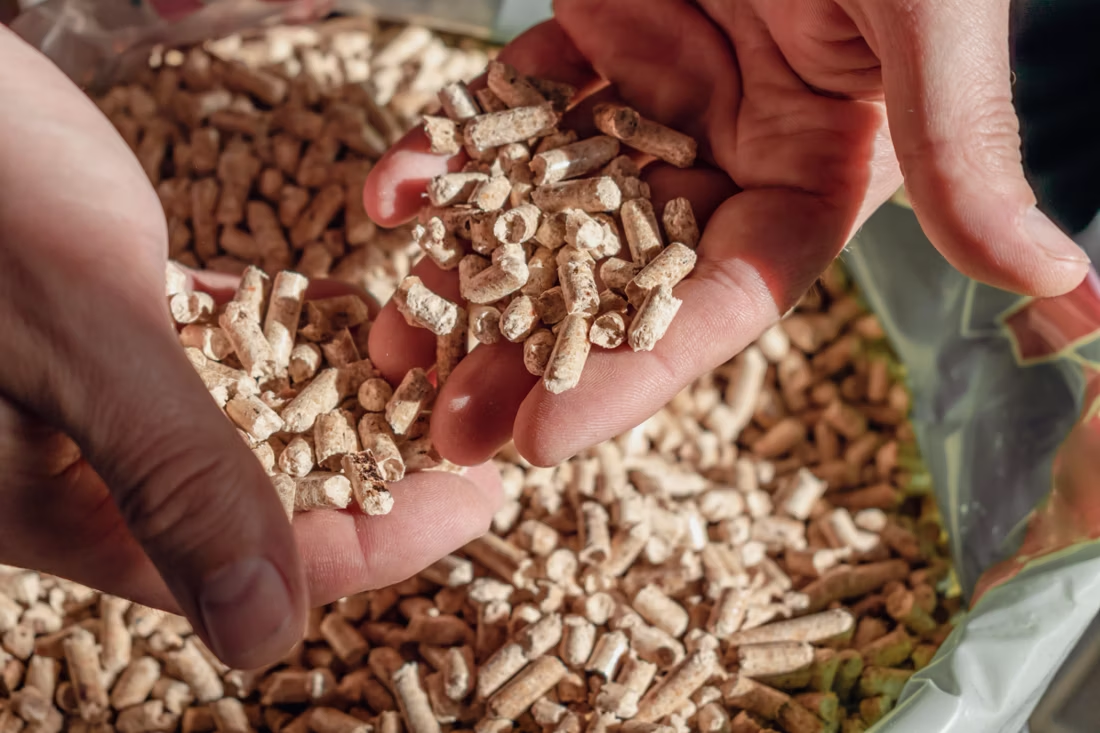
Clark County has no air quality non-attainment issues or winter inversion restrictions, so pellet appliances run without the burn-ban concerns that complicate wood heat in other parts of the country. Bagged pellet fuel from regional suppliers like Lignetics, Hamer Pellet Fuel, and Greenway Renewable Energy is readily available through area hearth and farm-supply retailers, which means Clark County homeowners get consistent BTU output and predictable ash content—a real advantage over firewood quality that can vary load to load. For rural properties near the Daniel Boone National Forest boundary, some households still split their own oak or hickory for a wood stove elsewhere on the property, but for the primary living space, pellet has become the low-maintenance choice.
Three steps. No salesperson until you're ready.
Tell us about your project
Your zip code, your situation, and the fuel you're leaning toward—or let the answers point you to one.
See what's actually available
The brands dealers within 100 miles genuinely carry—real options, never a catalog mirage.
Get your dealer & Project Guide
A trusted local dealer, plus the free Project Guide & Parts List that names every component of the job.
Frequently Asked Questions
How much does a pellet stove installation cost in Clark County?
A typical pellet stove installation in Clark County runs roughly $3,000 to $6,000, and it's usually on the lower end of that range compared with wood or gas because pellet units vent through a simple wall or roof pipe rather than requiring a full masonry chimney. A pellet insert going into an existing fireplace opening—common in older Winchester homes and farmhouses throughout the county—typically lands in the middle of that range once venting and a liner are factored in. New construction with no existing hearth opening runs toward the higher end. Local dealers will size the job and quote a firm number after seeing your home.
What size pellet stove do I need for my home?
Sizing depends on square footage, ceiling height, and how leaky the home is—a real consideration in Clark County, where a good share of the housing stock is older farmhouse construction with less insulation than newer builds. As a rough guide: a small pellet stove (up to 1,000 sq ft) suits a single room or addition, a medium unit (1,000–1,800 sq ft) covers most main living areas, and a large unit (1,800+ sq ft) can serve as primary heat for a well-sealed home. Because Clark County's winters are moderate rather than extreme, oversizing is more common here than undersizing—a stove that's too large for the space will short-cycle and waste pellets. A local dealer can size your space accurately during an in-home visit.
Where can I find certified pellet stove installers near Winchester?
Look for installers with NFI (National Fireplace Institute) pellet-specialist certification, which confirms training specific to pellet appliances rather than wood or gas units—the venting, electrical, and auger systems are different enough that experience matters. Certified hearth dealers serving Clark County typically handle the full job: unit selection, wall or roof venting, and the electrical outlet the auger and blower require. Because pellet stoves need power to run, your installer should also confirm outlet placement works with your existing floor plan rather than requiring a new circuit run.
What's the difference between a pellet stove and a pellet insert?
A pellet stove is a freestanding unit that sits on its own hearth pad and vents through a wall or the roof—it can go almost anywhere in the house with access to an outlet. A pellet insert is built to slide into an existing masonry fireplace opening, which is a common retrofit in Clark County's older Winchester homes and rural farmhouses that already have a fireplace but rarely use it. The insert uses a stainless liner run through the existing chimney rather than new wall venting. For a home without an existing fireplace, the freestanding stove is the simpler and usually less expensive path.
Do I need a permit to install a pellet stove in Clark County?
Yes—a building permit is generally required for a new pellet stove or insert installation through the Winchester-Clark County Planning and Building office, mainly to confirm venting clearances and the electrical connection meet code. Most local dealers handle the permit application as part of the installation. Unlike wood heat, there's no cutting permit or forest office involved since pellet fuel is purchased bagged rather than harvested—you won't need anything from the Daniel Boone National Forest office to run a pellet appliance.
What pellet stove brands are available through Clark County dealers?
Local hearth dealers serving Clark County typically carry established pellet stove manufacturers such as Harman and Quadra-Fire, both known for reliable auger systems and strong parts availability—useful in a rural county where a quick service call isn't always same-day. On the fuel side, bagged pellets from regional suppliers Lignetics, Hamer Pellet Fuel, and Greenway Renewable Energy are widely stocked at area hearth shops and farm-supply stores, so sourcing fuel locally isn't a concern once you've picked a unit. Ask your dealer which stove brands they service directly, since warranty support is easier when the installer also handles repairs.
How much maintenance does a pellet stove need?
Pellet stoves need more routine attention than a gas unit but far less than a wood stove's chimney sweeping. Plan on emptying the ash pan every few days to weekly during heavy winter use, vacuuming the burn pot and heat exchanger tubes every one to two weeks, and scheduling a full professional cleaning and inspection once a year—typically in late summer or early fall before Clark County's heating season starts in earnest. The auger motor, exhaust blower, and gaskets are the parts most likely to need service over the unit's life, and a local dealer familiar with your specific brand will have those parts on hand faster than ordering direct.
Where do I buy pellet fuel in Clark County, and how much does it cost?
Bagged wood pellets from regional producers like Lignetics, Hamer Pellet Fuel, and Greenway Renewable Energy are stocked at hearth retailers and farm-supply stores throughout the Winchester and Lexington-area market. Pricing generally runs in the range of $250 to $300 per ton, though it can shift with demand early in the heating season—buying your season's supply in September or October, before the first cold snap, is the most reliable way to avoid shortages and price spikes. A ton of pellets typically covers six to eight weeks of regular use for an average-sized Clark County home, though usage varies with stove size and how much of your heat load the pellet stove is carrying.
Pellet stove vs. wood stove—which makes more sense in Clark County?
Wood stoves make sense if you have access to your own oak, hickory, maple, or cherry—all common species locally—and don't mind splitting and stacking a winter's supply; Forest Service cutting permits through the Daniel Boone National Forest run about $20 per cord during the May-to-October season for those willing to cut their own. Pellet stoves trade that labor for convenience: load the hopper, set the thermostat, and let the auger do the work, with more consistent heat output and less ash. The tradeoff is that pellet stoves need electricity to run the auger and blower, so they're not a backup heat source during a power outage the way a wood stove is. For Clark County's moderate winters—milder than the northern Midwest—many homeowners choose pellet for the primary living space and keep a wood stove or fireplace elsewhere for outages and ambiance.
What's the difference between an insert and a zero-clearance fireplace?
An insert is a fireplace that slides into a pre-existing wood-burning fireplace—if you don't have one, there's nothing to insert it into. A zero-clearance fireplace is built into a framed wall, which makes it the answer for remodels and new construction. Simple test: existing masonry fireplace means insert; blank or framed wall means zero-clearance.
What do I measure to size a fireplace insert?
Four numbers tell you what fits: the front width, the front height, the back width, and the overall depth of your existing fireplace opening. Grab a tape measure, jot those down, and snap a photo of the wall—those two things do more to move your project forward than anything else you can do today.
Can I install a fireplace myself?
If you're putting a fire in your house on purpose, it's best to work with an expert. Unless you're genuinely experienced in framing, gas line, vent pipe, and the national code on clearances to combustibles, have a professional do it—and ideally the same company that sells you the fireplace, so warranty, service, and liability all live under one roof.
Does a fireplace add value to my home?
On average, a fireplace adds back to the home about the same amount you spent installing it. Add the monthly savings from heating the rooms you actually use instead of the whole house—often hundreds of dollars a year—and the value case is strong before you even count what a fire does for how your family uses the room.
Stove and Fireplace Dealers in Clark County
Pellet Brands Stocked Around Clark County
Manufacturers will point you to the nearest stocking dealer.
Find your pellet stove in Clark County.
Tell us a bit about your home and we'll match you with a trusted local dealer and send over a free Project Guide & Parts List—sized to your space, with the exact parts and venting your pellet project needs.
Find Your Fireplace →