
Instant heat, zero mess, for Clark County homes.
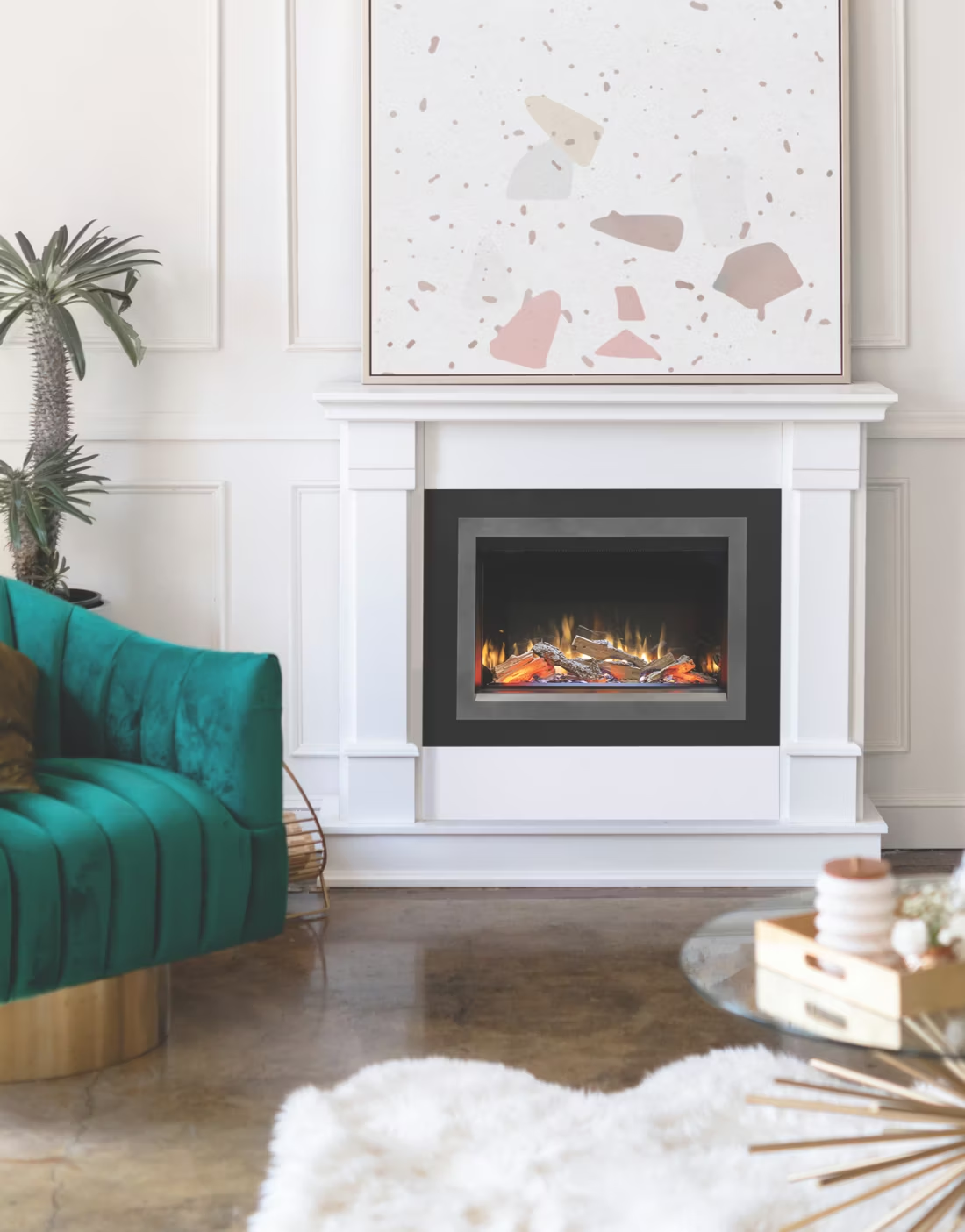
From Winchester to the rural stretches near the Daniel Boone National Forest, electric fireplaces give Clark County homeowners clean supplemental warmth with no venting, no gas line, and no wood to haul. Find the right unit and connect with a trusted local dealer.
Every Project Starts From One of These Five Situations
Supplemental heat that fits any room in the house.
Clark County sits in the Bluegrass region of central Kentucky, with Winchester as its county seat and rolling horse farms giving way to the Daniel Boone National Forest along the county's eastern edge. At climate zone 4A with an average winter low around 22°F and a moderately long heating season, Clark County winters are real but moderate—cold enough to matter, not so extreme that a home needs aggressive primary heat in every room. That's exactly the gap electric fireplaces fill well: a finished bonus room over the garage, a sunroom addition in Winchester, a basement family room that the central system never quite reaches.
Winchester proper is served by Kentucky Utilities, while much of rural Clark County runs on power from Clark Energy Cooperative, headquartered right in Winchester. Either way, electric fireplaces plug into standard household power (larger built-ins may need a dedicated 20-amp circuit) and don't require the gas line, chimney, or venting work that wood and gas units do. Clark County has no air quality non-attainment issues, so the zero-emission angle isn't the deciding factor here the way it might be in a smoggy basin—for most local homeowners, the draw is simpler: flip a switch, get heat and ambiance, done.
Three steps. No salesperson until you're ready.
Tell us about your project
Your zip code, your situation, and the fuel you're leaning toward—or let the answers point you to one.
See what's actually available
The brands dealers within 100 miles genuinely carry—real options, never a catalog mirage.
Get your dealer & Project Guide
A trusted local dealer, plus the free Project Guide & Parts List that names every component of the job.
Frequently Asked Questions
How much does an electric fireplace installation cost in Clark County?
A plug-in electric insert or freestanding unit that uses an existing outlet typically runs $400 to $1,000 installed, including the unit and basic setup. A built-in wall unit or a full mantel-and-surround package that requires a dedicated 20-amp circuit and possibly some framing or drywall work runs higher, often $1,200 to $2,500, depending on whether an electrician needs to run new wiring. Because there's no venting, chimney, or gas line involved, electric installs in Clark County are almost always the least expensive of the fuel options and the fastest to complete—often a single day.
Will an electric fireplace actually keep a Clark County room warm in winter?
For a single room, yes—most electric fireplaces put out around 4,500 to 5,000 BTUs, enough to comfortably heat 400 to 600 square feet, which covers most bonus rooms, sunrooms, and family rooms in Clark County homes. What it won't do is replace your furnace on a hard winter night. With average lows around 22°F and a moderately long heating season each year, Clark County gets cold enough that electric units are best understood as supplemental or zone heat, not a whole-house solution. Homeowners here typically pair one with existing central heat and use it to take the edge off a specific room without running the furnace harder than it needs to.
Do I need an electrician to install an electric fireplace?
It depends on the unit. Smaller freestanding or insert-style electric fireplaces plug into a standard 120-volt outlet and don't require any electrical work—you can plug it in and go. Larger built-in units, especially wider models or ones installed inside a new mantel surround, often draw enough current to need their own dedicated 20-amp circuit, which does require a licensed electrician. Neither Winchester nor Clark County generally requires a building permit for a plug-in unit since there's no gas line or chimney to inspect, but new circuit work should still be pulled through a licensed electrician for safety and code compliance.
Where can I find a local dealer for electric fireplaces in Clark County?
Because electric units are simple to install, some Clark County homeowners are tempted to order online and skip a local dealer entirely—but that skips the part that actually matters: sizing the unit correctly for the room, matching the style to an existing mantel or built-in, and knowing which models handle a dedicated circuit cleanly versus which ones are truly plug-and-play. A trusted local hearth dealer serving the Winchester area can walk through your space, size the BTU output to the room, and make sure whatever you install looks and performs the way you expect—without you guessing from a big-box aisle.
Electric vs. wood—which makes more sense for my Clark County home?
Wood has deep roots in Clark County—oak, hickory, maple, and cherry are all common locally, and cutting permits through the Daniel Boone National Forest run about $20 per cord during the May-to-October season. Wood heat works without electricity, which matters if you want backup warmth during a power outage, and it produces serious BTU output for the cost of the fuel. Electric flips that equation: no hauling, splitting, or ash cleanup, no chimney to maintain, and instant on-off convenience—but it depends entirely on the grid, whether that's Kentucky Utilities in Winchester or Clark Energy Cooperative in the surrounding county. If backup heat during outages matters to you, wood wins. If convenience and low-maintenance ambiance in a specific room is the goal, electric is usually the easier call.
Electric vs. gas—which is the better fit?
Gas fireplaces deliver more real heat output and can run during a power outage if equipped with battery backup ignition, but they require either a natural gas line or a propane tank plus venting work, which adds cost and complexity. Electric skips all of that—no gas line, no venting, no combustion byproducts to worry about—which makes it a strong option for homes in the more rural stretches of Clark County that aren't on a natural gas line, or for anyone adding a fireplace to a room where running gas simply isn't practical. If you already have gas service to the house, gas is worth considering for heat output; if you don't, or you just want the simplest possible install, electric is usually the more sensible route.
How much does an electric fireplace cost to run in Clark County?
Most electric fireplaces draw around 1,500 watts on the heat setting, which works out to roughly 12 to 18 cents an hour to run depending on current Kentucky Utilities or Clark Energy Cooperative rates—noticeably cheaper per hour than running a space heater of similar output, and with the added benefit of a flame-effect display that runs on minimal power even with the heat turned off. For a room used a few hours a night through a Clark County winter, that typically adds up to a modest monthly cost, well below what a comparable amount of propane or natural gas would run.
Do electric fireplaces need any maintenance?
Very little compared to wood or gas. There's no chimney to sweep, no gas line to inspect, and no ash to clean. Maintenance is mostly limited to occasionally dusting the unit, checking the LED lighting for the flame effect over the years, and replacing the heating element if it eventually wears out—which on most quality units takes a decade or more of regular use. This low-maintenance profile is one of the main reasons electric units are popular for secondary rooms in Clark County homes where nobody wants to add another appliance to the seasonal maintenance list.
Can an electric fireplace be installed anywhere in my house?
Almost—that's one of the real advantages. Since there's no venting or gas line requirement, electric fireplaces can go on an interior wall, in a bedroom, in a finished basement, or in an addition that would be difficult or expensive to run a chimney or gas line to. The main constraint is electrical: make sure the outlet or circuit can handle the unit's draw, and check manufacturer clearance requirements around combustible materials like wood mantels. For Clark County additions and bonus rooms that were never part of the original heating plan, that flexibility is often the deciding factor over wood or gas.
Does an electric fireplace need a vent or chimney?
No—that's its superpower. An electric fireplace needs a wall and an outlet, period. No vent pipe, no gas line, no clearances to design around, which is why it works in bedrooms, offices, apartments, and walls where venting a gas or wood unit would be impractical or impossible. Installation is typically the simplest and least expensive of any fireplace type.
Can I put a TV above my fireplace?
Yes—with an asterisk. Fireplaces are hot and TVs don't like heat. Either put a mantel between them to deflect rising warmth, or choose a fireplace with heat-management technology that creates a cool zone on the wall above—the wall stays around 125 degrees, barely warm, while the room still gets full heat. If you like clean lines and don't want a mantel, heat management is the answer.
How much should I budget for a fireplace?
For an average home—covering the fireplace, the vent pipe, and basic installation—a budget between $3,900 and $5,500 gives you a lot of options across wood, gas, and pellet. By the time you add finish work, gas line, and electrical, the average complete installation lands between $5,000 and $12,000 all-in. In a remodel or new build, a good rule is to put about 2.5% of the total project cost toward the fireplace.
Can I install a fireplace myself?
If you're putting a fire in your house on purpose, it's best to work with an expert. Unless you're genuinely experienced in framing, gas line, vent pipe, and the national code on clearances to combustibles, have a professional do it—and ideally the same company that sells you the fireplace, so warranty, service, and liability all live under one roof.
Stove and Fireplace Dealers in Clark County
Find your electric fireplace in Clark County.
Tell us a bit about your room and we'll match you with the right electric fireplace or insert, plus a free Project Guide & Parts List and a trusted local dealer near Winchester to handle the install.
Find Your Fireplace →