
Steady pellet heat for Casey County's oak-and-hickory country.
Casey County winters average lows near 24°F with about 4,560 heating degree days—cold enough to matter, mild enough that a hopper-fed pellet stove can carry a home without the splitting and stacking. Find the right unit and connect with a trusted local dealer.
Every Project Starts From One of These Five Situations
A hopper-fed alternative to cutting your own firewood.
Casey County is small—just over 2,100 residents spread across Liberty and the surrounding rural hollows—and firewood here is genuinely cheap and abundant. The Daniel Boone National Forest issues cutting permits for $20 a cord during the May-through-October season, and the county's oak, hickory, maple, and cherry stands make for some of the best-burning cordwood in the region. So when a Casey County homeowner chooses pellet over wood, it's rarely about supply—it's about convenience. A pellet stove skips the splitting, stacking, and daily reloading in favor of a hopper you fill every day or two and a thermostat that holds a room temperature on its own, which matters for older farmhouses and smaller homes where nobody wants to babysit a fire through a Tuesday night.
Kentucky's zone 4A climate keeps Casey County's winters moderate compared to the Ohio Valley or points north—this isn't Duluth or Fargo territory—but 4,560 heating degree days is still enough that a pellet stove earns its keep as either a primary heat source in a well-sealed home or reliable zone heat for the room where the family actually lives. Regional pellet supply runs through Lignetics, Kentucky-based Hamer Pellet Fuel, and Greenway Renewable Energy, all of which distribute into this part of the state, and with no air quality non-attainment issues in Casey County, there's no curtailment period or burn-ban complication to plan around—you run the stove when it's cold, full stop.
Three steps. No salesperson until you're ready.
Tell us about your project
Your zip code, your situation, and the fuel you're leaning toward—or let the answers point you to one.
See what's actually available
The brands dealers within 100 miles genuinely carry—real options, never a catalog mirage.
Get your dealer & Project Guide
A trusted local dealer, plus the free Project Guide & Parts List that names every component of the job.
Frequently Asked Questions
How much does a pellet stove installation cost in Casey County?
Most pellet stove installations run in the neighborhood of $3,000 to $6,000 once you include the unit, the vent kit, and labor—pellet venting is simpler and less expensive than a masonry chimney because it uses smaller-diameter PL vent pipe through a wall or roof rather than a full Class A chimney system. A freestanding stove replacing an old wood stove or going into a room with no existing hearth sits toward the lower end; a pellet insert going into an existing fireplace, with a liner run up the old flue, can run a bit higher. A local dealer will give you a firm number after seeing the room and the venting path.
What size pellet stove do I need for a Casey County home?
With winter lows averaging around 24°F and roughly 4,560 heating degree days, most Casey County homes don't need the largest hopper-capacity units sold for harsher climates further north. A stove rated for 1,000 to 1,800 square feet handles a main living area or a small farmhouse comfortably as supplemental or primary heat, while larger, well-insulated homes may want a unit rated closer to 2,000 square feet. Older, drafty farmhouses common in this part of the county—especially ones with high ceilings or add-on rooms—often need to size up regardless of square footage. A local dealer walking through the home is the fastest way to get this right.
Where do I buy pellets in or near Casey County?
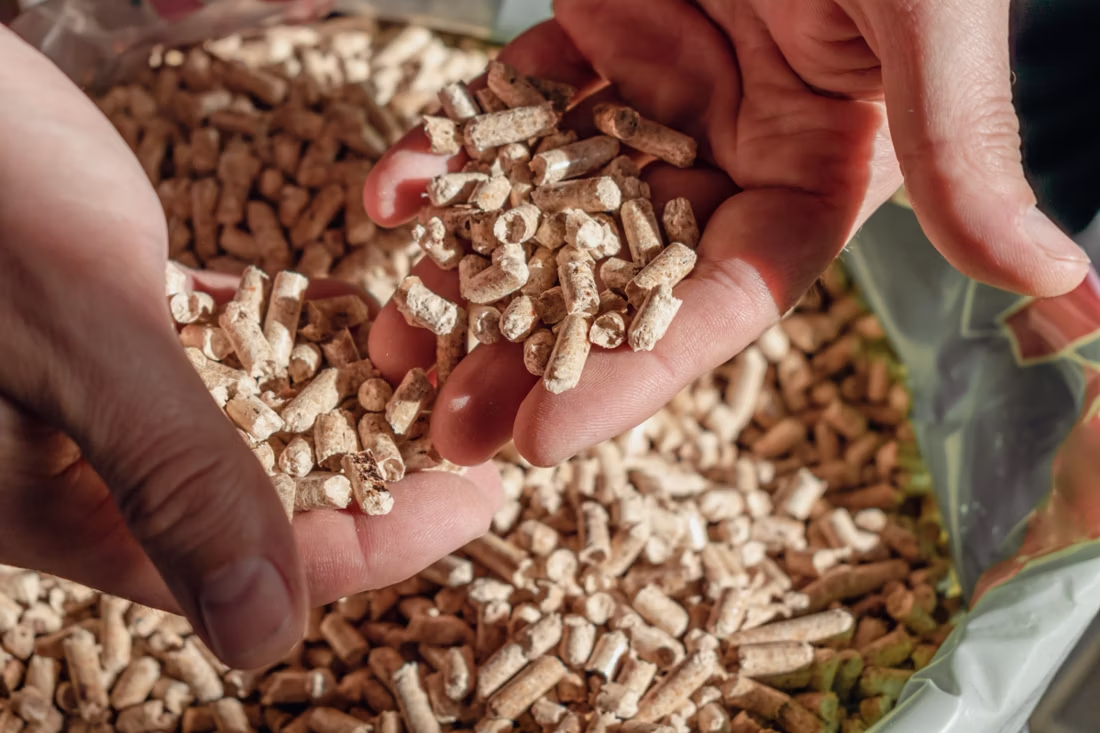
Regional supply comes primarily through Lignetics, Hamer Pellet Fuel—a Kentucky-based pellet producer—and Greenway Renewable Energy, all of which distribute bagged pellets into south-central Kentucky. Farm supply stores and hardware stores in Liberty and nearby towns like Danville and Somerset typically stock one or more of these brands, especially heading into fall. Pricing moves with wood pellet supply nationally, so it's worth buying a season's worth early rather than restocking mid-winter when demand—and sometimes price—climbs.
Do I need a permit to install a pellet stove in Casey County?
Yes—a building permit is typically required for a new solid-fuel appliance installation, and in Casey County that goes through the Fiscal Court's building office rather than a separate city department, since most of the county is unincorporated. Because pellet venting uses PL pipe through a wall rather than a masonry chimney, the inspection is usually more straightforward than a wood stove install. Most local dealers who sell and install pellet stoves handle the permit paperwork as part of the job.
Pellet stove or wood stove—which makes more sense in Casey County?
Wood is cheap here—Daniel Boone National Forest cutting permits run $20 a cord from May through October, and oak, hickory, and maple are common on Casey County land, so self-sufficient wood burners have real cost advantages. A wood stove also keeps working with zero electricity, which matters if the power goes out during an ice storm. A pellet stove trades that off for convenience: no chainsaw, no splitting, no hauling rounds out of the woods, and a thermostat that holds a set temperature without you tending the fire every couple of hours. If you've got the land, the tools, and the time, wood wins on cost. If you want set-and-forget heat and don't mind running a generator during an outage, pellet is usually the better fit.
What's the best pellet stove for Casey County's climate?
Given the moderate winters here—nothing like the sustained sub-zero stretches further north—most Casey County homes do well with a mid-size, auto-ignition pellet stove with a hopper that holds 40 to 60 pounds of pellets, which typically buys 24 to 40 hours of burn time on a low-to-medium setting. Look for a unit with a reliable auto-feed system and easy-to-clean burn pot, since Kentucky's humidity can affect pellet quality over a season and a stove that clogs easily becomes a chore. A local dealer familiar with regional pellet brands like Hamer or Lignetics can match a stove to what's actually stocked nearby.
Will my pellet stove work if the power goes out?
Not without a backup power source. Pellet stoves rely on an electric auger to feed fuel and a blower to distribute heat and exhaust combustion air, so a power outage shuts the stove down even with a full hopper. For a rural county like Casey where ice storms occasionally knock out power for stretches, many homeowners pair a pellet stove with a small generator or battery backup sized to run the auger motor and blower—it's a modest power draw compared to running a whole house. If uninterrupted backup heat during outages is the priority, a wood stove is the more reliable choice since it needs no electricity at all.
How much maintenance does a pellet stove need?
Less than a wood stove, but it's not zero. Plan on emptying the ash pan every few days depending on use, cleaning the burn pot weekly during heavy winter burning, and a full professional cleaning and inspection once a year—typically before the season starts in fall. The vent system, while smaller than a masonry chimney, still needs periodic inspection since it can accumulate fine ash and creosote-like residue over a season of regular use. Local dealers who sell pellet stoves usually offer this annual service directly.
Pellet vs. propane—which is right for my Casey County home?
Propane is the common alternative to pellet in a rural county like this one where natural gas lines don't reach most properties. A propane stove or fireplace offers instant on-off heat with no fuel handling and no ash to clean, but it depends on a filled tank and regular propane deliveries, and propane prices can swing more than pellet fuel from one winter to the next. A pellet stove asks a little more of you—filling the hopper, cleaning the burn pot—but gives you more control over fuel cost and sourcing, especially with Kentucky producers like Hamer Pellet Fuel in the regional supply chain. Either is a reasonable choice for zone heating; the decision usually comes down to whether you already have a propane tank and delivery service set up.
Why is a fireplace insert so efficient?
An insert does two things: it seals the chimney completely, so you stop losing air you already paid to heat, and it radiates warmth into the room through the firebox and glass. Most add a heat-exchange fan that pulls cool room air underneath, wraps it around the hot firebox, and pushes it back out warm. Your home is more efficient before you've even lit the first fire.
How often does a pellet stove need cleaning?
A clean pellet stove is a happy pellet stove. Plan on cleaning the burn pot about once a week when you're burning regularly—ash and clinkers gum up the air holes just like a pellet barbecue. Most pellet stove problems trace back to skipped cleaning that nobody explained up front. Some designs make it easy with a trapdoor burn pot: pull a lever and the gunk drops into the ash pan.
Can I install a fireplace myself?
If you're putting a fire in your house on purpose, it's best to work with an expert. Unless you're genuinely experienced in framing, gas line, vent pipe, and the national code on clearances to combustibles, have a professional do it—and ideally the same company that sells you the fireplace, so warranty, service, and liability all live under one roof.
How much should I budget for a fireplace?
For an average home—covering the fireplace, the vent pipe, and basic installation—a budget between $3,900 and $5,500 gives you a lot of options across wood, gas, and pellet. By the time you add finish work, gas line, and electrical, the average complete installation lands between $5,000 and $12,000 all-in. In a remodel or new build, a good rule is to put about 2.5% of the total project cost toward the fireplace.
Stove and Fireplace Dealers in Casey County
Pellet Brands Stocked Around Casey County
Manufacturers will point you to the nearest stocking dealer.
Find your pellet stove in Casey County.
Tell us a bit about your home and we'll match you with the right pellet stove or insert, plus a free Project Guide & Parts List—the vent kit, hearth requirements, and a recommended local dealer serving Casey County.
Find Your Fireplace →