
Plug-in warmth for every room in Casey County.
No chimney, no gas line, no venting—just real heat and a real flame effect for homes across Casey County, from Liberty to the farms and hollows outside town. Find the right unit and connect with a trusted local dealer.
Every Project Starts From One of These Five Situations
No gas line, no chimney, no problem.
Casey County sits in climate zone 4A with around 4,560 heating degree days a year and average winter lows near 24°F—cold enough to matter, but nowhere near the sub-zero stretches that drive whole-home wood or gas systems elsewhere. That's the sweet spot for electric fireplaces: many Casey County homes, especially in and around Liberty, Middleburg, and Yosemite, already lean on wood or propane for primary heat and want an electric unit for a living room, bedroom, or finished basement that doesn't need its own flue.
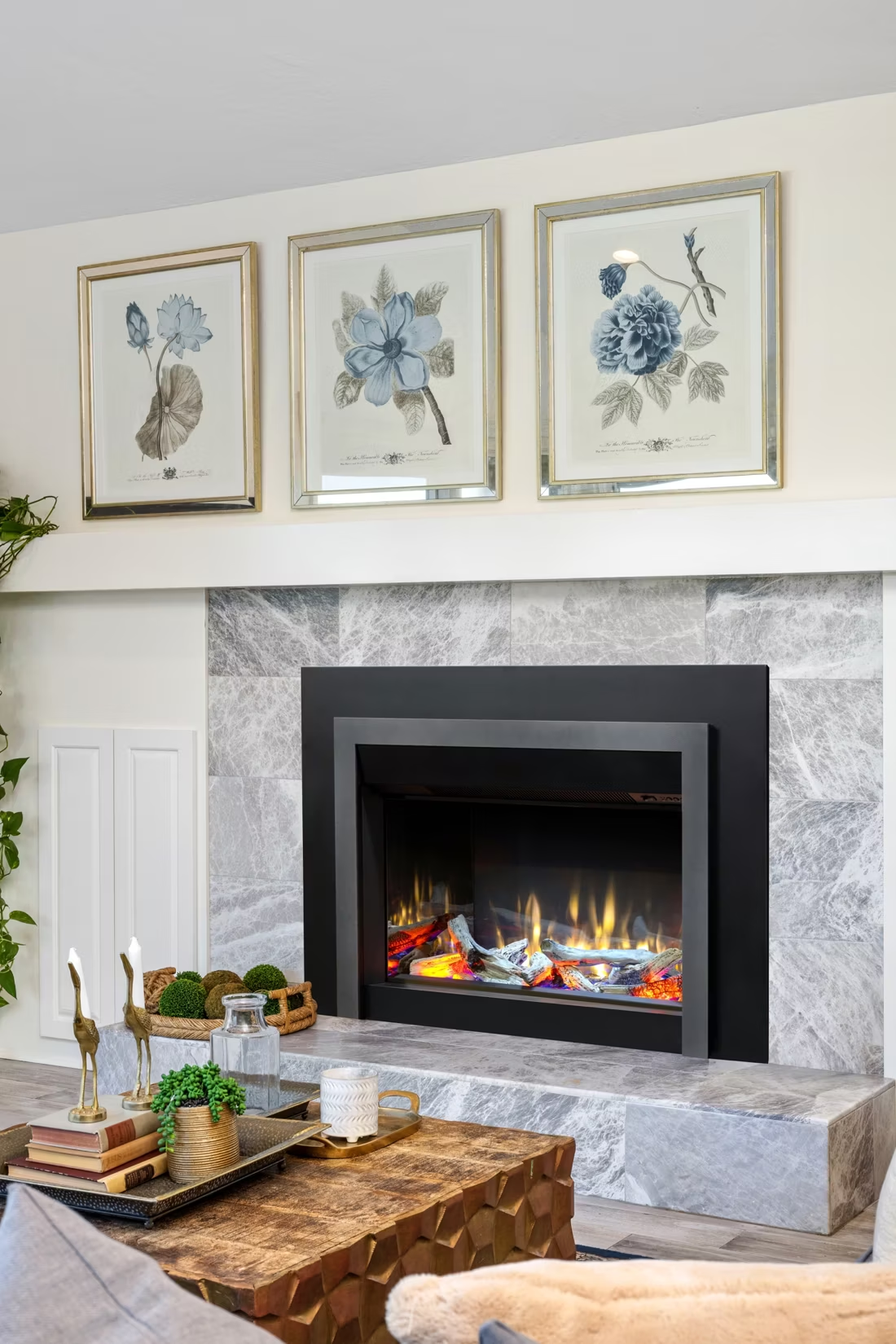
A lot of Casey County housing stock includes manufactured and modular homes where cutting a new chimney chase isn't practical, or where a homeowner rents and can't alter the structure at all—an electric insert or wall unit solves both problems since it plugs into a standard outlet or, for larger built-ins, ties into a dedicated 240-volt circuit run by a licensed electrician. Power in the county comes through South Kentucky RECC, and because electric units carry no combustion byproducts and need no venting, they're often the fastest and least invasive hearth project a homeowner can take on here.
Three steps. No salesperson until you're ready.
Tell us about your project
Your zip code, your situation, and the fuel you're leaning toward—or let the answers point you to one.
See what's actually available
The brands dealers within 100 miles genuinely carry—real options, never a catalog mirage.
Get your dealer & Project Guide
A trusted local dealer, plus the free Project Guide & Parts List that names every component of the job.
Frequently Asked Questions
How much does an electric fireplace installation cost in Casey County?
A plug-in electric insert or freestanding electric stove that drops into an existing fireplace opening typically runs $300 to $1,200 including the unit itself, with little to no installation labor since it simply plugs into a standard 120-volt outlet. A built-in electric wall unit or a linear electric fireplace set into new framing runs higher, generally $1,500 to $3,500, once you factor in a dedicated 240-volt circuit, wall framing, and finish work. Local dealers serving Casey County will walk through both options during an in-home or phone consultation before you commit to either approach.
What size electric fireplace do I need for my room?
Most electric fireplaces are rated for supplemental heat in the 1,000 to 1,500 square foot range on their heater setting, which covers a typical living room or bedroom in a Casey County home without any trouble. If you're heating an open floor plan or a room with vaulted ceilings, size up to a wider linear unit or plan on it as ambiance rather than your main heat source for that space. Because Casey County winters average lows around 24°F rather than deep sub-zero cold, an electric unit rarely needs to carry a whole room on its own—it's usually paired with a wood stove, propane furnace, or central heat pump already doing the heavy lifting.
Do I need an electrician to install an electric fireplace?
It depends on the unit. A basic plug-in electric insert or stove just needs a standard outlet and no electrician is required. A built-in wall unit or a larger linear fireplace typically draws more current and needs its own 240-volt circuit, which does require a licensed electrician to run wiring and tie into your panel. The hearth dealers who serve Casey County generally coordinate this as part of the install, so you're not left finding a separate electrician on your own.
What's the difference between an electric insert, a built-in wall unit, and a freestanding electric stove?
An electric insert is sized to slide into an existing masonry fireplace opening, giving an old wood-burning fireplace real heat output and a flame effect without touching the chimney. A built-in wall unit is framed into a wall like a piece of cabinetry—common in newer construction or remodels where there's no existing fireplace. A freestanding electric stove looks like a traditional wood stove but plugs in and needs no hearth pad or clearance to combustibles beyond what's listed in the manual. For Casey County homes with an old masonry fireplace that's no longer used for wood, an insert is usually the simplest upgrade.
Do I need a permit to install an electric fireplace in Casey County?
A simple plug-in electric insert or stove generally doesn't require a permit since no venting, gas line, or structural chimney work is involved. If your project includes new wall framing, a dedicated circuit, or a permanent built-in installation, check with the Casey County building department before work starts—electrical work tied to a new circuit typically does require inspection. Your local dealer or electrician can tell you which category your specific project falls into.
What's the best electric fireplace for a Casey County home?
For most Casey County living rooms, a mid-size linear electric insert from a brand like Dimplex, Napoleon, or Touchstone gives realistic flame detail and enough supplemental heat for a single room. If you're outfitting a manufactured or modular home—common throughout the county—look specifically for units rated for that clearance profile, since not every electric fireplace is approved for manufactured housing installation. For a rental or a home where you might want to take the unit with you, a freestanding electric stove is the most portable option.
How much maintenance does an electric fireplace need?
Very little compared to wood or gas. There's no chimney to sweep, no gas line to inspect, and no combustion byproducts to worry about. Periodically dust the heater vents and wipe down the glass front, and replace the LED light strip if it dims after years of use—most units are rated for 20,000+ hours before that's even a consideration. This low-maintenance profile is one of the main reasons electric units are popular as a second hearth feature in Casey County homes that already maintain a wood stove or propane system for primary heat.
How much does it cost to run an electric fireplace in Casey County?
Most electric fireplaces draw around 1,500 watts on the heater setting, which at typical South Kentucky RECC residential rates works out to roughly 15-20 cents per hour of heater use—considerably less than running a space heater of the same wattage would feel like, since many units let you run the flame effect alone without the heater for pennies an hour. Running one for a few hours a night in the evening adds a modest amount to a monthly bill, which is part of why they're popular as supplemental heat rather than a whole-home solution in a county where propane or wood typically carries the coldest stretches.
Electric vs. wood—which is right for my Casey County home?
Wood offers real heat output, works without electricity during outages, and Casey County has ready access to oak, hickory, maple, and cherry through Daniel Boone National Forest cutting permits at $20 per cord during the May-to-October season—a strong option if you already burn wood or want backup heat that doesn't depend on the grid. Electric offers instant on-off convenience, zero venting or chimney maintenance, and works well in manufactured homes or rental units where structural changes aren't an option. Many Casey County households run both: a wood stove for primary winter heat and cost savings, and an electric insert or stove in a second room for easy ambiance and quick supplemental warmth without hauling wood upstairs.
Can I put a TV above my fireplace?
Yes—with an asterisk. Fireplaces are hot and TVs don't like heat. Either put a mantel between them to deflect rising warmth, or choose a fireplace with heat-management technology that creates a cool zone on the wall above—the wall stays around 125 degrees, barely warm, while the room still gets full heat. If you like clean lines and don't want a mantel, heat management is the answer.
Does an electric fireplace need a vent or chimney?
No—that's its superpower. An electric fireplace needs a wall and an outlet, period. No vent pipe, no gas line, no clearances to design around, which is why it works in bedrooms, offices, apartments, and walls where venting a gas or wood unit would be impractical or impossible. Installation is typically the simplest and least expensive of any fireplace type.
Can a fireplace actually lower my heating bill?
Yes—by creating a comfort zone. A furnace heats every square foot of the house just to warm the one room you're in; a gas fireplace on low burns roughly a sixth of the gas a typical furnace does. Set the furnace around 55–60 degrees as a baseline, then heat the rooms your family actually uses. Families who heat this way commonly save $20–$60 a month.
What is an in-home preview and do I need one?
It's a visit where a hearth professional measures your space, confirms the model you picked actually works in your home, and walks the specs—framing, gas line, venting, finish work—before anything is ordered. Some details you just can't know until you see the house. Never make a down payment without one; it's the single most-skipped step that burns buyers.
Stove and Fireplace Dealers in Casey County
Find your electric fireplace in Casey County.
Tell us a bit about your home and we'll match you with the right electric insert, stove, or built-in unit—plus a free Project Guide & Parts List and a trusted local dealer to install it.
Find Your Fireplace →