
Keep Your Family Warm and Safe—No Matter What
Oak, hickory, and cherry from the Jackson Purchase have heated homes here for generations. Find the right stove or insert for your farmhouse or cabin, and get matched with a trusted local dealer.
Every Project Starts From One of These Five Situations
Oak, hickory, and cherry heat this corner of the Purchase.
Carlisle County sits in Kentucky's Jackson Purchase region, a stretch of bottomland and rolling farm ground near the confluence of the Mississippi and Ohio rivers. The climate here—Zone 4A, mixed-humid—means real winters without the brutal extremes of the upper Midwest: expect stretches of freezing nights, occasional arctic outbreaks that drop lows into the single digits, and enough cold weather from December through February to make supplemental heat worth having. With no air quality nonattainment issues in the county, there's no winter burn-ban culture to navigate—just straightforward wood heating the way it's been done here for generations.
With roughly 1,300 residents spread across a rural, agricultural county, Carlisle County doesn't support its own dense retail corridor of hearth shops. Most homeowners here end up working with dealers based in nearby Paducah or Mayfield who cover the whole Purchase area, and that's exactly where Find My Fireplace earns its keep—matching you with whichever trusted installer actually services your address rather than leaving you to guess. Given the amount of oak, hickory, maple, and cherry timber standing on private land throughout the county, a lot of local households already have access to firewood; a properly sized stove or insert turns that into real heat, and real backup heat when an ice storm takes down the power lines on a rural line.
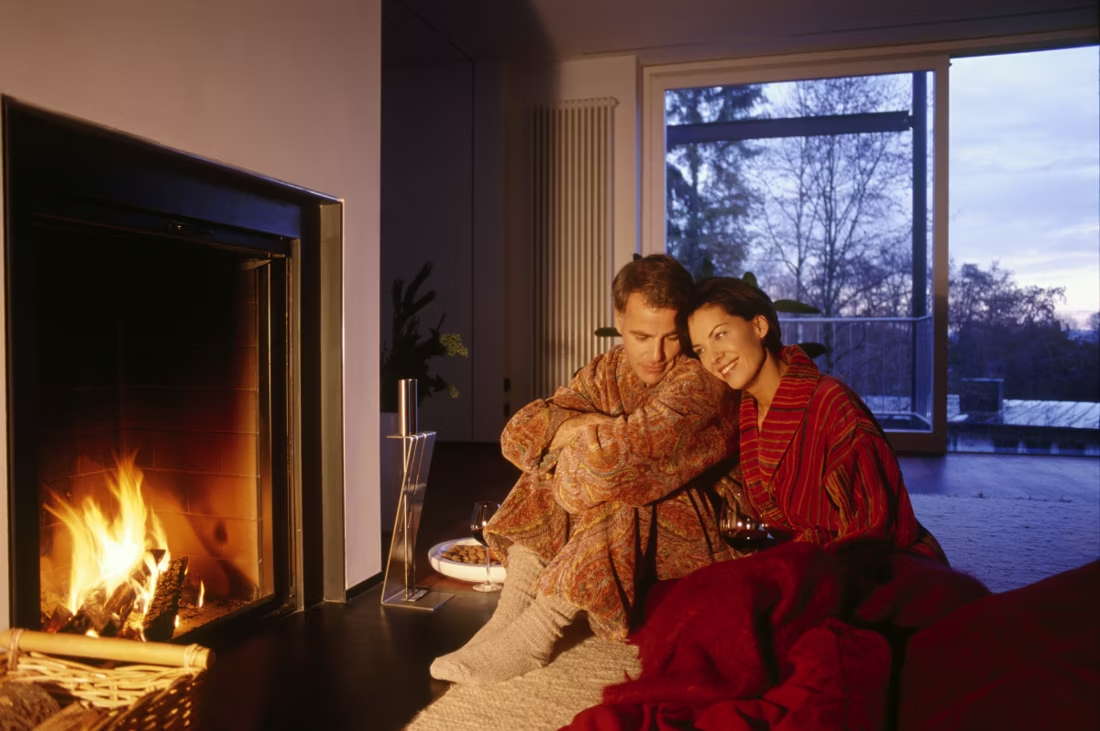
Three steps. No salesperson until you're ready.
Tell us about your project
Your zip code, your situation, and the fuel you're leaning toward—or let the answers point you to one.
See what's actually available
The brands dealers within 100 miles genuinely carry—real options, never a catalog mirage.
Get your dealer & Project Guide
A trusted local dealer, plus the free Project Guide & Parts List that names every component of the job.
Frequently Asked Questions
How much does a wood stove installation cost in Carlisle County?
Most wood stove installations in a rural county like Carlisle run somewhere between $3,000 and $8,000, with the spread driven by whether you're installing into an existing chimney versus running new Class A pipe through a wall or roof, and whether the hearth pad needs to be built out or upgraded to meet clearance requirements. Homes without an existing masonry chimney—common in newer farmhouses and manufactured homes across the county—tend to land on the higher end once full venting is factored in. Because dealer coverage here comes out of Paducah and Mayfield, ask about a travel charge for the install visit; it's usually modest but worth confirming up front.
What size wood stove do I need for my home?
Sizing comes down to square footage, ceiling height, and how drafty the house is—older farmhouses common in Carlisle County often leak more heat than newer construction, which pushes sizing up a notch. A small stove (under 1,000 sq ft) suits a single room or a hunting cabin; a medium stove (1,000–2,000 sq ft) covers most main living areas; a large stove (2,000+ sq ft) can carry a whole well-insulated home through a Zone 4A winter. Given the moderate but real cold here, undersizing is the more common mistake—a stove that can't keep up on the coldest nights of January gets run too hot too often. A local dealer will size your space properly during an in-home visit.
Where can I find a certified wood stove installer near Carlisle County?
Look for installers carrying NFI (National Fireplace Institute) or CSIA (Chimney Safety Institute of America) credentials—those certifications confirm real training in clearance, venting, and code compliance for wood-burning appliances. Because Carlisle County's population doesn't support a dedicated hearth retailer, most homeowners here are served by dealers based out of Paducah or Mayfield who cover the surrounding Purchase counties. That's fine—and often preferable—but it does mean confirming the installer actually services your specific road before you commit. Avoid a general handyman for the venting work; improper chimney clearances are the leading cause of wood stove house fires in older rural homes.
What's the difference between a wood stove and a wood insert for my home?
A wood stove is a freestanding unit sitting on its own hearth pad, which makes it a good fit for the many manufactured and newer-built homes across Carlisle County that don't have an existing masonry fireplace. A wood insert, by contrast, slides into an existing masonry fireplace opening and uses the existing chimney (usually with a stainless liner)—a natural fit for the older farmhouses in the county that already have a working fireplace but want real heat output instead of a decorative, heat-losing open hearth. If you've got the fireplace already, an insert is almost always the more cost-effective upgrade.
Do I need a permit to install a wood stove in Carlisle County?
Yes—new wood stove installations require a building permit, and the unit itself needs to meet current EPA 2020 NSPS emissions standards, which is now standard on every new stove sold by a legitimate dealer. For permitting specifics, Carlisle County residents work through the county's building code enforcement, which for many small Kentucky counties is coordinated regionally rather than through a dedicated county office—your installer will typically know the correct point of contact and handle the paperwork as part of the job. Because Carlisle County has no air quality nonattainment designation, you won't run into the seasonal burn curtailment restrictions that some western states impose.
What's the best wood stove for Carlisle County's climate?
Zone 4A winters here are real but not extreme, so you don't necessarily need the 20+ hour catalytic burn times built for sub-zero northern climates—a solid mid-size non-catalytic stove from a brand like Englander, Drolet, or Pacific Energy handles most Carlisle County homes well, especially burning the oak and hickory that's abundant locally and known for a hot, long-lasting coal bed. Farmhouses with drafty old construction or homes wanting a true off-grid backup during ice-storm power outages should size up and consider a catalytic model for longer, steadier burns. A local dealer can match the stove to your specific house and wood supply.
How often should my chimney be inspected in Carlisle County?
An annual inspection before burning season—ideally in late summer or early fall—is the standard recommendation from the CSIA for any wood-burning appliance in regular use. Households burning oak and hickory as a primary heat source through a full Zone 4A winter should expect at least one full sweep a year, since dense hardwoods like these are excellent fuel but produce plenty of creosote if the stove is run cool or the wood isn't fully seasoned. For rural Carlisle County homes where a chimney fire means waiting on a volunteer fire department, staying current on inspections matters more, not less.
Where can I get firewood in Carlisle County?
With oak, hickory, maple, and cherry standing across the county's farm and bottomland acreage, a lot of Carlisle County households source firewood directly from their own or a neighbor's property rather than buying delivered cords. For those without land access, local sawmills and farm-supply operations in the area often sell seasoned hardwood by the truckload or rick, and it's worth asking specifically for oak or hickory if you want the longest burn times—cherry and maple burn cleaner but faster. Whatever the source, make sure wood is seasoned at least six to twelve months before burning; green hardwood is notorious for smoldering and building up creosote fast.
Wood stove vs. pellet stove—which is right for a Carlisle County home?
Wood stoves run on the oak and hickory already available throughout the county, work with zero electricity, and give you real backup heat when an ice storm takes down power on a rural line—a meaningful consideration for farms and homes on the outskirts of Bardwell. Pellet stoves, running on bags from regional suppliers like Lignetics, Hamer Pellet Fuel, or Greenway Renewable Energy, are more convenient day-to-day—load the hopper, set the thermostat, less mess—but the auger and blower need electricity, so they go dark in an outage unless you add a battery backup. For a county where storm-related outages aren't rare, that tradeoff is worth thinking through before you buy.
What's the difference between an insert and a zero-clearance fireplace?
An insert is a fireplace that slides into a pre-existing wood-burning fireplace—if you don't have one, there's nothing to insert it into. A zero-clearance fireplace is built into a framed wall, which makes it the answer for remodels and new construction. Simple test: existing masonry fireplace means insert; blank or framed wall means zero-clearance.
Why is a fireplace insert so efficient?
An insert does two things: it seals the chimney completely, so you stop losing air you already paid to heat, and it radiates warmth into the room through the firebox and glass. Most add a heat-exchange fan that pulls cool room air underneath, wraps it around the hot firebox, and pushes it back out warm. Your home is more efficient before you've even lit the first fire.
Can I install a fireplace myself?
If you're putting a fire in your house on purpose, it's best to work with an expert. Unless you're genuinely experienced in framing, gas line, vent pipe, and the national code on clearances to combustibles, have a professional do it—and ideally the same company that sells you the fireplace, so warranty, service, and liability all live under one roof.
Can a fireplace actually lower my heating bill?
Yes—by creating a comfort zone. A furnace heats every square foot of the house just to warm the one room you're in; a gas fireplace on low burns roughly a sixth of the gas a typical furnace does. Set the furnace around 55–60 degrees as a baseline, then heat the rooms your family actually uses. Families who heat this way commonly save $20–$60 a month.
Find your wood stove in Carlisle County.
Tell me a bit about your home and I'll match you with a trusted local dealer and send over your free Project Guide & Parts List—the right stove or insert, sized correctly, with the vent kit and parts you'll actually need.
Find Your Fireplace →