
Reliable gas heat for Carlisle County's coldest nights.
From Bardwell out through the farmland of the Jackson Purchase, propane and natural gas fireplaces give Carlisle County homes instant, dependable heat when winter turns sharp. Find the right unit and get matched with a trusted local dealer.
Every Project Starts From One of These Five Situations
Instant heat without the wood pile.
Carlisle County sits in the flat farm country of Kentucky's Jackson Purchase, near where the Mississippi and Ohio Rivers converge. It's a small county—around 1,289 residents spread across Bardwell and the surrounding rural roads—and winters here fall into climate zone 4A: cold enough for hard freezes and the occasional ice event (the 2009 ice storm that knocked out power across western Kentucky for days is still a reference point for a lot of local homeowners), but without the sustained brutal cold of the upper Midwest. For a lot of families, that's exactly the profile where a gas fireplace makes sense: heat when you need it, without tending a fire every night.
Natural gas service is limited in Carlisle County—most homes outside any in-town gas lines run on propane, delivered and serviced by regional suppliers who work the Jackson Purchase counties. Either fuel works well in a modern direct-vent fireplace or insert. There's no countywide building code office handling routine hearth permits the way you'd find in a larger Kentucky county, but gas line work still falls under state licensing requirements—it has to be done by a licensed gas fitter, and a legitimate local dealer will coordinate that as part of the install rather than leaving you to find one yourself.
Three steps. No salesperson until you're ready.
Tell us about your project
Your zip code, your situation, and the fuel you're leaning toward—or let the answers point you to one.
See what's actually available
The brands dealers within 100 miles genuinely carry—real options, never a catalog mirage.
Get your dealer & Project Guide
A trusted local dealer, plus the free Project Guide & Parts List that names every component of the job.
Frequently Asked Questions
How much does a gas fireplace installation cost in Carlisle County?
A typical gas fireplace or insert installation in Carlisle County runs roughly $3,500 to $9,000, depending on the unit, whether you're on propane or have access to natural gas, and how much venting and gas line work is involved. A direct-vent insert going into an existing masonry fireplace with a propane tank already on the property tends to land on the lower end. A new built-in gas fireplace requiring fresh gas line runs, a new propane tank, and framing work sits at the higher end. Because so much of the county is propane-served, ask any local installer whether tank rental, purchase, or a fuel-supply agreement is included in your quote.
Can I convert my existing wood fireplace to gas in Carlisle County?
Yes, and it's a common upgrade for older farmhouses in the county. A gas insert typically slides into your existing masonry fireplace, using a stainless liner run up your current chimney as the vent path. Costs usually run $3,500 to $7,500 depending on the insert and whether the home already has a propane supply line in place versus needing a new tank setup. The conversion keeps the look of the original fireplace opening while eliminating firewood handling and cleanup—a real draw for anyone managing a working farm property where time is tight in winter.
Do I need natural gas, or does propane work for a gas fireplace here?
Propane is the standard choice for most of Carlisle County. Natural gas lines are limited to pockets in and around Bardwell, so if you're out on county roads or farm acreage, plan on propane—either an existing tank if you already heat with it, or a new tank from one of the regional propane suppliers serving western Kentucky. Nearly every gas fireplace model on the market can be configured for propane with the correct orifice and regulator, so fuel availability shouldn't limit which unit you choose. Your local dealer will confirm your fuel source before finalizing a quote.
Will my gas fireplace still work if the power goes out?
Most modern gas fireplaces will, which matters in a county where ice and wind events have knocked out power for days at a time. Units with intermittent pilot ignition (IPI) run on a small battery backup—typically AA batteries inside the unit—that kicks in automatically and lets you light the fireplace on demand even with no electricity. Valor fireplaces take a different approach: the pilot's thermocouple generates its own electricity, so there are no batteries to check or replace at all. If backup heat during an outage is a priority for your Carlisle County home, ask your dealer specifically about the ignition system on any unit you're considering.
What's the difference between a gas fireplace, insert, and stove?
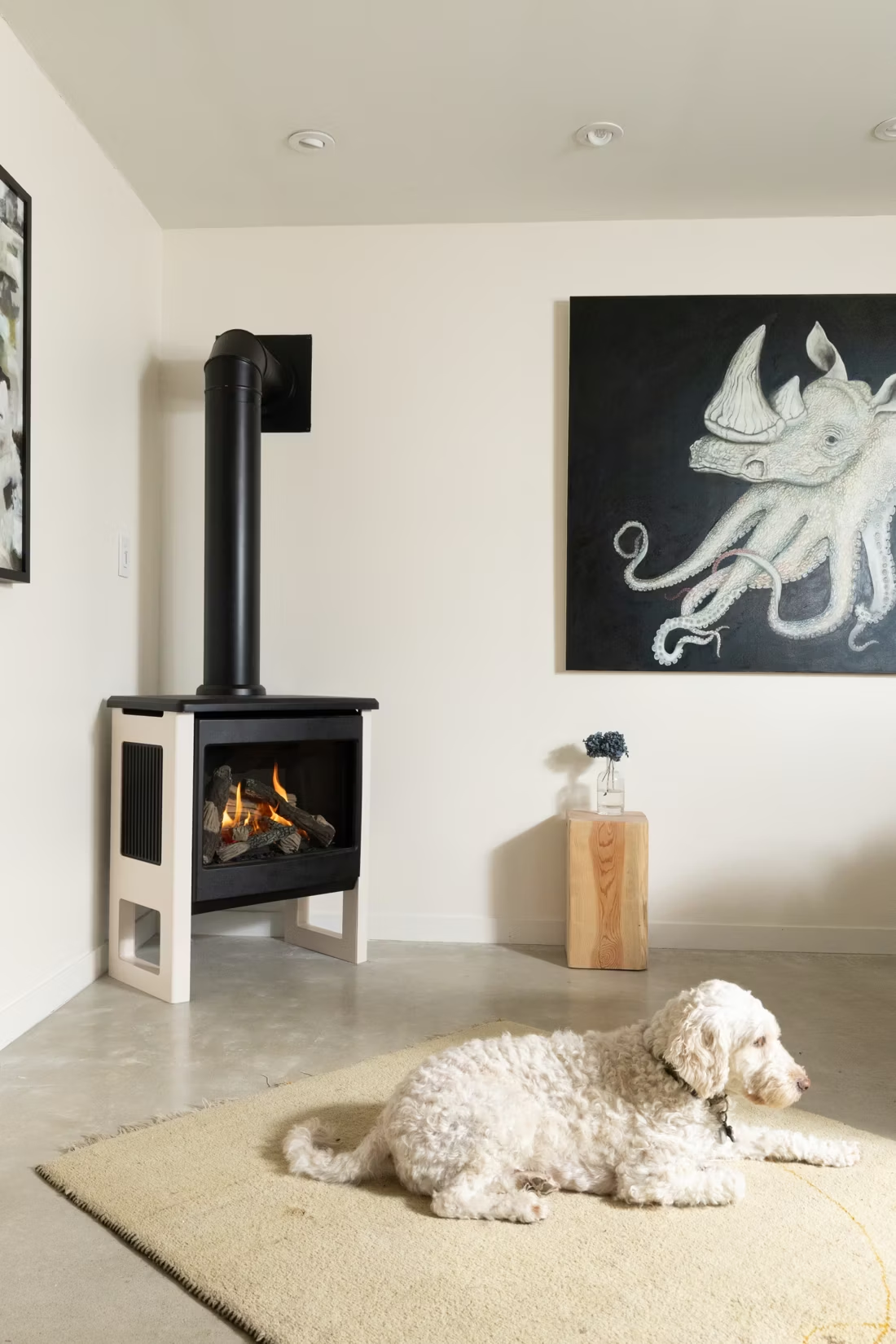
A gas fireplace is a built-in unit framed into a wall—the right choice for new construction or a remodel without an existing fireplace. A gas insert is built to slide into an existing masonry firebox, turning an old wood-burning fireplace into a sealed, efficient gas unit that vents through the same chimney. A gas stove is a freestanding cabinet-style unit that sits on the floor, similar in footprint to a wood stove but gas-fired. For the many older farmhouses in Carlisle County with an existing brick fireplace, an insert is usually the most cost-effective upgrade.
Do I need a permit to install a gas fireplace in Carlisle County?
Carlisle County does not have a countywide residential building permit office handling routine hearth installations the way some larger Kentucky counties do. That said, the gas line work itself is still regulated under Kentucky's gas-fitter licensing requirements, meaning the actual gas hookup has to be performed by a licensed professional regardless of local permitting. A reputable local dealer will handle the gas connection to code, size the venting correctly, and follow manufacturer clearance specs even where there's no local inspector checking the paperwork—that's exactly the corner you don't want cut.
What's the difference between vented and vent-free gas fireplaces?
Vented (direct-vent) gas fireplaces pull combustion air from outside and exhaust the byproducts back outside through sealed venting. Vent-free units burn gas directly into the room air with no outside venting at all—more efficient on paper, but they release water vapor and small amounts of combustion byproducts into the living space, and they come with strict room-size and ventilation requirements. Vent-free units are legal in Kentucky, but for Carlisle County homes, direct-vent is the more common and more broadly recommended option—it delivers real heat without any tradeoff on indoor air quality, which matters in tightly built modern additions as much as in older farmhouses.
How often should a gas fireplace be serviced?
Plan on an annual inspection, ideally before the first cold snap each fall. A technician checks the burner, pilot assembly, gas connections, and venting, and cleans the glass and interior components. This is a much smaller job than chimney sweeping for a wood-burning unit, but it's still the step that catches a failing ignition system or a loose fitting before it becomes a bigger problem. Expect to pay roughly $125 to $200 for a standard annual service call from a qualified hearth or propane technician in the region.
Gas vs. wood—which makes more sense for a Carlisle County home?
Wood has deep roots here—oak, hickory, maple, and cherry are all common on local properties, and a wood stove keeps working during the ice-related power outages the region sees every few winters. Gas offers instant, consistent heat with none of the cutting, stacking, or ash cleanup, which is a real advantage for anyone managing a working farm through calving season or harvest prep. A lot of Carlisle County homeowners end up with both: gas in the main living space for daily convenience, and a wood stove or fireplace somewhere in the house as backup heat for when the power lines come down.
Is my gas fireplace wasting gas?
If it was installed more than 15 years ago, probably. Older gas fireplaces keep a standing pilot light burning all the time, and that little flame can cost a couple hundred dollars a year. Newer models use pilot-on-demand ignition—the pilot lights only when you use the fireplace and goes out when you turn it off.
What's the difference between an insert and a zero-clearance fireplace?
An insert is a fireplace that slides into a pre-existing wood-burning fireplace—if you don't have one, there's nothing to insert it into. A zero-clearance fireplace is built into a framed wall, which makes it the answer for remodels and new construction. Simple test: existing masonry fireplace means insert; blank or framed wall means zero-clearance.
Can I install a fireplace myself?
If you're putting a fire in your house on purpose, it's best to work with an expert. Unless you're genuinely experienced in framing, gas line, vent pipe, and the national code on clearances to combustibles, have a professional do it—and ideally the same company that sells you the fireplace, so warranty, service, and liability all live under one roof.
Can a fireplace actually lower my heating bill?
Yes—by creating a comfort zone. A furnace heats every square foot of the house just to warm the one room you're in; a gas fireplace on low burns roughly a sixth of the gas a typical furnace does. Set the furnace around 55–60 degrees as a baseline, then heat the rooms your family actually uses. Families who heat this way commonly save $20–$60 a month.
Find your gas fireplace in Carlisle County.
Tell us about your home and your propane or natural gas situation, and we'll match you with a trusted local dealer and send over a free Project Guide & Parts List—the exact parts, including the vent kit, for your Carlisle County gas fireplace project.
Find Your Fireplace →