
Set the thermostat, load the hopper, heat your Boyle County home.
Consistent, thermostat-controlled heat for Danville, Perryville, Junction City, and the rest of Boyle County—without the splitting, stacking, and chimney sweeps that come with cordwood. Find the right pellet stove or insert and connect with a trusted local dealer.
Every Project Starts From One of These Five Situations
Steady heat from a fuel you can stack in a closet.
Boyle County sits in Kentucky's Bluegrass region, anchored by Danville and the Centre College campus, with the Perryville battlefield and Junction City rounding out the county's small towns. Winters here are moderate by national standards—Climate Zone 4A, an average winter low near 23°F, and roughly 4,634 heating degree days a year, well under half the heating load of a place like Minneapolis or Madison, Wisconsin. That means most Boyle County homes don't need a stove built to hold a fire through a week of sub-zero nights. What they need is efficient, controllable heat for a season that runs steady from November through March, and pellet stoves fit that job well.
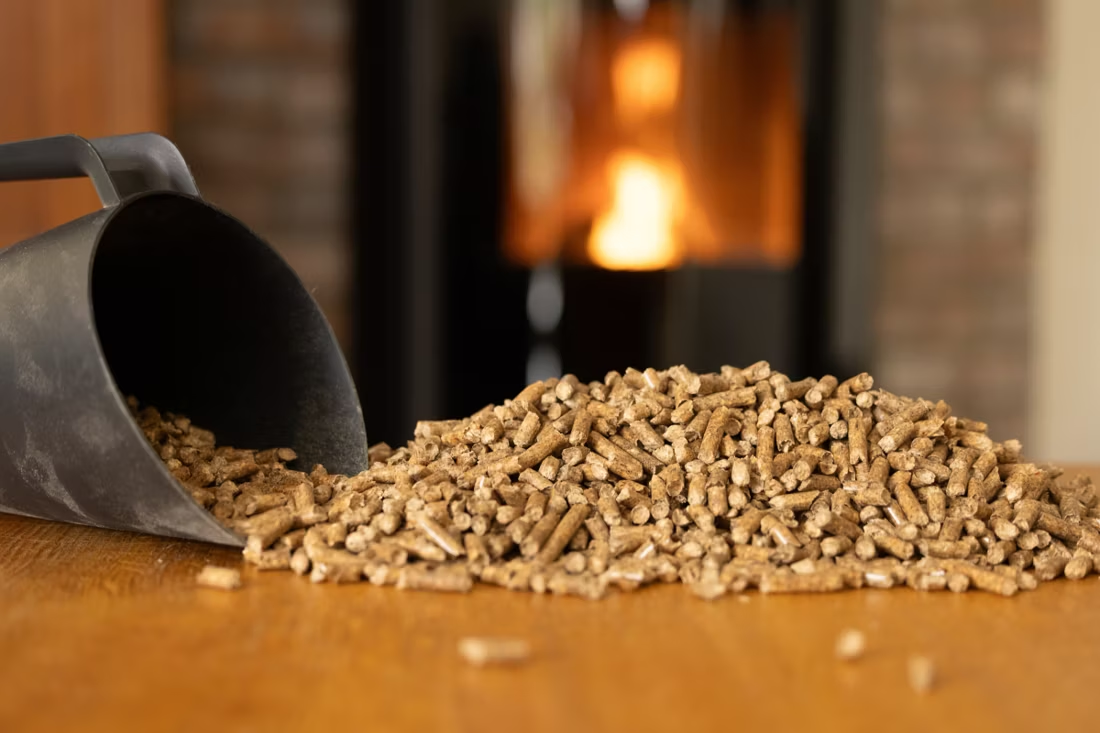
The county's oak, hickory, maple, and cherry forests—including stands accessible through Daniel Boone National Forest cutting permits ($20 per cord, May through October)—have long supported cordwood burning here. Pellet stoves offer an alternative for homeowners who want that same wood-heat feel without the splitting and stacking: load a hopper with bagged pellets from regional suppliers like Lignetics, Hamer Pellet Fuel, or Greenway Renewable Energy, set a thermostat, and let the auger do the rest. Boyle County has no listed wintertime air-quality concerns, so there's no curtailment schedule to plan around—you burn on your own schedule, not the county's.
Three steps. No salesperson until you're ready.
Tell us about your project
Your zip code, your situation, and the fuel you're leaning toward—or let the answers point you to one.
See what's actually available
The brands dealers within 100 miles genuinely carry—real options, never a catalog mirage.
Get your dealer & Project Guide
A trusted local dealer, plus the free Project Guide & Parts List that names every component of the job.
Frequently Asked Questions
How much does a pellet stove installation cost in Boyle County?
Most pellet stove and insert installations in Boyle County run in the $3,000 to $6,500 range, depending on the unit and whether it's a freestanding stove or an insert going into an existing masonry fireplace. Pellet stoves vent through a smaller-diameter pipe than wood stoves and don't require a full Class A chimney system, which typically keeps installed cost below a comparable wood stove install. Inserts that reuse an existing fireplace opening and chimney chase tend to land on the lower end; new freestanding installations with fresh through-wall venting run higher. A local dealer can give you a firm number after seeing your home.
What size pellet stove do I need for my Boyle County home?
With Boyle County's roughly 4,634 annual heating degree days and winter lows typically in the low 20s, most homes here don't need the largest pellet stoves on the market. A small unit (up to roughly 1,000 sq ft) works for a single room or a well-insulated addition. A medium stove (1,000–2,000 sq ft) covers most main living areas in a typical Danville or Junction City home. Homes looking for whole-house primary heat, or older farmhouses with less insulation, generally do better with a larger unit. A dealer sizing your space in person—accounting for insulation, ceiling height, and floor plan—will get you closer than a square-footage chart alone.
Where can I find pellet stove dealers and installers near me in Boyle County?
Look for hearth dealers who carry recognized pellet stove brands and who also stock or can order regional pellet fuel—Lignetics, Hamer Pellet Fuel, and Greenway Renewable Energy are the pellet brands most commonly available in this part of Kentucky. A dealer who sells you both the stove and the fuel usually knows which pellets burn cleanest in which stoves, which matters more than people expect—ash content varies by brand and affects how often you'll need to clean the burn pot. Installers should be comfortable pulling a Boyle County building permit and sizing the vent pipe correctly for your specific model; that's where DIY installs most often go wrong.
Pellet stove or wood stove—which makes more sense in Boyle County?
Boyle County's oak, hickory, maple, and cherry forests, plus $20-per-cord cutting permits through Daniel Boone National Forest (May through October), make wood a genuinely cheap fuel source for anyone willing to cut, split, and stack it. A wood stove also keeps working with zero electricity, which matters during ice storms when power in this part of Kentucky can go down for days. Pellet stoves trade that self-sufficiency for convenience: no cutting, less ash, cleaner glass, and a thermostat that holds a steady temperature overnight without you tending a fire. If you have the time, land, or a permit to cut your own wood, the math often favors wood. If your priority is set-it-and-forget-it heat and you're fine buying bagged fuel each season, pellet is usually the easier day-to-day choice.
Do I need a permit to install a pellet stove in Boyle County?
Most pellet stove and insert installations require a building permit through the county, largely to confirm the venting and clearances meet code. Unlike some Kentucky counties dealing with winter inversion or non-attainment issues, Boyle County has no listed air-quality restrictions, so there's no burn-ban or curtailment schedule affecting when you can run a pellet stove—permitting here is purely a construction and safety matter, not an emissions one. Most local dealers handle the permit application as part of the installation, so it's rarely something homeowners have to manage themselves.
How many bags of pellets do I need to get through a Boyle County winter?
A pellet stove used as a primary heat source through a typical Boyle County heating season (roughly 4,634 heating degree days, running steady from November into March) generally burns through 2 to 3 tons of pellets—about 100 to 150 forty-pound bags. Homes using a pellet stove for supplemental heat in one or two rooms use less, often under a ton for the season. Regional brands like Lignetics, Hamer Pellet Fuel, and Greenway Renewable Energy are sold by the bag, pallet, or ton at hearth dealers and farm supply stores throughout central Kentucky, and buying ahead of the fall rush usually locks in the best price.
Will my pellet stove work if the power goes out?
Not on its own. Pellet stoves rely on an electric auger to feed fuel and a blower to distribute heat, so a standard unit shuts down when the power does—worth knowing given how ice storms occasionally take out power in this part of Kentucky for extended stretches. Some pellet stove models offer a battery backup option or can run off a small generator or inverter for a limited time; ask your dealer specifically about backup power compatibility if outage resilience matters to you. Homes that need heat guaranteed through a multi-day outage often pair a pellet stove with a wood-burning unit elsewhere in the house rather than relying on pellets alone.
Where can I buy pellet fuel in Boyle County?
Lignetics, Hamer Pellet Fuel, and Greenway Renewable Energy are the pellet brands most widely stocked at hearth dealers and farm supply retailers across this part of Kentucky, and most stores that sell pellet stoves also sell the fuel by the bag or by the ton. Pricing typically runs in the $220 to $280 per ton range depending on brand and how early in the season you buy, with premium low-ash blends at the higher end. Buying a season's supply in September or October, before demand picks up, is generally the easiest way to avoid running low mid-winter.
Pellet stove or gas fireplace—which is right for my home?
Gas fireplaces ignite instantly and need almost no day-to-day maintenance beyond an annual service check. Pellet stoves burn a renewable, often locally sourced fuel, produce genuine radiant heat with visible flame, and typically cost less to run per BTU than propane, which is the common gas alternative in unincorporated parts of Boyle County. The tradeoff is upkeep: pellet stoves need the hopper refilled every day or two during heavy use and the burn pot cleaned regularly, while gas units mostly just run. If you want the lowest-maintenance option, gas usually wins; if you want a fuel source with more local control and lower operating cost, pellet is usually worth the extra attention.
What's the difference between an insert and a zero-clearance fireplace?
An insert is a fireplace that slides into a pre-existing wood-burning fireplace—if you don't have one, there's nothing to insert it into. A zero-clearance fireplace is built into a framed wall, which makes it the answer for remodels and new construction. Simple test: existing masonry fireplace means insert; blank or framed wall means zero-clearance.
Why is a fireplace insert so efficient?
An insert does two things: it seals the chimney completely, so you stop losing air you already paid to heat, and it radiates warmth into the room through the firebox and glass. Most add a heat-exchange fan that pulls cool room air underneath, wraps it around the hot firebox, and pushes it back out warm. Your home is more efficient before you've even lit the first fire.
What is an in-home preview and do I need one?
It's a visit where a hearth professional measures your space, confirms the model you picked actually works in your home, and walks the specs—framing, gas line, venting, finish work—before anything is ordered. Some details you just can't know until you see the house. Never make a down payment without one; it's the single most-skipped step that burns buyers.
How much should I budget for a fireplace?
For an average home—covering the fireplace, the vent pipe, and basic installation—a budget between $3,900 and $5,500 gives you a lot of options across wood, gas, and pellet. By the time you add finish work, gas line, and electrical, the average complete installation lands between $5,000 and $12,000 all-in. In a remodel or new build, a good rule is to put about 2.5% of the total project cost toward the fireplace.
Pellet Brands Stocked Around Boyle County
Manufacturers will point you to the nearest stocking dealer.
Find your pellet stove in Boyle County.
Tell us about your home and heating goals, and we'll match you with a trusted local dealer and a free Project Guide & Parts List—the exact parts, including the vent kit, for your pellet stove or insert project in Boyle County.
Find Your Fireplace →