
Plug-in warmth for Danville, Perryville, and all of Boyle County.
No chimney, no gas line, no combustion—just instant zone heat and ambiance for the historic homes of Danville, the farmhouses near Perryville, and everywhere in between. Find the right unit and connect with a trusted local dealer.
Every Project Starts From One of These Five Situations
Simple, safe heat for a mild Bluegrass winter.
Boyle County sits in climate zone 4A, with an average winter low around 23°F and a moderate winter heating season—real winter, but nowhere near the brutal stretch you'd see in a place like Duluth or Fargo. That moderate profile is exactly why electric fireplaces have found a real foothold here. Central HVAC handles the bulk of the heating load in most Boyle County homes, and an electric insert or wall-mounted unit fills the gap: extra warmth in a sunroom, a den, or a farmhouse addition without central ductwork, plus the visual of a fire without adding a single BTU of combustion byproduct to the room.
That matters in particular for Danville's older housing stock—the blocks of 19th-century homes around Centre College and downtown, many with masonry fireplaces that were never designed for wood-burning code compliance or that homeowners simply don't want to alter. An electric insert drops into an existing firebox with no venting, no liner work, and no changes to the historic mantel. Out in Junction City and Parksville, where a good number of homes are manufactured or modular, electric units solve the same problem from the other direction—no clearance-to-combustible headaches, no chimney to build from scratch. Kentucky Utilities (KU) serves most of the county's electric load, and running a typical 1,500-watt unit costs only pennies an hour on a standard residential rate.
Three steps. No salesperson until you're ready.
Tell us about your project
Your zip code, your situation, and the fuel you're leaning toward—or let the answers point you to one.
See what's actually available
The brands dealers within 100 miles genuinely carry—real options, never a catalog mirage.
Get your dealer & Project Guide
A trusted local dealer, plus the free Project Guide & Parts List that names every component of the job.
Frequently Asked Questions
How much does an electric fireplace installation cost in Boyle County?
Most electric fireplace projects in Boyle County run far less than wood or gas installs, since there's no venting or chimney work involved. A plug-in insert or freestanding unit that uses an existing standard outlet can run as little as a few hundred dollars for the unit itself, with no installation labor required beyond mounting. Built-in units—a wall-mounted linear fireplace or a insert wired to a dedicated 20-amp circuit—typically run $800 to $2,500 including electrician labor, drywall or trim work, and the unit. Custom mantel surrounds or recessed installations in Danville's older homes can push toward the higher end depending on carpentry involved.
Do I need a permit to install an electric fireplace in Boyle County?
In most cases, no. A plug-in electric fireplace that runs off an existing standard household outlet doesn't require a permit anywhere in Boyle County—it's treated like any other appliance. Where a permit does come into play is when a unit needs a new dedicated circuit run to the electrical panel; that work should be done by a licensed electrician, who will typically pull an electrical permit through the county or city code office as part of the job. If you're unsure which category your project falls into, ask your local dealer—they'll know whether the specific unit you're considering needs new wiring or just an outlet.
Can I put an electric fireplace in a historic home in Danville without a chimney?
Yes, and it's one of the more common reasons homeowners in Danville's older neighborhoods choose electric over wood or gas. Because electric units produce no combustion byproducts, there's no venting requirement and no need to modify an existing masonry firebox, chimney liner, or hearth. An electric insert can drop directly into an existing fireplace opening—even one that hasn't been used for wood burning in decades—without touching the historic masonry or mantel. It's a practical fix for homes near Centre College and downtown Danville where preservation guidelines or simply the age of the chimney make wood or gas conversion impractical.
What's the difference between an electric insert, electric stove, and wall-mounted electric fireplace?
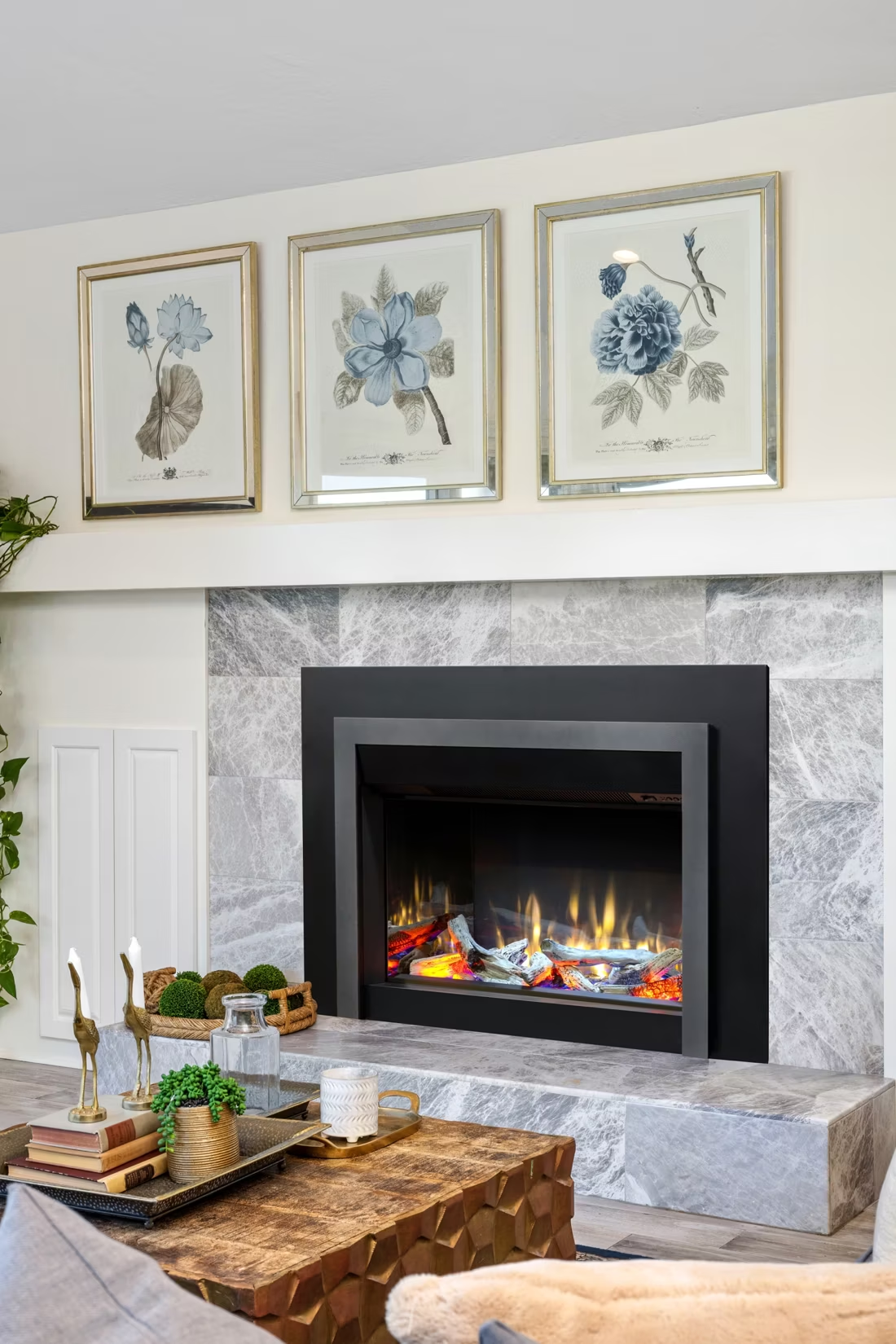
An electric insert is built to slide into an existing fireplace opening, replacing an unused wood or gas firebox with a self-contained heater and flame effect. An electric stove is a freestanding cabinet-style unit designed to sit on the floor, often used to mimic a wood stove's look in a room with no fireplace at all. A wall-mounted or linear electric fireplace is a thin, framed unit installed flush into a wall or mounted on the surface, popular in newer construction and remodels around Danville where a modern, low-profile look is the goal. All three plug into standard power or a dedicated circuit—none require venting.
How much does it cost to run an electric fireplace in Boyle County?
Most electric fireplaces draw around 1,500 watts on the heater setting, which works out to roughly 15 to 20 cents an hour on Kentucky Utilities' typical residential rate—a fraction of what wood or propane costs to produce the same heat. Many units let you run the flame effect alone, without the heater, for pennies an hour, which is popular for ambiance in warmer months. For a household running a unit as supplemental zone heat a few hours a night through a Boyle County winter, expect somewhere in the range of $15 to $40 added to a monthly electric bill, depending on usage.
Is an electric fireplace a good primary or supplemental heat source in Boyle County?
For most Boyle County homes, electric fireplaces work best as supplemental zone heat rather than a primary system—with average winter lows around 23°F and a moderate winter heating season, central HVAC still needs to carry the bulk of the load. Where electric shines is in a specific room: a sunroom or converted porch, a home office, a den added onto an older Danville house without extending ductwork, or a farmhouse bedroom that runs cold. A 1,500-watt unit can comfortably raise the temperature in a single room by several degrees, which covers most of these use cases well.
Can I install an electric fireplace in a manufactured or mobile home in Boyle County?
Yes—electric fireplaces are one of the easiest hearth upgrades for manufactured and modular housing, which makes up a meaningful share of the housing stock in rural parts of the county around Junction City and Parksville. Because there's no combustion, no venting, and minimal clearance-to-combustible requirements compared to wood or gas units, electric fireplaces avoid most of the structural complications that come with adding a wood stove or gas insert to a manufactured home. Wall-mounted units are especially popular in this housing type since they don't require floor space or a hearth pad.
Electric vs. wood—which makes more sense for my Boyle County home?
Wood heat has deep roots in this part of Kentucky—oak, hickory, maple, and cherry are all common locally, and the Daniel Boone National Forest issues cutting permits (around $20 per cord, May through October) for residents who want to cut their own. Wood makes sense for rural Boyle County homes that want real backup heat during a power outage and don't mind the work of hauling and stacking cordwood. Electric makes more sense where convenience matters more than self-sufficiency—apartments and rentals in Danville, historic homes where chimney work isn't practical, or any room where you want fire without smoke, ash, or a woodpile. The trade-off is that electric units won't run without power, so they're not a storm-outage solution the way a wood stove is.
Does an electric fireplace need any venting or minimum clearance?
No venting is required for any electric fireplace—there's no combustion, so there's no exhaust to route outside, which is the single biggest simplification versus wood or gas. Clearance requirements are also minimal compared to wood-burning units; most electric inserts and wall-mounted models can sit close to combustible trim and cabinetry, though you should still follow the manufacturer's specific clearance chart, since it varies by model and wattage. This is part of why electric installs move faster and cost less than wood or gas projects in Boyle County—there's no chimney, liner, or through-wall vent kit to plan around.
Do electric fireplaces actually produce heat?
Yes—most put out around 4,800–5,000 BTUs from a standard outlet, which comfortably warms a bedroom, office, or den as a comfort-zone heater. What they won't do is carry a whole house the way wood, gas, or pellet can. Think of electric as ambiance-first with honest supplemental heat: flames on with no heat in July, flames plus warmth in January.
Can I put a TV above my fireplace?
Yes—with an asterisk. Fireplaces are hot and TVs don't like heat. Either put a mantel between them to deflect rising warmth, or choose a fireplace with heat-management technology that creates a cool zone on the wall above—the wall stays around 125 degrees, barely warm, while the room still gets full heat. If you like clean lines and don't want a mantel, heat management is the answer.
Can I install a fireplace myself?
If you're putting a fire in your house on purpose, it's best to work with an expert. Unless you're genuinely experienced in framing, gas line, vent pipe, and the national code on clearances to combustibles, have a professional do it—and ideally the same company that sells you the fireplace, so warranty, service, and liability all live under one roof.
Does a fireplace add value to my home?
On average, a fireplace adds back to the home about the same amount you spent installing it. Add the monthly savings from heating the rooms you actually use instead of the whole house—often hundreds of dollars a year—and the value case is strong before you even count what a fire does for how your family uses the room.
Find your electric fireplace in Boyle County.
Tell us a bit about your home in Danville, Perryville, Junction City, or elsewhere in Boyle County, and we'll match you with a trusted local dealer and send over a free Project Guide & Parts List—the exact unit, mounting or trim details, and electrical requirements for your space.
Find Your Fireplace →