
Steady pellet heat for Boone County's Ohio Valley winters.
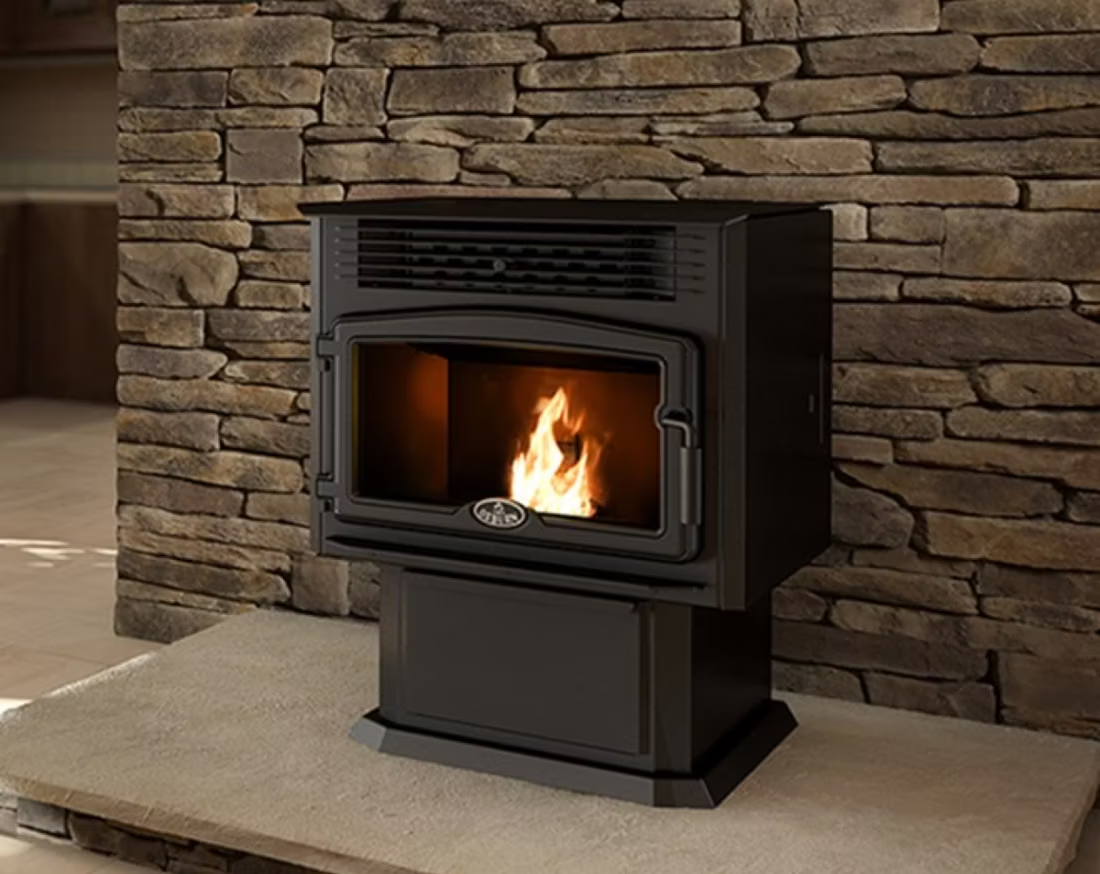
Thermostat-controlled warmth for homes from Florence to Burlington to Hebron—no wood splitting, no ash hauling, just a hopper you fill every couple of days. Find the right unit and connect with a trusted local dealer.
Every Project Starts From One of These Five Situations
Convenient heat that keeps up with Cincinnati-area winters.
Boone County sits across the Ohio River from Cincinnati, anchored by CVG airport and a mix of established towns like Burlington and fast-growing subdivisions around Florence, Union, and Hebron. Winters here average a 23°F overnight low with a moderate winter heating load—real cold, but a fraction of what places like Duluth, MN or Fargo, ND see in a given winter. That milder profile matters for pellet heat: a mid-size unit that would struggle to keep pace in a harsher climate zone can comfortably handle a Boone County living room or open-concept main floor as either primary supplemental heat or genuine zone heating.
With no local air quality non-attainment issues or burn curtailment periods to navigate, Boone County homeowners have more flexibility than residents of stricter-air western counties—you can run a pellet stove whenever you want without checking an advisory first. Regional pellet brands including Lignetics, Hamer Pellet Fuel, and Greenway Renewable Energy supply the Ohio Valley market, so bags are generally easier to source locally than in regions that rely on cross-country shipping. For homeowners who like the idea of wood heat's local hardwoods—oak, hickory, maple, and cherry are all common in Boone County's woodlots—but don't want to deal with splitting, stacking, or seasoning, a pellet stove delivers a similar radiant, homey feel with a fraction of the labor.
Three steps. No salesperson until you're ready.
Tell us about your project
Your zip code, your situation, and the fuel you're leaning toward—or let the answers point you to one.
See what's actually available
The brands dealers within 100 miles genuinely carry—real options, never a catalog mirage.
Get your dealer & Project Guide
A trusted local dealer, plus the free Project Guide & Parts List that names every component of the job.
Frequently Asked Questions
How much does a pellet stove installation cost in Boone County?
A typical pellet stove installation in Boone County runs roughly $3,000 to $6,500. A freestanding pellet stove venting through an exterior wall with a simple PL-vent run sits on the lower end. A pellet insert going into an existing masonry fireplace—which usually needs a liner adapter and sometimes a hearth pad upgrade—runs toward the middle to upper end. Homes without an existing chimney or venting path, or installations requiring longer horizontal vent runs, can push toward $7,000 once materials and labor are factored in. Local hearth dealers will give you a firm number after seeing your fireplace or wall setup in person.
How much do wood pellets cost in Boone County, and where do I buy them?
Wood pellets in the Boone County area typically run $230 to $300 per 40-pound bag ton, a bit below what homeowners in states farther from pellet manufacturing pay in shipping premiums. Lignetics, Hamer Pellet Fuel, and Greenway Renewable Energy all distribute into the Ohio Valley, and bags are commonly stocked at farm supply and home improvement stores as well as by hearth dealers who often offer better per-ton pricing on multi-ton or pallet purchases made in late summer before demand picks up in October and November.
What size pellet stove do I need for my Boone County home?
Because Boone County's climate zone 4A winters are moderate compared to colder regions, most homes here don't need the largest pellet stoves on the market. A small to mid-size unit rated for 1,000 to 1,800 square feet handles a typical Florence or Union ranch or two-story main floor comfortably as zone heat, while larger open floor plans or homes using pellet as a primary heat source may want a unit rated closer to 2,000+ square feet with a bigger hopper for longer unattended burn times. A local dealer will factor in your ceiling height, insulation, and whether the stove is supplemental or primary heat before recommending a model.
Where can I find a certified pellet stove installer near me?
Look for installers with NFI (National Fireplace Institute) pellet-specific certification, which covers the electrical, venting, and clearance requirements unique to pellet appliances—different from wood stove certification since pellet units use forced-air venting and require a dedicated electrical outlet. Hearth dealers serving Boone County generally cover the Florence, Burlington, Union, Hebron, and Walton area, with most installs handled by the same company that sells the unit so warranty and code compliance stay under one roof. Avoid handyman installs for the electrical and venting work—pellet stoves need a properly sized PL-vent run and a grounded outlet within reach of the unit's cord.
Do I need a permit to install a pellet stove in Boone County?
Most pellet stove installations in Boone County require a building permit, typically through Boone County Building Inspection for unincorporated areas, or through the city if you're inside Florence or another incorporated municipality. Because pellet stoves vent through smaller PL-vent pipe rather than a full masonry chimney, the permitting and inspection process is usually quicker than a wood stove or fireplace install. Most local dealers handle the permit application as part of the installation, so it's rarely something you need to manage yourself. There's no burn restriction or curtailment period to worry about once it's installed—Boone County has no air quality non-attainment designation.
What's the best pellet stove for Boone County's climate?
Because Boone County winters are cold but not extreme—a 23°F average overnight low is manageable territory compared to genuinely harsh cold-climate regions—most homeowners here do well with mid-range convection pellet stoves from brands like Harman, Lopi, or Quadra-Fire rather than the largest hopper-capacity units built for sub-zero climates. A stove with a 40-to-60-pound hopper generally gets a Boone County home through an overnight burn without a refill. If you're using the stove as your primary heat source rather than supplemental zone heat, ask your dealer about models with larger hoppers and higher max BTU output for the coldest stretches of January and February.
How much maintenance does a pellet stove need?
Pellet stoves need more frequent light maintenance than wood stoves but far less heavy cleaning. Plan on emptying the ash pan every few days during regular use, wiping the glass weekly, and cleaning the burn pot and exhaust fan monthly during heating season. An annual professional service—checking the auger motor, gaskets, and venting—is recommended before each burning season starts, similar to servicing a furnace. Local dealers and service techs in the Boone County area typically charge $150 to $250 for an annual inspection and cleaning.
What pellet brands are available in Boone County?
Lignetics, Hamer Pellet Fuel, and Greenway Renewable Energy all distribute into the Boone County and greater Cincinnati market, giving homeowners a choice of regionally produced hardwood and softwood blend pellets without relying on long-distance shipping. Quality varies by brand and even by batch, so it's worth trying a bag or two before committing to a pallet—look for low ash content and minimal fines (the sawdust that collects at the bottom of the bag) as signs of a clean-burning pellet. Local hearth dealers can usually point you toward the brand that runs cleanest in the specific stove model you buy from them.
Pellet stove vs. wood stove—which is right for my Boone County home?
Wood stoves offer real ambiance, operate without electricity during power outages, and pair with locally abundant oak, hickory, maple, and cherry—including self-cut wood through Daniel Boone National Forest permits, which run about $20 per cord during the May-to-October cutting season. Pellet stoves trade that self-sufficiency for convenience: no splitting, no seasoning, more consistent heat output, and a cleaner burn with less ash. The tradeoff is that pellet stoves need electricity to run the auger and blower, so they won't provide heat during an outage unless paired with a battery backup. For Boone County's newer subdivisions around Florence and Union where firewood storage space is limited, pellet is often the more practical choice. For rural properties with wood lot access, wood heat still has a strong following.
How often does a pellet stove need cleaning?
A clean pellet stove is a happy pellet stove. Plan on cleaning the burn pot about once a week when you're burning regularly—ash and clinkers gum up the air holes just like a pellet barbecue. Most pellet stove problems trace back to skipped cleaning that nobody explained up front. Some designs make it easy with a trapdoor burn pot: pull a lever and the gunk drops into the ash pan.
Why is my open fireplace making my house colder?
Open fireplaces suck—literally. As the fire burns, it consumes air your furnace already paid to heat and pulls it out through the chimney, so the house is actually colder after the fire goes out than before you lit it. An insert fixes this: it seals the chimney, puts fixed glass across the front, and turns that hole in your house into a real heat source.
Does a fireplace add value to my home?
On average, a fireplace adds back to the home about the same amount you spent installing it. Add the monthly savings from heating the rooms you actually use instead of the whole house—often hundreds of dollars a year—and the value case is strong before you even count what a fire does for how your family uses the room.
Can a fireplace actually lower my heating bill?
Yes—by creating a comfort zone. A furnace heats every square foot of the house just to warm the one room you're in; a gas fireplace on low burns roughly a sixth of the gas a typical furnace does. Set the furnace around 55–60 degrees as a baseline, then heat the rooms your family actually uses. Families who heat this way commonly save $20–$60 a month.
Stove and Fireplace Dealers in Boone County
Listings include WhyFire partner dealers, dealers we have verified as authorized for the brands we recommend, and established local businesses that carry hearth products. Every listing shows which one it is. The ones marked Preferred run on WhyFire's software, so they can show you real pricing and book your appointment right here. No manufacturer pays for placement. How we verify dealers →
Top Quality Building Products
Chimney Top Masonry
Best Cincinnati Chimney
Bona Decorative Hardware
Charlie's Chimney Sweeps & Masonry
Watson's Of Cincinnati
Reading Rock's Fireside Hearth & Home
Pellet Brands Stocked Around Boone County
Manufacturers will point you to the nearest stocking dealer.
Find your pellet stove in Boone County.
Tell us a bit about your home and we'll put together a free Project Guide & Parts List—the right pellet stove or insert, the vent kit it needs, and a trusted local Boone County dealer to install it.
Find Your Fireplace →