
Real Ambiance, Zero Venting, Any Room in Boone County.
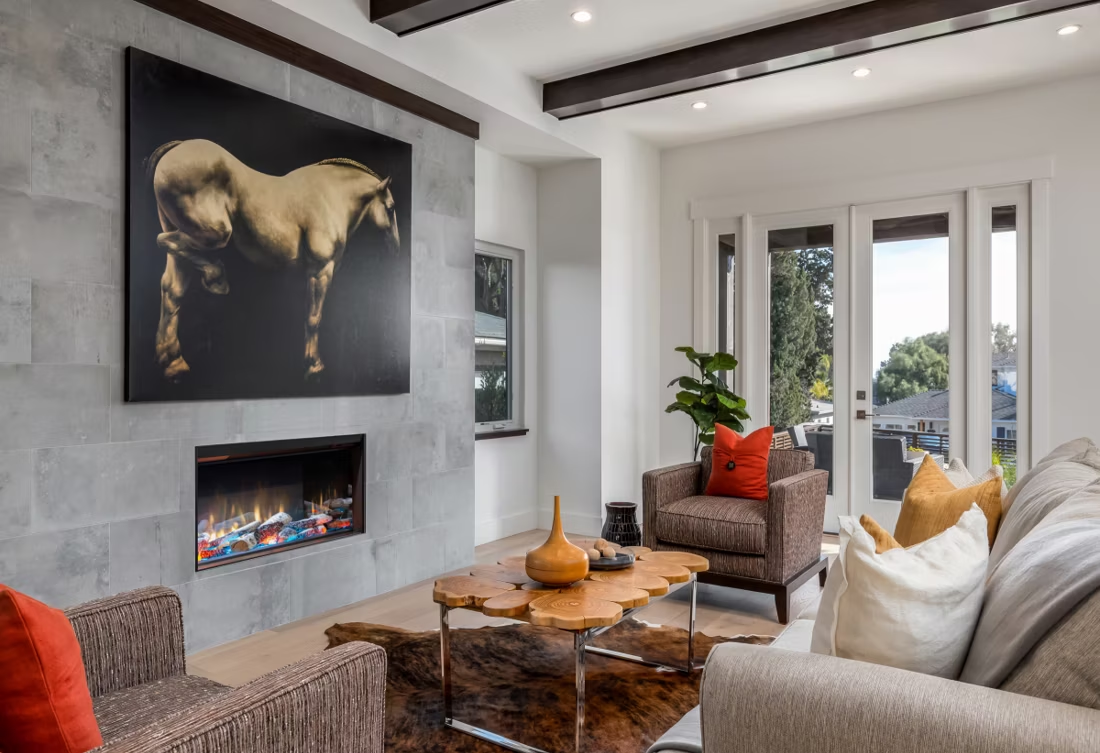
From finished basements in Burlington to new builds near Union and Hebron, electric fireplaces bring instant heat and ambiance to any room in Boone County—no chimney, no gas line, no waiting. Find the right unit and connect with a trusted local dealer.
Every Project Starts From One of These Five Situations
Heat and ambiance without a flue in Boone County.
Boone County sits along the Ohio River across from Cincinnati, anchored by CVG airport and a mix of established towns like Burlington and Walton alongside fast-growing subdivisions around Union and Hebron. The climate here is zone 4A, with winter lows averaging 23°F and a winter heating load noticeably milder than a place like Madison, WI or Minneapolis, which run closer to half again as much heating need. That means most Boone County homes aren't relying on a single heat source to survive the coldest week of winter, which opens the door to electric fireplaces as practical zone heat and ambiance: finished basements, primary suites, home offices, and condos near the airport corridor where running a chimney or gas line isn't realistic.
Plenty of older homes in Burlington and Walton still have masonry fireplaces built for cordwood—oak, hickory, maple, and cherry are all common locally, and residents can cut their own through a Daniel Boone National Forest permit for about $20 per cord during the May-through-October season. But for new construction and renovations across the county, electric fireplaces have become the default upgrade because they need no chimney, no venting, and no combustion permitting—just a standard outlet or, for larger built-ins, a dedicated circuit pulled by a licensed electrician.
Three steps. No salesperson until you're ready.
Tell us about your project
Your zip code, your situation, and the fuel you're leaning toward—or let the answers point you to one.
See what's actually available
The brands dealers within 100 miles genuinely carry—real options, never a catalog mirage.
Get your dealer & Project Guide
A trusted local dealer, plus the free Project Guide & Parts List that names every component of the job.
Frequently Asked Questions
How much does an electric fireplace installation cost in Boone County?
Electric fireplace installations in Boone County typically range from about $300 for a plug-in insert dropped into an existing mantel opening to $2,500–$4,500 for a full built-in unit with custom millwork and a dedicated 240V circuit. Wall-mounted units with basic surface mounting usually run $600–$1,500 including a certified installer. Because there's no chimney work, venting, or gas line to price in, electric installs are consistently the most affordable of the four fuel types available to Boone County homeowners—and among the fastest, often completed in a single day.
Do electric fireplaces actually put out real heat?
Modern electric fireplaces are rated between roughly 4,600 and 9,000 BTU, enough to comfortably warm a single room of 400 to 1,000 square feet. Boone County's winters average 23°F lows with a winter heating load measurably milder than a heating-heavy climate like Minneapolis or Madison, WI—so one well-sized unit can meaningfully take the edge off a chilly evening in a finished basement or home office. Most Boone County homeowners pair an electric fireplace with existing central HVAC rather than expecting it to replace furnace heat on the coldest nights of the year.
Do I need a permit to install an electric fireplace in Boone County?
A basic plug-in electric fireplace needs no permit at all—there's no combustion, so none of the venting or emissions rules that apply to wood and gas installations come into play. Built-in models that require a dedicated 240V circuit typically need only a standard electrical permit, which most licensed electricians pull and close out as part of the job. It's the simplest fuel type to get approved and installed in Boone County, with none of the chimney inspection or gas-line permitting that wood and gas projects involve.
Electric vs. wood—which makes sense for a Boone County home?
Wood heat has deep roots here—oak, hickory, maple, and cherry are all common locally, and residents can cut their own through a Daniel Boone National Forest permit for about $20 per cord during the May-through-October season. Wood remains the better choice if you want real radiant heat that keeps working during a power outage, which matters during the occasional ice storm that hits Northern Kentucky. Electric fireplaces can't run without power and won't replace a furnace on the coldest week of the year, but they require no cutting, hauling, stacking, or chimney sweeping—just a switch or remote. For finished basements, condos, or homes without an existing chimney, electric is usually the practical answer.
Can I convert an existing wood fireplace to electric?
Yes—it's a common project for Boone County homeowners with an older masonry fireplace in Burlington or Walton. An electric insert fits into the existing firebox opening, plugs into a standard outlet or a dedicated circuit for larger units, and requires no liner, venting, or chimney inspection. It's a fast way to bring a dated wood-burning fireplace back into everyday use without the cost or effort of a full gas or wood conversion.
Will my electric fireplace work during a power outage?
No—electric fireplaces stop working the moment the power goes out, which is worth knowing since Duke Energy Kentucky's grid, like any regional utility, can see outages during ice storms and summer thunderstorms. If backup heat during outages matters to your household, a wood stove or a hard-wired gas unit is a better primary choice, with electric reserved for ambiance and everyday supplemental heat. Most Boone County homeowners choosing electric are prioritizing convenience in rooms where backup heat isn't the main concern.
What type of electric fireplace works best for Boone County homes?
For the mix of established homes and new construction around Union and Hebron, wall-mounted and built-in electric fireplaces are the most popular choices—they fit cleanly into modern great rooms and finished basements without altering the structure. Older homes in Burlington and Walton with existing masonry fireplaces often go with a drop-in insert instead. Mantel package units, which combine a surround and heater in one prebuilt piece, are popular for a fast upgrade in a starter home or rental. A local dealer can size the right unit based on your room and whether you want supplemental heat or ambiance only.
Electric vs. gas—which is right for my home?
Gas fireplaces put out more heat per unit and a more realistic flame, but they require a gas line and, in most cases, venting—a larger upfront investment. Electric fireplaces cost less to install, need no venting or gas line work, and can go anywhere there's an outlet, including interior walls, condos, and finished basements where running a flue isn't practical. If your priority is ambiance and modest supplemental heat with the lowest install cost, electric is usually the fit. If you want a fireplace that can meaningfully offset furnace use, gas typically wins on heat output.
How much maintenance does an electric fireplace need?
Electric fireplaces are close to maintenance-free—no chimney sweeping, no annual gas inspection, no creosote to manage. Most owners just vacuum the interior periodically and replace LED components after a decade or more of use, which is roughly when many units reach the end of their service life. Compare that to the annual chimney inspection a wood-burning fireplace needs or the yearly technician visit a gas unit requires, and electric is the lowest-maintenance option available to Boone County homeowners by a wide margin.
Do electric fireplaces actually produce heat?
Yes—most put out around 4,800–5,000 BTUs from a standard outlet, which comfortably warms a bedroom, office, or den as a comfort-zone heater. What they won't do is carry a whole house the way wood, gas, or pellet can. Think of electric as ambiance-first with honest supplemental heat: flames on with no heat in July, flames plus warmth in January.
Does an electric fireplace need a vent or chimney?
No—that's its superpower. An electric fireplace needs a wall and an outlet, period. No vent pipe, no gas line, no clearances to design around, which is why it works in bedrooms, offices, apartments, and walls where venting a gas or wood unit would be impractical or impossible. Installation is typically the simplest and least expensive of any fireplace type.
How much should I budget for a fireplace?
For an average home—covering the fireplace, the vent pipe, and basic installation—a budget between $3,900 and $5,500 gives you a lot of options across wood, gas, and pellet. By the time you add finish work, gas line, and electrical, the average complete installation lands between $5,000 and $12,000 all-in. In a remodel or new build, a good rule is to put about 2.5% of the total project cost toward the fireplace.
What is an in-home preview and do I need one?
It's a visit where a hearth professional measures your space, confirms the model you picked actually works in your home, and walks the specs—framing, gas line, venting, finish work—before anything is ordered. Some details you just can't know until you see the house. Never make a down payment without one; it's the single most-skipped step that burns buyers.
Stove and Fireplace Dealers in Boone County
Listings include WhyFire partner dealers, dealers we have verified as authorized for the brands we recommend, and established local businesses that carry hearth products. Every listing shows which one it is. The ones marked Preferred run on WhyFire's software, so they can show you real pricing and book your appointment right here. No manufacturer pays for placement. How we verify dealers →
Top Quality Building Products
Chimney Top Masonry
Best Cincinnati Chimney
Bona Decorative Hardware
Charlie's Chimney Sweeps & Masonry
Watson's Of Cincinnati
Reading Rock's Fireside Hearth & Home
Find your electric fireplace in Boone County.
Tell us about your room and we'll match you with a trusted local dealer and a free Project Guide & Parts List—the exact parts and plan for your electric fireplace project in Boone County.
Find Your Fireplace →