
Steady pellet heat for Bell County's Appalachian winters.
From Pineville to Middlesboro and up into the hollows near the Cumberland Gap, pellet stoves give Bell County homes consistent, thermostat-controlled heat without the daily wood-hauling. Find the right size unit and connect with a trusted local dealer.
Every Project Starts From One of These Five Situations
Consistent warmth without the woodpile.
Bell County sits at the far southeastern tip of Kentucky, wedged between Pine Mountain and the Cumberland Gap where Kentucky, Virginia, and Tennessee meet. It's steep, mountainous terrain—Middlesboro sits in a crater-shaped valley basin and Pineville hugs the Cumberland River between ridgelines—and winters here run cold enough to matter, with average lows around 23°F and a long, demanding heating season stretching from fall well into spring. That's a real heating season, not a mild inconvenience, especially in the older frame houses and hollow homes scattered up the creek roads outside town.
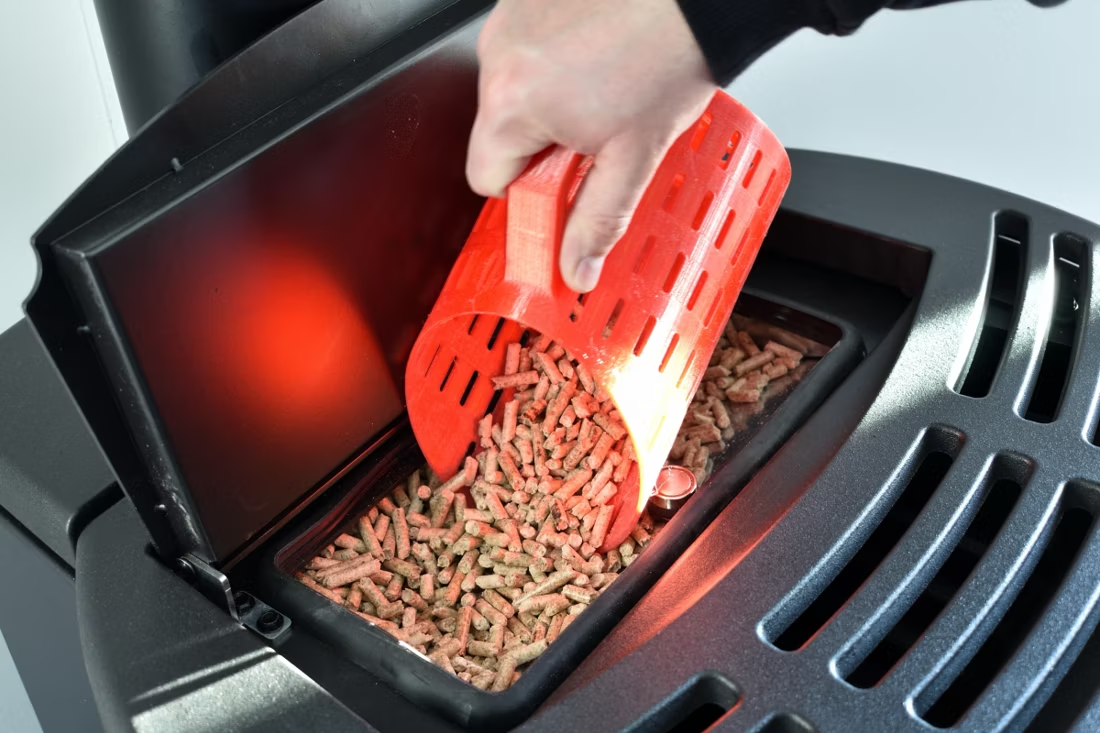
Wood heat has deep roots here—the county's oak, hickory, maple, and cherry forests have kept mountain homes warm for generations—but pellet stoves have become a popular alternative for households that want that same steady radiant heat without splitting, stacking, and hauling cordwood up a hillside driveway. Bell County has no air quality nonattainment issues to work around, so pellet appliances install cleanly almost anywhere in the county. Regional suppliers like Lignetics, Hamer Pellet Fuel, and Greenway Renewable Energy keep bagged pellets reasonably accessible throughout the area, and a pellet insert can go into an existing fireplace opening in homes across Pineville, Middlesboro, or the unincorporated communities along Yellow Creek and Straight Creek without the masonry chimney a wood stove would need.
Three steps. No salesperson until you're ready.
Tell us about your project
Your zip code, your situation, and the fuel you're leaning toward—or let the answers point you to one.
See what's actually available
The brands dealers within 100 miles genuinely carry—real options, never a catalog mirage.
Get your dealer & Project Guide
A trusted local dealer, plus the free Project Guide & Parts List that names every component of the job.
Frequently Asked Questions
How much does a pellet stove installation cost in Bell County?
Most pellet stove and insert installations in this part of Kentucky run in the $3,000 to $6,500 range, depending on whether the unit is a freestanding stove or an insert going into an existing fireplace, and whether the home needs a new dedicated electrical circuit—pellet stoves run an auger and blower, so they draw continuous power unlike a standard wood stove. Homes in Pineville or Middlesboro with an existing masonry fireplace and nearby outlet typically land on the lower end; older mountain homes without a existing hearth or convenient wiring will run higher once venting through an exterior wall and electrical work are added in. A local dealer can give you a firm number after seeing the install location.
What size pellet stove do I need for my Bell County home?
Sizing comes down to square footage, ceiling height, and how drafty the house is—and a lot of Bell County's housing stock is older frame construction up in the hollows, which loses heat faster than newer, tighter builds in town. As a rough guide: smaller units (under 1,000 sq ft) suit a single main living area, mid-size stoves (1,000–1,800 sq ft) cover most modest homes in Pineville or Middlesboro, and larger units handle bigger or leakier houses. If you're heating a home tucked into a hollow with steep shade and less winter sun exposure, size up slightly rather than down—a local retailer will walk your space and give you a specific recommendation rather than a guess.
Where can I buy pellet fuel in Bell County?
Regional brands like Lignetics, Hamer Pellet Fuel, and Greenway Renewable Energy supply much of southeastern Kentucky, and local hearth dealers and farm supply stores typically carry bagged pellets by the ton or by the 40-lb bag, with pricing in line with the rest of the region—generally in the low-to-mid $200s per ton depending on the brand and time of year. Buying a full season's supply in late summer or early fall, before demand picks up, is the most reliable way to make sure you're not scrambling for pellets during a cold snap in January.
Do I need a permit to install a pellet stove in Bell County?
Most jurisdictions in Kentucky require a building permit for a new solid-fuel appliance installation, including pellet stoves, and Bell County is no exception—check with the county building department or your city's office if you're inside Pineville or Middlesboro city limits before installing. In practice, most local hearth dealers handle the permitting as part of the installation, so you're not the one filing paperwork. Because pellet stoves vent through a smaller-diameter PL pipe rather than a full masonry chimney, the inspection process is usually more straightforward than a wood stove install.
Will my pellet stove work during a power outage?
Not without a backup power source—this is the one real tradeoff of pellet heat. The auger that feeds pellets into the burn pot and the blower that circulates heat both run on electricity, so a standard pellet stove goes dark the moment power drops. In the mountain hollows of Bell County, where ice storms can knock out power for a stretch, some homeowners pair their pellet stove with a small battery backup or generator specifically to keep it running through an outage. If uninterrupted backup heat during outages is your top priority, a wood stove is worth considering alongside or instead of pellet—ask a local dealer about both.
What should I look for in a pellet stove for this climate?
With a long, demanding heating season and lows regularly in the low-to-mid 20s, look for a stove with a hopper large enough to get you through an overnight burn without refilling—40-to-60-lb hoppers are common and can run 24 hours or more on a lower burn setting. A stove with a reliable auto-ignition and a thermostat-controlled burn rate will keep the house steady through the swings between a mild Kentucky afternoon and a cold mountain-valley night. Local dealers carrying pellets from Lignetics, Hamer Pellet Fuel, or Greenway Renewable Energy can also tell you which stoves run cleanest on the fuel that's actually available near you.
Can I install a pellet stove without an existing chimney?
Yes—this is one of pellet's biggest advantages for Bell County's older housing stock. Pellet stoves vent through a small-diameter PL (pellet vent) pipe that can run horizontally through an exterior wall, so a home without a masonry chimney or an existing fireplace opening isn't ruled out. That makes pellet a practical option for additions, mobile homes, and the many frame houses around Pineville and Middlesboro that were never built with a chimney in the first place. A wood stove or wood insert, by contrast, generally needs a full Class A chimney system if there's no existing masonry flue.
How often does a pellet stove need to be cleaned and serviced?
Plan on emptying the ash pan every few days during regular use and doing a deeper clean of the burn pot and exhaust venting every few weeks, depending on how many hours a day the stove runs. A full annual service—checking the auger motor, gaskets, blower, and venting—is recommended before each heating season, similar to how a gas appliance gets serviced. Pellet stoves produce far less ash and creosote than wood stoves, but the mechanical components (auger, igniter, blower) are what need attention, so it's worth having a technician familiar with pellet appliances specifically, not just a general chimney sweep.
Pellet vs. wood stove—which makes more sense in Bell County?
Wood is the traditional choice here for good reason—Bell County's oak, hickory, maple, and cherry forests make firewood relatively easy to source, and a wood stove keeps running through a power outage without any backup equipment, which matters in the hollows where ice storms occasionally take the lines down. Pellet stoves trade that off for real convenience: no splitting or stacking, a steadier and more controllable burn, and often a cleaner venting install for homes without an existing chimney. Many Bell County households end up choosing based on which they already have on hand—an existing fireplace opening points toward a pellet insert, a need for guaranteed heat during outages points toward wood. A local dealer carrying both can help you weigh it against your specific house.
Why is my open fireplace making my house colder?
Open fireplaces suck—literally. As the fire burns, it consumes air your furnace already paid to heat and pulls it out through the chimney, so the house is actually colder after the fire goes out than before you lit it. An insert fixes this: it seals the chimney, puts fixed glass across the front, and turns that hole in your house into a real heat source.
How often does a pellet stove need cleaning?
A clean pellet stove is a happy pellet stove. Plan on cleaning the burn pot about once a week when you're burning regularly—ash and clinkers gum up the air holes just like a pellet barbecue. Most pellet stove problems trace back to skipped cleaning that nobody explained up front. Some designs make it easy with a trapdoor burn pot: pull a lever and the gunk drops into the ash pan.
Does a fireplace add value to my home?
On average, a fireplace adds back to the home about the same amount you spent installing it. Add the monthly savings from heating the rooms you actually use instead of the whole house—often hundreds of dollars a year—and the value case is strong before you even count what a fire does for how your family uses the room.
Can a fireplace actually lower my heating bill?
Yes—by creating a comfort zone. A furnace heats every square foot of the house just to warm the one room you're in; a gas fireplace on low burns roughly a sixth of the gas a typical furnace does. Set the furnace around 55–60 degrees as a baseline, then heat the rooms your family actually uses. Families who heat this way commonly save $20–$60 a month.
Pellet Brands Stocked Around Bell County
Manufacturers will point you to the nearest stocking dealer.
Find your pellet stove in Bell County.
Tell us a bit about your home and we'll match you with the right pellet stove or insert, plus a free Project Guide & Parts List—the vent kit and parts your project needs—and a trusted local dealer to install it.
Find Your Fireplace →