
Find your electric fireplace in Bell County, Kentucky.
Clean, no-mess heat and ambiance for homes tucked between Pine Mountain and Cumberland Gap—no chimney, no gas line, no combustion byproducts. Find the right unit and get matched with a trusted local dealer.
Every Project Starts From One of These Five Situations
Clean, zone heat for Bell County's mountain homes.
Bell County sits in the folded ridges of southeastern Kentucky, wedged between Pine Mountain and Cumberland Mountain near the Virginia and Tennessee lines, with Pineville and Middlesboro as its two population centers and Cumberland Gap National Historical Park drawing visitors to cabins and rentals throughout the area. With winters comparable to Knoxville, TN and a winter low averaging 23°F, this is a mixed-humid climate zone (4A)—cold enough for real heating season, but nowhere near the extremes of places like Duluth, MN or Burlington, VT. That moderation matters for electric heat: it's a realistic option here in a way it wouldn't be much farther north.
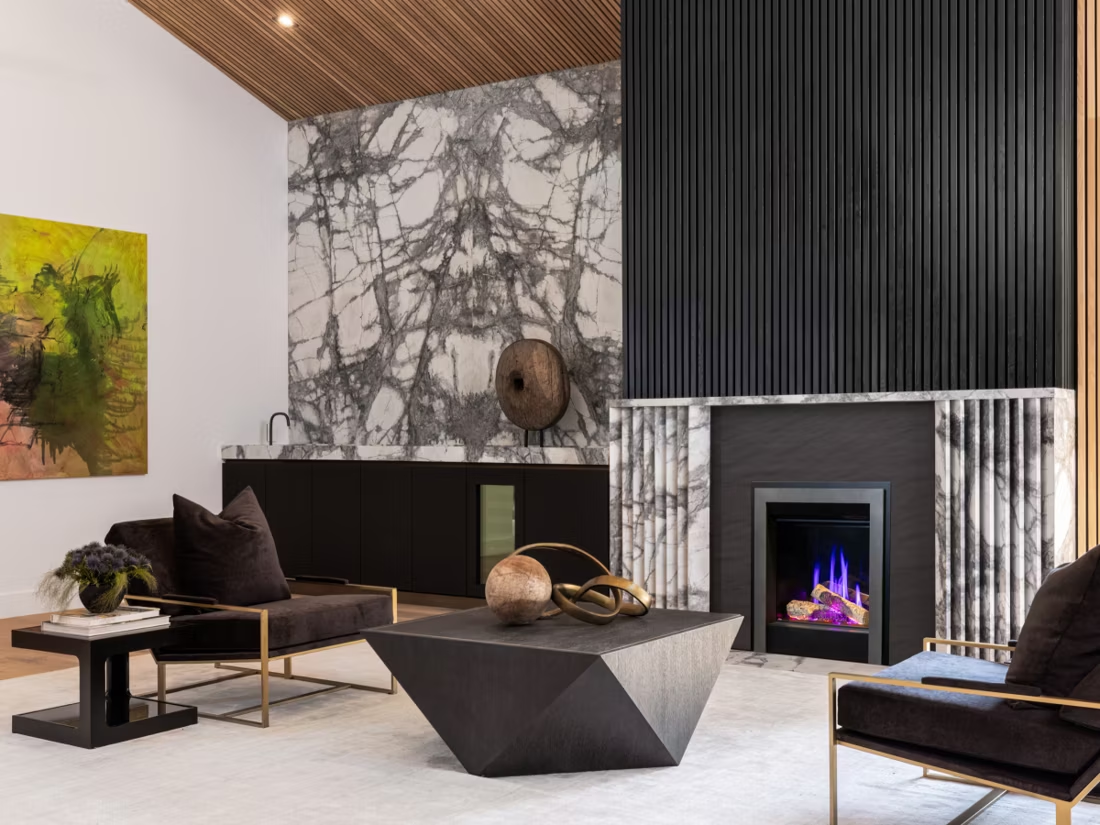
Coal and wood heat run deep in this region's heritage, and plenty of Bell County homes still burn oak, hickory, or maple cut from the surrounding hills. But electric fireplaces have carved out a real niche—in newer construction around Middlesboro, in condos and rentals without a chimney, in older Pineville homes where running a new gas line isn't practical, and in the mountain cabins that cater to Cumberland Gap tourism. Power comes off the Kentucky Utilities grid throughout most of the county, so there's no fuel delivery to schedule and no combustion byproducts to vent. A built-in unit on a dedicated circuit, installed by a local electrician or hearth dealer, gives you supplemental zone heat and real flame-effect ambiance without touching your home's existing heating system.
Three steps. No salesperson until you're ready.
Tell us about your project
Your zip code, your situation, and the fuel you're leaning toward—or let the answers point you to one.
See what's actually available
The brands dealers within 100 miles genuinely carry—real options, never a catalog mirage.
Get your dealer & Project Guide
A trusted local dealer, plus the free Project Guide & Parts List that names every component of the job.
Frequently Asked Questions
How much does an electric fireplace installation cost in Bell County?
A simple plug-in electric insert into an existing fireplace opening runs $300 to $800 for the unit alone, with little to no installation labor since it just plugs into a standard outlet. A built-in wall unit or a linear electric fireplace set into new framing—the more common choice for Middlesboro new construction or a Pineville remodel—typically runs $1,500 to $4,000 once you factor in a dedicated 20-amp circuit, wall framing or a mantel surround, and finish work. Costs run higher if an electrician has to run new wiring any distance from your panel, which is common in older county homes with limited circuit capacity.
Can an electric fireplace actually heat a room in Bell County's winters?
Most electric fireplaces are rated around 4,600 to 5,000 BTU and are designed to comfortably heat a single room of 400 to 1,000 square feet—plenty for a living room or den given Bell County's 23°F average winter low. They're not built to replace a furnace or heat pump across a whole house, and I wouldn't recommend relying on one as your only heat source during a hard cold snap. Where they earn their keep is zone heating: warming the room you're actually using so your central system can run less, plus backup ambiance during the kind of ice-related outages that occasionally hit this part of the mountains—though keep in mind an electric fireplace still needs grid power to run.
Electric vs. wood—which makes more sense for my Bell County home?
Wood remains a strong choice here, with plenty of oak, hickory, maple, and cherry available locally and no air quality restrictions on burning in Bell County. Wood heat also keeps working during a power outage, which matters on mountain roads where storm response can take a while. Electric wins on convenience and clean living space—no ash, no creosote, no chimney to maintain, and it can go into rooms and rental units where a wood stove simply isn't practical. A lot of Bell County homeowners end up with both: wood as a serious heat source in the main living area, and a smaller electric unit in a bedroom, basement, or guest space where running a flue isn't worth it.
Do I need a permit to install an electric fireplace in Bell County?
A simple plug-in insert that uses an existing outlet doesn't require a permit. A built-in unit that needs a new dedicated circuit does require an electrical permit, typically through the Bell County building and codes office or, for work inside Pineville or Middlesboro city limits, the relevant city building department. Most local electricians and hearth dealers handle this paperwork as part of the installation, so it's rarely something the homeowner has to manage directly—but it's worth confirming before work starts, especially in older homes where panel capacity may need an upgrade first.
What's the difference between a plug-in insert and a built-in electric fireplace?
A plug-in insert drops into an existing fireplace opening or a simple cabinet and runs off a standard household outlet—no electrician needed, and it's the easiest way to add electric flame and heat to a Pineville or Middlesboro home with an old unused fireplace. A built-in unit is installed into a wall, framed enclosure, or custom mantel, usually wired to its own circuit for full heating output, and it reads more like a permanent fixture than a supplemental appliance. For county homes without an existing fireplace opening—a lot of newer Middlesboro construction falls into this category—a built-in linear unit is generally the better-looking, better-performing option.
How much does it cost to run an electric fireplace in Bell County?
Running a typical 1,500-watt electric fireplace on the heat setting for a few hours an evening costs somewhere in the range of a few dollars a week at standard Kentucky Utilities residential rates—meaningfully less than heating an entire home, since you're only warming the room you're in. Many units also let you run the flame effect with the heater off, which draws only a fraction of the wattage—useful if you just want the visual on a mild evening without adding heat to a room that doesn't need it.
Will an electric fireplace work in an older Bell County home without a chimney?
Yes—that's actually where electric units solve a real problem. A lot of the older housing stock around Pineville and up into the county's coal-camp communities was never built with a masonry chimney, which rules out wood or many gas options without significant construction. An electric fireplace needs no venting, no flue, and no clearance to combustibles beyond the manufacturer's stated spacing, so it can go into an interior wall, a converted closet, or a simple built-in surround in a home that could never support a traditional hearth.
Electric vs. gas—which is the better fit in Bell County?
Natural gas service is limited outside of Pineville and Middlesboro, so a gas fireplace in most of rural Bell County means running on propane, with a tank to site and refill. Electric skips that entirely—no fuel deliveries, no tank, no gas line permit—which makes it the simpler option for a lot of county homes, especially rentals and cabins near Cumberland Gap where low-maintenance operation matters more than maximum heat output. Where a homeowner wants stronger, whole-room heat and already has gas or propane infrastructure, a gas insert is worth a look too. A local dealer can walk through both given your specific home.
Where can I find a local dealer to install an electric fireplace in Bell County?
Look for a hearth dealer or licensed electrician with experience installing built-in electric units, not just a big-box appliance seller—proper circuit sizing and clearance placement matter for a clean, safe install, especially in older homes around Pineville and Middlesboro where panel capacity can be tight. A dealer who regularly works in Bell County will also know which built-in models hold up well as supplemental heat through a real Appalachian winter versus units meant purely for warm-climate ambiance.
Do electric fireplaces actually produce heat?
Yes—most put out around 4,800–5,000 BTUs from a standard outlet, which comfortably warms a bedroom, office, or den as a comfort-zone heater. What they won't do is carry a whole house the way wood, gas, or pellet can. Think of electric as ambiance-first with honest supplemental heat: flames on with no heat in July, flames plus warmth in January.
Does an electric fireplace need a vent or chimney?
No—that's its superpower. An electric fireplace needs a wall and an outlet, period. No vent pipe, no gas line, no clearances to design around, which is why it works in bedrooms, offices, apartments, and walls where venting a gas or wood unit would be impractical or impossible. Installation is typically the simplest and least expensive of any fireplace type.
Does a fireplace add value to my home?
On average, a fireplace adds back to the home about the same amount you spent installing it. Add the monthly savings from heating the rooms you actually use instead of the whole house—often hundreds of dollars a year—and the value case is strong before you even count what a fire does for how your family uses the room.
What is an in-home preview and do I need one?
It's a visit where a hearth professional measures your space, confirms the model you picked actually works in your home, and walks the specs—framing, gas line, venting, finish work—before anything is ordered. Some details you just can't know until you see the house. Never make a down payment without one; it's the single most-skipped step that burns buyers.
Find your electric fireplace in Bell County.
Tell us about your home and we'll match you with a trusted local dealer and send over a free Project Guide & Parts List—sized for your room, with the exact parts and installer recommended for your Bell County home.
Find Your Fireplace →