
Find the right gas fireplace for your Ballard County home.
Reliable, instant heat for the river-bottom winters around Wickliczffe, Bardwell, and La Center—matched with a local dealer who knows the propane and gas-line realities of rural Ballard County.
Every Project Starts From One of These Five Situations
Steady warmth without tending a woodpile.
Ballard County sits at the far western tip of Kentucky, where the Mississippi and Ohio rivers meet—flat farmland, a Climate Zone 4A profile, and winters that bring damp cold and occasional ice rather than the deep sub-zero stretches you'd see in a place like Fargo, ND. It's not an extreme climate, but the humidity off the rivers makes a still, cold January night feel colder than the thermometer suggests—exactly the kind of evening where a gas fireplace earns its keep with heat on demand, no kindling required.
Most of rural Ballard County—including farmsteads and homes outside Wickliffe and Bardwell—runs on propane rather than piped natural gas, so a fireplace project here usually starts with a conversation about tank size and fuel line routing, not just unit selection. Homeowners closer to town may have natural gas access through the local utility. Either way, a direct-vent gas insert or freestanding gas stove gives this county's older farmhouses and newer ranch homes alike a clean, low-maintenance heat source that doesn't require a woodpile out back—though plenty of local families still keep oak and hickory on hand for the wood stove in the barn or shop.
Three steps. No salesperson until you're ready.
Tell us about your project
Your zip code, your situation, and the fuel you're leaning toward—or let the answers point you to one.
See what's actually available
The brands dealers within 100 miles genuinely carry—real options, never a catalog mirage.
Get your dealer & Project Guide
A trusted local dealer, plus the free Project Guide & Parts List that names every component of the job.
Frequently Asked Questions
How much does a gas fireplace installation cost in Ballard County?
Gas fireplace and insert installations in rural western Kentucky counties like Ballard typically run $4,000 to $10,000, depending on whether you're converting an existing masonry fireplace, running new gas line from a propane tank, or building out a fresh install in a room with no chimney at all. Homes already set up with a propane tank and regulator tend to land on the lower end. Projects that require a new tank installation, a longer buried line run across a rural lot, or significant framing work push toward the higher end. A local dealer will size this up accurately during an in-home visit—Ballard County's spread-out farm properties often mean line-run distance matters more here than it would in a denser subdivision.
Can I convert my existing wood fireplace to gas?
Yes, and it's a common upgrade in Ballard County's older farmhouses, many of which have a masonry fireplace that's rarely used because tending a wood fire during calving season or planting season just isn't practical. A gas insert slides into the existing firebox and uses a stainless liner run up your current chimney, so you keep the look of the original fireplace while gaining instant, thermostat-controlled heat. Since most of the county runs on propane, your installer will also confirm tank capacity and line sizing can support the added draw—that's a step homeowners closer to a natural gas line in town don't need to worry about as much.
Do I need natural gas, or can I run my fireplace on propane?
Propane is the standard fuel for most of Ballard County outside the immediate area around Wickliffe or Bardwell where natural gas lines may reach. If you already heat your home or run a range on propane, adding a fireplace usually means tapping into your existing tank and running a dedicated line, sized correctly by your installer. If you're in one of the pockets with natural gas service, your dealer can confirm availability and hook into that line instead. Nearly every gas fireplace and insert on the market can be configured for either fuel—it's a matter of the correct orifice and regulator setup at install, not a different product line.
Will my gas fireplace still work if the power goes out?
Most will, which matters in a county where ice storms off the rivers can knock out power for a stretch. Units with intermittent pilot ignition (IPI) include a battery backup that keeps the fireplace lighting on demand even with the electricity out—just remember to swap the batteries occasionally so they're ready when you need them. Valor fireplaces take a different route: the pilot's thermocouple generates its own electricity, so there's no battery to maintain at all. For a rural Ballard County property where a downed line might mean no power for a day or two, that kind of self-sufficient ignition is worth asking your local dealer about directly.
What's the difference between a gas fireplace, insert, and stove?
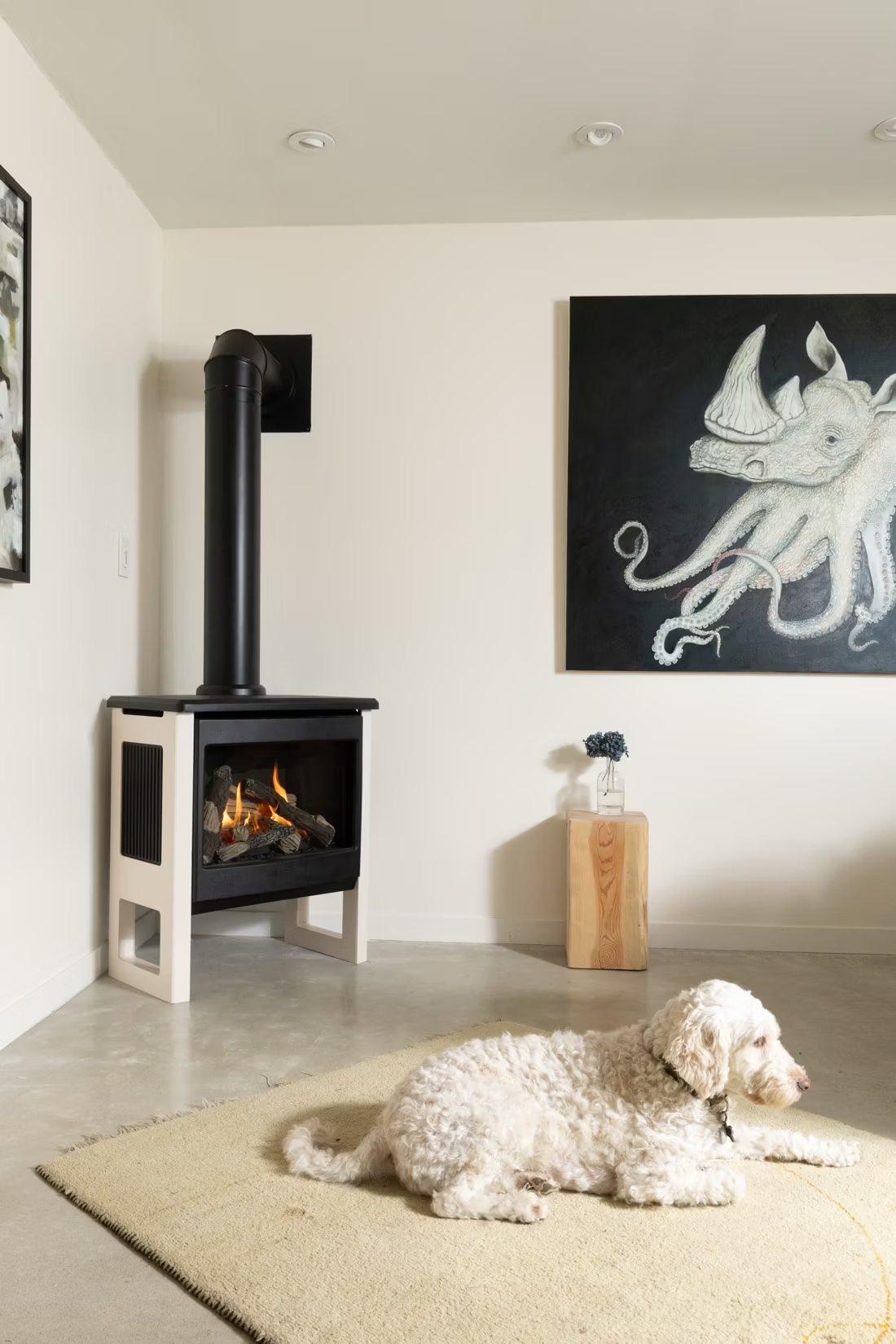
A gas fireplace is a built-in unit framed into a wall, typically chosen for new construction or a full remodel. A gas insert is built to drop into an existing masonry firebox, converting an old wood-burning fireplace into a sealed, efficient gas unit using the same chimney. A gas stove is a freestanding cabinet-style unit that sits on the floor, similar in footprint to a wood stove but running on gas. In Ballard County, where a lot of the housing stock includes older farmhouses with existing fireplaces, an insert is often the natural fit—but newer homes without a chimney lean toward a built-in fireplace or a freestanding stove instead.
Do I need a permit to install a gas fireplace in Ballard County?
Most gas fireplace installations require both a building permit and sign-off on the gas line work, which needs to be done by a licensed gas-fitter regardless of whether you're on propane or natural gas. A trusted local dealer typically manages this paperwork as part of the installation rather than leaving you to coordinate the trades yourself. If you're adding or upsizing a propane tank as part of the project, your propane supplier will also have its own siting and safety requirements to satisfy.
What's the difference between vented and vent-free gas fireplaces?
Vented gas fireplaces—direct-vent or B-vent—pull combustion air from outside and exhaust the byproducts back outside through sealed venting, which keeps indoor air quality clean and is code-approved everywhere. Vent-free units burn directly into the room air, which makes them simpler to install but means some moisture and combustion byproducts stay indoors, and they come with strict room-sizing and ventilation rules. Vent-free models are legal in Kentucky, but for Ballard County's older, often tightly sealed farmhouses, a direct-vent unit is usually the safer and more comfortable long-term choice—your local dealer can walk you through both if you want to weigh the tradeoffs yourself.
How often should a gas fireplace be serviced?
Plan on an annual checkup—a technician inspects the burner, pilot assembly, venting, and gas connections, and cleans the glass and interior components. It's a much lighter lift than an annual wood-stove chimney sweep, but it matters just as much for safe operation, especially on a unit that's run daily through a damp western Kentucky winter. Local gas appliance service providers typically charge in the $150–$250 range for this inspection.
Gas vs. wood—which makes more sense for a Ballard County home?
Wood still has a strong following here—oak, hickory, maple, and cherry are all common on local properties, and a wood stove keeps burning even when the power's out. Gas trades that off for push-button convenience: no hauling, no ash, no creosote buildup, and steady heat you can dial in and walk away from. For a primary living space in a farmhouse or a newer build near Wickliffe or Bardwell, gas is often the practical daily choice, while a wood stove in a shop, barn, or secondary room keeps the self-sufficient backup option in place. Plenty of households in the county run both.
What's the difference between an insert and a zero-clearance fireplace?
An insert is a fireplace that slides into a pre-existing wood-burning fireplace—if you don't have one, there's nothing to insert it into. A zero-clearance fireplace is built into a framed wall, which makes it the answer for remodels and new construction. Simple test: existing masonry fireplace means insert; blank or framed wall means zero-clearance.
Can I put a TV above my fireplace?
Yes—with an asterisk. Fireplaces are hot and TVs don't like heat. Either put a mantel between them to deflect rising warmth, or choose a fireplace with heat-management technology that creates a cool zone on the wall above—the wall stays around 125 degrees, barely warm, while the room still gets full heat. If you like clean lines and don't want a mantel, heat management is the answer.
Does a fireplace add value to my home?
On average, a fireplace adds back to the home about the same amount you spent installing it. Add the monthly savings from heating the rooms you actually use instead of the whole house—often hundreds of dollars a year—and the value case is strong before you even count what a fire does for how your family uses the room.
What is an in-home preview and do I need one?
It's a visit where a hearth professional measures your space, confirms the model you picked actually works in your home, and walks the specs—framing, gas line, venting, finish work—before anything is ordered. Some details you just can't know until you see the house. Never make a down payment without one; it's the single most-skipped step that burns buyers.
Get your Ballard County gas fireplace Project Guide & Parts List.
Tell us about your home and we'll match you with a trusted local dealer serving Ballard County, then send over a free Project Guide & Parts List—the exact parts, vent kit, and recommended installer for your gas fireplace project.
Find Your Fireplace →