
Every fuel type, every town in Ballard County.
Wood, gas, pellet, and electric fireplace resources for the whole county—from the river bottoms around Wickliffe to Barlow and La Center. Pick a fuel and get matched with a local dealer who actually installs it here.
Every Project Starts From One of These Five Situations
Mixed-humid winters, oak-hickory bottomland forests, and a county of 3,050 people.
Ballard County sits at the confluence of the Ohio and Mississippi Rivers in Kentucky's Jackson Purchase region, a flat, river-bottom landscape a world away from the mountain counties further east. Climate zone 4A here means winters are cold enough to run a stove daily for months, but nowhere near the sub-zero stretches of a place like Duluth, Minnesota—this is a moderate, mixed-humid heating season. Oak, hickory, maple, and cherry fill the county's bottomland forests and fencerows, and with just over 3,050 residents spread across Wickliffe, Barlow, and La Center, seasoned local firewood tends to be cheap and easy to come by.
Ballard County has no designated air quality concerns and no seasonal burn restrictions, which is a real difference from non-attainment counties elsewhere in the region—homeowners here can run an EPA-certified wood or pellet stove through the winter without worrying about curtailment days. Natural gas service is limited mostly to town limits like Wickliffe, so propane fills the gap for gas fireplaces and inserts across most of the rural county. Pellet stove owners generally stock up on Lignetics, Hamer Pellet Fuel, or Greenway Renewable Energy bags through regional farm and hardware suppliers near Paducah. This hub rolls up hearth retailers, service techs, and fuel suppliers across the whole county—pick your fuel below for local dealers, install costs, and unit recommendations specific to your town.
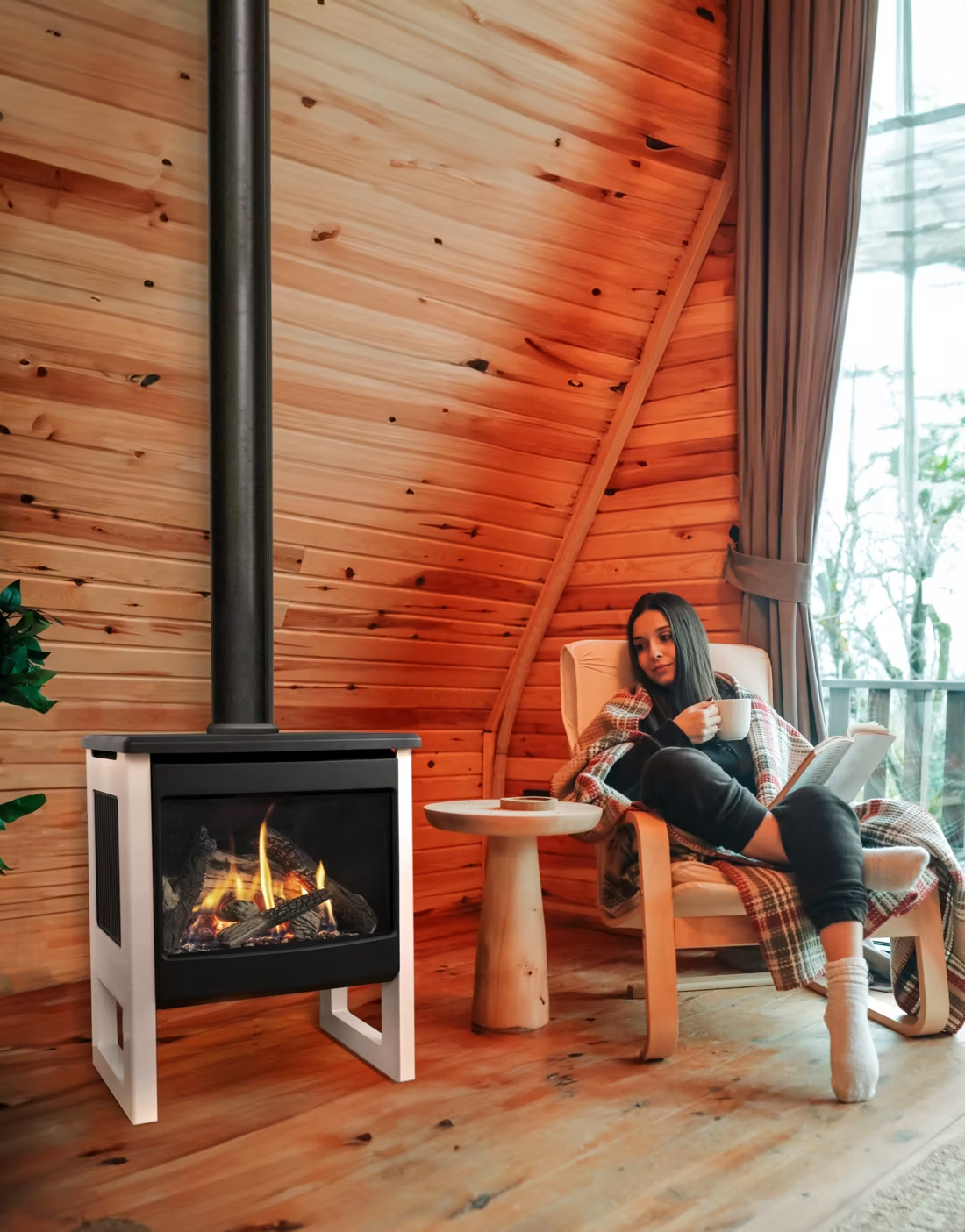
Four fuels. One honest answer for Ballard County.
Three steps. No salesperson until you're ready.
Tell us about your project
Your zip code, your situation, and the fuel you're leaning toward—or let the answers point you to one.
See what's actually available
The brands dealers within 100 miles genuinely carry—real options, never a catalog mirage.
Get your dealer & Project Guide
A trusted local dealer, plus the free Project Guide & Parts List that names every component of the job.
Frequently Asked Questions
Which fireplace fuel makes the most sense for a Ballard County home?
All four fuels work here, and the right pick depends more on your setup than the climate—Ballard County's zone 4A winters are cold enough to justify a real heat source but far milder than a place like Fargo, North Dakota. Wood is a natural fit given how much oak, hickory, maple, and cherry grows in the county's bottomland forests; a lot of long-time residents already have a supply lined up from their own land or a neighbor's woodlot. Propane-fueled gas fireplaces and inserts are the common choice where natural gas mains don't reach, which is most of the county outside Wickliffe. Pellet stoves have a following too, with Lignetics, Hamer Pellet Fuel, and Greenway Renewable Energy all sold through regional suppliers. Electric fireplaces work well as a supplemental unit for a bedroom or den, though in this climate they're rarely anyone's only heat source.
Do I need a permit to install a wood stove or gas fireplace in Ballard County?
Yes, most installations go through the county's building and zoning office, and gas hookups additionally require a licensed gas fitter for the propane or natural gas connection. Ballard County is small and rural, so the permitting process tends to be more straightforward than in larger jurisdictions, but it's still required for new stoves, inserts, and hearth conversions. Electric fireplace installs usually skip the permit process unless a built-in unit needs a new dedicated circuit. Most hearth retailers we match homeowners with in this county handle the permitting paperwork as part of the install, so it's rarely something you're navigating alone.
Are there wood-burning restrictions or seasonal burn bans in Ballard County?
No. Ballard County has no designated air quality concerns and no non-attainment status, so there's nothing like the yellow or red curtailment days that some western counties deal with during winter inversions. You can run a wood or pellet stove daily through the heating season without worrying about burn bans. That said, an EPA-certified stove is still worth the upgrade over an older uncertified unit—it burns local oak and hickory more efficiently and produces less creosote buildup in the chimney over a long winter.
Is natural gas available for a gas fireplace in Ballard County?
It's limited. Natural gas service generally reaches homes inside town limits like Wickliffe, but most of rural Ballard County—including a lot of the farmland around Barlow and La Center—relies on propane instead. That's not a downside for a gas fireplace or insert; propane units perform the same way as natural gas models, just with a tank on the property instead of a utility line. Your local dealer will confirm which fuel source your address actually supports before recommending a specific unit.
What does a fireplace installation typically cost in Ballard County?
Costs run in line with regional averages and depend heavily on venting and fuel-line work. Wood stove or insert installs typically fall between $3,500 and $8,000, more if new chimney construction is involved. Propane or gas fireplace installs generally run $4,000–$10,000 depending on tank placement and line length. Pellet stove or insert installs tend to land around $4,000–$7,000. Electric fireplaces are the most affordable option—often $200–$3,000 for the unit plus modest labor unless you're wiring a new circuit for a built-in. The county + fuel pages above break these numbers down further with local retailer pricing.
Where does firewood come from in Ballard County, and how do I know it's ready to burn?
Most local firewood comes straight from the county's own bottomland hardwoods—oak, hickory, maple, and cherry are all common on private land and fencerows, and plenty of residents cut and split their own from trees cleared during farm work. Freshly cut wood needs 6 to 12 months of seasoning under cover before it burns clean; oak in particular can take closer to a year given how dense it is. If you're buying instead of cutting, ask the seller for a moisture reading—wood below 20% moisture content burns hotter and produces far less creosote, which matters over a full Ballard County heating season.
Can a fireplace actually lower my heating bill?
Yes—by creating a comfort zone. A furnace heats every square foot of the house just to warm the one room you're in; a gas fireplace on low burns roughly a sixth of the gas a typical furnace does. Set the furnace around 55–60 degrees as a baseline, then heat the rooms your family actually uses. Families who heat this way commonly save $20–$60 a month.
What is an in-home preview and do I need one?
It's a visit where a hearth professional measures your space, confirms the model you picked actually works in your home, and walks the specs—framing, gas line, venting, finish work—before anything is ordered. Some details you just can't know until you see the house. Never make a down payment without one; it's the single most-skipped step that burns buyers.
Wood, gas, pellet, or electric—how do I choose?
Match the fuel to your life, not the other way around. Wood: lowest fuel cost and total power-outage independence, but you're hauling and stacking. Gas: press a button, set a thermostat, no maintenance to speak of. Pellet: wood economics with automatic feeding, in exchange for weekly cleaning and a need for electricity. Electric: plugs in anywhere with honest supplemental heat. Nobody regrets the fuel that fits how they actually live.
Does a fireplace add value to my home?
On average, a fireplace adds back to the home about the same amount you spent installing it. Add the monthly savings from heating the rooms you actually use instead of the whole house—often hundreds of dollars a year—and the value case is strong before you even count what a fire does for how your family uses the room.
Stove and Fireplace Dealers in Ballard County
Listings include WhyFire partner dealers, dealers we have verified as authorized for the brands we recommend, and established local businesses that carry hearth products. Every listing shows which one it is. The ones marked Preferred run on WhyFire's software, so they can show you real pricing and book your appointment right here. No manufacturer pays for placement. How we verify dealers →
Russell Electric
Hank Bros. True Value
The Fireplace Center
Get matched with a local Ballard County dealer.
Pick your fuel below and we'll put together a free Project Guide & Parts List—the right unit, the vent kit it needs, and the local dealer we recommend for your project.
Find Your Fireplace →