
Find your electric fireplace in Ballard County.
No chimney, no gas line, no new venting—just plug-in or hardwired zone heat for homes from Wickliffe to La Center, Kevil, Bandana, and Barlow. Find the right unit and connect with a trusted local dealer.
Every Project Starts From One of These Five Situations
Instant heat without new venting or gas lines.
Ballard County sits at the far western tip of Kentucky's Jackson Purchase region, wedged between the Mississippi and Ohio Rivers, with a population under 3,100 spread across farm country and small towns like Wickliffe, La Center, Kevil, Bandana, and Barlow. Climate Zone 4A here means genuinely cold, damp winters and humid summers—not the brutal cold of the northern Plains, but enough real chill that a lot of older farmhouses and manufactured homes in the county still run cold in back bedrooms and additions that the central system doesn't reach well.
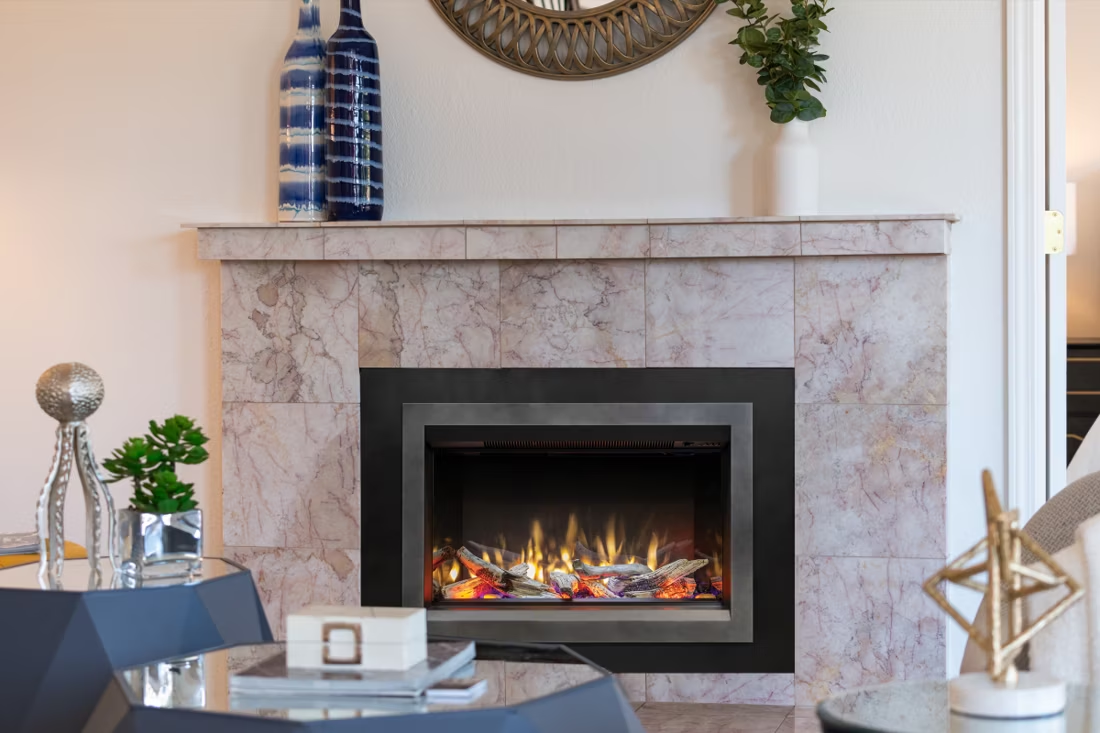
That's where electric fireplaces do their best work in Ballard County: no chimney, no gas line, no combustion venting to plan around—just a dedicated circuit and a spot on the wall or in an existing masonry opening. The county has no wood-smoke air quality restrictions to navigate, so the choice here comes down to convenience and budget rather than regulation. Electric is also the simplest option for the county's mobile and manufactured homes, and for renters who want supplemental heat without altering the structure. Power comes through the regional electric cooperative serving the Jackson Purchase area, and a licensed electrician can typically add a dedicated 120V or 240V circuit for a built-in unit in an afternoon.
Three steps. No salesperson until you're ready.
Tell us about your project
Your zip code, your situation, and the fuel you're leaning toward—or let the answers point you to one.
See what's actually available
The brands dealers within 100 miles genuinely carry—real options, never a catalog mirage.
Get your dealer & Project Guide
A trusted local dealer, plus the free Project Guide & Parts List that names every component of the job.
Frequently Asked Questions
How much does an electric fireplace installation cost in Ballard County?
A basic plug-in electric fireplace or insert runs $300 to $900 installed, since most units simply need a standard 120V outlet—no electrician required if one's already nearby. A built-in wall unit or a larger insert that needs a dedicated circuit typically runs $1,000 to $2,500, including $150 to $400 for an electrician to run new wiring if your home doesn't already have a circuit close to the install location. Older farmhouses in the county with older panels sometimes need panel work first, which adds cost—a local dealer will flag that during the in-home visit rather than after the unit shows up.
Do I need a permit to install an electric fireplace in Ballard County?
Most plug-in electric fireplaces don't require a permit since there's no gas line, venting, or structural change involved. If you're adding a built-in unit that requires new electrical wiring, that work typically needs an electrical permit, which Ballard County administers through the county Fiscal Court. A licensed electrician doing the wiring will usually pull the permit as part of the job, so it's rarely something you have to manage yourself.
What size electric fireplace do I need for my home?
Electric fireplaces are almost always zone heaters rather than whole-home heat sources—most units top out around 5,000 to 5,200 BTU, enough to comfortably warm a single room of 400 to 1,000 square feet depending on insulation and ceiling height. For an older Ballard County farmhouse with drafty additions or a back bedroom that the central system doesn't reach well, a single insert or wall unit in that room is usually the right call rather than trying to heat the whole house electrically. If you're trying to offset your primary heating bill across a larger space, a wood stove or gas insert will do more work—electric is best suited to supplemental comfort and specific cold spots.
Will an electric fireplace work during a power outage?
No—electric fireplaces need power to run the heater, blower, and flame effect, so they shut down the moment the power does. That matters in Ballard County, where ice storms moving through the Jackson Purchase region periodically knock out power for a day or more in rural areas. If backup heat during outages is a priority, pair an electric fireplace for everyday convenience with a wood stove or a propane appliance that doesn't depend on the grid—plenty of local homes run both.
Electric vs. wood—which is right for my Ballard County home?
Wood offers real heat output, works without electricity during outages, and pairs with the oak, hickory, maple, and cherry that's common firewood in this part of western Kentucky. Electric offers instant on-off convenience, no ash or chimney maintenance, and no combustion byproducts to vent—but it needs the grid to run and puts out far less heat per unit than a wood stove. For a primary heat source in a drafty older home, wood often wins. For a clean, low-maintenance supplemental heat source in a specific room—or for a rental where a real hearth isn't an option—electric is usually the better fit.
Electric vs. gas insert—which should I choose?
A gas insert delivers noticeably more heat output and a more realistic flame, but it requires a fuel source (natural gas or propane), venting in most cases, and a higher installation cost. An electric insert skips all of that—no gas line, no venting, no combustion—in exchange for lower heat output and a flame effect that's convincing but not a real fire. For Ballard County homes without existing natural gas service, propane delivery and tank setup add cost and complexity to a gas project that electric simply avoids. If ambiance and simplicity matter more than serious heat output, electric is the easier install.
How much does it cost to run an electric fireplace?
Most electric fireplace heaters draw around 1,500 watts on the heat setting, which costs roughly 15 to 25 cents an hour to run depending on your electric cooperative's rate—cheap enough to use for zone heating in one room without worrying about the bill the way you might with running a whole-house furnace harder. Running the flame effect alone with the heater off costs only a few cents an hour, which is why a lot of Ballard County homeowners run the ambiance year-round and only switch on the heat in winter.
What's the best electric fireplace option for a mobile or manufactured home?
Wall-mounted and built-in electric units are a common fit for the mobile and manufactured homes found throughout rural Ballard County, since they don't require the floor clearances or structural support that a wood or gas appliance needs. A slim wall unit or a recessed insert into an existing wall cavity adds heat and ambiance to a living room or bedroom without any venting penetration through the roof or exterior wall—a real advantage in homes where that kind of modification isn't practical. A local dealer can walk through your specific wall construction before recommending a model.
Electric vs. pellet stove—which makes more sense here?
Pellet stoves, using regional bagged fuel from brands like Lignetics, Hamer Pellet Fuel, or Greenway Renewable Energy, put out real heat and can serve as a primary source for a room or small home—but they require venting, a hopper you load regularly, and electricity to run the auger and blower, so they're not a backup option during an outage either. Electric fireplaces skip the venting and the fuel loading entirely, trading some heat output for pure simplicity. If you want a genuine secondary heat source with more punch, pellet is worth a look; if you want the easiest possible install with zero maintenance, electric is the simpler answer.
Does an electric fireplace need a vent or chimney?
No—that's its superpower. An electric fireplace needs a wall and an outlet, period. No vent pipe, no gas line, no clearances to design around, which is why it works in bedrooms, offices, apartments, and walls where venting a gas or wood unit would be impractical or impossible. Installation is typically the simplest and least expensive of any fireplace type.
Can I put a TV above my fireplace?
Yes—with an asterisk. Fireplaces are hot and TVs don't like heat. Either put a mantel between them to deflect rising warmth, or choose a fireplace with heat-management technology that creates a cool zone on the wall above—the wall stays around 125 degrees, barely warm, while the room still gets full heat. If you like clean lines and don't want a mantel, heat management is the answer.
Can I install a fireplace myself?
If you're putting a fire in your house on purpose, it's best to work with an expert. Unless you're genuinely experienced in framing, gas line, vent pipe, and the national code on clearances to combustibles, have a professional do it—and ideally the same company that sells you the fireplace, so warranty, service, and liability all live under one roof.
Can a fireplace actually lower my heating bill?
Yes—by creating a comfort zone. A furnace heats every square foot of the house just to warm the one room you're in; a gas fireplace on low burns roughly a sixth of the gas a typical furnace does. Set the furnace around 55–60 degrees as a baseline, then heat the rooms your family actually uses. Families who heat this way commonly save $20–$60 a month.
Find your electric fireplace in Ballard County.
Tell us a bit about your home and we'll match you with the right electric fireplace or insert, plus a free Project Guide & Parts List—the exact parts and your recommended local Ballard County dealer.
Find Your Fireplace →