
Pellet Heat Is Rare in Trego County, Kansas—Here's the Honest Picture.
Most Trego County homes heat with propane, electric baseboard, or a wood stove burning local oak and osage orange—not bagged pellets. If a pellet stove still makes sense for your place, we'll tell you straight and connect you with a dealer who can actually get one installed and supplied.
Every Project Starts From One of These Five Situations
Trego County runs on wood, propane, and electric—not pellets.
Trego County sits on the shortgrass and mixed-grass prairie of northwest-central Kansas, with WaKeeney as the county seat and a population under 2,000 spread across ranchland and wheat country along the Smoky Hill River. Winters average a low around 17°F with a fairly substantial heating season—colder than most of Kansas but noticeably milder than places like Bismarck, ND, where pellet culture is far more established. With no incorporated town in the county large enough to support a dedicated hearth retailer, homeowners here have historically leaned on two things: propane (delivered by tank to nearly every rural property) and wood cut from oak, hickory, and osage orange growing in river bottoms and old Dust Bowl-era shelterbelts.
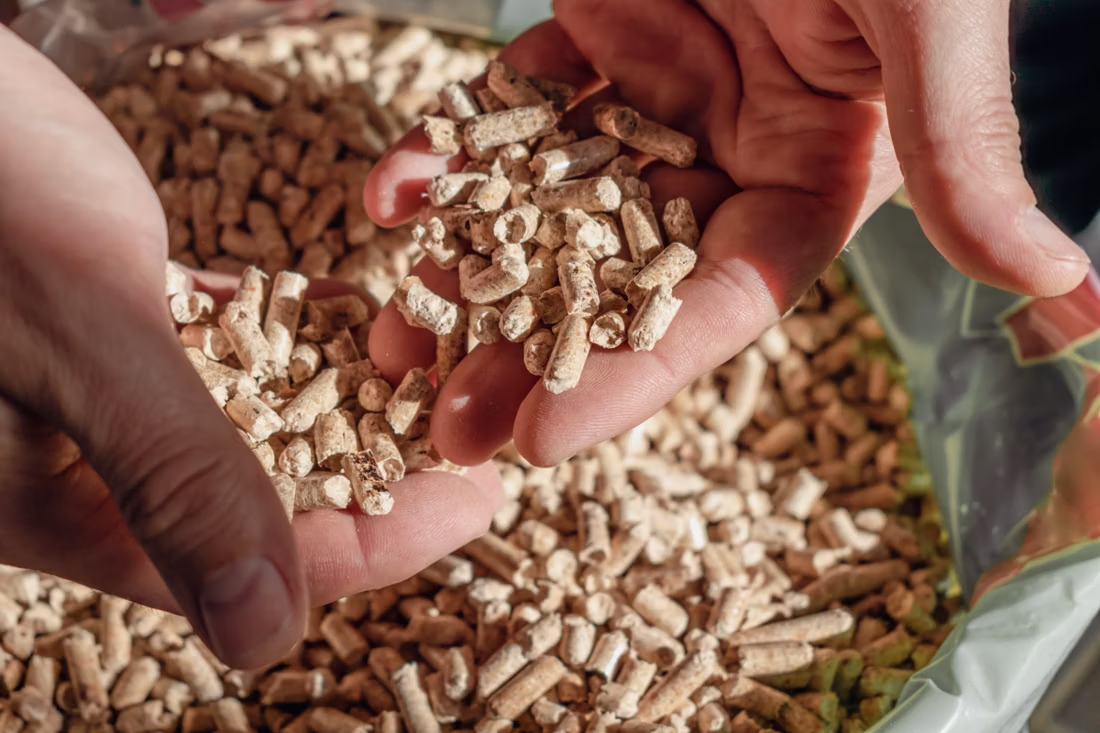
Pellet stoves never really caught on in Trego County, and that's less about the fuel itself than about supply. There's no farm store or co-op in WaKeeney that stocks pellet bags on a shelf—Lignetics and Indeck Energy Services pellets, the two regional brands most likely to turn up in this part of Kansas, generally have to be special-ordered by the pallet through suppliers in Hays or Great Bend. That works fine for a household willing to plan ahead and dedicate garage or shed space to 40-50 bags at a time. It doesn't work for someone expecting to grab a bag on a cold Tuesday. Air quality isn't a factor either way—Trego County has no burn restrictions or non-attainment concerns—so the limiting factor here is purely logistics, not regulation.
Three steps. No salesperson until you're ready.
Tell us about your project
Your zip code, your situation, and the fuel you're leaning toward—or let the answers point you to one.
See what's actually available
The brands dealers within 100 miles genuinely carry—real options, never a catalog mirage.
Get your dealer & Project Guide
A trusted local dealer, plus the free Project Guide & Parts List that names every component of the job.
Frequently Asked Questions
Are pellet stoves actually available in Trego County?
Technically yes, practically rare. There's no hearth dealer based in Trego County itself, so a pellet stove install typically means working with an installer out of Hays or Great Bend who's willing to make the drive to WaKeeney or the surrounding townships. Most Trego County homes we see are heated with propane or electric as the primary system, with a wood stove burning local oak or osage orange as backup or ambiance. Pellet sits in a narrow middle ground—a small number of households choose it for the hands-off convenience, but it's not the local default the way it is in more forested or suburban parts of Kansas.
Where would I even buy pellets near Trego County?
There's no farm supply or hardware store in WaKeeney that keeps pellet bags in regular stock. The realistic path is special-ordering through a supplier in Hays (about 25 miles east) or Great Bend, and most of those orders come in by the pallet—50 forty-pound bags—rather than a bag or two at a time. Lignetics and Indeck Energy Services are the two brands most likely to show up in this part of the state. Plan on buying your season's supply in one or two deliveries and having dry, rodent-proof storage ready, since you won't be running to a store mid-winter if you run low.
How much does a pellet stove installation cost in Trego County?
Because no dealer works exclusively in Trego County, we typically match homeowners here with the same installers serving Hays and Great Bend, and their quotes tend to run in line with the rest of rural western Kansas—a mid-efficiency pellet stove with venting and hearth pad work generally lands in the low-to-mid thousands. Expect a small travel charge added on top for the drive out to WaKeeney or the surrounding townships, since there's no local shop to absorb that cost.
Will a pellet stove work as backup heat during a power outage?
No—this is the single biggest reason pellet doesn't fit many Trego County homes. Pellet stoves need electricity to run the auger and combustion blower, and rural western Kansas sees real outage risk from ice storms and high-wind events that can take down cooperative power lines for hours or days at a time. If backup heat during an outage matters to you, a wood stove burning oak or hickory—which needs no electricity at all—is the more honest recommendation for this county. A pellet stove paired with a battery backup or small generator can work, but it's an added system to maintain, not a given.
What size pellet stove would I need for a Trego County farmhouse?
With winter lows averaging around 17°F and a fairly substantial heating season, Trego County sits solidly in a moderate-cold climate zone—not as brutal as the Dakotas, but colder than most of eastern Kansas. Older farmhouses here tend to be drafty and larger than average, which usually pushes sizing toward a mid-to-large pellet unit if it's meant to carry real heating load rather than just supplement a propane furnace. Most households we see use pellet as a supplemental zone-heat source in one main room rather than a whole-house solution, which changes the sizing math considerably—a local installer will want your actual square footage and insulation details before recommending a unit.
Should I get a pellet stove or just stick with propane?
For most Trego County homes, propane remains the more practical primary heat source—tanks are delivered reliably across the county, furnaces are already in place in most houses, and there's no bulk-storage puzzle to solve. A pellet stove makes more sense as a secondary, zone-heat appliance for a family room or shop space where you want radiant warmth without running the whole furnace. If you're weighing pellet purely against propane for whole-home heat, propane usually wins here on convenience and existing infrastructure; pellet only pulls ahead if you specifically want the ambiance of a visible flame with less mess than cordwood.
Do I need a permit to install a pellet stove in Trego County?
Trego County doesn't have a dedicated building department the way larger Kansas counties do, so permitting for a pellet stove install typically runs through the county courthouse in WaKeeney—it's worth a quick call before scheduling any work, since requirements can vary depending on whether the property sits inside city limits or out in the unincorporated county. There are no air-quality restrictions or burn-ban concerns to navigate here, which does simplify things compared to counties with non-attainment status.
Is wood a better fit than pellet for Trego County?
For most rural properties here, yes. Oak, hickory, and osage orange are all locally available along the Smoky Hill River bottoms and in old shelterbelt rows, and a wood stove needs no electricity and no special-ordered fuel shipped in from Hays or Great Bend. Pellet's advantages—no splitting, no ash mess, thermostatic control—are real, but they come with a supply chain that doesn't fully exist in Trego County yet. If convenience is the main draw, it's worth being honest that you're signing up for pallet deliveries and dedicated storage, not a quick trip to a local store.
If pellet is this uncommon, why does Find My Fireplace even cover Trego County?
Because a handful of households here genuinely want it—retirees who don't want to split wood, a shop or outbuilding that needs supplemental heat, or someone moving in from a region where pellet was standard. Our job is to give you the real picture rather than push a fuel that doesn't fit your county, and then, if pellet still makes sense for your situation, match you with an installer out of Hays or Great Bend who can actually service Trego County and help you plan around the pallet-order supply chain. If wood or propane turns out to be the better answer for your home, we'll tell you that instead.
What's the difference between an insert and a zero-clearance fireplace?
An insert is a fireplace that slides into a pre-existing wood-burning fireplace—if you don't have one, there's nothing to insert it into. A zero-clearance fireplace is built into a framed wall, which makes it the answer for remodels and new construction. Simple test: existing masonry fireplace means insert; blank or framed wall means zero-clearance.
Why is my open fireplace making my house colder?
Open fireplaces suck—literally. As the fire burns, it consumes air your furnace already paid to heat and pulls it out through the chimney, so the house is actually colder after the fire goes out than before you lit it. An insert fixes this: it seals the chimney, puts fixed glass across the front, and turns that hole in your house into a real heat source.
Can a fireplace actually lower my heating bill?
Yes—by creating a comfort zone. A furnace heats every square foot of the house just to warm the one room you're in; a gas fireplace on low burns roughly a sixth of the gas a typical furnace does. Set the furnace around 55–60 degrees as a baseline, then heat the rooms your family actually uses. Families who heat this way commonly save $20–$60 a month.
What is an in-home preview and do I need one?
It's a visit where a hearth professional measures your space, confirms the model you picked actually works in your home, and walks the specs—framing, gas line, venting, finish work—before anything is ordered. Some details you just can't know until you see the house. Never make a down payment without one; it's the single most-skipped step that burns buyers.
Pellet Brands Stocked Around Trego County
Manufacturers will point you to the nearest stocking dealer.
Find your pellet stove option in Trego County.
Tell us about your home and heating goals and we'll give you the honest read on pellet versus wood or propane for Trego County—then match you with a trusted local installer and send over a free Project Guide & Parts List with the exact venting and parts your project needs.
Find Your Fireplace →