
Find the right fireplace for Trego County winters.
Gas and electric fireplaces are the practical mainstream choices across Trego County's High Plains—wood stoves and pellet units exist informally on some farms with oak, hickory, or osage orange windbreaks, but with under 2,000 residents countywide, there's no dedicated local wood or pellet retail market. This hub connects you with the dealers who actually serve WaKeeney and the surrounding communities.
Every Project Starts From One of These Five Situations
Steady heat for the High Plains of Trego County, Kansas.
Trego County sits on the open High Plains of west-central Kansas, exposed to steady winter wind with an average low around 17°F and a heating load in the same range as Bismarck, North Dakota. Oak, hickory, and osage orange grow along the county's creek bottoms and farmstead windbreaks, and plenty of longtime residents still cut and split their own firewood the way farm families always have. But with a county population under 1,900, there's never been enough demand to support a dedicated wood-stove or pellet-stove retail and installation trade—most of that burning happens informally, in older stoves passed down or bought secondhand, without a local dealer network behind it.
What that means for this hub: gas and electric are the fuels with real local dealer support, and that's where most of the depth on this site lives. If you're looking to add a gas fireplace, insert, or stove—propane-fed in much of the county, natural gas where mains reach into WaKeeney—or an electric unit for a bedroom, sunroom, or acreage home, pick your fuel below. If you already run a wood or pellet appliance and need firewood, chimney service, or pellet fuel (Lignetics and Indeck Energy Services both distribute into this part of Kansas), the suppliers and technicians section further down still applies to you.
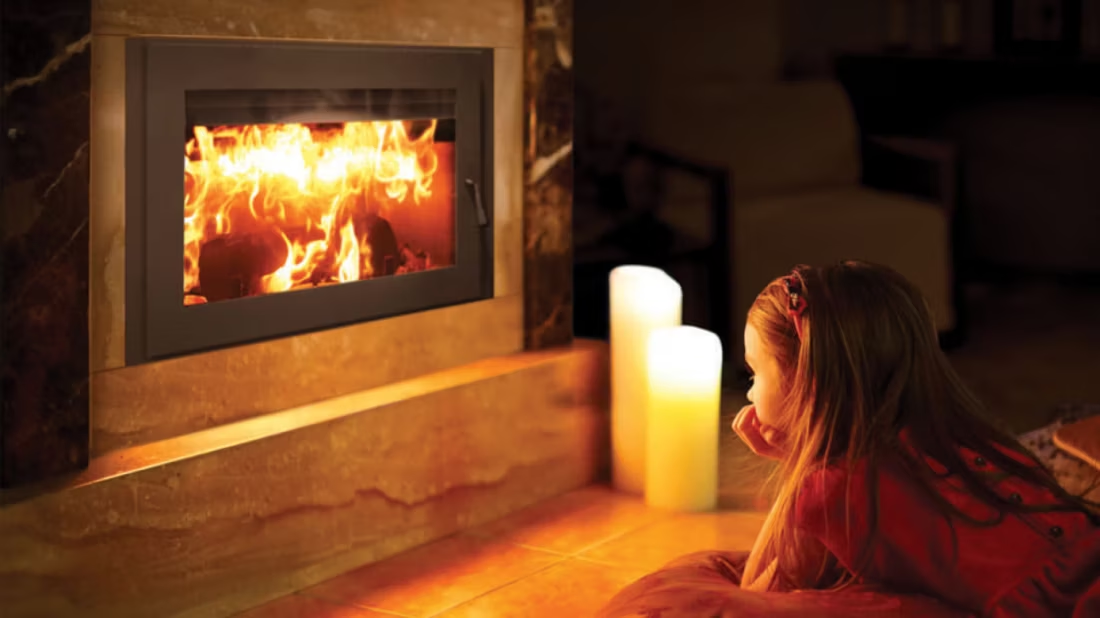
Four fuels. One honest answer for Trego County.
Three steps. No salesperson until you're ready.
Tell us about your project
Your zip code, your situation, and the fuel you're leaning toward—or let the answers point you to one.
See what's actually available
The brands dealers within 100 miles genuinely carry—real options, never a catalog mirage.
Get your dealer & Project Guide
A trusted local dealer, plus the free Project Guide & Parts List that names every component of the job.
Frequently Asked Questions
Which fuel works best in Trego County?
For most households, it's gas or electric. Propane is the default heating fuel across the unincorporated parts of the county, and gas fireplaces or inserts pair naturally with an existing propane tank—no new fuel infrastructure needed. Where natural gas mains reach into WaKeeney, gas fireplace installs are simpler still. Electric units are the go-to for bedrooms, additions, or homes where running new gas line isn't worth it for a secondary heat source. Wood is present but informal—oak, hickory, and osage orange cut from local windbreaks still heat some farmhouses, but with a county population under 1,900, there's no local wood-stove dealer network to speak of. Pellet stoves are rare here for the same reason: not because pellet fuel isn't available (Lignetics and Indeck Energy Services both distribute regionally), but because there's no dedicated pellet-appliance retail presence to sell, size, or install one.
Do I need a permit to install a fireplace in Trego County?
Generally yes for gas installations—any new gas fireplace, insert, or stove involves gas line work that should be permitted and done by a licensed propane or natural gas fitter, whether you're inside WaKeeney city limits or in the unincorporated county. Electric fireplaces usually skip the permit process entirely unless you're hardwiring a built-in unit into a new circuit, in which case an electrical permit applies. If you already own a wood stove and are simply replacing firewood sources or doing basic maintenance, no permit is needed—but if you're installing a new wood-burning appliance, check with the county building department first, since requirements can apply even without a local wood-stove retailer nearby to walk you through it.
Are there air quality restrictions on wood burning in Trego County?
No—Trego County has no air-quality non-attainment designation, no inversion-prone geography, and no burn-ban history tied to wood smoke. The open, windy High Plains terrain doesn't trap smoke the way a basin or valley might. That said, the absence of restrictions doesn't mean there's a formal wood-heating trade here; most wood burning in the county is informal, using self-cut oak, hickory, or osage orange rather than appliances bought and installed through a local dealer. If you're burning wood, you're free to do so without seasonal advisories—but you're largely on your own for sourcing, sizing, and safety guidance, since the retail infrastructure that exists for gas and electric doesn't really exist for wood here.
Can one local hearth retailer handle all four fuel types?
In Trego County itself, there isn't a full-service, all-four-fuel hearth retailer—the population base (under 1,900 countywide) doesn't support one. Most homeowners here end up working with a regional dealer based out of a larger nearby trade hub who travels into WaKeeney and the surrounding towns for gas and electric installs. Those regional retailers typically carry gas and electric fireplaces as their core business, with wood and pellet as a much smaller, secondary line if they carry them at all. If a specific fuel matters to you, it's worth confirming with the dealer directly rather than assuming full selection—the county + fuel pages above note which fuels each retailer actually stocks and installs locally.
How does service work in rural areas of Trego County?
Expect technicians to travel in from outside the county on a route basis rather than being based locally—that's typical for a county this size and this rural. Gas service techs and electricians covering WaKeeney, Collyer, Ogallah, and Voda usually batch their stops, so scheduling in late summer or early fall, ahead of the first hard freeze, gets you on the route more easily than a mid-winter emergency call. Given the open plains driving distances and winter wind, plan for a modest trip fee on rural calls, and if you rely on a gas fireplace as backup heat, keep an eye on your propane tank level going into the coldest stretch—deliveries can be affected by the same weather that makes you need the heat most.
What's the typical cost range for fireplace installation across all fuel types in Trego County?
Gas fireplace, insert, or stove: typically $4,000–$10,000 depending on whether you're tying into an existing propane tank or natural gas line versus running new gas service. Electric fireplace: $200–$3,000 for the unit itself, plus $400–$1,000 in labor for anything beyond a simple plug-in wall-mount, which covers most builds. Wood-burning appliances are mostly informal here—many households already own a stove passed down or bought used, and the ongoing cost is closer to the labor of cutting and hauling oak, hickory, or osage orange than a retail install bill. Pellet stoves are uncommon enough in the county that there isn't a reliable local install-cost baseline; fuel itself (Lignetics, Indeck Energy Services) runs comparable to regional Kansas pellet pricing for anyone who already owns a unit.
Can a fireplace actually lower my heating bill?
Yes—by creating a comfort zone. A furnace heats every square foot of the house just to warm the one room you're in; a gas fireplace on low burns roughly a sixth of the gas a typical furnace does. Set the furnace around 55–60 degrees as a baseline, then heat the rooms your family actually uses. Families who heat this way commonly save $20–$60 a month.
Can I install a fireplace myself?
If you're putting a fire in your house on purpose, it's best to work with an expert. Unless you're genuinely experienced in framing, gas line, vent pipe, and the national code on clearances to combustibles, have a professional do it—and ideally the same company that sells you the fireplace, so warranty, service, and liability all live under one roof.
Does a fireplace add value to my home?
On average, a fireplace adds back to the home about the same amount you spent installing it. Add the monthly savings from heating the rooms you actually use instead of the whole house—often hundreds of dollars a year—and the value case is strong before you even count what a fire does for how your family uses the room.
What are the biggest mistakes people make buying a fireplace?
Five come up constantly: budgeting for the unit but not the full job (vent, gas line, electrical, finish work); drowning in options instead of starting from style and fuel; buying without an in-home preview; handing installation to a handyman instead of a pro; and giving up out of sheer indecision. Every one is avoidable with a clear plan—step one, step two, step three.
Stove and Fireplace Dealers in Trego County
Listings include WhyFire partner dealers, dealers we have verified as authorized for the brands we recommend, and established local businesses that carry hearth products. Every listing shows which one it is. The ones marked Preferred run on WhyFire's software, so they can show you real pricing and book your appointment right here. No manufacturer pays for placement. How we verify dealers →
Heartland Building Center
Bird's Alternatives
Rube's
Find your fireplace in Trego County.
Tell us about your home in WaKeeney or the surrounding towns, and we'll match you with a trusted local or regional dealer and send over a free Project Guide & Parts List—the exact parts, including the vent or gas-line kit, sized for your project, plus the dealer we recommend for your area.
Find Your Fireplace →