
Pellet stoves are rare in Seward County—here's an honest look.
With a solid winter heating season and no natural pellet market nearby, most Liberal-area homes heat with gas or propane. If you still want a pellet stove, I'll match you with a dealer who can tell you honestly whether it makes sense for your house.
Every Project Starts From One of These Five Situations
Seward County's heating culture runs on gas and propane, not pellets.
Seward County sits in the southwest Kansas plains, climate zone 4A, with winters that dip to an average low of 20°F and a heating season that's about a third as demanding as a place like Fargo, ND—but still enough to run a furnace hard for months. That heat load is met almost entirely by natural gas and propane infrastructure that's well-established across Liberal and the surrounding county, not by biomass appliances. There's no meaningful local pellet fuel market, no regional mill supplying the area, and no cultural tradition of pellet heating the way you'd find in parts of the Pacific Northwest or New England.
That doesn't mean a pellet stove is impossible here—it means it's a deliberate, somewhat unusual choice rather than a mainstream one. A homeowner might still want one for supplemental zone heat in a shop or sunroom, for the ambiance of a real flame without the split-and-stack work of cordwood (oak, hickory, and osage orange are the common local firewood species, for what it's worth), or because they lived somewhere with pellet heat before and want the same setup here. Fuel has to be trucked or shipped in via national brands like Lignetics or Indeck Energy Services rather than sourced from a nearby mill, which affects both price and ongoing convenience. A trusted local dealer can tell you honestly whether that tradeoff is worth it for your specific situation.
Three steps. No salesperson until you're ready.
Tell us about your project
Your zip code, your situation, and the fuel you're leaning toward—or let the answers point you to one.
See what's actually available
The brands dealers within 100 miles genuinely carry—real options, never a catalog mirage.
Get your dealer & Project Guide
A trusted local dealer, plus the free Project Guide & Parts List that names every component of the job.
Frequently Asked Questions
Are pellet stoves even available in Seward County?
They're available, but uncommon. Seward County doesn't have the pellet-heating culture you'd find in the Pacific Northwest or the Northeast—there's no local pellet mill, and the housing stock and utility infrastructure here are built around natural gas and propane. A handful of hearth dealers serving the Liberal area can still order and install pellet stoves, but expect to be one of a small number of pellet customers on their books rather than a routine product line. If you're set on pellet heat, working with a dealer who's done at least a few installs locally matters more here than in a pellet-heavy region.
Why don't more people in Seward County use pellet stoves?
Mostly infrastructure and economics. With a solid winter heating season, Seward County has a real need for heat, but natural gas and propane are cheap, widely available, and already piped or tanked into most homes—there's little incentive to switch to a fuel that has to be trucked in from out of state. Pellet fuel from brands like Lignetics or Indeck Energy Services is reliable, but without a nearby mill, per-ton pricing runs higher here than in pellet-producing regions, and stove owners typically buy pallets in bulk during fall to avoid running short mid-winter.
Where would I even buy pellets in Seward County?
Because there's no local mill, pellet fuel in Seward County typically comes through farm supply stores, hardware retailers, or direct-order pallets from national brands like Lignetics or Indeck Energy Services. It's worth calling ahead before committing to a pellet stove to confirm a retailer near Liberal actually stocks bags reliably through the winter—availability can be spottier here than in regions where pellet heat is the norm, and running out in January isn't a quick fix when the nearest depot is a drive away.
How much does a pellet stove installation cost in Seward County?
Installation costs follow national norms—typically running from roughly $3,500 to $6,500 depending on the unit and venting work—but because installers here handle pellet jobs infrequently, it's worth asking directly about their pellet-specific experience rather than assuming general hearth familiarity covers it. Venting a pellet stove correctly (proper pellet vent pipe, not a wood-stove flue) is a detail that matters for both safety and performance, and a dealer who mostly installs gas logs and propane inserts may need to special-order components.
Would a pellet stove make sense for my home in Seward County?
It depends on your goal. If you want primary heat, gas or propane will almost always be more practical here—the infrastructure is already in place, fuel is cheap and always in stock, and you won't be dependent on shipped-in pellet pallets. A pellet stove makes more sense as supplemental heat for a specific room, a workshop, or a space where you want visible flame without cordwood handling. If that's your use case, a local dealer can help you size a unit correctly and set realistic expectations about fuel sourcing.
What's the difference between a pellet stove and a wood stove for a Seward County home?
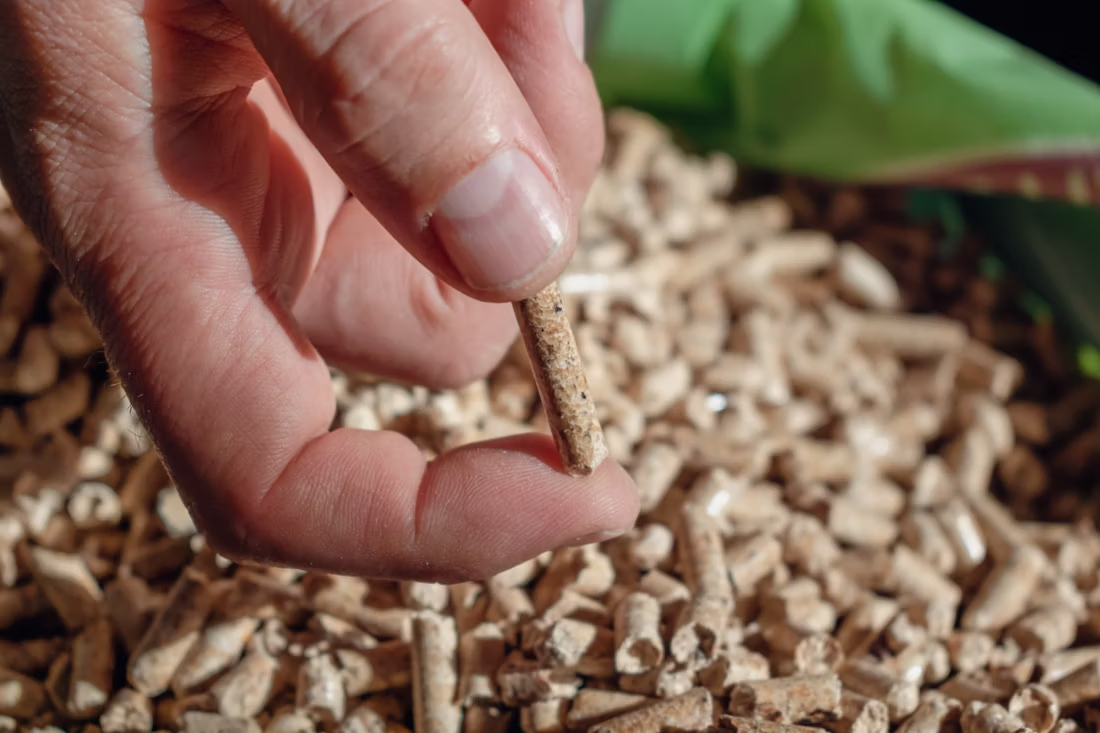
Both are uncommon locally, but for different reasons. Wood stoves require cordwood—oak, hickory, and osage orange are the common regional species—split, stacked, and seasoned, plus a code-compliant chimney. Pellet stoves use compressed wood pellets fed automatically from a hopper, need only a smaller vent rather than a full masonry chimney, but require electricity to run the auger and blower, and rely on shipped-in fuel bags since there's no nearby mill. For a homeowner in Liberal without an existing wood supply or chimney, pellet is generally the simpler retrofit—but neither is the default choice the way a gas or propane appliance is.
Will a pellet stove work if the power goes out?
No—this is a real limitation to weigh. Pellet stoves need electricity to run the auger that feeds pellets and the blower that distributes heat, so they shut down in a power outage unless you have a battery backup or generator. In Seward County, where winter storms can knock out power, a propane or gas unit with a standing pilot—or a wood stove, if you're set up for cordwood—will keep working when the grid doesn't. This is one of the more common reasons local homeowners choose gas over pellet for a primary or backup heat source.
Are there rebates or incentives for pellet stoves in Kansas?
Some pellet stoves qualify for the federal biomass stove tax credit (25% of cost, capped annually) if the unit meets the required efficiency threshold—this applies regardless of location, including Seward County. Kansas doesn't have a robust state-level biomass incentive program the way some Pacific Northwest states do, so the federal credit is typically the main financial benefit available locally. A dealer can confirm which specific units currently qualify.
Pellet vs. propane—which makes more sense in Seward County?
For most Seward County homes, propane wins on practicality: it's widely available, already the standard fuel for many rural properties outside Liberal's natural gas service area, works during power outages with a standing-pilot unit, and doesn't require sourcing shipped-in fuel bags. Pellet wins on ambiance and the appeal of a real, visible flame with automated feed—but you're trading fuel convenience and outage reliability for that experience. If you already have propane service or a tank on the property, sticking with propane for primary heat and reserving pellet (if you want it at all) for a supplemental, non-critical space is usually the more realistic setup.
How often does a pellet stove need cleaning?
A clean pellet stove is a happy pellet stove. Plan on cleaning the burn pot about once a week when you're burning regularly—ash and clinkers gum up the air holes just like a pellet barbecue. Most pellet stove problems trace back to skipped cleaning that nobody explained up front. Some designs make it easy with a trapdoor burn pot: pull a lever and the gunk drops into the ash pan.
What's the difference between an insert and a zero-clearance fireplace?
An insert is a fireplace that slides into a pre-existing wood-burning fireplace—if you don't have one, there's nothing to insert it into. A zero-clearance fireplace is built into a framed wall, which makes it the answer for remodels and new construction. Simple test: existing masonry fireplace means insert; blank or framed wall means zero-clearance.
Can a fireplace actually lower my heating bill?
Yes—by creating a comfort zone. A furnace heats every square foot of the house just to warm the one room you're in; a gas fireplace on low burns roughly a sixth of the gas a typical furnace does. Set the furnace around 55–60 degrees as a baseline, then heat the rooms your family actually uses. Families who heat this way commonly save $20–$60 a month.
Does a fireplace add value to my home?
On average, a fireplace adds back to the home about the same amount you spent installing it. Add the monthly savings from heating the rooms you actually use instead of the whole house—often hundreds of dollars a year—and the value case is strong before you even count what a fire does for how your family uses the room.
Pellet Brands Stocked Around Seward County
Manufacturers will point you to the nearest stocking dealer.
Get a straight answer on pellet heat in Seward County.
Tell me about your home and goals, and I'll match you with a local dealer who'll give you an honest read on whether pellet makes sense here—plus a free Project Guide & Parts List with the exact parts, vent kit, and recommended dealer for your project.
Find Your Fireplace →