
Find the right fireplace for Seward County, Kansas.
Seward County sits atop one of the largest natural gas fields in the country, and it shows in how homes here heat—gas is the default, electric fills in for ambiance and secondary rooms, and wood or pellet setups are the exception rather than the rule.
Every Project Starts From One of These Five Situations
Flat plains heating over the Hugoton Gas Field.
Seward County covers open shortgrass plains in far southwest Kansas, anchored by Liberal and the smaller community of Kismet. Winters are moderate by prairie standards—average lows around 20°F and a heating load closer to a typical Midwest winter than the deep cold of Fargo or Bismarck ND. What sets this county apart is what's underneath it: Seward County sits within the Hugoton Natural Gas Field, one of the largest natural gas reserves in North America, which is a big part of why gas heat is so dominant and so affordable here.
There isn't much standing timber on the plains—the oak and hickory that exist are mostly along scattered creek bottoms, and osage orange shows up as old hedgerow and windbreak trees rather than a managed fuel-wood supply. That's why wood and pellet fireplaces are genuinely rare in Seward County, and why this hub focuses on where the real local hearth market actually is: gas fireplaces, inserts, and stoves, plus electric units for supplemental heat and ambiance. Pick your fuel below to find local dealers, installed costs, and the resources that match your project.
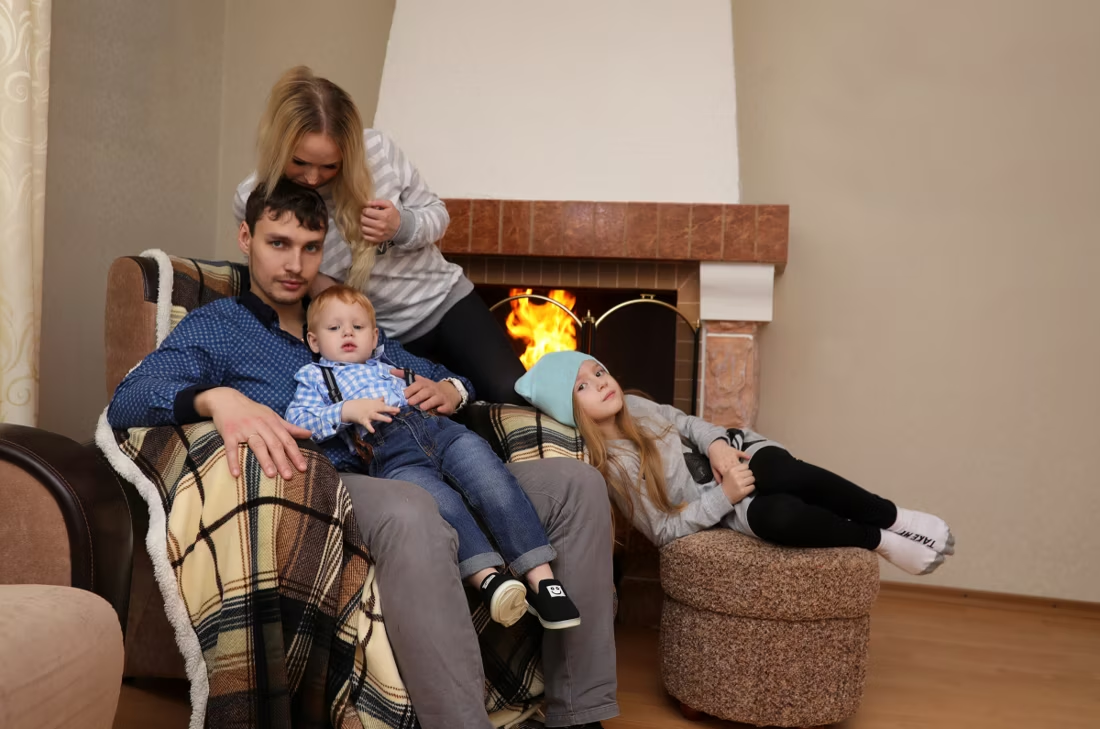
Four fuels. One honest answer for Seward County.
Three steps. No salesperson until you're ready.
Tell us about your project
Your zip code, your situation, and the fuel you're leaning toward—or let the answers point you to one.
See what's actually available
The brands dealers within 100 miles genuinely carry—real options, never a catalog mirage.
Get your dealer & Project Guide
A trusted local dealer, plus the free Project Guide & Parts List that names every component of the job.
Frequently Asked Questions
Which fuel works best in Seward County?
For most homes here, it's gas. Seward County sits over the Hugoton Gas Field, one of the largest natural gas reserves in the country, and that local supply keeps gas fireplaces, inserts, and stoves both affordable to run and easy to install where service lines already exist. Electric fireplaces are the second-most-common choice—plug-in or hardwired units for bedrooms, dens, and secondary living spaces where a vent isn't practical. Wood is genuinely uncommon: the county is open plains with little standing timber beyond creek-bottom oak and hickory and old osage orange hedgerows, so most homeowners who want a wood-burning unit are doing it for a specific aesthetic rather than as their main heat source. Pellet stoves are rarer still—there's no meaningful local demand, even though pellet brands like Lignetics move through the region as a supply-chain point rather than a local retail market.
Do I need a permit to install a fireplace in Seward County?
Yes, typically. Gas fireplace, insert, and stove installations generally require a building permit plus a separate gas line permit for the connection work, handled by a licensed gas fitter. Within Liberal, permits are issued through the city; outside city limits, permitting runs through Seward County. Electric fireplace installs usually don't need a permit unless the project involves hardwiring or a new dedicated circuit, in which case an electrical permit applies. Wood stove or insert installs, while rare here, still require the same permit process as anywhere else, including EPA-certified equipment. Most local gas and electric retailers handle the permitting as part of the installation, so it's rarely something homeowners have to manage themselves.
Are there air quality restrictions on burning in Seward County?
No—there are no air quality non-attainment designations or winter inversion concerns in Seward County. The open, flat terrain of southwest Kansas doesn't trap air the way a basin or valley does, so there are no seasonal burn advisories or curtailment periods to plan around. That said, since wood-burning appliances are uncommon locally in the first place, this is a minor factor either way—most of the county's hearth activity is gas and electric, neither of which triggers local air quality rules.
Can one local retailer handle both gas and electric fireplaces?
Yes, and that's the norm here. Given how dominant gas and electric are in Seward County, most local hearth retailers carry both fuel types and can show working displays of each side by side. A handful may also special-order a wood or pellet unit on request, but don't expect a full wood-stove showroom—that inventory just doesn't move fast enough locally to justify the floor space. If you're comparing a gas insert against an electric unit for the same room, a dual-fuel retailer is the right place to start.
How does service work for rural homes in Seward County?
Most gas and electric service technicians serving Seward County are based in Liberal and travel out to Kismet and the rural farmsteads spread across the rest of the county's roughly 640 square miles. With a county population under 20,000 spread over that much open ground, expect a modest travel fee for calls outside Liberal city limits, and plan on scheduling routine gas fireplace inspections a few weeks ahead of the first cold snap rather than waiting for a mid-winter emergency call.
What's the typical installed cost for a gas or electric fireplace in Seward County?
Gas fireplace, insert, or stove installation typically runs $4,000–$10,000, with the range driven mainly by gas line work and venting—homes already on a gas line with existing venting land toward the lower end. Electric fireplace installation is much less expensive: $200–$3,000 for the unit itself, plus $400–$1,200 in labor for anything beyond a simple plug-in setup, such as a wall-mount or built-in with a new circuit. Because wood and pellet installations are so uncommon in Seward County, there isn't reliable local pricing data for those—most homeowners considering either fuel should expect quotes closer to national averages plus any distance-based travel charge from an out-of-county installer.
Can I install a fireplace myself?
If you're putting a fire in your house on purpose, it's best to work with an expert. Unless you're genuinely experienced in framing, gas line, vent pipe, and the national code on clearances to combustibles, have a professional do it—and ideally the same company that sells you the fireplace, so warranty, service, and liability all live under one roof.
What is an in-home preview and do I need one?
It's a visit where a hearth professional measures your space, confirms the model you picked actually works in your home, and walks the specs—framing, gas line, venting, finish work—before anything is ordered. Some details you just can't know until you see the house. Never make a down payment without one; it's the single most-skipped step that burns buyers.
Can a fireplace actually lower my heating bill?
Yes—by creating a comfort zone. A furnace heats every square foot of the house just to warm the one room you're in; a gas fireplace on low burns roughly a sixth of the gas a typical furnace does. Set the furnace around 55–60 degrees as a baseline, then heat the rooms your family actually uses. Families who heat this way commonly save $20–$60 a month.
Does a fireplace add value to my home?
On average, a fireplace adds back to the home about the same amount you spent installing it. Add the monthly savings from heating the rooms you actually use instead of the whole house—often hundreds of dollars a year—and the value case is strong before you even count what a fire does for how your family uses the room.
Stove and Fireplace Dealers in Seward County
Listings include WhyFire partner dealers, dealers we have verified as authorized for the brands we recommend, and established local businesses that carry hearth products. Every listing shows which one it is. The ones marked Preferred run on WhyFire's software, so they can show you real pricing and book your appointment right here. No manufacturer pays for placement. How we verify dealers →
Builders FirstSource-Garden City, Ks
Premier Homes
Find your fireplace in Seward County.
Tell us about your home and we'll match you with a trusted local dealer and send over your free Project Guide & Parts List—the exact parts, including the vent kit, and the dealer we recommend for your Seward County installation.
Find Your Fireplace →