
Steady pellet heat for Russell County's long, windswept winters.
Thermostat-controlled heat for a county where timber is scarce and the wind rarely stops—from Russell to Bunker Hill, Dorrance, Lucas, Paradise, and Waldo. Find the right pellet stove or insert and connect with a trusted local dealer.
Every Project Starts From One of These Five Situations
Convenient heat where firewood isn't always close at hand.
Russell County sits on the open central Kansas plains, home to about 5,640 people spread across Russell and the smaller communities of Bunker Hill, Dorrance, Lucas, Paradise, and Waldo. At climate zone 4A with a winter heating load similar to much of central Kansas and average winter lows near 19°F, the county sees six real months of heating season—colder than the Gulf Coast, though not as brutal as places like Fargo or Bismarck. What sets Russell County apart isn't the cold, it's the landscape: this is farm and ranch country, not forest. Oak and hickory grow mainly along creek bottoms, and osage orange—planted decades ago as windbreak hedgerows—is dense, twisted, and genuinely hard to split by hand.
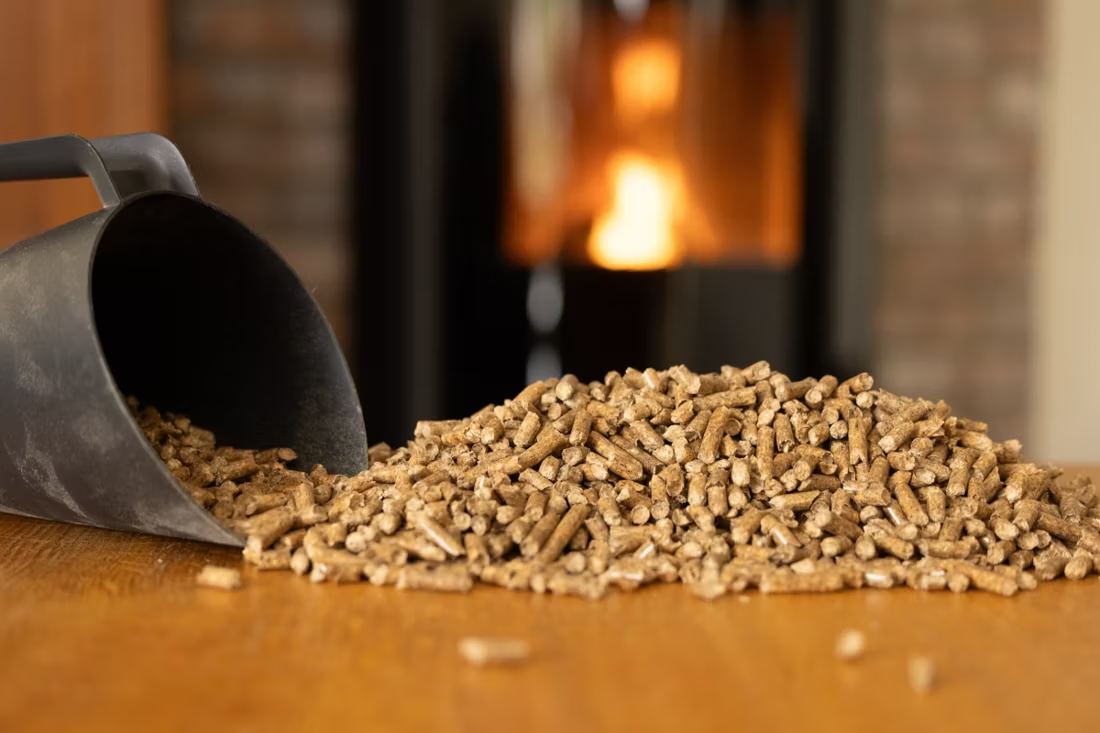
That combination makes pellet stoves a practical fit for a lot of Russell County homes. There's no woodlot to manage, no splitting osage orange on a cold Saturday, and no chimney sweep required the way a wood-burning system needs one. Pellets arrive by the ton—regional brands like Lignetics and Indeck Energy Services are both common in this part of Kansas—and get stored in a garage or shed rather than stacked outside. With no air quality non-attainment issues or burn curtailment periods in this part of the state, homeowners here have more flexibility on when and how often they run a stove than in some other regions. A local dealer can size the right unit for a farmhouse, a newer build in town, or anything in between.
Three steps. No salesperson until you're ready.
Tell us about your project
Your zip code, your situation, and the fuel you're leaning toward—or let the answers point you to one.
See what's actually available
The brands dealers within 100 miles genuinely carry—real options, never a catalog mirage.
Get your dealer & Project Guide
A trusted local dealer, plus the free Project Guide & Parts List that names every component of the job.
Frequently Asked Questions
How much does a pellet stove installation cost in Russell County?
Most freestanding pellet stove installations run in the $3,000 to $6,000 range once you account for the unit, the 3-inch PL vent kit that runs through an exterior wall, and electrical work for the hopper motor and igniter. Pellet inserts installed into an existing masonry fireplace tend to land in a similar range, since they reuse the existing opening and vent through the chimney with a liner. Given how spread out Russell County is, expect a modest travel charge if your installer is coming from Russell to a rural property near Paradise, Waldo, or Dorrance—a local dealer can give you a firm number after seeing the space.
What size pellet stove do I need for my home?
Sizing depends on square footage, ceiling height, and how drafty the house is—and a lot of Russell County's housing stock is older farmhouse construction with less insulation than a new build. As a rough guide: smaller units (under 40,000 BTU) handle a single large room or a tight, well-sealed home; mid-size units (40,000–60,000 BTU) cover most main living areas; larger units can carry a whole home as primary heat if the layout is open. A stove that's undersized will run flat-out on the coldest nights near that 19°F average low and still fall short. A local dealer will size your specific home for free rather than going off a generic square-footage chart.
Where can I find certified pellet stove installers near me?
Look for installers with NFI (National Fireplace Institute) certification, which covers proper venting, clearance, and hopper wiring for pellet appliances specifically. Because Russell County's population is under 6,000, the pool of local specialty hearth dealers is small, and some homeowners in outlying areas end up working with an installer based in Russell or pulling one in from a larger hub like Hays or Great Bend. That's normal in a county this size—what matters is that the installer is trained on pellet venting specifically, not just wood stoves or gas.
What's the difference between a pellet stove and a pellet insert?
A pellet stove is a freestanding unit that sits on the floor and vents through a wall using 3-inch PL pipe—it doesn't need an existing chimney and can go almost anywhere with power and a clear exterior wall. A pellet insert is built to slide into an existing masonry fireplace opening, using a liner run up the old chimney instead of a wall vent. For Russell County homes with an older fireplace that rarely gets used because firewood is a hassle to source, an insert is often the simpler upgrade. Homes without an existing fireplace almost always end up with a freestanding stove instead.
Do I need a permit to install a pellet stove in Russell County?
In most cases, yes—a building permit is typically required for the venting and any electrical work tied to a new pellet stove installation, handled through the Russell County Planning & Zoning office for unincorporated areas, or the city if you're inside Russell's limits. Requirements can vary slightly by township, so it's worth a quick call before work starts. Most local dealers who sell and install pellet stoves are used to this process and will pull the permit as part of the job rather than leaving it to the homeowner.
What's the best pellet stove for Russell County's climate?
With a winter heating load typical of central Kansas and winter lows averaging 19°F, Russell County doesn't need the extreme-cold catalytic hardware you'd see in northern Montana or Minnesota—a solid non-catalytic pellet stove with a reasonably sized hopper is usually enough. The bigger consideration locally is power reliability: Kansas ice storms and high-wind events do knock out rural electric service, and pellet stoves need electricity to run the auger, igniter, and blower. If backup heat during outages matters to you, ask a local dealer about models compatible with a battery backup or small generator—it's a common add-on request in this part of the state.
Where can I buy pellet fuel in Russell County?
Lignetics and Indeck Energy Services are both regional brands commonly stocked or ordered through farm supply stores and hearth dealers serving this part of Kansas, and either can typically arrange delivery for larger orders. Bagged pellets from a local co-op or farm store work fine for occasional burners, while homeowners using a pellet stove as a primary heat source usually order by the ton ahead of the season—expect somewhere in the $250 to $300 per ton range in this region, though your local dealer can confirm current pricing and availability.
How much maintenance does a pellet stove need?
Pellet stoves need the ash pan emptied every few days to weekly depending on use, a wipe-down of the burn pot to clear clinkers, and an annual professional cleaning of the exhaust venting and hopper components—usually done at the end of burning season before pellets sit unused over summer. It's considerably less work than sweeping a wood chimney, but skipping the vent cleaning can cause feed jams or shutdowns mid-winter, which is the last thing you want during a cold snap.
Pellet stove vs. wood stove—which is right for Russell County?
Wood stoves run on cordwood, work without electricity, and are the traditional choice where local oak, hickory, or hedgerow osage orange is available for the cutting—but osage orange in particular is notoriously dense and difficult to split, and creek-bottom hardwood isn't as easy to source here as it is in more forested counties. Pellet stoves trade that labor for convenience: load the hopper, set the thermostat, and let it run—at the cost of needing electricity and a standing pellet supply. For most in-town homes in Russell, Bunker Hill, or the surrounding area without ready access to a woodlot, pellet tends to win on convenience. For rural properties with existing timber access and a priority on power-outage backup heat, wood still holds an edge.
Why is my open fireplace making my house colder?
Open fireplaces suck—literally. As the fire burns, it consumes air your furnace already paid to heat and pulls it out through the chimney, so the house is actually colder after the fire goes out than before you lit it. An insert fixes this: it seals the chimney, puts fixed glass across the front, and turns that hole in your house into a real heat source.
How often does a pellet stove need cleaning?
A clean pellet stove is a happy pellet stove. Plan on cleaning the burn pot about once a week when you're burning regularly—ash and clinkers gum up the air holes just like a pellet barbecue. Most pellet stove problems trace back to skipped cleaning that nobody explained up front. Some designs make it easy with a trapdoor burn pot: pull a lever and the gunk drops into the ash pan.
Can I install a fireplace myself?
If you're putting a fire in your house on purpose, it's best to work with an expert. Unless you're genuinely experienced in framing, gas line, vent pipe, and the national code on clearances to combustibles, have a professional do it—and ideally the same company that sells you the fireplace, so warranty, service, and liability all live under one roof.
What is an in-home preview and do I need one?
It's a visit where a hearth professional measures your space, confirms the model you picked actually works in your home, and walks the specs—framing, gas line, venting, finish work—before anything is ordered. Some details you just can't know until you see the house. Never make a down payment without one; it's the single most-skipped step that burns buyers.
Pellet Brands Stocked Around Russell County
Manufacturers will point you to the nearest stocking dealer.
Find your pellet stove in Russell County.
Tell us a bit about your home and we'll put together a free Project Guide & Parts List for your pellet project—the right unit, the vent kit you'll need, and a trusted local dealer to install it.
Find Your Fireplace →