
Add real heat and a real glow without touching your chimney.
From Russell to Lucas, Bunker Hill, and Dorrance, electric fireplaces give north-central Kansas homes supplemental heat and ambiance with zero venting, zero gas line work, and none of the permit hassle that comes with wood or gas. I'll match you with a local dealer who can size and install it right.
Every Project Starts From One of These Five Situations
No chimney, no gas line, no permits—just plug in and warm up.
Russell County sits in north-central Kansas—open farm country spread across the county seat of Russell and smaller communities like Lucas, Bunker Hill, Dorrance, Paradise, and Waldo, with a total population under 6,000 people spread thin across the landscape. Winters here average lows around 19°F with a heating season comparable in length and intensity to much of Kansas in climate zone 4A—real cold, with genuine cold snaps, but nowhere close to the sustained deep-freeze you'd find in Bismarck, North Dakota. A lot of the county's housing stock is older farmhouses without an existing masonry chimney, plus a meaningful share of manufactured and modular homes where cutting into a wall for gas line or running a Class A chimney isn't realistic—or isn't allowed by the home's construction.
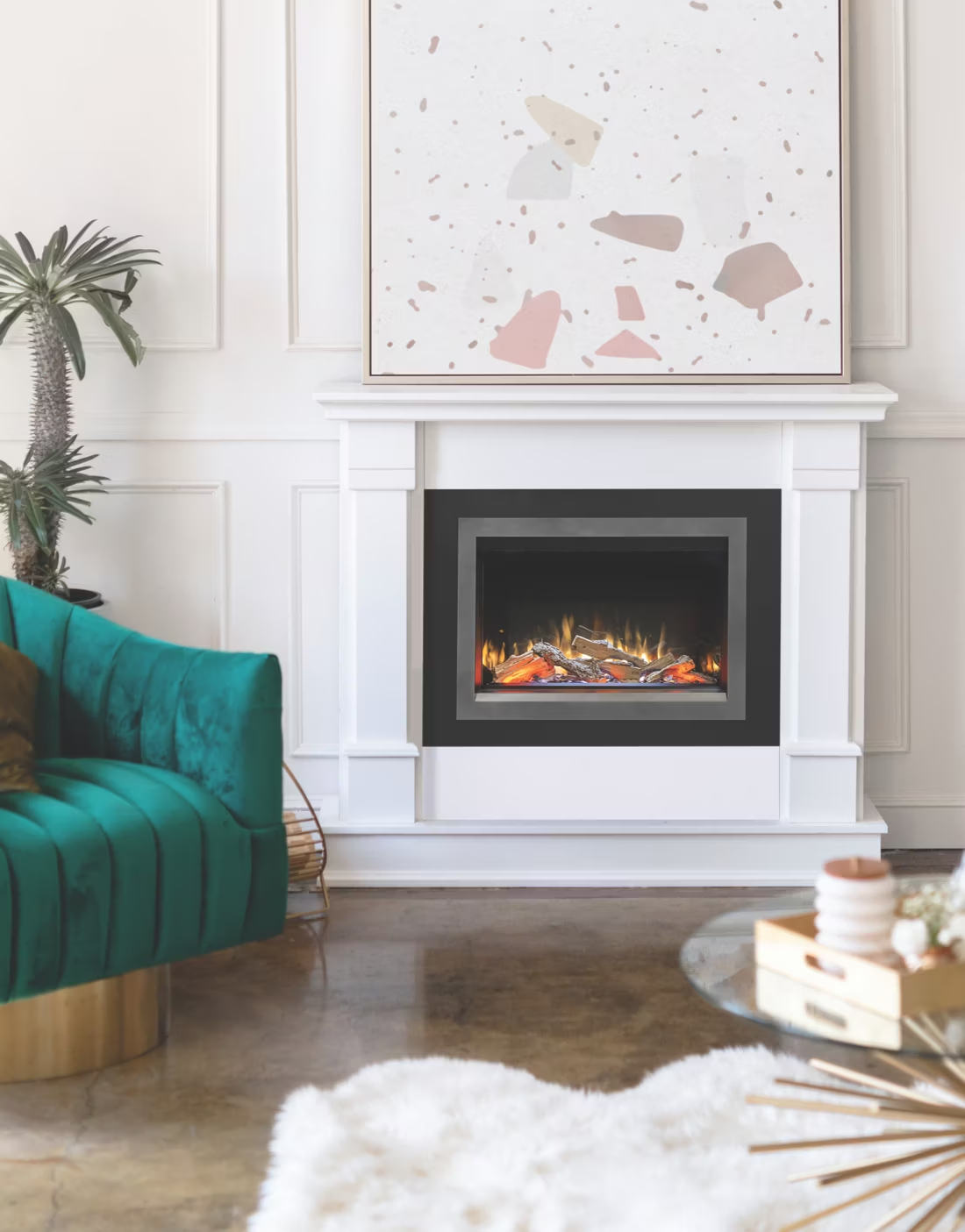
That's exactly where electric fireplaces fit. There's no combustion, no venting, and no gas permit to pull—most units run off a standard 120-volt outlet, and built-in models with a dedicated circuit are handled by a licensed electrician in an afternoon. For a bedroom, sunporch, or a farmhouse living room that never quite holds heat, an electric insert or stove adds real supplemental warmth from a 1,500-watt heater plus the ambiance of a realistic flame—without touching the roofline or the structure of an older home. It's also one of the simplest options for renters, landlords, and manufactured-home owners in the county who want fireplace ambiance without a construction project.
Three steps. No salesperson until you're ready.
Tell us about your project
Your zip code, your situation, and the fuel you're leaning toward—or let the answers point you to one.
See what's actually available
The brands dealers within 100 miles genuinely carry—real options, never a catalog mirage.
Get your dealer & Project Guide
A trusted local dealer, plus the free Project Guide & Parts List that names every component of the job.
Frequently Asked Questions
How much does an electric fireplace installation cost in Russell County?
Plug-in electric inserts and freestanding stoves typically run $300 to $1,200 installed—often just the unit cost plus setup, since no dedicated wiring is required. Built-in wall-mounted units or larger electric fireplace inserts that need a dedicated 20-amp circuit run higher, generally $1,500 to $4,000 once electrical work and any surrounding trim or mantel carpentry is included. Because there's no chimney, no gas line, and no venting to run, electric installs in Russell County are consistently faster and cheaper than wood or gas projects—often a single-day job.
Can an electric fireplace actually heat a room, or is it just for looks?
Most electric fireplaces top out around 1,500 watts—roughly 5,000 BTU—which is enough to noticeably warm a bedroom, sunroom, or single living area, but it won't replace a furnace on a 19°F January night across a whole farmhouse. In Russell County, electric fireplaces work best as zone heat: warming the room you're actually in so you can turn down the thermostat elsewhere, or adding backup warmth in a room that's always cold no matter what the furnace does. For whole-home heating in a cold snap, wood or pellet stoves generally do more work per dollar.
Do I need a permit to install an electric fireplace in Russell County?
Usually not for a plug-in unit—since there's no gas line, no chimney, and no structural venting involved, most jurisdictions don't require a building permit for a freestanding or insert-style plug-in electric fireplace. If your installer is adding a new dedicated circuit for a built-in unit, that electrical work may need to be pulled through Russell County's building permit process depending on the scope, and any licensed electrician handling the job will typically know exactly what's required. It's a much lighter permitting lift than a wood stove or gas fireplace installation.
Electric vs. wood—which makes more sense for my Russell County home?
Wood heat has deep roots here—oak, hickory, and osage orange are all common local firewood species, and a wood stove keeps burning through a power outage, which matters on the plains when ice storms take down rural electric lines. Electric fireplaces can't provide backup heat during an outage since they need power to run, but they cost far less to install, require zero maintenance (no chimney sweeping, no ash), and work in homes where a chimney isn't an option. If you already have a working chimney or plenty of access to firewood, wood is worth considering. If you want simple, clean supplemental heat with no upkeep, electric is the more practical fit for most Russell County homes.
What's the best type of electric fireplace for a Russell County home?
For most homes here, a built-in electric insert into an existing fireplace opening or a wall-mounted unit with a thermostat and adjustable heat output gives the most usable warmth for the money. Look for models with a real ceramic or infrared heating element rather than a purely decorative unit—the difference matters when you're trying to take the edge off a cold January evening in an older farmhouse. Freestanding electric stoves are a good fit for manufactured homes or rooms without any existing fireplace opening, since they need nothing more than floor space and an outlet.
Will an electric fireplace work in a manufactured or modular home?
Yes—and it's one of the more common reasons homeowners in rural Russell County choose electric over wood or gas. Manufactured and modular homes often have restrictions on running new gas lines or cutting through walls for chimney venting, and some insurance policies complicate wood-burning installations in these homes altogether. An electric fireplace sidesteps all of that: no venting, no combustion, no structural modification. A local dealer can confirm the electrical capacity of your home before recommending a specific model.
How much does it cost to run an electric fireplace?
A typical 1,500-watt electric fireplace running on the heater setting costs somewhere around 15 to 25 cents an hour to operate, depending on your rural electric cooperative's rate structure—so a few hours of evening use most nights adds a modest amount to a monthly bill, nowhere near the cost of running central heat longer to warm the whole house. Many homeowners use the flame-only setting (no heater) for ambiance on mild evenings, which draws a fraction of that power.
Electric fireplace vs. pellet stove—which is right for me?
Pellet stoves, running on bagged pellets from brands like Lignetics or Indeck Energy Services, put out serious heat—enough for whole-room or even whole-home supplemental heating in a Russell County winter—but they need a vent, a hopper to load, and periodic cleaning, and they still require electricity to run the auger and blower. Electric fireplaces produce less raw heat but need zero venting, zero fuel handling, and zero maintenance. If you want meaningful heat output and don't mind loading pellets and running a vent, pellet is the stronger heating tool. If you want simple ambiance with modest supplemental warmth and the easiest possible installation, electric wins.
Can I install an electric fireplace myself?
A simple plug-in freestanding electric stove or a basic insert that uses an existing outlet is genuinely a DIY-friendly project for most homeowners—set it in place, plug it in, done. Larger built-in units or anything requiring a new dedicated circuit should go through a licensed electrician, both for safety and because overloading an existing circuit is a real risk in older Russell County homes with dated wiring. A local dealer can tell you which category your chosen unit falls into before you buy.
Can I put a TV above my fireplace?
Yes—with an asterisk. Fireplaces are hot and TVs don't like heat. Either put a mantel between them to deflect rising warmth, or choose a fireplace with heat-management technology that creates a cool zone on the wall above—the wall stays around 125 degrees, barely warm, while the room still gets full heat. If you like clean lines and don't want a mantel, heat management is the answer.
Do electric fireplaces actually produce heat?
Yes—most put out around 4,800–5,000 BTUs from a standard outlet, which comfortably warms a bedroom, office, or den as a comfort-zone heater. What they won't do is carry a whole house the way wood, gas, or pellet can. Think of electric as ambiance-first with honest supplemental heat: flames on with no heat in July, flames plus warmth in January.
How much should I budget for a fireplace?
For an average home—covering the fireplace, the vent pipe, and basic installation—a budget between $3,900 and $5,500 gives you a lot of options across wood, gas, and pellet. By the time you add finish work, gas line, and electrical, the average complete installation lands between $5,000 and $12,000 all-in. In a remodel or new build, a good rule is to put about 2.5% of the total project cost toward the fireplace.
What is an in-home preview and do I need one?
It's a visit where a hearth professional measures your space, confirms the model you picked actually works in your home, and walks the specs—framing, gas line, venting, finish work—before anything is ordered. Some details you just can't know until you see the house. Never make a down payment without one; it's the single most-skipped step that burns buyers.
Find your electric fireplace in Russell County.
Tell me a bit about your home and I'll match you with a trusted local dealer and send over a free Project Guide & Parts List—the exact fireplace or insert, any electrical work needed, and a plan built for your home in Russell County.
Find Your Fireplace →