
Steady, low-maintenance heat for Republic County winters.
With 5,723 heating degree days and average lows near 16°F, a pellet stove gives Belleville, Scandia, and Cuba-area homes automated, thermostat-controlled heat without daily firewood work. Get matched with a trusted local dealer.
Every Project Starts From One of These Five Situations
Consistent heat without the woodpile.
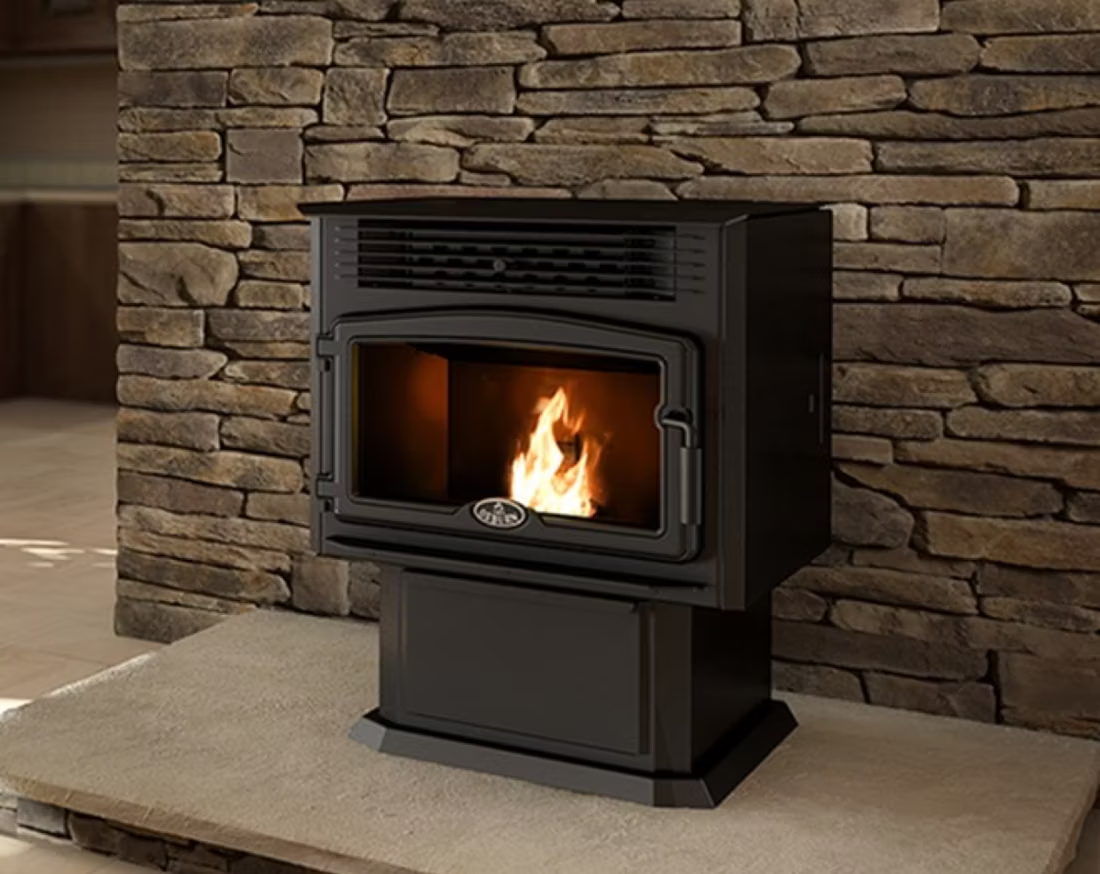
Republic County sits in north-central Kansas along the Nebraska line, a rural stretch of farm country where winter arrives with sharp winds off open fields and average lows around 16°F. At 5,723 heating degree days, the county's heating season is comparable to Madison, Wisconsin—long enough that a supplemental heat source matters, but not so extreme that homeowners need the massive overnight burn times a place like Duluth or Bismarck would demand. That makes pellet stoves a strong fit here: they hold a steady, programmable temperature through a January cold snap without anyone needing to split or stack a cord of oak.
Republic County has no air quality non-attainment issues or burn restrictions, so pellet stoves here aren't chosen to dodge smoke regulations the way they sometimes are in tighter airsheds—they're chosen for convenience. Local oak, hickory, and osage orange firewood is plentiful for those who want to split their own, but many county residents work full days on farms or commute to Belleville and don't have time to tend a wood fire every few hours. A pellet stove's auger-fed hopper runs largely unattended, and pellets from regional suppliers like Lignetics stack cleanly in a mudroom or garage without the bark, bugs, and mess of cordwood.
Three steps. No salesperson until you're ready.
Tell us about your project
Your zip code, your situation, and the fuel you're leaning toward—or let the answers point you to one.
See what's actually available
The brands dealers within 100 miles genuinely carry—real options, never a catalog mirage.
Get your dealer & Project Guide
A trusted local dealer, plus the free Project Guide & Parts List that names every component of the job.
Frequently Asked Questions
How much does a pellet stove installation cost in Republic County?
Most pellet stove installations in Republic County run in the same range seen across rural Kansas—roughly $4,500 to $7,500 depending on the unit, whether you're installing into an existing fireplace opening as an insert or placing a freestanding stove on a new hearth pad, and the length of the vent run through an exterior wall. Homes without an existing masonry fireplace typically fall toward the higher end since a full hearth pad and wall-through venting kit need to be built from scratch. Because Republic County is sparsely populated, expect installers based in Belleville or nearby to include a modest travel charge for jobs out toward Scandia or Cuba.
What size pellet stove do I need for my Republic County home?
Sizing depends on square footage, ceiling height, and how exposed your home is to the open wind that's typical of this part of north-central Kansas. As a rough guide: smaller units (rated for up to about 1,000-1,300 sq ft) suit a farmhouse room or addition, while mid-size units handle 1,500-2,200 sq ft main living areas common in Belleville and Scandia homes. Older farmhouses with less insulation or exposed rural sites should size up slightly, since wind chill on an open Republic County field pulls heat out of a structure faster than a comparable house in a sheltered town lot. A local dealer will walk your home and size the unit for free rather than relying on a square-footage chart alone.
Where can I buy pellets in or near Republic County?
Regional brands like Lignetics and Indeck Energy Services supply pellets to farm and home stores across this part of Kansas and Nebraska, and many hardware or feed stores in Belleville stock pellets seasonally or can order by the pallet. Rural residents often buy a full ton (50 forty-pound bags) at once each fall to avoid multiple trips, and it's worth asking your dealer about pallet delivery direct to a farm or acreage outside town—many will deliver within the county for a modest fee, which beats hauling 2,000 pounds of pellets in a pickup bed yourself.
What's the difference between a pellet stove and a pellet insert?
A pellet stove is a freestanding unit that sits on its own hearth pad and vents through a wall or existing chimney chase—it can go almost anywhere in a room with the right clearances. A pellet insert is built to slide into an existing masonry fireplace opening, which is common in older Republic County farmhouses that still have a brick fireplace from decades past. For homes with an existing fireplace, an insert usually makes sense because it reuses the opening and improves both looks and heat output. Homes without an existing fireplace, including newer construction, are generally better matched to a freestanding stove.
Do I need a permit to install a pellet stove in Republic County?
Yes—a building permit is generally required for a new pellet stove installation, issued through the applicable county or city building office depending on whether you're inside Belleville city limits or in unincorporated Republic County. Most established hearth dealers handle the permit paperwork as part of the installation quote, so it's rarely something a homeowner has to navigate directly. Because pellet stoves burn cleanly and Republic County has no air quality non-attainment designation, there are no seasonal burn curtailment periods to worry about here the way there sometimes are in more urban Kansas counties.
Will a pellet stove work if the power goes out in Republic County?
This is the honest tradeoff of pellet heat, and it matters in a farming county like Republic where rural power lines can go down in an ice storm or high-wind event. Pellet stoves rely on an electric auger to feed fuel and a blower to circulate heat, so they stop running without power unless paired with a battery backup or generator. For homes that lose power for extended stretches during winter storms, a wood stove or a battery-backed setup is worth discussing with your dealer. Many Republic County households actually run a pellet stove as their day-to-day convenience heater and keep a wood-burning option or generator on hand specifically for outage backup.
How often does a pellet stove need cleaning and maintenance?
Pellet stoves need more frequent light maintenance than wood stoves but far less heavy work. Plan on emptying the ash pan every few days during regular winter use, cleaning the burn pot weekly to keep the fire burning efficiently, and a full professional inspection and deep clean once a year—typically before the heating season starts in fall. Because Republic County pellet stoves often run for months at a stretch through the long Kansas winter, staying on top of the burn pot cleaning specifically prevents the clinker buildup that causes uneven burns and reduced heat output.
How much does it cost to run a pellet stove all winter in Republic County?
With 5,723 heating degree days, a typical Republic County home running a pellet stove as a primary or heavy supplemental heat source will burn somewhere in the neighborhood of 2 to 3 tons of pellets over a full winter, depending on home size and insulation. At current regional pricing for brands like Lignetics, that generally works out to a few hundred dollars less than an equivalent season of propane in most rural Kansas comparisons, though your local dealer can walk through actual numbers based on your specific home and usage pattern.
Pellet stove vs. wood stove—which is right for my Republic County home?
Wood stoves burn oak, hickory, or osage orange cut locally, work with zero electricity (a real advantage during rural power outages), and offer the lowest fuel cost if you or a neighbor can source your own cordwood. Pellet stoves trade that self-sufficiency for convenience: load a hopper instead of splitting and stacking wood, get a thermostat-controlled steady burn, and deal with far less ash and mess—but you lose heat the moment the power goes out. For Republic County households with reliable electric service who value the hands-off operation, pellet is often the better daily-use choice. For those prioritizing storm-ready backup heat or who already have a woodlot, wood remains a strong option. A number of local homes run both.
Why is my open fireplace making my house colder?
Open fireplaces suck—literally. As the fire burns, it consumes air your furnace already paid to heat and pulls it out through the chimney, so the house is actually colder after the fire goes out than before you lit it. An insert fixes this: it seals the chimney, puts fixed glass across the front, and turns that hole in your house into a real heat source.
What's the difference between an insert and a zero-clearance fireplace?
An insert is a fireplace that slides into a pre-existing wood-burning fireplace—if you don't have one, there's nothing to insert it into. A zero-clearance fireplace is built into a framed wall, which makes it the answer for remodels and new construction. Simple test: existing masonry fireplace means insert; blank or framed wall means zero-clearance.
How much should I budget for a fireplace?
For an average home—covering the fireplace, the vent pipe, and basic installation—a budget between $3,900 and $5,500 gives you a lot of options across wood, gas, and pellet. By the time you add finish work, gas line, and electrical, the average complete installation lands between $5,000 and $12,000 all-in. In a remodel or new build, a good rule is to put about 2.5% of the total project cost toward the fireplace.
Can a fireplace actually lower my heating bill?
Yes—by creating a comfort zone. A furnace heats every square foot of the house just to warm the one room you're in; a gas fireplace on low burns roughly a sixth of the gas a typical furnace does. Set the furnace around 55–60 degrees as a baseline, then heat the rooms your family actually uses. Families who heat this way commonly save $20–$60 a month.
Pellet Brands Stocked Around Republic County
Manufacturers will point you to the nearest stocking dealer.
Find your pellet stove in Republic County.
Tell us about your home and heating goals, and we'll match you with a trusted local dealer and send you a free Project Guide & Parts List—the exact equipment, vent kit, and recommended installer for your Republic County pellet project.
Find Your Fireplace →