
Find the right hearth for a High Plains Kansas winter.
Wood, gas, pellet, and electric fireplace resources for Belleville, Scandia, Cuba, and every farm and town in Republic County—built around winters that average 16°F and burn oak, hickory, and osage orange from local shelterbelts and river bottoms.
Every Project Starts From One of These Five Situations
Farm country heating in Republic County, Kansas.
Republic County sits along the Republican River in north-central Kansas, a farming county of roughly 3,350 people spread across small towns and open cropland. Winters here run cold but not extreme—average lows near 16°F and about 5,723 heating degree days put the county solidly in cold-climate territory, though nowhere near the severity of Fargo, ND or Duluth, MN. Osage orange hedgerows, planted generations ago as windbreaks along Kansas farmsteads, still supply some of the densest, hottest-burning firewood around, and oak and hickory from the river bottoms round out the local wood supply. With no air quality non-attainment designations in the county, wood burning here isn't subject to the inversion advisories or curtailment periods that complicate things in western mountain basins.
This hub covers every fuel type for every community in Republic County—Belleville, Scandia, Cuba, Courtland, Narka, Munden, Agenda, and the farms in between. Because the county is small and rural, dealer options are limited compared to a metro area, and a fair number of residents drive into Belleville or over into Cloud County for full-service hearth retailers. Pick your fuel below to see local dealers, realistic installation costs, and the practical trade-offs for a farmhouse, a Belleville side-street bungalow, or a rural property that's off the natural gas line.
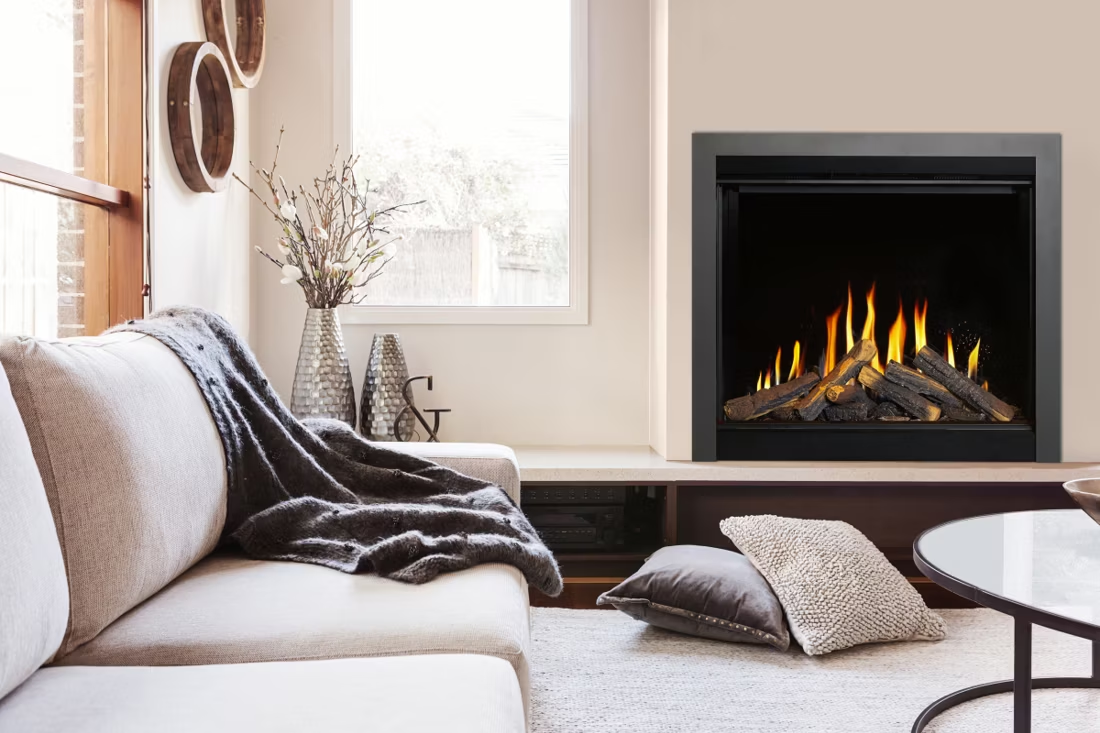
Four fuels. One honest answer for Republic County.
Three steps. No salesperson until you're ready.
Tell us about your project
Your zip code, your situation, and the fuel you're leaning toward—or let the answers point you to one.
See what's actually available
The brands dealers within 100 miles genuinely carry—real options, never a catalog mirage.
Get your dealer & Project Guide
A trusted local dealer, plus the free Project Guide & Parts List that names every component of the job.
Frequently Asked Questions
Which fuel works best in Republic County?
All four fuels see standard use here, and the right choice depends more on your home and budget than on the climate. Wood remains popular on farm properties where osage orange hedgerows and oak or hickory from the river bottoms make fuel cheap or free—a well-loaded cast iron or steel stove will carry a farmhouse through a 16°F night without trouble. Gas is the low-maintenance choice for homes with natural gas or propane service already in place, especially for anyone who doesn't want to handle firewood. Pellet stoves are a solid middle ground—steady, thermostatic heat without the splitting and stacking, and Lignetics and Indeck Energy Services both keep regional pellet supply reasonably steady. Electric fireplaces work well as supplemental heat in a bedroom or den but aren't built to carry a Kansas winter on their own. Many Republic County homes pair wood or pellet as the primary heat source with a gas or electric unit for convenience in a secondary room.
Do I need a permit to install a fireplace in Republic County?
It depends on where in the county you're building. Republic County doesn't maintain a single unified building code the way a large metro county would—incorporated towns like Belleville and Scandia generally handle their own permitting for new wood stoves, gas fireplaces, gas line work, and pellet stove installations, while property outside city limits often has lighter permit requirements. Gas work should always go through a licensed installer regardless of paperwork, since it involves a pressurized fuel line and combustion venting. Electric fireplace installs are usually permit-free unless you're hardwiring a built-in unit into a new circuit. If you're not sure what applies to your address, ask your local hearth retailer—most have already dealt with Belleville's or Scandia's specific requirements and can walk you through it as part of the installation.
Are there air quality restrictions on wood burning in Republic County?
No—Republic County has no air quality non-attainment designations and no winter burn advisories to plan around, which is a real advantage over places like the Klamath Basin or the Wasatch Front. That said, a well-seasoned, properly sized stove still matters for efficiency and safety, regardless of regulation. Osage orange, in particular, burns extremely hot and dense—it's a great fuel but can overfire an undersized stove if you're not used to it, so most local retailers will talk you through the right mix of osage orange, oak, and hickory rather than running osage orange alone.
Can one local hearth retailer handle all four fuel types?
With a county population under 3,500, don't expect a large multi-fuel showroom on every Main Street. Belleville has the county's main retail presence, and coverage tends to concentrate around wood and gas, with pellet stoves handled as a secondary line and electric fireplaces sold more as an add-on than a specialty. If you want to compare all four fuels side by side with working displays, plan on a drive into a larger regional hub like Concordia in neighboring Cloud County. It's a normal trade-off in a rural county this size, and it's worth calling ahead to confirm a dealer stocks the specific fuel type you're after before you make the trip.
How does service work in rural areas of Republic County?
Most technicians who service Republic County are based in or near Belleville and drive out to Scandia, Cuba, Courtland, Narka, and the farms in between. Expect a modest trip charge for calls out to the more distant corners of the county, and expect scheduling to tighten up once cold weather actually arrives—booking your annual chimney sweep or gas inspection in late summer or early fall, before the first hard freeze, gets you seen faster than calling once the snow's already down. If you're heating a rural property, it's also worth keeping a backup fuel source in mind—a wood stove as backup for a pellet or gas system covers you if a delivery or a power outage interrupts your primary heat.
What's the typical cost range for fireplace installation across all fuel types in Republic County?
Costs run lower here than in many metro markets, reflecting both the rural pricing and the more modest installation scope typical of farmhouse and small-town homes. Wood stove or insert installation: roughly $3,000–$7,000 for a typical install, more if new chimney work is required. Gas fireplace, insert, or stove: roughly $3,500–$9,000 depending on whether a new gas line or propane tank hookup is needed. Pellet stove or insert: roughly $3,000–$6,000 for most installs. Electric fireplace: $200–$2,500 for the unit itself, plus $300–$1,000 in labor for anything beyond a plug-and-play install. Exact pricing depends on the dealer and the specifics of your home—the county + fuel pages above break this down further.
How much should I budget for a fireplace?
For an average home—covering the fireplace, the vent pipe, and basic installation—a budget between $3,900 and $5,500 gives you a lot of options across wood, gas, and pellet. By the time you add finish work, gas line, and electrical, the average complete installation lands between $5,000 and $12,000 all-in. In a remodel or new build, a good rule is to put about 2.5% of the total project cost toward the fireplace.
What is an in-home preview and do I need one?
It's a visit where a hearth professional measures your space, confirms the model you picked actually works in your home, and walks the specs—framing, gas line, venting, finish work—before anything is ordered. Some details you just can't know until you see the house. Never make a down payment without one; it's the single most-skipped step that burns buyers.
Can I install a fireplace myself?
If you're putting a fire in your house on purpose, it's best to work with an expert. Unless you're genuinely experienced in framing, gas line, vent pipe, and the national code on clearances to combustibles, have a professional do it—and ideally the same company that sells you the fireplace, so warranty, service, and liability all live under one roof.
Does a fireplace add value to my home?
On average, a fireplace adds back to the home about the same amount you spent installing it. Add the monthly savings from heating the rooms you actually use instead of the whole house—often hundreds of dollars a year—and the value case is strong before you even count what a fire does for how your family uses the room.
Stove and Fireplace Dealers in Republic County
Listings include WhyFire partner dealers, dealers we have verified as authorized for the brands we recommend, and established local businesses that carry hearth products. Every listing shows which one it is. The ones marked Preferred run on WhyFire's software, so they can show you real pricing and book your appointment right here. No manufacturer pays for placement. How we verify dealers →
Alan Witte Sales
Swims And Sweeps
Pestinger Hearth Products
J & R Heating
Edward's Stone Inc
Table Rock Stone & Fireplace
Robidoux Inc
Capital Patio/flame Shop
Fireplace Stone & Patio - Lincoln
Find your fireplace in Republic County.
Pick your fuel below and we'll match you with a trusted local dealer, plus a free Project Guide & Parts List built around your fuel, your home, and your town in Republic County.
Find Your Fireplace →