
Find the right pellet stove for your Morris County home.
Steady, low-maintenance heat for the Flint Hills winters around Council Grove and White City. We match you with a trusted local dealer who sizes the unit and handles the install right.
Every Project Starts From One of These Five Situations
A hopper full of pellets, days of steady heat.
Morris County sits in the Flint Hills of east-central Kansas, with a moderate winter heating season and average winter lows around 20°F—a climate zone 4A pattern similar to what you'd see in parts of the lower Midwest, though without the extreme cold that hits places like Fargo or Bismarck. That's a moderate but real heating season, and a growing number of Morris County homeowners are turning to pellet stoves as a way to add heat to a farmhouse, ranch home, or shop without the daily wood-splitting routine common on properties surrounded by oak, hickory, and osage orange timber stands.
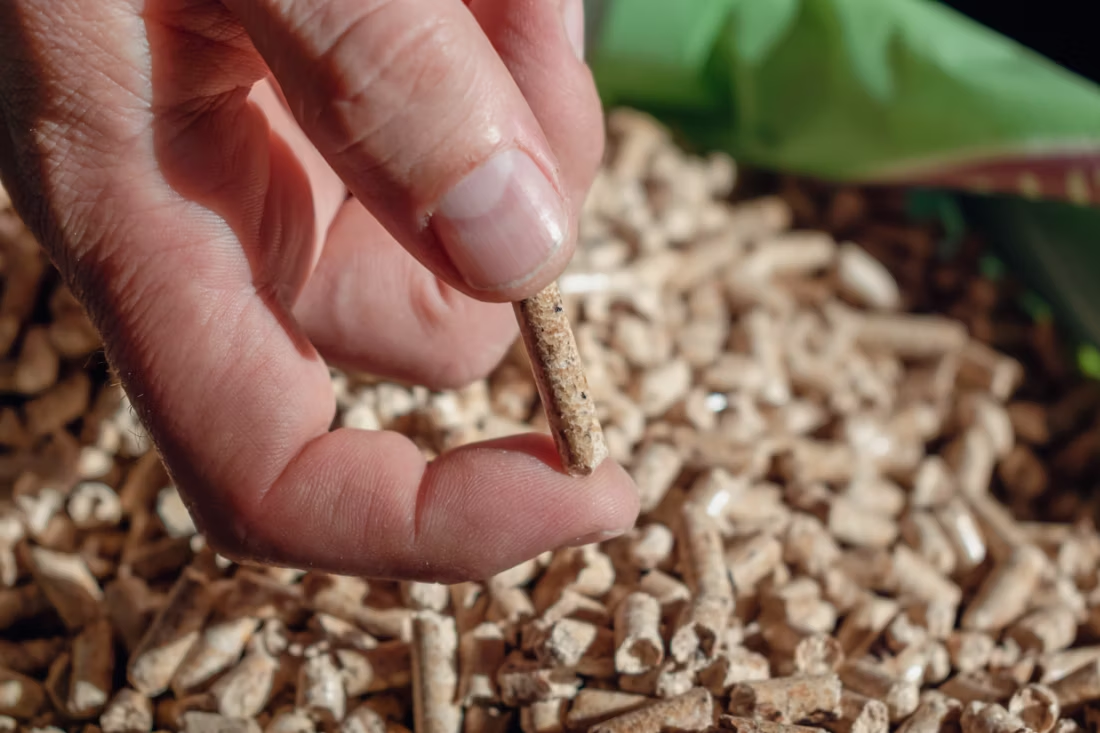
There's no wood-burning air quality restriction here—Morris County has no non-attainment designation or inversion concerns—so the appeal of pellet heat isn't regulatory, it's practical. A pellet stove loads from a bag instead of a woodpile, burns cleaner with far less ash than cordwood, and holds a steady, thermostatically controlled temperature that's useful for rural properties where a homeowner might be out working cattle or fields for hours at a time. Regional pellet supply comes through brands like Lignetics and Indeck Energy Services, both of which distribute into this part of Kansas.
Three steps. No salesperson until you're ready.
Tell us about your project
Your zip code, your situation, and the fuel you're leaning toward—or let the answers point you to one.
See what's actually available
The brands dealers within 100 miles genuinely carry—real options, never a catalog mirage.
Get your dealer & Project Guide
A trusted local dealer, plus the free Project Guide & Parts List that names every component of the job.
Frequently Asked Questions
How much does a pellet stove installation cost in Morris County?
Pellet stove installations in this part of Kansas typically run in the range of $4,500 to $7,500 once you factor in the unit, venting, and hearth pad work if needed. Because pellet stoves vent through a small-diameter pipe rather than a full masonry chimney, installs in Morris County homes are often simpler and less costly than a comparable wood stove install—particularly in ranch homes and ranch-style farmhouses common throughout the county. A local dealer can give you a firm number after seeing your specific wall or floor configuration.
What size pellet stove do I need for my Morris County home?
Sizing depends on square footage, ceiling height, and whether you want the stove as primary or supplemental heat. Many Morris County homes are older farmhouses with less insulation than newer construction, which pushes sizing up a notch from the manufacturer's square-footage chart. A stove that comfortably covers 1,200 square feet in a tight, newer build might only handle 900 in a drafty older farmhouse near Dwight or Latimer. A local dealer will walk your space and size it correctly rather than relying on a box-store rule of thumb.
Where can I find a certified pellet stove installer near me?
Look for a dealer with NFI (National Fireplace Institute) certification—it signals real training in hearth appliance installation and venting, not just a general contractor doing a side job. Given Morris County's small population, most residents end up working with a dealer based in a nearby larger town who covers Council Grove, White City, and the surrounding rural areas. Expect a modest travel charge on quotes for installs further out in the county. Find My Fireplace matches you with a trusted local dealer who covers your specific address, so you're not guessing which company actually services your area.
What's the difference between a pellet stove and a pellet insert?
A pellet stove is a freestanding unit that sits on a hearth pad and vents through a wall or existing chimney chase—it can go almost anywhere with the right clearances. A pellet insert is built to slide into an existing masonry fireplace opening, converting an old open hearth into a much more efficient heat source while using the existing chimney as a vent chase. For Morris County homes with an older fireplace that barely throws heat, an insert is often the more practical upgrade; for a room with no existing fireplace, a freestanding stove is the simpler path.
Do I need a permit to install a pellet stove in Morris County?
Requirements vary by whether you're inside city limits (Council Grove, White City) or in unincorporated Morris County, so it's worth checking with the relevant building office before work starts. Most local dealers handle the permitting process as part of the installation, which is one of the practical advantages of using an established local installer rather than a DIY approach. Because Morris County has no air quality non-attainment designation, there are no wood-smoke curtailment periods or burn bans to work around here—pellet stoves run whenever you want heat.
What's the best pellet stove for Morris County's climate?
With winter lows averaging around 20°F and a moderate winter heating season, Morris County doesn't demand the extreme-cold engineering you'd need in a place like Duluth or International Falls—a mid-size pellet stove in the 40,000-50,000 BTU range covers most farmhouses and ranch homes here without issue. For larger square footage or older, leakier construction common in this county, sizing up to a higher-output model is worth discussing with your dealer. Pellet supply locally comes through Lignetics and Indeck Energy Services, so ask your dealer which brand of stove is tuned to run cleanest on the pellets actually available near you.
How much do pellets cost and where do I buy them in Morris County?
Pellets are typically sold in 40-pound bags, with a heating season for an average home running anywhere from 1 to 3 tons depending on square footage and how hard the stove runs. Regional supply in this part of Kansas comes primarily through Lignetics and Indeck Energy Services, both of which distribute to farm and hardware stores across the region. Because Morris County is rural with a small population base, it's worth confirming with your dealer which local retailer keeps pellets in stock through the winter rather than assuming year-round availability at any single store.
How often does a pellet stove need cleaning and maintenance?
Pellet stoves need more frequent light maintenance than wood stoves but far less heavy cleaning—expect to empty the ash pan every few days during regular use and do a deeper burn-pot and venting cleaning every few weeks depending on how many hours you're running it. An annual professional inspection is still worth scheduling, ideally in late summer before the heating season starts, to check the auger, blower motor, and venting. For a rural Morris County property running the stove as a main heat source through a full Kansas winter, staying ahead of ash buildup keeps the auger feeding pellets consistently and avoids a mid-January service call.
Pellet vs. wood—which is right for my Morris County home?
Wood is abundant here—oak, hickory, and osage orange are all common in local timber stands—and a wood stove runs without electricity, which matters for rural properties where storm-related power outages can stretch on. Pellet stoves need electricity to run the auger and blower, so they're not a fallback during an outage, but they offer a big convenience trade: no splitting, no daily wood hauling, and a thermostatically even heat that's easier to leave running while you're out working the property. For a Morris County homeowner who wants low-maintenance daily heat and has reliable power, pellet is often the better fit; for anyone prioritizing storm-proof backup heat, wood remains the safer bet. A local dealer can walk you through both options for your specific situation.
What's the difference between an insert and a zero-clearance fireplace?
An insert is a fireplace that slides into a pre-existing wood-burning fireplace—if you don't have one, there's nothing to insert it into. A zero-clearance fireplace is built into a framed wall, which makes it the answer for remodels and new construction. Simple test: existing masonry fireplace means insert; blank or framed wall means zero-clearance.
Why is my open fireplace making my house colder?
Open fireplaces suck—literally. As the fire burns, it consumes air your furnace already paid to heat and pulls it out through the chimney, so the house is actually colder after the fire goes out than before you lit it. An insert fixes this: it seals the chimney, puts fixed glass across the front, and turns that hole in your house into a real heat source.
How much should I budget for a fireplace?
For an average home—covering the fireplace, the vent pipe, and basic installation—a budget between $3,900 and $5,500 gives you a lot of options across wood, gas, and pellet. By the time you add finish work, gas line, and electrical, the average complete installation lands between $5,000 and $12,000 all-in. In a remodel or new build, a good rule is to put about 2.5% of the total project cost toward the fireplace.
What is an in-home preview and do I need one?
It's a visit where a hearth professional measures your space, confirms the model you picked actually works in your home, and walks the specs—framing, gas line, venting, finish work—before anything is ordered. Some details you just can't know until you see the house. Never make a down payment without one; it's the single most-skipped step that burns buyers.
Stove and Fireplace Dealers in Morris County
Pellet Brands Stocked Around Morris County
Manufacturers will point you to the nearest stocking dealer.
Get your free Morris County pellet stove Project Guide & Parts List.
Tell us about your home and we'll match you with a trusted local Morris County dealer and send a free Project Guide & Parts List—the exact parts, vent kit, and recommended installer for your pellet stove project.
Find Your Fireplace →