
Electric heat that works in any Morris County home—no chimney required.
From the storefronts of Council Grove to farmhouses outside White City and Dwight, electric fireplaces plug into a room without a flue, a gas line, or a masonry chimney. Find the right unit and get matched with a trusted local dealer.
Every Project Starts From One of These Five Situations
The easiest fireplace upgrade in the Flint Hills.
Morris County is home to just over 5,600 people spread across Council Grove and the smaller communities of White City and Dwight, plus a lot of open Flint Hills ranchland in between. Climate zone 4A puts the county in a moderate-cold band—about 4,948 heating degree days a year and winter lows averaging around 20°F—cold enough for real heating bills, but not the kind of extreme that demands a wood stove running around the clock. A lot of the housing stock here is older: farmhouses built long before natural gas lines reached rural additions, and historic buildings around the Santa Fe Trail corridor in Council Grove where cutting a new chimney chase isn't an option the county's historic district review wants to approve lightly.
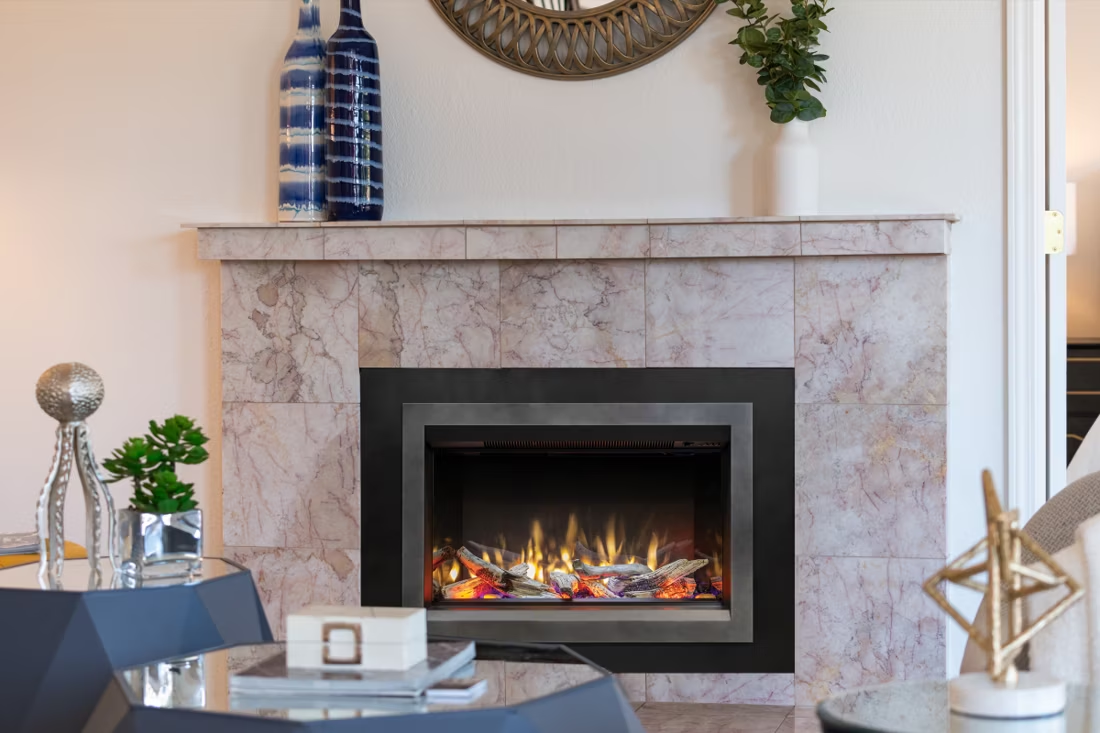
That's exactly the gap electric fireplaces fill. A simple plug-in insert runs on a standard household circuit; a larger built-in wall unit typically needs a dedicated 20-amp circuit, which a licensed electrician can run without touching your roofline or masonry. No venting, no gas line, no chimney sweep. Most of rural Morris County gets its power from Flint Hills Electric Cooperative, and like anywhere in this part of Kansas, winter ice storms can knock the co-op's lines down for a stretch—so it's worth being clear-eyed that an electric fireplace is ambiance and zone heat, not a substitute for a wood stove if you want backup heat during an outage. For everyday supplemental warmth in a bedroom, sunroom, or upstairs apartment above a Main Street building in Council Grove, though, it's the simplest project on this list, and a trusted local dealer can get one sized and installed correctly.
Three steps. No salesperson until you're ready.
Tell us about your project
Your zip code, your situation, and the fuel you're leaning toward—or let the answers point you to one.
See what's actually available
The brands dealers within 100 miles genuinely carry—real options, never a catalog mirage.
Get your dealer & Project Guide
A trusted local dealer, plus the free Project Guide & Parts List that names every component of the job.
Frequently Asked Questions
How much does an electric fireplace installation cost in Morris County?
A basic plug-in electric insert or freestanding unit runs $150 to $600 for the unit itself and can be set up the same afternoon since it uses an existing outlet. A built-in wall unit or mantel package with a custom surround typically runs $1,200 to $4,000 installed, and that range depends heavily on whether a licensed electrician needs to run a new dedicated circuit—common in older Morris County farmhouses where the electrical panel is original to the home. Historic properties in the Council Grove district sometimes carry additional review for exterior-visible changes, though electric units rarely trigger that since there's no venting involved.
Do I need a permit to install an electric fireplace in Morris County?
A simple plug-in unit that uses an existing outlet generally doesn't require a permit. If you're adding a dedicated circuit or doing a built-in wall installation with new wiring, that electrical work typically needs a permit through the county's building and zoning office at the courthouse in Council Grove, and it should be pulled by the licensed electrician doing the work. There's no gas line, flue, or chimney inspection involved—electric is by far the lightest-touch permitting path of any fireplace fuel in the county.
What size electric fireplace do I need for my room?
Electric fireplaces are rated for supplemental heat, not whole-home heating, so sizing is really about the room, not the square footage of the house. A compact insert or 26-40 inch unit comfortably heats a bedroom or small living room in a White City or Dwight-area home. Larger 50-60 inch built-ins with higher wattage heaters can take the edge off a bigger open-concept living area, but on Morris County's coldest 20°F nights, plan on your furnace or a supplemental wood or gas source doing the heavy lifting—the electric unit is there for the visual and the extra warmth close to where you're sitting.
Will my electric fireplace work during a power outage?
No—this is the one honest limitation to flag. Electric fireplaces need power to run the heater, blower, and flame effect, so when Flint Hills Electric Cooperative lines go down during an ice storm, the unit goes dark along with everything else on the circuit. If backup heat during outages matters to your household, a wood stove or a battery-backed gas insert is the better fit for that specific need—plenty of Morris County homes pair an electric unit for everyday ambiance with a wood stove elsewhere in the house for exactly this reason.
What's the difference between an electric insert and a built-in electric fireplace?
An electric insert is designed to drop into an existing masonry fireplace opening, giving an old, drafty fireplace a heat source and a flame effect without any chimney work or clean-out. A built-in unit is meant to be framed into a wall from scratch—common in newer construction or renovations where there's no existing fireplace at all. For a lot of the older homes around Council Grove that still have an unused masonry firebox, an insert is usually the simpler and cheaper route since it reuses the opening you already have.
Electric vs. wood vs. gas—which fuel makes sense for my Morris County home?
Wood remains a strong option here given the abundance of local oak, hickory, and osage orange, and it's the only one of the three that keeps working when the co-op lines are down. Gas offers instant heat and higher output than electric, but requires either a natural gas line or a propane tank, which not every rural address has readily available. Electric is the fastest and cheapest to install, produces zero emissions or ash, and works anywhere there's an outlet—but it's genuinely supplemental heat, not a primary source, and it's the one option that goes quiet during a winter power outage. A lot of households in the county end up mixing fuels: wood or gas for real heat, electric for the rooms where running a flue isn't practical.
Can I convert my old masonry fireplace to electric?
Yes, and it's a common project for older housing stock in Morris County. An electric insert slides into the existing firebox opening, plugs into a nearby outlet or a newly added dedicated circuit, and gives you flame effect and heat without needing to sweep, reline, or even use the chimney at all—the flue can stay capped. It's often the lowest-cost way to bring a decades-old, unused fireplace back into service, particularly in historic homes near the Santa Fe Trail corridor where major masonry changes aren't practical.
Do electric fireplaces need special wiring?
Smaller units (typically under 1,500 watts) run fine on a standard 15-amp household outlet, which covers most plug-in inserts and freestanding models. Larger built-in units, especially ones with a higher-wattage heater, often call for a dedicated 20-amp circuit to avoid tripping breakers when the heater kicks on alongside other things on the same circuit. In many older Morris County farmhouses, the panel itself may need a look before adding a new circuit—a licensed electrician can confirm capacity during the same visit they run the new wiring.
Where can I find electric fireplace dealers near me in Morris County?
Given the county's small population, most residents end up working with dealers based in the larger Flint Hills or Emporia-area markets who serve Morris County as part of their regular install territory, alongside a handful of local electricians comfortable with fireplace wiring. We match you with a trusted dealer who actually services your address—whether that's in Council Grove, White City, or a rural route address outside Dwight—rather than leaving you to guess who covers your area.
Can I put a TV above my fireplace?
Yes—with an asterisk. Fireplaces are hot and TVs don't like heat. Either put a mantel between them to deflect rising warmth, or choose a fireplace with heat-management technology that creates a cool zone on the wall above—the wall stays around 125 degrees, barely warm, while the room still gets full heat. If you like clean lines and don't want a mantel, heat management is the answer.
Does an electric fireplace need a vent or chimney?
No—that's its superpower. An electric fireplace needs a wall and an outlet, period. No vent pipe, no gas line, no clearances to design around, which is why it works in bedrooms, offices, apartments, and walls where venting a gas or wood unit would be impractical or impossible. Installation is typically the simplest and least expensive of any fireplace type.
Can I install a fireplace myself?
If you're putting a fire in your house on purpose, it's best to work with an expert. Unless you're genuinely experienced in framing, gas line, vent pipe, and the national code on clearances to combustibles, have a professional do it—and ideally the same company that sells you the fireplace, so warranty, service, and liability all live under one roof.
Should the dealer who sells my fireplace also install it?
Ideally, yes. A fireplace project involves vent pipe, gas line, electrical, and often tile or stone. Hire three or four separate trades and you own the liability and the game of telephone between them. One company selling and installing means one accountable party, start to finish—ask about factory training, on-time completion records, and what happens if an inspection fails.
Stove and Fireplace Dealers in Morris County
Find your electric fireplace in Morris County.
Tell us a bit about your home and we'll put together a free Project Guide & Parts List—the right unit, the wiring it needs, and a trusted local dealer who can install it correctly.
Find Your Fireplace →