
Find a pellet stove built for Greeley County's wind and cold.
Consistent, hopper-fed heat for Tribune and the wide-open High Plains of Greeley County—find the right pellet stove or insert and connect with a trusted local dealer.
Every Project Starts From One of These Five Situations
Steady, low-maintenance heat for wide-open Greeley County.
Greeley County sits at the far western edge of Kansas, along the Colorado border, where the High Plains stretch flat and windswept for miles in every direction. With just 923 residents spread across roughly 778 square miles, Tribune is the only incorporated town and the county seat—there's no dense grid of hearth shops or chimney sweeps out here, just wide-open wheat and cattle country. Climate zone 5A means a real heating season: sustained cold snaps, biting northwest wind off the plains, and a burn season that runs long even though snowfall itself is modest. The trees that do grow here—oak, hickory, and the tough, dense osage orange (hedge) planted generations ago as shelterbelts—burn hot in a traditional wood stove, but pellet heat has become the more practical choice for a lot of Greeley County households.
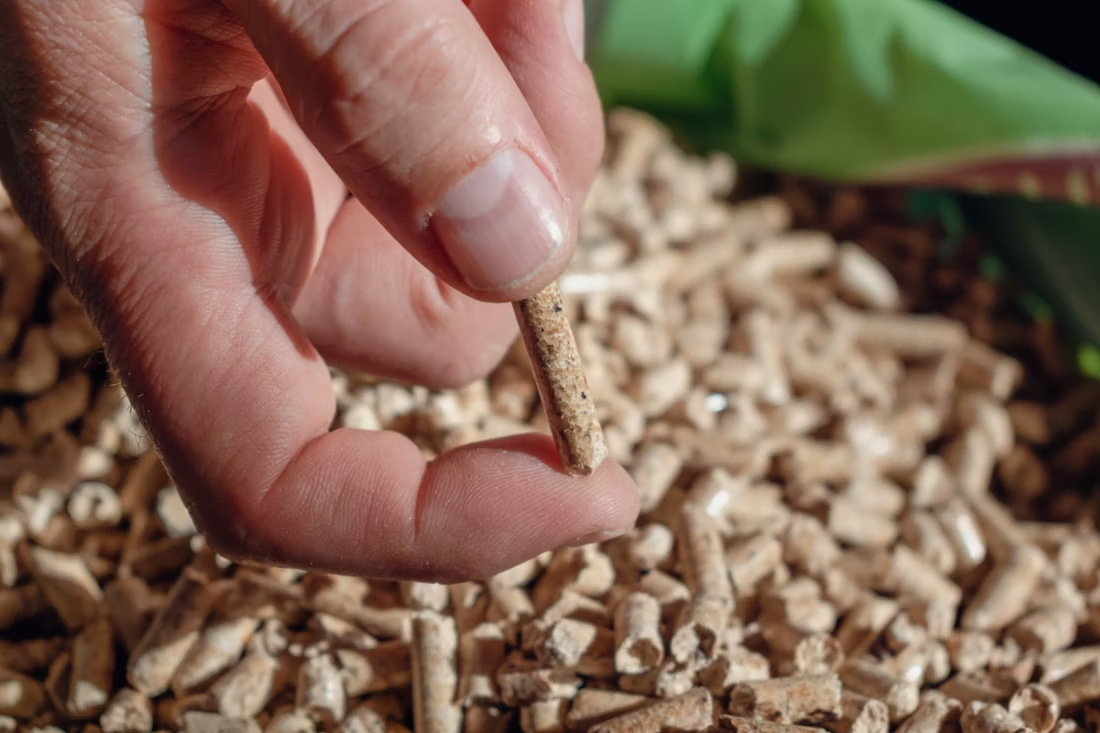
Pellet stoves solve two problems at once out here. First, there's no masonry chimney requirement—a pellet unit vents through a small-diameter pipe straight through an exterior wall, which matters in a county with no local chimney contractors and a long drive to the nearest hearth specialist in Garden City or Scott City. Second, pellet fuel itself is straightforward to source: Lignetics and Indeck Energy Services both supply the regional Kansas market, so bagged pellets can move through farm supply and co-op channels rather than requiring a dedicated pellet retailer. Because Greeley County has no air-quality nonattainment designation and no winter inversion problems like you'd see in a mountain valley, there's no burn-curtailment pressure here—the appeal of pellet heat is really about convenience, consistent output, and lower ash than cordwood, not regulatory compliance.
Three steps. No salesperson until you're ready.
Tell us about your project
Your zip code, your situation, and the fuel you're leaning toward—or let the answers point you to one.
See what's actually available
The brands dealers within 100 miles genuinely carry—real options, never a catalog mirage.
Get your dealer & Project Guide
A trusted local dealer, plus the free Project Guide & Parts List that names every component of the job.
Frequently Asked Questions
How much does a pellet stove installation cost in Greeley County?
A typical pellet stove installation runs about $3,500 to $6,500 in most rural Kansas markets, depending on the unit, whether you need new wall venting versus using an existing chimney chase, and any electrical work for the hopper's auger and blower. Because Greeley County has no dedicated hearth retailer, expect a travel charge built into quotes from installers based out of Garden City or Scott City. Homes near Tribune with straightforward exterior-wall venting tend to land on the lower end of that range.
What size pellet stove do I need for my home?
Sizing depends on square footage and how well-sealed your home is against the near-constant High Plains wind. Small units (under 1,000 sq ft) suit a single room or a smaller Tribune home; medium units (1,000–2,000 sq ft) cover most farmhouses and ranch-style homes common in Greeley County; larger units handle bigger or older farmhouses with less insulation. Because wind exposure out here drives up heat loss even on days that aren't especially cold by the thermometer, it's worth erring toward a slightly larger unit than you would in a more sheltered part of the state—a local installer can confirm sizing based on your home's construction.
Where can I find installers for pellet stoves near Tribune and Greeley County?
There's no full-service hearth shop inside Greeley County itself, so most homeowners work with installers based in larger southwest Kansas towns—commonly Garden City or Scott City—who travel out to Tribune and the surrounding countryside. When vetting an installer, ask specifically about pellet stove experience rather than just wood stove or fireplace work, since venting and electrical requirements differ. A qualified installer will also know how to route wall venting on an older farmhouse without compromising the wall's structure.
What's the difference between a pellet stove and a wood stove for a Greeley County home?
A wood stove burns split cordwood—oak, hickory, or the dense osage orange hedge wood common in local shelterbelts—and needs no electricity to operate, which matters if you lose power during a High Plains ice storm. A pellet stove burns compressed wood pellets fed automatically from a hopper, produces far less ash, and holds a more consistent temperature without constant tending, but it depends on electricity to run the auger and blower. For a county served by a rural electric cooperative where outages can happen during severe winter weather, some households keep a wood stove as backup even if pellet is their primary daily-use unit.
Do I need a permit to install a pellet stove in Greeley County?
Most rural Kansas counties, including Greeley County, require a building permit for a new solid-fuel appliance installation, along with proof the unit meets current EPA emissions certification. Check with the Greeley County building or zoning office before work begins—in a county this size, that's often a short conversation rather than a formal review process, but it's still a required step. Your installer can typically confirm what documentation is needed and handle the paperwork as part of the job.
What's the best pellet stove for far-western Kansas winters?
Look for a unit with a large hopper capacity—40 to 60 pounds—so it can run overnight without a refill during the longer, windier cold stretches typical of Greeley County's climate zone 5A winters. A reliable auger feed and simple thermostatic control matter more out here than fancy features, since service technicians are a longer drive away than in more populated parts of the state. Brands distributed regionally through suppliers like Lignetics are a common and dependable starting point; ask your installer which models they can service locally without a long-distance parts order.
How often does a pellet stove need servicing?
Plan on a full cleaning and inspection once a year, ideally before the heating season starts in fall. This includes clearing the burn pot, checking the auger motor, inspecting the exhaust blower, and cleaning the venting. Because there's no local hearth service provider in Greeley County, some homeowners schedule this alongside a visit from a Garden City or Scott City technician, or learn to do basic burn-pot and glass cleaning themselves between professional service visits.
Where can I buy pellets in Greeley County?
Bagged pellets aren't typically stocked in Tribune itself given the town's small size, so most Greeley County households buy pellets through farm supply stores or co-ops in nearby larger towns, or order pallets directly through regional suppliers like Lignetics or Indeck Energy Services. Buying a full pallet (usually 50 forty-pound bags) ahead of the heating season is common practice in a rural area like this, both for cost savings and to avoid a mid-winter supply gap.
Pellet stove vs. propane heater—which is right for my Greeley County home?
Propane is widely used across rural Kansas for whole-home heat and is delivered by tank to almost any farmstead, which makes it a practical baseline in a county without natural gas infrastructure. A pellet stove is usually chosen as a zone-heating supplement or a primary heat source in a smaller home, offering a visible flame and a lower fuel cost per BTU than propane in many years, though it depends on electricity to operate. Many Greeley County households run propane as their whole-house system and add a pellet stove in the main living area to cut propane use during the coldest months and add a backup heat source if the furnace ever needs service.
What's the difference between an insert and a zero-clearance fireplace?
An insert is a fireplace that slides into a pre-existing wood-burning fireplace—if you don't have one, there's nothing to insert it into. A zero-clearance fireplace is built into a framed wall, which makes it the answer for remodels and new construction. Simple test: existing masonry fireplace means insert; blank or framed wall means zero-clearance.
Why is my open fireplace making my house colder?
Open fireplaces suck—literally. As the fire burns, it consumes air your furnace already paid to heat and pulls it out through the chimney, so the house is actually colder after the fire goes out than before you lit it. An insert fixes this: it seals the chimney, puts fixed glass across the front, and turns that hole in your house into a real heat source.
Can a fireplace actually lower my heating bill?
Yes—by creating a comfort zone. A furnace heats every square foot of the house just to warm the one room you're in; a gas fireplace on low burns roughly a sixth of the gas a typical furnace does. Set the furnace around 55–60 degrees as a baseline, then heat the rooms your family actually uses. Families who heat this way commonly save $20–$60 a month.
Can I install a fireplace myself?
If you're putting a fire in your house on purpose, it's best to work with an expert. Unless you're genuinely experienced in framing, gas line, vent pipe, and the national code on clearances to combustibles, have a professional do it—and ideally the same company that sells you the fireplace, so warranty, service, and liability all live under one roof.
Pellet Brands Stocked Around Greeley County
Manufacturers will point you to the nearest stocking dealer.
Find your pellet stove in Greeley County.
Tell us about your home in Greeley County and we'll match you with a trusted local dealer plus a free Project Guide & Parts List—the exact parts, including the vent kit, for your pellet stove project near Tribune.
Find Your Fireplace →