
Find the right fireplace for the High Plains winters in Greeley County.
Wood, gas, pellet, and electric fireplace resources for Tribune and the farm communities across Greeley County. Get matched with a trusted local dealer who knows what actually installs well out here.
Every Project Starts From One of These Five Situations
Wide-open, wind-scoured heating on the western Kansas High Plains.
Greeley County sits on the far western edge of Kansas, hard against the Colorado border, with a population under a thousand spread across nearly 800 square miles of dryland farm country. Climate zone 5A puts winters here closer to Fargo, ND or Bismarck, ND than to Wichita—sustained wind, single-digit overnight lows, and heating seasons that stretch from October well into April. There's no local air quality non-attainment concern, no inversion layer trapping smoke, so wood burning is straightforward here in a way it isn't in mountain basins or river valleys. Local hardwoods—oak, hickory, and the tough, dense osage orange fencerows planted generations ago as windbreaks—have heated farmhouses in this county for over a century, and plenty of households still burn wood as a primary or backup heat source.
What you'll find on this hub: hearth retailers, service technicians, and fuel suppliers serving Tribune and the rest of Greeley County. Given the population, most dealers covering this area are based in a neighboring county and drive in for installs and service—that's normal for rural western Kansas, not a red flag. Pick your fuel below to see what's realistically available, installed costs, and which local pro actually covers your address.
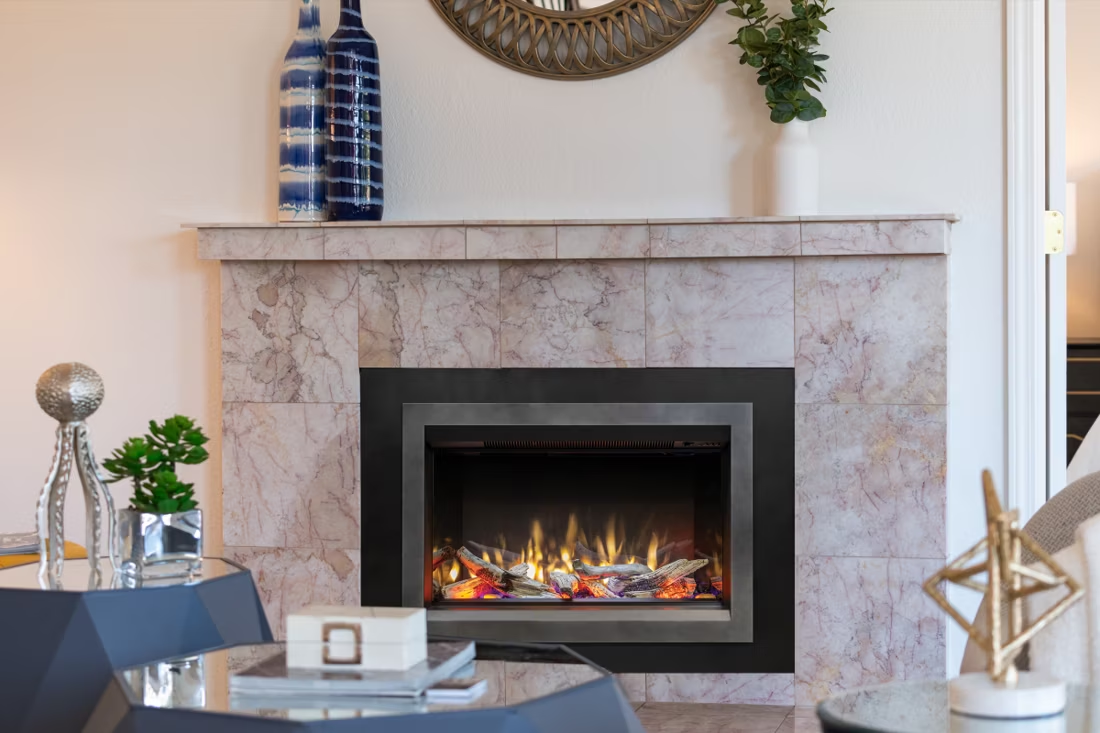
Four fuels. One honest answer for Greeley County.
Three steps. No salesperson until you're ready.
Tell us about your project
Your zip code, your situation, and the fuel you're leaning toward—or let the answers point you to one.
See what's actually available
The brands dealers within 100 miles genuinely carry—real options, never a catalog mirage.
Get your dealer & Project Guide
A trusted local dealer, plus the free Project Guide & Parts List that names every component of the job.
Frequently Asked Questions
Which fuel makes sense for a home in Greeley County?
It depends on the house and how remote it is. Wood is a genuine primary or backup fuel here—local oak, hickory, and osage orange are dense, long-burning hardwoods, and a lot of Greeley County farmhouses have relied on self-cut or locally sourced firewood for generations, especially useful when winter wind knocks out power. Propane, not natural gas, is the realistic 'gas' option for most of the county given the distance from gas mains—instant heat with no wood-hauling labor. Pellet stoves work well too and are supplied regionally through brands like Lignetics; they need electricity to run the auger and blower, so they're not ideal as your only heat source if outages are a concern. Electric fireplaces are fine supplemental heat for a bedroom or den but won't keep up with a 5A-zone January night on their own. Many households here run wood or propane as primary heat with electric as a secondary, ambiance-focused unit in one room.
Do I need a permit to install a fireplace or stove in Greeley County?
Generally yes for wood, gas, and pellet installations, though enforcement and process are lighter here than in a metro county—check with the Greeley County building office or your township before starting work. Propane installations typically require sign-off from your propane supplier on the line work in addition to any local permit. Wood stoves and inserts should meet current EPA emissions standards regardless of whether local enforcement is strict—this matters for insurance and resale even where inspection is minimal. Electric fireplaces usually don't need a permit unless you're hardwiring a built-in unit into a new circuit. If you're working with a dealer who regularly installs in rural Kansas counties, they'll usually know exactly what Greeley County requires and can handle the paperwork for you.
Is wood burning restricted in Greeley County?
No—Greeley County has no air quality non-attainment designation and no winter inversion issue like you'd see in a mountain basin such as Klamath Falls. The open, windy High Plains terrain here disperses smoke rather than trapping it, so there are no curtailment days or burn advisories to plan around. That said, an EPA-certified stove is still worth the investment for efficiency's sake—burning dense hardwood like osage orange in an old uncertified box wastes a lot of the fuel's heat value up the flue.
Will one dealer carry all four fuel types for my Greeley County home?
It's less likely here than in a larger market—with under 1,000 people in the whole county, most dealers serving Tribune and the surrounding area specialize in one or two fuels rather than stocking full showrooms of all four. A wood and pellet specialist might not carry electric units, and a propane-focused dealer may only handle gas appliances and tank service. That's normal for a county this size, not a gap in service. If you want to compare fuel types side by side, expect to work with a dealer based in a neighboring western Kansas or eastern Colorado town that serves a wider regional territory.
How does installation and service work when you're this far from a dealer's home base?
Most retailers and technicians covering Greeley County are routed out of a larger town outside the county and bundle Tribune-area calls together rather than making one-off trips. Expect a modest travel or trip fee built into quotes, and expect scheduling to run on a route or seasonal basis rather than next-day availability—booking your annual chimney sweep or gas inspection in late summer, before the October cold sets in, gets you ahead of the rush. For wood heat, keeping a few dry rounds of osage orange or oak on hand and a working carbon monoxide detector matters more out here, given how far a service call can be if something goes wrong mid-winter.
What does fireplace installation typically cost across fuel types in Greeley County?
Costs run close to regional western Kansas norms, sometimes slightly higher once a dealer's rural travel fee is factored in. Wood stove or insert: roughly $4,000–$8,500 depending on chimney work, higher for full new-construction chimney runs. Propane fireplace, insert, or stove: roughly $4,000–$9,500, with cost driven mostly by line work and venting rather than the appliance itself. Pellet stove or insert: roughly $4,000–$7,000 for a typical install. Electric fireplace: $200–$3,000 for the unit itself, plus $400–$1,200 in labor for anything beyond a plug-and-play install. The fuel-specific pages above break down local pricing and dealer-by-dealer detail further.
Can I install a fireplace myself?
If you're putting a fire in your house on purpose, it's best to work with an expert. Unless you're genuinely experienced in framing, gas line, vent pipe, and the national code on clearances to combustibles, have a professional do it—and ideally the same company that sells you the fireplace, so warranty, service, and liability all live under one roof.
Can a fireplace actually lower my heating bill?
Yes—by creating a comfort zone. A furnace heats every square foot of the house just to warm the one room you're in; a gas fireplace on low burns roughly a sixth of the gas a typical furnace does. Set the furnace around 55–60 degrees as a baseline, then heat the rooms your family actually uses. Families who heat this way commonly save $20–$60 a month.
How much should I budget for a fireplace?
For an average home—covering the fireplace, the vent pipe, and basic installation—a budget between $3,900 and $5,500 gives you a lot of options across wood, gas, and pellet. By the time you add finish work, gas line, and electrical, the average complete installation lands between $5,000 and $12,000 all-in. In a remodel or new build, a good rule is to put about 2.5% of the total project cost toward the fireplace.
Wood, gas, pellet, or electric—how do I choose?
Match the fuel to your life, not the other way around. Wood: lowest fuel cost and total power-outage independence, but you're hauling and stacking. Gas: press a button, set a thermostat, no maintenance to speak of. Pellet: wood economics with automatic feeding, in exchange for weekly cleaning and a need for electricity. Electric: plugs in anywhere with honest supplemental heat. Nobody regrets the fuel that fits how they actually live.
Stove and Fireplace Dealers in Greeley County
Listings include WhyFire partner dealers, dealers we have verified as authorized for the brands we recommend, and established local businesses that carry hearth products. Every listing shows which one it is. The ones marked Preferred run on WhyFire's software, so they can show you real pricing and book your appointment right here. No manufacturer pays for placement. How we verify dealers →
Cheyenne Wells Lumber Co
Premier Homes
Plains Heating & Air Conditioning
Builders FirstSource-Garden City, Ks
Bird's Alternatives
Get matched with a local dealer serving Greeley County.
Tell us about your home and we'll put together a free Project Guide & Parts List—the exact parts, vent kit included, and the local dealer we recommend for your Tribune-area project.
Find Your Fireplace →