
Reliable pellet heat for Coffey County's farmhouses and lake homes.
From Burlington to New Strawn to the shores of John Redmond Reservoir, pellet stoves give Coffey County households a clean, low-maintenance way to take the edge off a Flint Hills winter. Tell us about your home and we'll match you with a trusted local dealer.
Every Project Starts From One of These Five Situations
Clean, consistent heat without cutting or hauling firewood.
Coffey County is spread thin—about 5,366 people across Burlington, New Strawn, Lebo, Gridley, Waverly, and LeRoy, with a lot of open ground in between around John Redmond Reservoir and Wolf Creek Lake. Winters here sit in Climate Zone 4A, with average lows around 19°F and roughly 4,839 heating degree days a season—not the brutal cold of the northern Plains, but enough sustained chill from November through March that most farmhouses and lake places run supplemental heat for a good chunk of the year. Local timber runs to oak, hickory, and the famously dense, rock-hard osage orange (hedge) that generations of Kansas farmers planted as shelterbelt and later cut for firewood because it burns hotter and longer than almost anything else in the county.
That same hedge and oak is still burned in wood stoves across Coffey County, but splitting osage orange is brutal work, and not every household has the time or the woodlot for it. Pellet stoves give farm families and lake-house owners a cleaner alternative: load the hopper, set the thermostat, and get steady heat without the splitting maul. Coffey County has no air quality non-attainment issues or winter burn bans, so the appeal here is practical rather than regulatory—convenience, consistent output, and less mess than a woodpile by the back door. Regional pellet suppliers including Lignetics and Indeck Energy Services keep fuel moving through Midwest farm and hardware stores, and a local hearth dealer can help you figure out whether a freestanding stove or an insert makes more sense for your house.
Three steps. No salesperson until you're ready.
Tell us about your project
Your zip code, your situation, and the fuel you're leaning toward—or let the answers point you to one.
See what's actually available
The brands dealers within 100 miles genuinely carry—real options, never a catalog mirage.
Get your dealer & Project Guide
A trusted local dealer, plus the free Project Guide & Parts List that names every component of the job.
Frequently Asked Questions
How much does a pellet stove installation cost in Coffey County?
A freestanding pellet stove installation typically runs $3,000 to $6,500 in this part of Kansas, depending on the unit and whether you need new venting run through an exterior wall versus tying into an existing chimney chase. A pellet insert going into an existing masonry fireplace usually falls in the $3,500 to $7,000 range once the flex liner and hearth work are included. Because Coffey County itself has limited retail, expect your quote to include a modest travel charge if your installer is based out of Emporia, Ottawa, or Topeka—worth asking about up front.
What size pellet stove do I need for a Coffey County farmhouse?
Sizing depends on square footage, ceiling height, and how leaky the house is—and a lot of Coffey County's older farmhouses and lake cabins run drafty by modern standards. As a rough guide: a small pellet stove (up to 1,000 sq ft) suits a single large room or a lake cabin used seasonally, a medium unit (1,000–1,800 sq ft) covers most main living areas, and a larger stove with a bigger hopper handles a whole modest farmhouse if it's the primary heat source rather than a supplement to propane or electric. A local dealer will want to walk the house before recommending a model—insulation quality matters more here than raw square footage.
Where can I find a pellet stove dealer near Coffey County?
Coffey County doesn't have big-box hearth retailers within its own borders, so most homeowners end up working with a dealer based in Emporia, Ottawa, or Topeka who services the surrounding rural counties. Look for a dealer whose installers carry NFI (National Fireplace Institute) certification specific to pellet appliances—venting a pellet stove correctly (and running the power cord for the auger and blower) is different from wood stove installation, and it matters for both safety and warranty coverage. Ask whether they've installed in older farmhouses in your part of the county; that experience with older wiring and non-standard wall construction is worth more than proximity alone.
What's the difference between a pellet stove and a pellet insert?
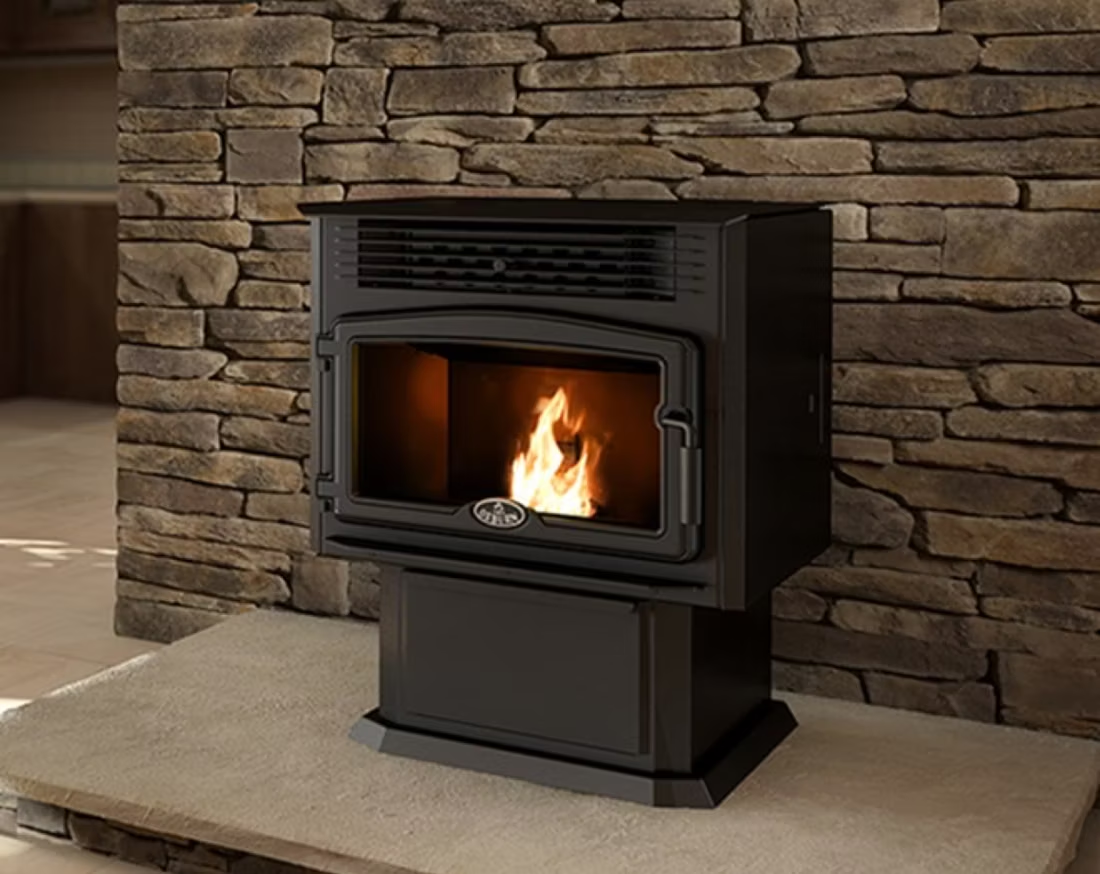
A pellet stove is a freestanding appliance that sits on its own hearth pad and vents through a wall or existing chimney—it can go almost anywhere in the house with a nearby outlet. A pellet insert is built to slide into an existing masonry fireplace opening, turning a rarely-used wood fireplace into an efficient, thermostatically controlled heat source while reusing the chimney chase. If your Coffey County home already has a fireplace that mostly sits cold, an insert is usually the more cost-effective route. If you're heating a room or outbuilding that never had a fireplace to begin with, a freestanding stove is the simpler install.
Do I need a permit to install a pellet stove in Coffey County?
Most pellet stove and insert installations require a building permit, and any electrical work for a dedicated outlet may need to be inspected as well—check with Coffey County's building office or your city clerk if you're inside Burlington, New Strawn, or one of the smaller towns, since requirements can vary by jurisdiction. Unlike counties with air quality non-attainment status, Coffey County has no wood-smoke curtailment periods or burn restrictions to work around, so once your unit is permitted and installed, there's no seasonal limitation on running it.
What's the best pellet stove for a Coffey County winter?
With average lows around 19°F and roughly 4,839 heating degree days a season, Coffey County doesn't demand the extreme-cold engineering you'd want in Bismarck or International Falls, but a mid-size hopper still pays off—a stove that can run 24 to 40 hours on a full load means fewer refills during a stretch of raw, windy Flint Hills weather. Widely available brands like Harman, Quadra-Fire, and Enviro all make units well suited to this climate; the bigger question for most Coffey County homes is whether you want a unit with a battery backup or generator-compatible transfer switch, since pellet stoves need electricity to run the auger and blower and rural power can go out during ice storms.
Where do I buy pellet fuel in Coffey County?
Pellets aren't typically stocked in Coffey County itself in bulk—most households buy through farm and ranch supply stores or hardware stores in Emporia, Ottawa, or Topeka, often stocking regional brands like Lignetics or fuel sourced through Indeck Energy Services' Midwest supply network. Pricing generally runs in the $220 to $280 per ton range in this part of Kansas, though it's worth buying early in the fall—rural stores sometimes sell through their stock during a hard winter, and running out mid-January isn't a great time to be hunting for pellets.
How much maintenance does a pellet stove need?
Less than a wood stove, but not none. Plan on emptying the ash pan every few days during regular use, cleaning the burn pot and glass weekly, and having the unit professionally serviced once a year—typically before the season starts—to clean the exhaust venting and check the auger motor and blower. For busy Coffey County farm and ranch households, that trade-off (a little routine upkeep instead of splitting and stacking hedge or oak) is often the whole appeal of going pellet in the first place.
Pellet stove vs. wood stove—which makes more sense here?
Wood is free or cheap if you're already cutting oak, hickory, or hedge off your own ground, produces real radiant heat, and keeps working during a power outage—a genuine consideration for rural Coffey County homes on co-op power during ice storms. Pellet stoves trade that off-grid resilience for convenience: no splitting hedge (which is genuinely hard, dense wood to process by hand), a thermostat instead of constant tending, and a cleaner burn with far less ash and creosote. For farmhouses with a woodlot and someone willing to put in the labor, wood still makes sense. For lake houses, retirees, or households that just want steady heat without the physical work, pellet is usually the better fit—and some households in the county run both.
How often does a pellet stove need cleaning?
A clean pellet stove is a happy pellet stove. Plan on cleaning the burn pot about once a week when you're burning regularly—ash and clinkers gum up the air holes just like a pellet barbecue. Most pellet stove problems trace back to skipped cleaning that nobody explained up front. Some designs make it easy with a trapdoor burn pot: pull a lever and the gunk drops into the ash pan.
Can a pellet stove heat a whole house?
It genuinely can. I burned a pellet stove as my only heat source for years after a furnace died, and it kept the entire house warm. Pellets feed automatically from a hopper, so you get wood-heat economics with thermostat-style control. Two honest caveats: it needs weekly cleaning during the season, and most models need electricity to run—ask about battery backup if outages are a concern.
Can I install a fireplace myself?
If you're putting a fire in your house on purpose, it's best to work with an expert. Unless you're genuinely experienced in framing, gas line, vent pipe, and the national code on clearances to combustibles, have a professional do it—and ideally the same company that sells you the fireplace, so warranty, service, and liability all live under one roof.
What is an in-home preview and do I need one?
It's a visit where a hearth professional measures your space, confirms the model you picked actually works in your home, and walks the specs—framing, gas line, venting, finish work—before anything is ordered. Some details you just can't know until you see the house. Never make a down payment without one; it's the single most-skipped step that burns buyers.
Pellet Brands Stocked Around Coffey County
Manufacturers will point you to the nearest stocking dealer.
Find your pellet stove in Coffey County.
Tell us about your home and we'll match you with a trusted local dealer and send over a free Project Guide & Parts List—a plan for your pellet project in Coffey County with the exact parts, including the vent kit, and the dealer we recommend for the install.
Find Your Fireplace →