
Warm your Coffey County home, fuel by fuel.
Wood, gas, pellet, and electric fireplace resources for every town in Coffey County—Burlington, LeRoy, Gridley, Waverly, New Strawn, and the farms in between. Find the right fuel and get matched with a trusted local dealer.
Every Project Starts From One of These Five Situations
Rural heating traditions in eastern Kansas.
Coffey County sits in the Flint Hills transition zone of eastern Kansas, home to about 5,366 residents spread across farms, ranches, and five small towns anchored by the county seat, Burlington. Winters here are moderately cold—climate zone 4A, an average winter low of 19°F, and roughly 4,839 heating degree days a year, meaningfully milder than colder Midwest cities like Madison, WI, where HDD often tops 7,500, but still cold enough that home heating matters six months out of twelve. Oak, hickory, and osage orange—the tough, dense hedge wood that lines fence rows across the county—are the species most local burners split and stack. Unlike parts of the West, Coffey County has no winter inversion or non-attainment air quality concerns, so there are no curtailment days or burn advisories to plan around here.
This hub rolls up hearth retailers, service technicians, and fuel suppliers covering every corner of Coffey County—Burlington, LeRoy, Gridley, Waverly, New Strawn, and the farms and lake homes around John Redmond Reservoir. Find My Fireplace doesn't sell or stock stoves and fireplaces ourselves; we match you with a trusted local dealer who knows what's actually available and installable in this part of Kansas, and hand you a free planning packet before you ever set foot in a showroom. Pick your fuel below—wood, gas, pellet, or electric—to see local dealers, typical installation costs, and the specifics for your project.
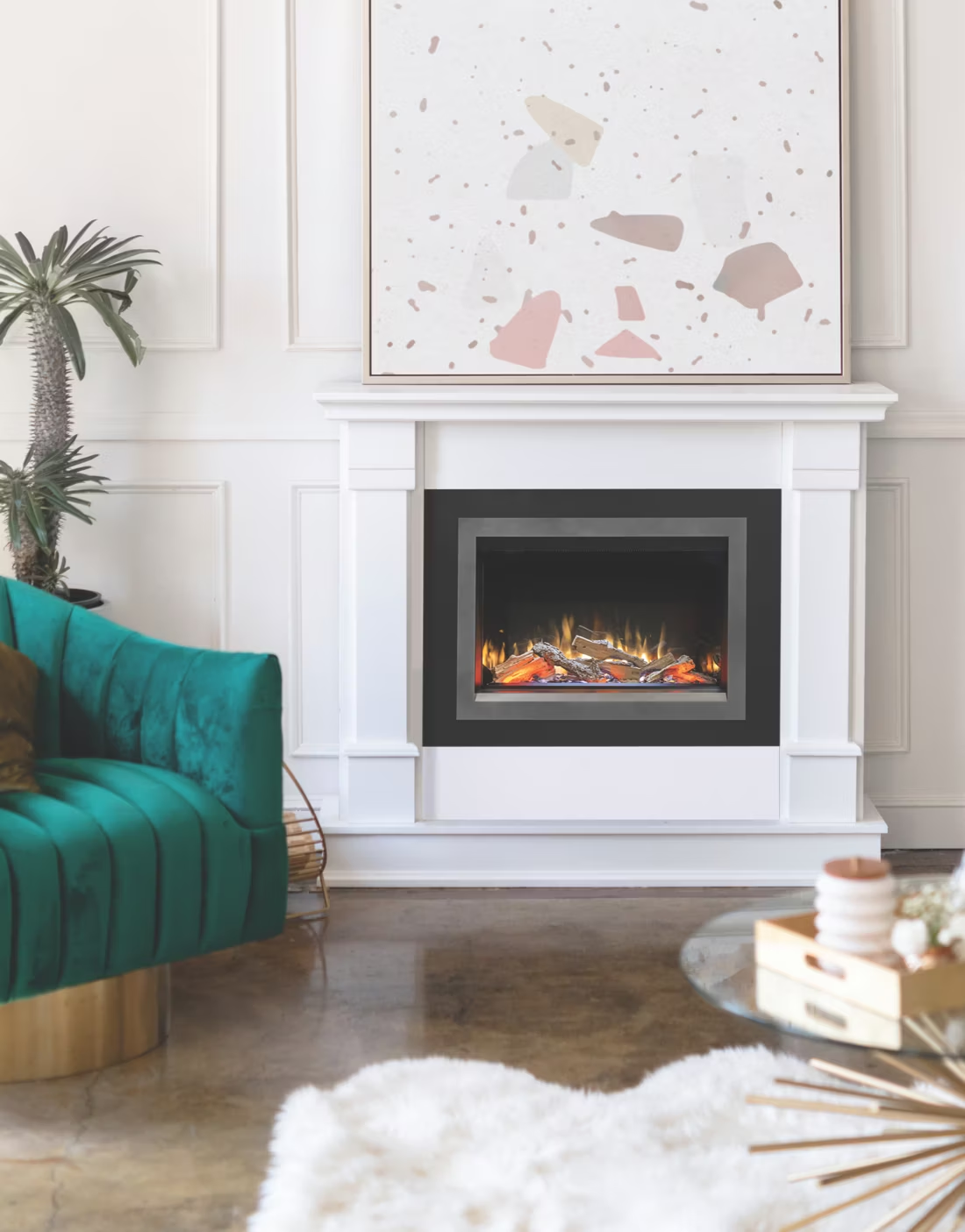
Four fuels. One honest answer for Coffey County.
Three steps. No salesperson until you're ready.
Tell us about your project
Your zip code, your situation, and the fuel you're leaning toward—or let the answers point you to one.
See what's actually available
The brands dealers within 100 miles genuinely carry—real options, never a catalog mirage.
Get your dealer & Project Guide
A trusted local dealer, plus the free Project Guide & Parts List that names every component of the job.
Frequently Asked Questions
Which fireplace fuel makes the most sense in Coffey County?
It comes down to what your home and your winters need. Wood is the traditional choice here—oak, hickory, and the hedge wood (osage orange) that lines so many fence rows burn hot and long, and a lot of Coffey County households still heat primarily with a wood stove or insert through the coldest months. Propane is the practical convenience fuel for most rural homes, since natural gas mains don't reach far outside Burlington—instant heat with none of the splitting and stacking. Pellet stoves are a solid middle ground: brands like Lignetics and Indeck Energy Services are both distributed regionally, so fuel supply isn't a concern, and you get wood-style ambiance without the woodpile. Electric fireplaces work well as supplemental heat in bedrooms or additions—Evergy's grid here is reliable, backed in part by the nearby Wolf Creek Generating Station, so electric heat doesn't carry the same outage risk it might in more storm-prone areas. Most Coffey County homes end up running two fuels: wood or propane as the primary heat source, electric or pellet filling in secondary rooms.
Do I need a permit to install a fireplace or stove in Coffey County?
In most cases yes, though requirements vary depending on whether you're inside Burlington's city limits or out in unincorporated Coffey County. New wood stoves and inserts need to meet current EPA New Source Performance Standards regardless of where you install them—that's federal, not local. Gas and propane installations typically require a separate permit for the gas line work, done by a licensed installer. For county permitting questions, homeowners in unincorporated areas generally start at the Coffey County Courthouse in Burlington; within city limits, Burlington's building department handles it. Most hearth retailers we match you with handle the permit paperwork as part of the installation, so it's rarely something you have to navigate solo.
Are there any wood-burning restrictions in Coffey County?
No—and that's one advantage of heating with wood here. Coffey County doesn't sit in a non-attainment zone and doesn't experience the winter inversions that trigger curtailment advisories in mountain or basin regions further west. There are no mandatory or voluntary no-burn days tied to air quality in this county. The one requirement that does apply everywhere in the country is that any new wood stove sold has to meet EPA emissions standards—that's a federal rule, not a Coffey County one. Beyond that, burning oak, hickory, or well-seasoned osage orange in a modern EPA-certified stove is simply a matter of good chimney maintenance and dry wood.
Can one local dealer handle all four fuel types—wood, gas, pellet, and electric?
Some can, though with a population under 6,000 spread across the whole county, Coffey County itself doesn't support a large number of standalone hearth showrooms. Many homeowners here end up working with multi-fuel retailers based in nearby regional centers like Emporia or Ottawa that travel into Burlington, LeRoy, and the surrounding towns for consultations and installs. That's actually one of the reasons Find My Fireplace exists—rather than guessing which dealer within a 40-mile radius actually carries and services what you need, we match you directly with a trusted dealer who covers your fuel and your part of the county.
How does hearth service work for such a rural, spread-out county?
Technicians serving Coffey County typically base out of Burlington or a nearby town and cover the county on a route basis—LeRoy and Gridley to the north, Waverly to the west, New Strawn and the John Redmond Reservoir homes to the south. Expect service techs to bundle appointments by area rather than offer same-day scheduling for a single rural call, so booking a few weeks ahead—especially before the first cold snap in October or November—gets you serviced before the busy season backs up. If you're heating a lake home or a farmhouse well outside town, it's worth asking your dealer about their travel radius up front.
What does fireplace or stove installation typically cost in Coffey County, across fuel types?
Costs vary by fuel and by how much venting or gas line work is involved. Wood stove or insert installs: roughly $4,000–$8,500 for a typical setup, more if a full chimney liner or masonry work is needed. Propane fireplace, insert, or stove: roughly $4,000–$10,000 depending on gas line distance and venting. Pellet stove or insert: roughly $4,000–$7,000 installed. Electric fireplace: $200–$3,000 for the unit itself, plus $400–$1,200 in labor for anything beyond a simple plug-in install. These are ballpark ranges—your matched local dealer will give you an exact quote based on your home.
Can a fireplace actually lower my heating bill?
Yes—by creating a comfort zone. A furnace heats every square foot of the house just to warm the one room you're in; a gas fireplace on low burns roughly a sixth of the gas a typical furnace does. Set the furnace around 55–60 degrees as a baseline, then heat the rooms your family actually uses. Families who heat this way commonly save $20–$60 a month.
Does a fireplace add value to my home?
On average, a fireplace adds back to the home about the same amount you spent installing it. Add the monthly savings from heating the rooms you actually use instead of the whole house—often hundreds of dollars a year—and the value case is strong before you even count what a fire does for how your family uses the room.
What is an in-home preview and do I need one?
It's a visit where a hearth professional measures your space, confirms the model you picked actually works in your home, and walks the specs—framing, gas line, venting, finish work—before anything is ordered. Some details you just can't know until you see the house. Never make a down payment without one; it's the single most-skipped step that burns buyers.
What are the biggest mistakes people make buying a fireplace?
Five come up constantly: budgeting for the unit but not the full job (vent, gas line, electrical, finish work); drowning in options instead of starting from style and fuel; buying without an in-home preview; handing installation to a handyman instead of a pro; and giving up out of sheer indecision. Every one is avoidable with a clear plan—step one, step two, step three.
Stove and Fireplace Dealers in Coffey County
Listings include WhyFire partner dealers, dealers we have verified as authorized for the brands we recommend, and established local businesses that carry hearth products. Every listing shows which one it is. The ones marked Preferred run on WhyFire's software, so they can show you real pricing and book your appointment right here. No manufacturer pays for placement. How we verify dealers →
Modern Air Conditioning, Inc
Chimney Sweep
Services Unlimited
Swims And Sweeps
Get matched with a Coffey County hearth dealer.
Tell us about your home and we'll match you with a trusted local dealer and send you a free Project Guide & Parts List—the exact parts, including the vent kit, for your project in Coffey County.
Find Your Fireplace →