
Steady heat for Cheyenne County's high plains winters.
From St. Francis to Bird City, Cheyenne County sits on the exposed Kansas-Colorado line where wind and cold cut through old farmhouses fast. Find the right pellet stove and get matched with a trusted local dealer.
Every Project Starts From One of These Five Situations
Consistent, low-maintenance heat for a wide-open county.
Cheyenne County sits in the far northwest corner of Kansas, right on the Colorado border, with a population of just 1,755 spread across nearly 1,020 square miles between St. Francis and Bird City. It's Climate Zone 5A country—the same cold, wind-driven continental pattern you'd find in Bismarck or Fargo, minus the tree cover. Most of the mature hardwoods in the county—oak, hickory, and hedgerows of osage orange—were planted generations ago as farm windbreaks rather than grown in natural forest stands, so cordwood here often comes from shelterbelt thinning rather than public timber sales.
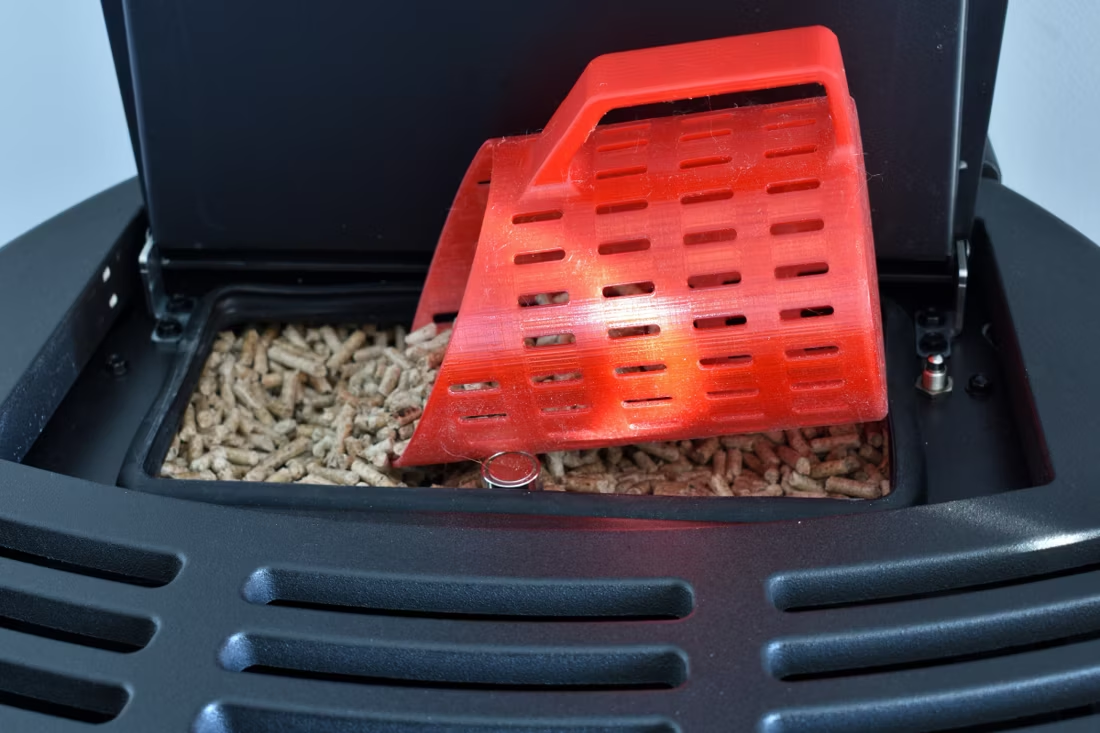
That's part of why pellet stoves have found a real foothold on the high plains: no cutting, splitting, or seasoning wood from your own windbreak, just a hopper you load from bagged pellets. Regional brands like Lignetics and Indeck Energy Services supply much of northwest Kansas, typically picked up or delivered by the ton from suppliers in nearby trade towns like Goodland or Colby. Cheyenne County has no air quality non-attainment issues and no winter burn curtailment periods on record, so pellet stoves here run without the seasonal restrictions you'd see in more urban basins—it's simply a practical, steady-burning choice for wide-open, wind-exposed homes.
Three steps. No salesperson until you're ready.
Tell us about your project
Your zip code, your situation, and the fuel you're leaning toward—or let the answers point you to one.
See what's actually available
The brands dealers within 100 miles genuinely carry—real options, never a catalog mirage.
Get your dealer & Project Guide
A trusted local dealer, plus the free Project Guide & Parts List that names every component of the job.
Frequently Asked Questions
How much does a pellet stove installation cost in Cheyenne County?
Most pellet stove installations in Cheyenne County run in the $3,500 to $7,000 range, depending on the unit and whether you're venting through an exterior wall or an existing chimney. Because pellet stoves use a small blower and auger motor, your installer will also confirm you have a nearby electrical outlet—most rural Cheyenne County homes do, but older farmhouses sometimes need a short electrical run added as part of the job. Installations in outbuildings or shops without existing wiring can push toward the higher end.
What size pellet stove do I need for my home?
Sizing depends on square footage, insulation, and how drafty the structure is—a real factor for the older farmhouses common around St. Francis and Bird City, where high plains wind finds every gap in a wall. As a rough guide: smaller units (under 1,200 sq ft) suit a single living area or a well-sealed newer home, while larger units (1,500+ sq ft) are typically needed for full-house heating in an older, less-insulated farmhouse exposed to open wind. A local dealer will walk your home before recommending a specific model rather than sizing off square footage alone.
Where can I find a certified pellet stove installer near me?
With a county population under 2,000, Cheyenne County itself doesn't support a dedicated hearth shop, so most homeowners here work with an installer based in a larger nearby trade center—Goodland, Colby, or occasionally across the state line near Burlington, Colorado. That's exactly the gap Find My Fireplace is built to close: we match you with a trusted dealer who already knows how to work efficiently in low-density rural counties like this one, rather than leaving you to guess which distant shop actually services your address.
What's the difference between a pellet stove and a wood stove?
A wood stove burns cordwood—in this area, typically oak, hickory, or osage orange cut from farm windbreaks—and needs no electricity to run, which matters when high plains wind knocks out power. A pellet stove burns compressed wood pellets fed automatically from a hopper, requires electricity to run the auger and blower, burns cleaner with far less ash, and doesn't require you to source, split, or season your own wood. For Cheyenne County homeowners without easy access to a windbreak to cut from, pellets are often the more practical daily-use choice; wood remains the better backup option during extended outages.
Do I need a permit to install a pellet stove in Cheyenne County?
Most pellet stove installations require a building permit through the county building department, along with an electrical inspection since the unit needs a dedicated outlet for its auger and blower motor. Because Cheyenne County has no air quality non-attainment designation, there are no winter curtailment periods or burn restrictions to plan around—unlike some western states, you won't need to check a daily air advisory before running your stove. Most local installers will confirm and handle the permitting as part of the job.
What's the best pellet stove for Cheyenne County's climate?
Look for a stove with a strong high-fire BTU rating and a hopper large enough to run overnight without refilling, since sustained sub-zero wind chill is common on this stretch of the high plains. Because rural Cheyenne County is served by an electric cooperative rather than an urban grid, and outages can happen during ice storms or high wind events, pairing your pellet stove with a small battery backup or generator is worth discussing with your dealer—the stove itself won't run without power. Models from Lignetics-compatible and Indeck-compatible lines are widely stocked by regional dealers and sized appropriately for this climate.
How often does a pellet stove need to be cleaned and serviced?
Plan on emptying the ash pan every few days during regular winter use and doing a deeper burn-pot and glass cleaning weekly. A full annual service—checking the auger, blower, gaskets, and venting—is recommended before each heating season, ideally in late summer or early fall ahead of the first cold snap off the plains. Because pellet stoves burn cleaner than cordwood, the maintenance is lighter than a wood stove, but it isn't zero-maintenance—skipping the annual service is the most common cause of auger jams and reduced heat output.
Where can I buy pellets and how much do they cost in Cheyenne County?
Lignetics and Indeck Energy Services are the two regional brands most commonly stocked by suppliers serving northwest Kansas, typically sold by the ton and picked up or delivered from trade towns like Goodland or Colby rather than from within Cheyenne County itself. Pricing regionally runs roughly $250 to $300 per ton depending on brand and delivery distance. Given the county's rural geography, many homeowners buy several tons at once each fall to avoid multiple trips once winter sets in.
Pellet stove vs. wood stove—which is right for my home?
Wood stoves work without electricity, burn cordwood you can source from local windbreaks of oak, hickory, or osage orange, and hold up as reliable backup heat when high plains wind takes down power lines. Pellet stoves are easier to run day to day—load the hopper, set the thermostat, less ash—but they depend on electricity for the auger and blower, and on a supply chain that, in Cheyenne County, runs through Goodland or Colby rather than a local yard. For a primary heat source with convenience in mind, pellet is a strong fit; for households prioritizing storm-proof backup heat, wood stays the safer bet, and many rural homes here end up with both.
What's the difference between an insert and a zero-clearance fireplace?
An insert is a fireplace that slides into a pre-existing wood-burning fireplace—if you don't have one, there's nothing to insert it into. A zero-clearance fireplace is built into a framed wall, which makes it the answer for remodels and new construction. Simple test: existing masonry fireplace means insert; blank or framed wall means zero-clearance.
Can a pellet stove heat a whole house?
It genuinely can. I burned a pellet stove as my only heat source for years after a furnace died, and it kept the entire house warm. Pellets feed automatically from a hopper, so you get wood-heat economics with thermostat-style control. Two honest caveats: it needs weekly cleaning during the season, and most models need electricity to run—ask about battery backup if outages are a concern.
What is an in-home preview and do I need one?
It's a visit where a hearth professional measures your space, confirms the model you picked actually works in your home, and walks the specs—framing, gas line, venting, finish work—before anything is ordered. Some details you just can't know until you see the house. Never make a down payment without one; it's the single most-skipped step that burns buyers.
Does a fireplace add value to my home?
On average, a fireplace adds back to the home about the same amount you spent installing it. Add the monthly savings from heating the rooms you actually use instead of the whole house—often hundreds of dollars a year—and the value case is strong before you even count what a fire does for how your family uses the room.
Pellet Brands Stocked Around Cheyenne County
Manufacturers will point you to the nearest stocking dealer.
Find your pellet stove in Cheyenne County.
Tell us a bit about your home and we'll put together a free Project Guide & Parts List—the exact parts, including the vent kit, and a recommended local dealer for your pellet stove project in Cheyenne County.
Find Your Fireplace →