
Reliable gas heat for the high plains of Cheyenne County.
From St. Francis to Bird City, most homes here run on propane, not piped natural gas—and the wind that sweeps this tri-state corner makes reliable heat matter. Find the right gas fireplace or insert and get matched with a trusted local dealer.
Every Project Starts From One of These Five Situations
Propane, not pipelines, keeps this corner of Kansas warm.
Cheyenne County sits in the very northwest corner of Kansas, wedged against both Colorado and Nebraska, with St. Francis as the county seat and Bird City as its only other incorporated town. Around 1,755 people are spread across roughly 1,020 square miles of open wheat and cattle country, sitting near 3,300 feet in a Climate Zone 5A pocket that runs colder and windier than most of the rest of the state—there's little to break a north wind coming straight off the plains. The county has no listed air quality restrictions, so burning schedules and curtailment periods that complicate hearth ownership in more urban counties simply aren't a factor here.
With a population this small and spread this thin, natural gas mains rarely reach every homestead—most gas heat in Cheyenne County runs on propane, delivered and stored in a tank on the property rather than piped in from a utility. A gas fireplace or insert paired with that existing propane setup gives instant, thermostat-controlled heat that doesn't depend on hauling firewood in from town, and models with battery-backup or self-powered ignition keep working when plains windstorms knock out the electric line—which happens here more than in sheltered parts of the state. Because there's no big-box hearth store in the county, most installs are handled by dealers based out of nearby Goodland, or crews that cross the state line from Burlington, Colorado or McCook, Nebraska.
Three steps. No salesperson until you're ready.
Tell us about your project
Your zip code, your situation, and the fuel you're leaning toward—or let the answers point you to one.
See what's actually available
The brands dealers within 100 miles genuinely carry—real options, never a catalog mirage.
Get your dealer & Project Guide
A trusted local dealer, plus the free Project Guide & Parts List that names every component of the job.
Frequently Asked Questions
How much does a gas fireplace installation cost in Cheyenne County?
Most gas fireplace and insert installations in this part of the state run roughly $4,000 to $9,000, depending on the unit, whether you're converting an existing masonry fireplace or building new, and whether your propane tank and regulator can support the added appliance without upgrades. Because Cheyenne County has no local hearth showroom, installers typically travel in from Goodland or from across the Colorado and Nebraska lines, and that travel time is usually reflected in the quote rather than hidden in it. Get a firm, in-home estimate before committing—a dealer serving St. Francis or Bird City can tell you quickly whether your existing propane line and tank size are adequate.
Can I convert an existing wood fireplace to gas out here?
Yes, and it's a common request in older Cheyenne County farmhouses that were built with a masonry fireplace decades ago. A propane insert slides into the existing firebox and vents through a stainless liner run up your current chimney, typically for $4,000 to $8,500 depending on the insert and whether new gas line needs to be run from your propane tank to the hearth. Homes that already have propane appliances—a furnace, water heater, or range—usually see the lower end of that range, since the fuel infrastructure is already in place and it's mostly a matter of tapping a new line.
Do I need natural gas, or does propane work fine?
Propane is the standard fuel for gas fireplaces throughout Cheyenne County—natural gas mains don't reach the vast majority of properties in a county this rural, so plan on propane unless you already know your address is on a gas line, which would be unusual outside a handful of in-town lots. Nearly every gas fireplace and insert model sold today can be configured for propane with the right orifice and regulator, so fuel type isn't a limiting factor on which unit you can choose—it just needs to be specified correctly at order time.
Will my gas fireplace still work if the power goes out?
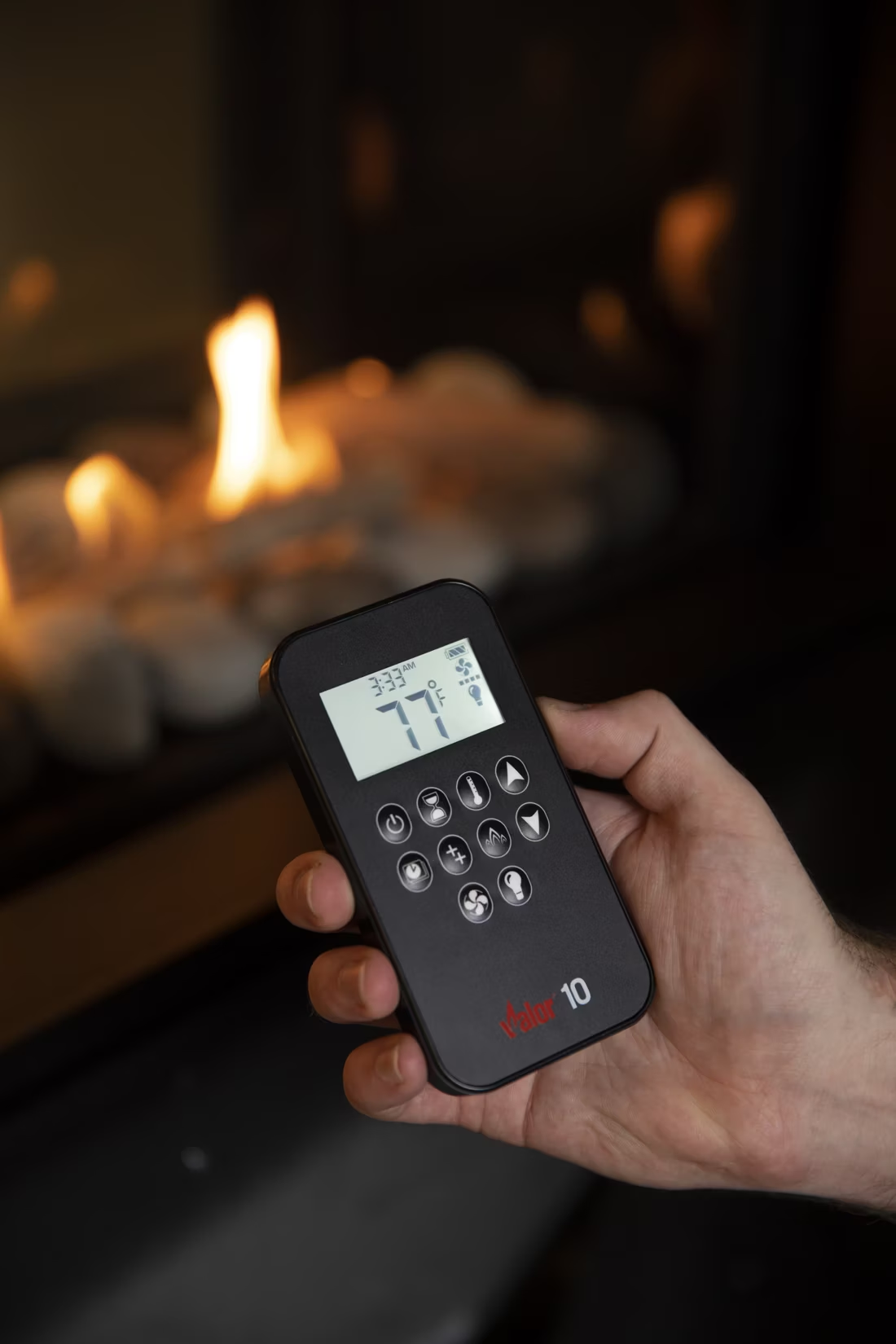
Most modern gas fireplaces will, which matters in a county where wind and ice regularly take down power lines strung across open plains with little tree cover to slow the weather down. Units with IPI (intermittent pilot ignition) run on a battery backup that kicks in automatically when the electricity drops, so the fireplace still lights on demand—just remember to keep fresh batteries in the unit. Valor fireplaces take a different approach: the pilot's thermocouple generates its own electricity, so there's no battery to remember at all. Ask your dealer which ignition system a given model uses before you decide.
What's the difference between a gas fireplace, insert, and stove?
A gas fireplace is a built-in unit framed into a wall, typically chosen for new construction or a full remodel. A gas insert drops into an existing masonry firebox and uses your current chimney as the vent path—the more common choice for the older farmhouses scattered across Cheyenne County. A gas stove is a freestanding cabinet-style unit that sits on the floor, similar in footprint to a wood stove but running on propane. If you already have a working fireplace opening, an insert is usually the simplest and most cost-effective upgrade.
Do I need a permit to install a gas fireplace here?
Generally yes—gas line work requires sign-off through the county, and in a county this size that oversight typically runs through the county clerk's office in St. Francis rather than a dedicated building department. The gas line itself should be run by a licensed propane technician regardless of permitting, since improper connections are the most common cause of leaks and combustion problems. Most dealers who install in Cheyenne County are used to coordinating this directly with the county, so you're not left tracking down paperwork yourself.
Vented or vent-free—which is allowed and which makes sense here?
Vented (direct-vent) gas fireplaces draw combustion air from outside and exhaust it back outside through sealed venting—the safer, more universally recommended choice, and the standard pick for most Cheyenne County installs. Vent-free units burn propane directly into the room air and are legal in Kansas, but they come with strict room-sizing and oxygen-sensor requirements, and they add moisture and combustion byproducts to indoor air that's already dry from plains winter wind. For a county with no natural gas infrastructure to fall back on and homes that often sit unattended for stretches during calving or harvest season, a direct-vent unit is the more forgiving, lower-maintenance option.
How often does a gas fireplace need servicing?
An annual inspection is recommended for any propane-fired fireplace or insert—a technician checks the burner, pilot assembly, gas connections, and venting, and cleans the glass and interior. This is a much lighter lift than wood chimney sweeping, typically $150 to $250, but it matters even more in a county without a natural gas utility doing periodic line checks—your propane supplier or a dealer technician is the only one keeping an eye on that equipment.
Gas or wood—which makes more sense for a Cheyenne County home?
Wood is still a viable option here—osage orange, historically planted across the plains as windbreak hedgerows, burns exceptionally hot and is plentiful along old fence lines, and oak and hickory are available from the scattered timber stands along the creeks. Wood also keeps working without electricity or a propane delivery, which some ranch households value given how exposed the power lines are out here. Gas, on the other hand, means no hauling or splitting, consistent heat at the flip of a switch, and less day-to-day maintenance—a real advantage during calving season or harvest when there's no time to tend a fire. Many households in the county end up with both: propane for daily convenience in the main living space, and a wood stove somewhere as backup.
Can I put a TV above my fireplace?
Yes—with an asterisk. Fireplaces are hot and TVs don't like heat. Either put a mantel between them to deflect rising warmth, or choose a fireplace with heat-management technology that creates a cool zone on the wall above—the wall stays around 125 degrees, barely warm, while the room still gets full heat. If you like clean lines and don't want a mantel, heat management is the answer.
What's the difference between an insert and a zero-clearance fireplace?
An insert is a fireplace that slides into a pre-existing wood-burning fireplace—if you don't have one, there's nothing to insert it into. A zero-clearance fireplace is built into a framed wall, which makes it the answer for remodels and new construction. Simple test: existing masonry fireplace means insert; blank or framed wall means zero-clearance.
What is an in-home preview and do I need one?
It's a visit where a hearth professional measures your space, confirms the model you picked actually works in your home, and walks the specs—framing, gas line, venting, finish work—before anything is ordered. Some details you just can't know until you see the house. Never make a down payment without one; it's the single most-skipped step that burns buyers.
How much should I budget for a fireplace?
For an average home—covering the fireplace, the vent pipe, and basic installation—a budget between $3,900 and $5,500 gives you a lot of options across wood, gas, and pellet. By the time you add finish work, gas line, and electrical, the average complete installation lands between $5,000 and $12,000 all-in. In a remodel or new build, a good rule is to put about 2.5% of the total project cost toward the fireplace.
Get matched with a gas dealer in Cheyenne County.
Tell us about your home and propane setup, and we'll match you with a trusted local dealer serving St. Francis and Bird City—plus a free Project Guide & Parts List with the exact parts, including the vent kit, for your gas fireplace project.
Find Your Fireplace →