
Steady Heat, Less Hassle, All Winter Long.
A hardwood-fired alternative to splitting cordwood for Cheney and Sedgwick County homes. Find the right pellet stove or insert and get matched with a trusted local dealer.
Every Project Starts From One of These Five Situations
A convenient alternative to cutting your own cordwood.
Cheney sits in the wheat country of Sedgwick County, about 1,380 feet up on the south-central Kansas plains, roughly 20 miles west of Wichita. Winters here are moderate compared to the northern tier of the country—average lows around 22°F and a heating season only a fraction as demanding as what a place like Fargo or Minneapolis logs each winter. Even so, older farmhouses and rural properties throughout the area routinely rely on supplemental heat through December, January, and February, and pellet stoves have become a popular option for households that want a real fire without the chainsaw, splitting maul, and woodshed that cordwood demands.
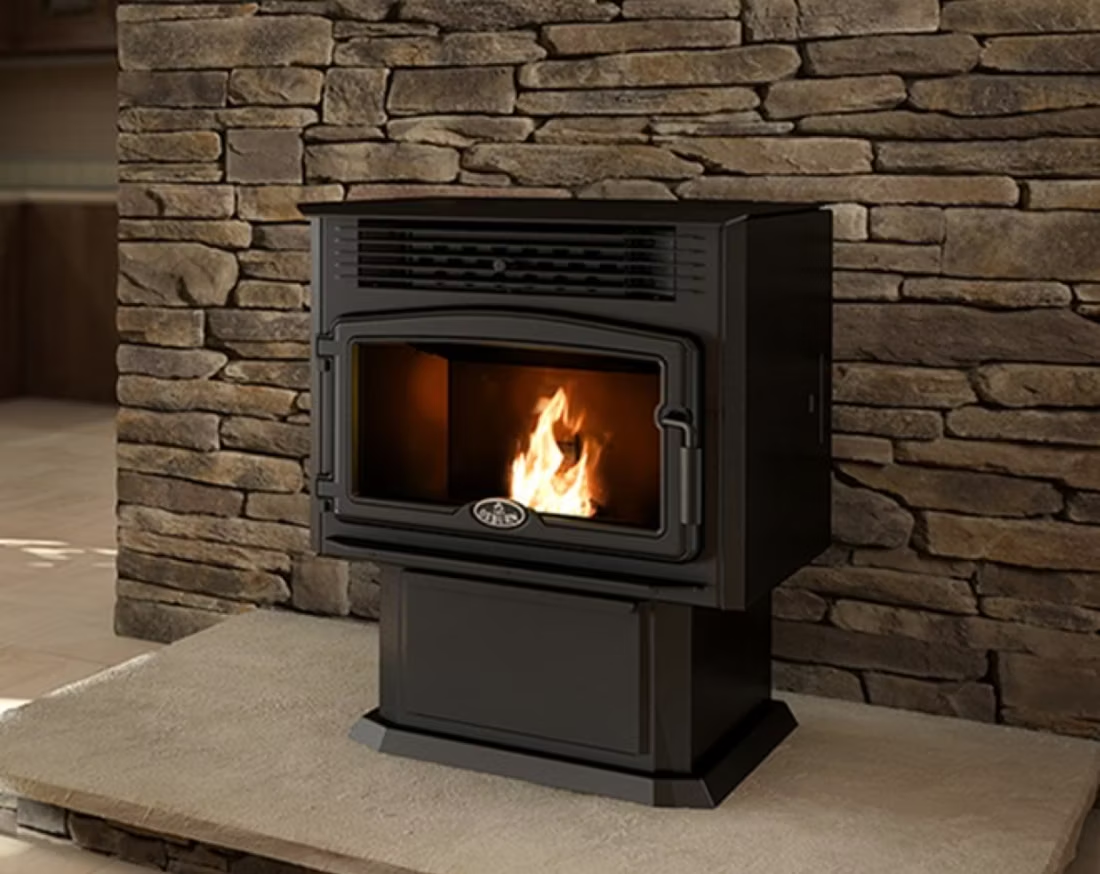
Oak, hickory, and osage orange are the wood species native to this part of Kansas, and plenty of Cheney households still burn cordwood cut from their own land or a neighbor's shelterbelt. A pellet stove offers a different bargain: bagged hardwood pellets from regional suppliers like Lignetics or Indeck Energy Services go straight into a hopper, and an auger feeds the fire automatically—no splitting, stacking, or hauling. Electric service from Evergy Kansas South, Evergy Kansas Central, or Sedgwick County Electric Cooperative (residential rates run about 14.3 cents per kWh) keeps the auger motor and blower running for only a few dollars a month, even during the coldest stretches.
Three steps. No salesperson until you're ready.
Tell us about your project
Your zip code, your situation, and the fuel you're leaning toward—or let the answers point you to one.
See what's actually available
The brands dealers within 100 miles genuinely carry—real options, never a catalog mirage.
Get your dealer & Project Guide
A trusted local dealer, plus the free Project Guide & Parts List that names every component of the job.
Frequently Asked Questions
How much does a pellet stove installation cost in Cheney?
Most pellet stove installations run in the neighborhood of $3,000 to $6,000, and Cheney tends to land on the lower half of that range because pellet venting is simpler than a wood chimney—a small-diameter PL vent pipe through an exterior wall usually does the job, rather than a full Class A chimney system. Costs move up if you're installing into an existing masonry fireplace as an insert, need longer horizontal venting runs, or want a dedicated electrical circuit added for the unit. A local dealer will give you a firm number after seeing your home.
What size pellet stove do I need for a Cheney home?
Because Cheney's winters are moderate compared to colder parts of the country—with a heating season only about two-thirds as demanding as places like Duluth or Fargo—most homes here don't need the largest pellet units on the market. A stove rated for 1,000 to 1,800 square feet handles a typical Sedgwick County home or supplements a farmhouse's existing furnace comfortably. Older, less-insulated rural homes on acreage sometimes run a larger unit or two smaller stoves in different zones. A local dealer will factor in your square footage, ceiling height, and insulation before recommending a model.
How do I find a certified pellet stove installer near Cheney?
Look for installers with NFI (National Fireplace Institute) certification, since pellet appliances still involve venting, electrical, and clearance requirements that need to be done correctly. Given Cheney's small size, most homeowners here work with hearth dealers based in the greater Wichita area who cover Sedgwick County and the surrounding towns. Before installing, check with the City of Cheney or Sedgwick County on building permit requirements—a certified installer will typically handle that paperwork as part of the job.
Pellet stove vs. burning cordwood—which makes more sense here?
If you have access to oak, hickory, or osage orange from your own property or a neighbor's, cordwood can cost you little more than the labor to cut and split it—a real advantage in farm country. But it also means chainsaw work, a woodshed, and hauling wood in through Kansas ice and mud. Pellet stoves trade that labor for a bagged fuel you buy by the ton from suppliers like Lignetics, with a hopper that feeds itself and a thermostat that holds a set temperature automatically. For Cheney households without easy access to a woodlot, or anyone who wants the look of a real fire without the upkeep, pellets are usually the easier day-to-day choice.
Do I need a permit to install a pellet stove in Cheney?
Most jurisdictions in Kansas require a building permit for a new solid-fuel appliance installation, and that likely means checking in with the City of Cheney or Sedgwick County depending on where your property sits. Unlike parts of the West Coast, this area has no listed air quality non-attainment issues or winter burn curtailment periods, so once your stove is installed and inspected, day-to-day operation isn't restricted by air quality advisories the way it can be in some Western cities.
What's the best pellet stove for Cheney's climate?
Because winter lows here average around 22°F rather than sub-zero cold, most Cheney homes do well with a mid-size, non-catalytic pellet stove from a manufacturer like Harman, Englander, or US Stove—you don't need the extreme-cold engineering built for northern Minnesota or Montana. What matters more locally is hopper capacity: a larger hopper means fewer refills during the occasional Kansas cold snap or ice storm when you'd rather not be out at the shed. A local dealer can match hopper size and BTU output to your specific home.
Where can I buy pellets near Cheney, and what do they cost?
Hardwood pellets from regional producers like Lignetics and Indeck Energy Services are typically available through hearth retailers and farm supply stores in the greater Wichita area, with Sedgwick County residents usually stocking up before the season starts rather than buying bag by bag all winter. Expect to pay somewhere in the range of $200 to $300 per ton depending on brand and how far it's shipped—a typical home burns three to five tons over a full Kansas winter, though usage runs lower here than in colder climates since the heating season is shorter.
What happens to my pellet stove during a power outage?
Unlike a wood stove, a pellet stove needs electricity to run its auger and blower, so it will shut down in a power outage unless you have backup power. Kansas ice storms do occasionally knock out power for a day or two in Sedgwick County, so some homeowners pair a pellet stove with a small battery backup or portable generator rated for the stove's low wattage draw (most units use well under 500 watts). If uninterrupted heat during outages is a priority, it's worth discussing wood as a secondary option with your local dealer.
Pellet vs. gas fireplace—which is right for my home?
Gas fireplaces offer instant on-off heat with no fuel to store, and work well if your home already has natural gas or propane service. Pellet stoves require you to keep bagged fuel on hand and load the hopper periodically, but they burn a renewable, often locally sourced fuel and give you the visual and radiant feel of a real wood fire that gas can't fully replicate. For Cheney homes without existing gas service, or for anyone who likes the idea of heating with wood but wants to skip splitting cordwood, pellet is usually the more practical route. A local dealer can walk you through both options based on your home's setup.
How often does a pellet stove need cleaning?
A clean pellet stove is a happy pellet stove. Plan on cleaning the burn pot about once a week when you're burning regularly—ash and clinkers gum up the air holes just like a pellet barbecue. Most pellet stove problems trace back to skipped cleaning that nobody explained up front. Some designs make it easy with a trapdoor burn pot: pull a lever and the gunk drops into the ash pan.
What's the difference between an insert and a zero-clearance fireplace?
An insert is a fireplace that slides into a pre-existing wood-burning fireplace—if you don't have one, there's nothing to insert it into. A zero-clearance fireplace is built into a framed wall, which makes it the answer for remodels and new construction. Simple test: existing masonry fireplace means insert; blank or framed wall means zero-clearance.
How much should I budget for a fireplace?
For an average home—covering the fireplace, the vent pipe, and basic installation—a budget between $3,900 and $5,500 gives you a lot of options across wood, gas, and pellet. By the time you add finish work, gas line, and electrical, the average complete installation lands between $5,000 and $12,000 all-in. In a remodel or new build, a good rule is to put about 2.5% of the total project cost toward the fireplace.
Should the dealer who sells my fireplace also install it?
Ideally, yes. A fireplace project involves vent pipe, gas line, electrical, and often tile or stone. Hire three or four separate trades and you own the liability and the game of telephone between them. One company selling and installing means one accountable party, start to finish—ask about factory training, on-time completion records, and what happens if an inspection fails.
Nearby Dealers
Hearth shops serving Cheney and the surrounding area. Every listing shows whether it is a WhyFire partner, a dealer we have verified as authorized for the brands we recommend, or a local business carrying hearth products. No manufacturer pays for placement. How we verify dealers →
Fisher Lumber- Wichita
Dod Installations
All Things Bbq
Bocote Showroom
Fireplace Stone & Patio
Pellet Brands Stocked Around Cheney
Manufacturers will point you to the nearest stocking dealer.
Find your pellet stove in Cheney.
Tell us a bit about your home and we'll match you with a trusted local dealer and a free Project Guide & Parts List—sized for your space, with the vent kit and parts spelled out.
Find Your Fireplace →