
Add Real Warmth to Any Room in Cheney—No Chimney Required.
Zone heat for Sedgwick County homes served by Evergy and Sedgwick County Electric Co-op—installs in an afternoon, with no venting or gas line to run.
Every Project Starts From One of These Five Situations
Supplemental heat that installs in an afternoon.
Cheney sits west of Wichita in Sedgwick County, a farm town of about 2,400 people near Cheney Reservoir, where winters bring a moderate heating season and average lows near 22°F—cold enough to want extra warmth in a bedroom, sunroom, or basement, but not so extreme that a full wood-burning setup or a new gas line extension makes sense for every room. That's where electric fireplaces do their best work: zone heat exactly where you need it, without altering your home's structure.
Cheney homes are served by Evergy Kansas South, Evergy Kansas Central, and Sedgwick County Electric Cooperative, with residential rates running around 14.25 to 14.29 cents per kWh—inexpensive enough that running a 1,500-watt electric insert for a few hours each evening costs pennies, not dollars. Because electric units need no chimney, no gas line, and no combustion air, they're often the easiest retrofit for older farmhouses, manufactured homes, and additions common throughout rural Sedgwick County, where extending gas service or adding a masonry chimney isn't always practical.
Three steps. No salesperson until you're ready.
Tell us about your project
Your zip code, your situation, and the fuel you're leaning toward—or let the answers point you to one.
See what's actually available
The brands dealers within 100 miles genuinely carry—real options, never a catalog mirage.
Get your dealer & Project Guide
A trusted local dealer, plus the free Project Guide & Parts List that names every component of the job.
Frequently Asked Questions
How much does an electric fireplace installation cost in Cheney?
Most electric fireplace inserts, mantel packages, and built-in wall units run $400 to $2,500 installed in the Cheney area, depending on whether you're dropping an insert into an existing masonry opening, mounting a wall unit on a standard 120V outlet, or running a dedicated 240V circuit for a larger built-in. Because there's no venting or gas line to run, most installs are electrician-plus-carpenter work rather than a full HVAC job—many local dealers can complete a straightforward insert or mantel unit in a single afternoon.
Do I need a permit for an electric fireplace in Cheney?
In most cases, no—plug-in electric fireplaces and inserts that use a standard household outlet don't require a building permit through Sedgwick County. If you're having a dedicated circuit added for a larger unit, that electrical work should be done by a licensed electrician and may require an electrical permit, but that's a small step compared to the gas line or chimney permitting that wood or gas installs require. Ask your local dealer whether your specific unit needs dedicated wiring.
How much will it cost to run an electric fireplace in Cheney?
With Evergy Kansas South, Evergy Kansas Central, and Sedgwick County Electric Cooperative residential rates running about 14.25 to 14.29 cents per kWh in this area, a typical 1,500-watt electric fireplace costs roughly 21 cents an hour to run on the heat setting. Used for a few hours each evening through a Kansas winter with a moderate heating season, that adds up to a modest supplemental cost—nothing close to running electric resistance heat as a home's primary system, but a reasonable price for zone heat in one room.
Can an electric fireplace heat my whole house?
No—electric fireplaces are built for zone heating, typically 400 to 1,000 square feet depending on the model and insulation. For a Cheney home relying on a central furnace, an electric fireplace works best as a supplement in a bedroom, sunroom, or basement family room where you want extra warmth without running the furnace harder for one space. Homeowners looking for whole-home electric heat should look at ducted heat pump systems rather than a fireplace-style unit.
What happens to my electric fireplace during a power outage?
It won't run—electric fireplaces require continuous power, so during an ice storm or line outage from Evergy or the Sedgwick County co-op, the unit goes dark along with everything else. That's the tradeoff for the easy installation: no venting or fuel storage, but no backup heat either. Rural Sedgwick County homes that want heat during outages typically keep a wood stove or propane heater as backup alongside an electric fireplace used for daily ambiance and supplemental warmth.
What's the difference between an electric insert, mantel package, and wall-mounted unit?
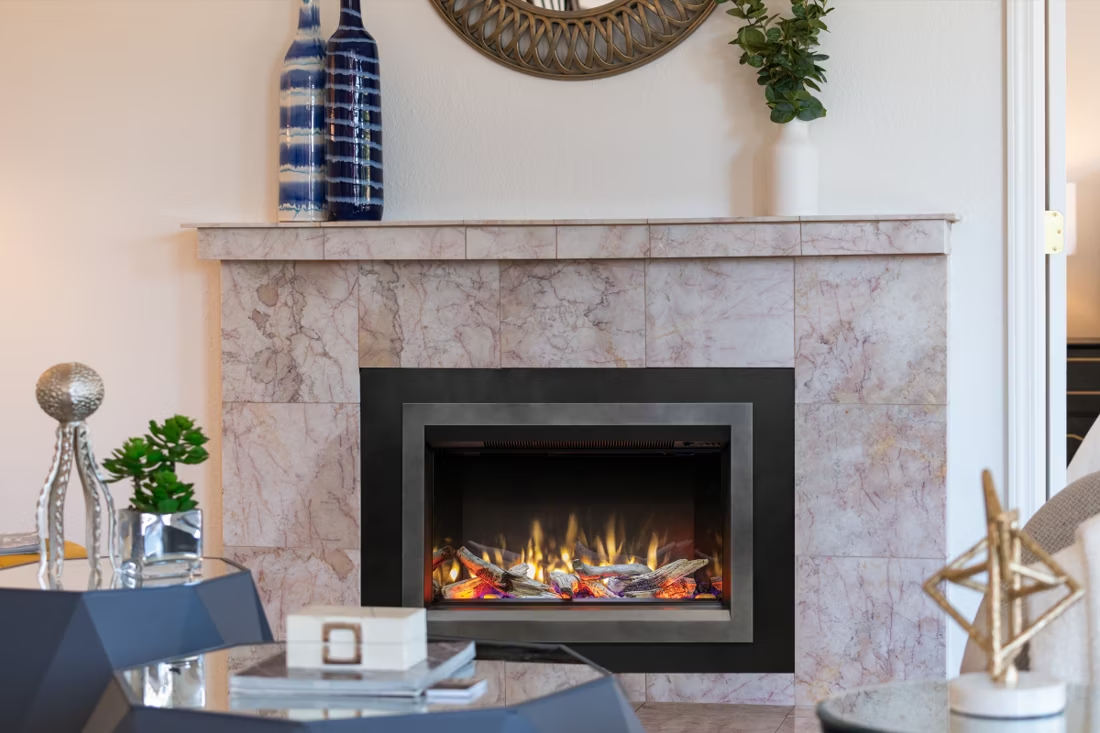
An electric insert drops into an existing fireplace opening—masonry or a converted wood-burning box—and is the most common retrofit for older Cheney farmhouses with a fireplace nobody uses anymore. A mantel package pairs an electric firebox with a surrounding cabinet and works well for homes without an existing fireplace opening. A wall-mounted or built-in unit recesses into a framed wall, popular in additions, bonus rooms, and manufactured homes where a traditional masonry chimney was never part of the build. All three plug into standard household power or a dedicated circuit for larger models.
Is an electric fireplace a good fit for a manufactured home?
Yes—electric fireplaces are one of the most practical hearth upgrades for manufactured and modular homes, which make up a meaningful share of housing stock in small Sedgwick County towns like Cheney. Since there's no chimney penetration, no combustion air requirement, and no gas line, an electric unit avoids the structural modifications that wood or gas installs require in a manufactured home. Most manufacturers of electric fireboxes list clearance and mounting specs that a local dealer can match to your home's wall construction.
How does an electric fireplace compare to a wood stove in Cheney?
Wood stoves burning local oak, hickory, or osage orange put out serious heat—enough to serve as a home's primary heat source through a Kansas winter—but require a chimney, cutting or buying firewood, and regular ash cleanup. Electric fireplaces install in a fraction of the time, need no venting, and cost pennies per hour to run at Cheney's roughly 14-cent kWh rate, but they're supplemental heat only and won't work without power. For most Cheney homes, the choice comes down to whether you want a genuine backup heat source (wood) or an easy, clean way to add ambiance and take the edge off a chilly room (electric).
Electric vs. propane—which makes more sense for Cheney homes without natural gas access?
Much of rural Sedgwick County, including Cheney, sits outside a natural gas utility's service territory, so propane is the common alternative fuel for full-size fireplaces and furnaces. Propane fireplaces put out more heat and can be sized to serve as a real backup during outages if paired with a standby generator, but require a propane tank, gas line, and venting. Electric fireplaces skip all of that—no tank, no delivery, no venting—in exchange for lower heat output and the tradeoff that they still need grid power to run. For a supplemental unit in a bedroom or living room, electric is usually the simpler and cheaper path; for anyone wanting a genuine backup heat source, propane remains the more capable option.
Do electric fireplaces actually produce heat?
Yes—most put out around 4,800–5,000 BTUs from a standard outlet, which comfortably warms a bedroom, office, or den as a comfort-zone heater. What they won't do is carry a whole house the way wood, gas, or pellet can. Think of electric as ambiance-first with honest supplemental heat: flames on with no heat in July, flames plus warmth in January.
Can I put a TV above my fireplace?
Yes—with an asterisk. Fireplaces are hot and TVs don't like heat. Either put a mantel between them to deflect rising warmth, or choose a fireplace with heat-management technology that creates a cool zone on the wall above—the wall stays around 125 degrees, barely warm, while the room still gets full heat. If you like clean lines and don't want a mantel, heat management is the answer.
Does a fireplace add value to my home?
On average, a fireplace adds back to the home about the same amount you spent installing it. Add the monthly savings from heating the rooms you actually use instead of the whole house—often hundreds of dollars a year—and the value case is strong before you even count what a fire does for how your family uses the room.
How much should I budget for a fireplace?
For an average home—covering the fireplace, the vent pipe, and basic installation—a budget between $3,900 and $5,500 gives you a lot of options across wood, gas, and pellet. By the time you add finish work, gas line, and electrical, the average complete installation lands between $5,000 and $12,000 all-in. In a remodel or new build, a good rule is to put about 2.5% of the total project cost toward the fireplace.
Nearby Dealers
Hearth shops serving Cheney and the surrounding area. Every listing shows whether it is a WhyFire partner, a dealer we have verified as authorized for the brands we recommend, or a local business carrying hearth products. No manufacturer pays for placement. How we verify dealers →
Fisher Lumber- Wichita
Dod Installations
All Things Bbq
Bocote Showroom
Fireplace Stone & Patio
Electric Service in Cheney
An electric fireplace's heater draws about 1,500 watts—pennies per hour at local rates.
Evergy Kansas South, Inc
Evergy Kansas Central, Inc
Sedgwick County El Coop Assn Inc
Find your electric fireplace in Cheney.
Tell us a bit about your home and we'll match you with the right electric insert, mantel, or built-in unit—plus a free Project Guide & Parts List with your recommended local dealer.
Find Your Fireplace →