
Steady, Automated Heat for Brown County's Long Winters.
With 5,664 heating degree days and winter lows averaging 15°F across Brown County's farm towns—Hiawatha, Horton, Everest, Fairview, Robinson—a pellet stove delivers thermostat-like heat without the wood-splitting. Find the right unit and connect with a trusted local dealer.
Every Project Starts From One of These Five Situations
Efficient, low-maintenance heat for northeast Kansas farm country.
Brown County sits in the rolling farmland of northeast Kansas near the Nebraska border, home to about 6,600 people spread across Hiawatha and the smaller communities of Horton, Everest, Fairview, Robinson, and Willis. At 5,664 heating degree days and winter lows averaging 15°F, the county's heating season is real but not extreme—noticeably milder than a place like Buffalo, NY, yet still cold enough that most farmhouses and modular homes here run a supplemental heat source from late October through March.
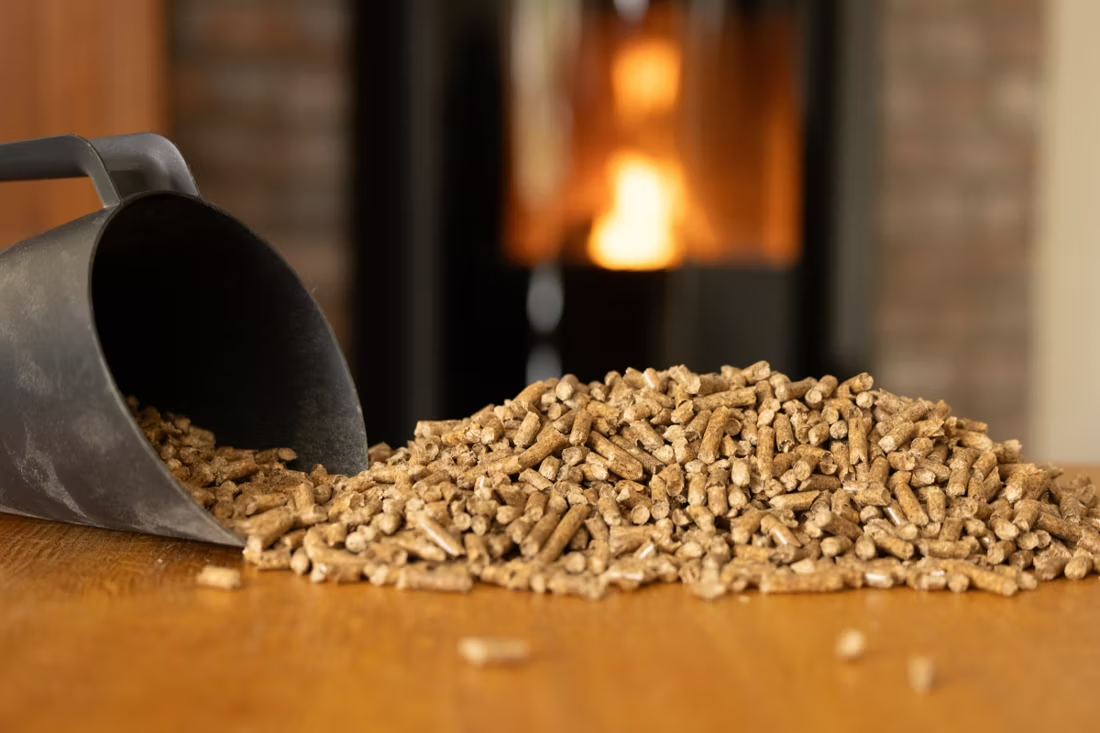
Unlike wood, pellet appliances don't require a supply of split and seasoned oak, hickory, or osage orange—though all three grow locally and remain the default fuel for wood burners in the county. Pellet stoves run on bagged fuel from brands like Lignetics and Indeck Energy Services, vent through a small wall-mounted pipe instead of a full masonry chimney, and hold a consistent temperature via thermostat and auger rather than manual tending. With no air quality non-attainment designations or burn restrictions in Brown County, pellet stoves here are chosen mainly for convenience and efficiency rather than any regulatory workaround—a straightforward upgrade for farmhouses, additions, and manufactured homes where a full masonry fireplace was never practical.
Three steps. No salesperson until you're ready.
Tell us about your project
Your zip code, your situation, and the fuel you're leaning toward—or let the answers point you to one.
See what's actually available
The brands dealers within 100 miles genuinely carry—real options, never a catalog mirage.
Get your dealer & Project Guide
A trusted local dealer, plus the free Project Guide & Parts List that names every component of the job.
Frequently Asked Questions
How much does a pellet stove installation cost in Brown County?
A typical freestanding pellet stove installation in Brown County runs roughly $3,500 to $6,500, depending on the unit, whether new electrical (a dedicated outlet is required for the auger and blower) needs to be run, and the venting path through an exterior wall. Converting an existing masonry fireplace to a pellet insert tends to land in a similar range once a liner and wall-thimble venting kit are included. Rural properties outside Hiawatha, Horton, or Fairview may see a modest travel charge added by the installer, but venting a pellet unit is generally simpler and less expensive than running Class A chimney pipe for a wood stove.
Pellet stove vs. wood stove—which makes more sense for a Brown County farmhouse?
Wood stoves burning local oak, hickory, or osage orange (a hedge wood common in county shelterbelts that burns extremely hot and long) still make sense for households with access to their own timber or windbreak trees to cut. Pellet stoves trade that self-sufficiency for convenience: load a hopper with bagged pellets, set a thermostat, and let the auger feed the fire automatically—no splitting, stacking, or daily tending. The tradeoff is that pellet stoves need electricity to run the auger and combustion blower, so they won't operate during a power outage without a battery backup, which matters given how rural sections of the county are served by Brown-Atchison Electric Cooperative lines that can be slower to restore after ice storms.
What size pellet stove do I need for my home?
Sizing depends on square footage, ceiling height, and how well-insulated the structure is. Many Brown County homes are older farmhouses with higher ceilings and less insulation than newer construction, which pushes sizing up a notch: a stove rated for 1,500 square feet in a tight modern build may only comfortably heat 1,000–1,200 square feet in a drafty two-story farmhouse. For whole-home heating in a larger farmhouse, look at units in the 2,000+ square foot rating; for supplemental heat in a single living area or a smaller Horton or Everest home, a mid-size unit is usually plenty. A local dealer can size this correctly during an in-home visit rather than relying on the box rating alone.
Will my pellet stove work during a power outage?
Not without a backup power source. Pellet stoves rely on an electric auger to feed fuel and a blower to distribute heat and exhaust combustion air, so a standard unit shuts down the moment power is lost—unlike a wood stove, which keeps burning regardless. For Brown County homes served by rural electric lines where outages can stretch longer after ice or wind events, a small battery backup or generator sized to run the stove's control board and motors is worth discussing with your installer, especially if the pellet stove is your primary heat source rather than a supplemental one.
Do I need a permit to install a pellet stove in Brown County?
Requirements vary by jurisdiction. Within city limits—Hiawatha, Horton, Fairview, and other incorporated towns—a building permit is typically required for a new pellet stove installation, particularly if new venting or electrical work is involved, and is handled through the city's building inspector. In unincorporated areas of the county, permitting is often less formal, but a licensed installer will still pull any required permits and ensure the venting and electrical work meets code. Most local dealers include this coordination as part of the installation.
Where can I buy pellets in or near Brown County?
Wood pellets are sold at farm and ranch supply stores across northeast Kansas as well as through regional distributors carrying brands like Lignetics and Indeck Energy Services. Pricing in this part of the Midwest typically runs in the $230–$300 per ton range depending on pellet quality (premium hardwood blends cost more than softwood or bark-content pellets) and how far the load has to travel. A stove burning as primary heat through a full Brown County winter typically uses 2 to 3 tons of pellets, so stocking up before the coldest stretch avoids scrambling for stock mid-winter.
How much maintenance does a pellet stove need?
Pellet stoves need more routine attention than a gas unit but far less than a wood stove and no chimney sweep. Expect to empty the ash pan every few days during regular use, clean the burn pot and glass weekly to keep combustion efficient, and have the unit professionally serviced once a year—typically before the heating season starts in the fall—to clean the exhaust venting, check the auger motor and blower, and inspect gaskets. Pellet quality matters too: higher-ash pellets clog burn pots faster, so many Brown County owners stick with a consistent hardwood-blend brand once they find one that burns clean in their unit.
What pellet stove brands are available through local dealers?
Local hearth dealers serving Brown County typically carry mainstream pellet stove manufacturers such as Harman, Quadra-Fire, and Englander, all of which offer models sized for everything from a single-room supplemental setup to whole-home heating in a larger farmhouse. Availability and lead times can vary by dealer, so it's worth confirming which brands a given installer stocks and services locally rather than assuming any model is available on short notice—parts and warranty support matter as much as the stove itself in a rural county like this one.
Pellet stove vs. propane heater—which is the better fit in Brown County?
Natural gas service is limited outside the larger towns in this part of Kansas, so propane is the common alternative fuel for many rural Brown County households, delivered and stored in a tank on the property. A propane heater or fireplace offers instant on-demand heat and typically doesn't require electricity to ignite (depending on the ignition system), while a pellet stove burns a renewable, often cheaper-per-BTU fuel but depends on electricity to run and needs periodic hopper loading. For homes without existing propane infrastructure, adding a tank and gas line can rival the cost of a pellet stove installation, which is one reason pellet units have gained ground in the county's older farmhouses that were never plumbed for gas.
Why is my open fireplace making my house colder?
Open fireplaces suck—literally. As the fire burns, it consumes air your furnace already paid to heat and pulls it out through the chimney, so the house is actually colder after the fire goes out than before you lit it. An insert fixes this: it seals the chimney, puts fixed glass across the front, and turns that hole in your house into a real heat source.
What's the difference between an insert and a zero-clearance fireplace?
An insert is a fireplace that slides into a pre-existing wood-burning fireplace—if you don't have one, there's nothing to insert it into. A zero-clearance fireplace is built into a framed wall, which makes it the answer for remodels and new construction. Simple test: existing masonry fireplace means insert; blank or framed wall means zero-clearance.
Can I install a fireplace myself?
If you're putting a fire in your house on purpose, it's best to work with an expert. Unless you're genuinely experienced in framing, gas line, vent pipe, and the national code on clearances to combustibles, have a professional do it—and ideally the same company that sells you the fireplace, so warranty, service, and liability all live under one roof.
What is an in-home preview and do I need one?
It's a visit where a hearth professional measures your space, confirms the model you picked actually works in your home, and walks the specs—framing, gas line, venting, finish work—before anything is ordered. Some details you just can't know until you see the house. Never make a down payment without one; it's the single most-skipped step that burns buyers.
Pellet Brands Stocked Around Brown County
Manufacturers will point you to the nearest stocking dealer.
Find your pellet stove in Brown County.
Tell us about your home and heating goals, and we'll match you with a trusted local dealer and send over a free Project Guide & Parts List—sized and specified for your Brown County project, right down to the venting kit.
Find Your Fireplace →