
Add warmth to any room in Brown County—no chimney required.
From Hiawatha to Horton, Everest, Fairview, and Robinson, electric fireplaces give Brown County homes an easy way to add heat and ambiance without gas lines, wood smoke, or masonry work. Find the right unit and get matched with a trusted local dealer.
Every Project Starts From One of These Five Situations
The easiest way to add heat and ambiance to any room.
Brown County sits in the rolling farmland of northeast Kansas, with Hiawatha as the county seat and smaller communities like Horton, Everest, Fairview, and Robinson spread across the rest of the county's roughly 570 square miles. At climate zone 4A with a solid five-month heating season and winter lows averaging 15°F, the cold here is real but nowhere near what a place like Fargo, ND or Duluth, MN sees—it's a wood-and-propane winter, not an arctic one. Wood heat has deep roots throughout the county thanks to abundant oak, hickory, and osage orange on local farmland, but electric fireplaces have carved out a solid, mainstream role of their own, especially in bedrooms, dens, basements, and the manufactured and modular homes common on rural Brown County properties.
Most of rural Brown County is served by cooperative electric providers like Brown-Atchison Electric Cooperative rather than a municipal utility, and that matters for electric fireplace owners: no gas line to run, no chimney to maintain, no wood to split and stack. With no air quality restrictions or burn-ban concerns recorded for the county, homeowners aren't choosing electric to dodge smoke regulations—they're choosing it because a plug-in insert or wall-mounted unit installs in an afternoon, adds supplemental warmth to a single room without touching the whole-house heating system, and works just as well in a rented farmhouse or a manufactured home outside Horton as it does in a newer build near Hiawatha's city limits.
Three steps. No salesperson until you're ready.
Tell us about your project
Your zip code, your situation, and the fuel you're leaning toward—or let the answers point you to one.
See what's actually available
The brands dealers within 100 miles genuinely carry—real options, never a catalog mirage.
Get your dealer & Project Guide
A trusted local dealer, plus the free Project Guide & Parts List that names every component of the job.
Frequently Asked Questions
How much does an electric fireplace installation cost in Brown County?
Plug-in electric inserts and freestanding stoves are the least expensive route—often $300 to $1,200 installed, since there's no venting or gas line and many units simply need a dedicated outlet. Wall-mounted linear electric fireplaces with custom framing, trim, and a new 120V or 240V circuit typically run $1,500 to $3,500 depending on the size of the unit and whether an electrician needs to run new wiring. Built-in units set into existing masonry fireplace openings—a popular option for older farmhouses around Fairview and Robinson—tend to land in the middle of that range. A local dealer can give you a firm number after seeing your room and existing wiring.
Do I need a permit for an electric fireplace in Brown County?
A simple plug-in insert or freestanding electric stove generally doesn't require a permit since it uses an existing outlet and involves no structural or gas work. If your installation calls for a new dedicated circuit, a wall-mounted unit built into cabinetry, or any new wiring, an electrical permit is typically required—inside Hiawatha city limits that goes through City Hall, and in unincorporated parts of the county it runs through the Brown County building office. Most local dealers and electricians handle this paperwork as part of the installation quote.
How big of an electric fireplace do I need for my Brown County home?
Electric fireplaces are built for supplemental heat and ambiance rather than whole-house heating, so sizing is more about the room than the square footage of the house. A 1,500-watt unit comfortably takes the chill off a bedroom or den in the 200–400 square foot range—common in the older farmhouses scattered around Everest and Robinson. Larger linear units in open living areas can supplement a propane or forced-air furnace on the coldest days, but with average winter lows around 15°F, most Brown County homes still lean on a whole-house heat source and use the electric fireplace to warm the room people actually spend time in.
What's the difference between an electric insert, an electric stove, and a wall-mounted electric fireplace?
An electric insert is built to slide into an existing masonry fireplace opening—a common upgrade for older Brown County farmhouses that want to retire a drafty wood-burning fireplace without bricking it up. An electric stove is a freestanding cabinet unit that mimics a wood stove's look and can go almost anywhere near an outlet. A wall-mounted or linear electric fireplace is a flush, modern unit set into a wall or entertainment center, usually wired on its own circuit. Which one fits depends on whether you're working with an existing fireplace, want a stand-alone piece, or are building out a new wall.
Will my electric fireplace still work during a power outage?
No—electric fireplaces need grid power or a generator to run, so they go dark the moment the lines go down. That's an important consideration in rural Brown County, where ice storms and high winds can knock out cooperative electric service for hours or longer. Many households here keep a wood stove or fireplace insert burning oak or hickory as backup heat for exactly that reason, using the electric unit for everyday convenience and ambiance and the wood-burning appliance as the fallback when the power's out.
What's the best electric fireplace for a Brown County home?
For older farmhouses with an existing fireplace opening around Fairview or Robinson, an insert with a realistic LED flame and a 1,500-watt heater covers most single-room heating needs. For newer construction or a remodel near Hiawatha, a linear wall-mounted unit gives a cleaner, modern look and can be sized wider for open-concept living spaces. If you're outfitting a manufactured or modular home—common throughout the county—look for units rated for use in mobile housing and confirm circuit requirements with your dealer before purchase. A local dealer can match flame style, heat output, and mounting method to your specific room.
Electric vs. wood—which is right for my Brown County home?
Wood offers real radiant heat, works without electricity during outages, and taps into the oak, hickory, and osage orange that's plentiful on Brown County farmland—a long tradition here. Electric offers instant on-off operation, no ash or creosote, no chimney maintenance, and the ability to add heat to a single room without any venting at all. Many Brown County households run both: a wood stove or insert as the reliable, storm-proof heat source, and an electric fireplace in a bedroom or den for everyday convenience and ambiance without hauling wood indoors.
Electric vs. pellet—which makes more sense here?
Pellet stoves burning bagged fuel from regional suppliers like Lignetics or Indeck Energy Services offer more heat output and a real-fire feel, but they need pellets delivered or picked up, periodic ash cleanout, and electricity to run the auger and blower—so they still go down in an outage. Electric fireplaces skip the fuel entirely; there's nothing to store, haul, or clean out, just a plug and a switch. For a primary supplemental heat source in a garage, shop, or larger room, pellet often wins on output. For a bedroom, sunroom, or rental unit where simplicity matters most, electric is usually the easier call.
Are electric fireplaces a good fit for rentals or manufactured homes in Brown County?
Yes—this is one of the strongest use cases for electric fireplaces in Brown County. Manufactured and modular housing is common throughout the rural parts of the county, and most of those homes aren't set up for a masonry chimney or gas line addition. A plug-in electric insert or freestanding stove needs no venting, no structural changes, and can typically be removed without a trace if a renter moves out or a homeowner changes their mind. Landlords around Horton and Hiawatha increasingly offer them as a low-risk amenity precisely because there's no open flame, no fuel storage, and minimal fire risk in older wood-frame construction.
Can I put a TV above my fireplace?
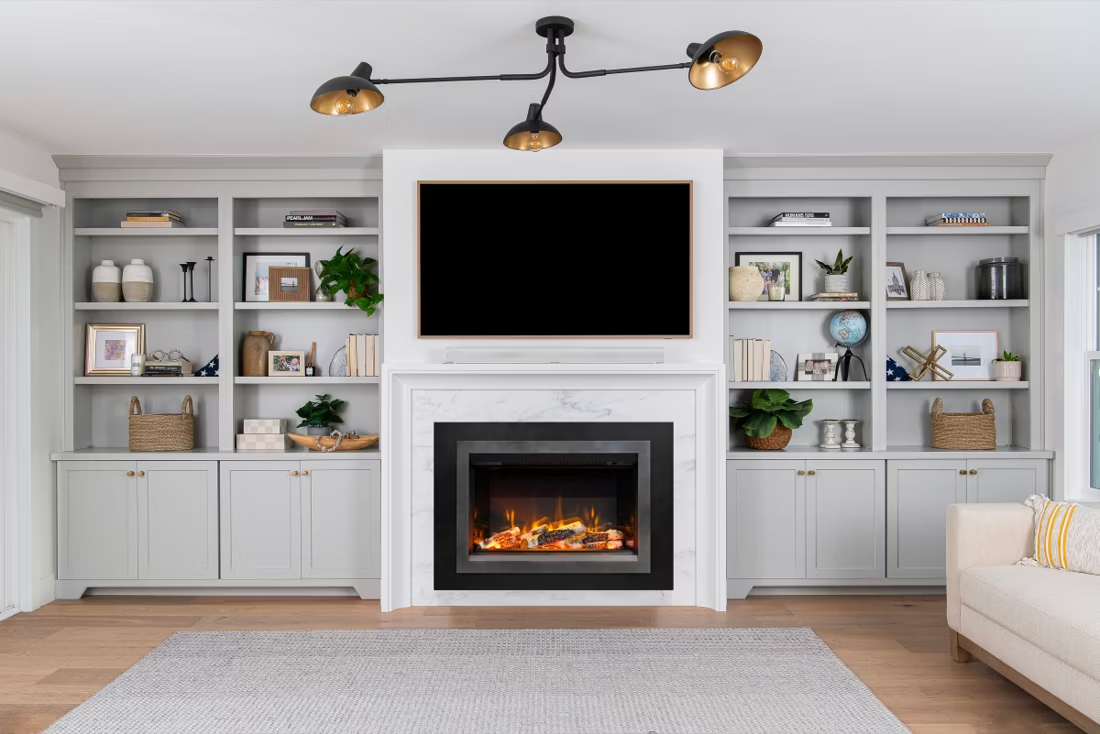
Yes—with an asterisk. Fireplaces are hot and TVs don't like heat. Either put a mantel between them to deflect rising warmth, or choose a fireplace with heat-management technology that creates a cool zone on the wall above—the wall stays around 125 degrees, barely warm, while the room still gets full heat. If you like clean lines and don't want a mantel, heat management is the answer.
Does an electric fireplace need a vent or chimney?
No—that's its superpower. An electric fireplace needs a wall and an outlet, period. No vent pipe, no gas line, no clearances to design around, which is why it works in bedrooms, offices, apartments, and walls where venting a gas or wood unit would be impractical or impossible. Installation is typically the simplest and least expensive of any fireplace type.
What is an in-home preview and do I need one?
It's a visit where a hearth professional measures your space, confirms the model you picked actually works in your home, and walks the specs—framing, gas line, venting, finish work—before anything is ordered. Some details you just can't know until you see the house. Never make a down payment without one; it's the single most-skipped step that burns buyers.
Does a fireplace add value to my home?
On average, a fireplace adds back to the home about the same amount you spent installing it. Add the monthly savings from heating the rooms you actually use instead of the whole house—often hundreds of dollars a year—and the value case is strong before you even count what a fire does for how your family uses the room.
Find your electric fireplace in Brown County.
Tell us about your room and your home—farmhouse, manufactured home, or new build—and we'll send a free Project Guide & Parts List for your electric fireplace project, along with a match to a trusted local dealer serving Brown County.
Find Your Fireplace →