
Steady, hands-off heat for Atchison County winters.
Thermostat-controlled warmth for the river-bluff towns of Atchison County—from the county seat on the Missouri River to Effingham and Huron. Find the right pellet stove or insert, and connect with a trusted local dealer.
Every Project Starts From One of These Five Situations
Convenience heat that keeps up with Missouri River winters.
Atchison County sits along the bluffs of the Missouri River in the northeast corner of Kansas, anchored by the county seat of Atchison and its roughly 12,000 residents spread across small river towns like Effingham, Huron, and Lancaster. Climate zone 4A here means a real winter—heating degree days run around 5,266 a year and average lows settle near 18°F—cold enough to demand a serious heat source, but nowhere near the extremes of places like Bismarck, ND or International Falls, MN. That middle-of-the-country cold is exactly the range where pellet stoves perform best: enough heating load to matter, not so severe that you need a 20-hour catalytic burn to survive the night.
For a county surrounded by oak, hickory, and osage orange timber, plenty of homeowners still burn cordwood—but a growing number are switching to pellet stoves for the thermostat control, the lack of splitting and stacking, and the clean burn. Atchison County has no air quality non-attainment designations or winter burn restrictions, so pellet appliances run without the curtailment concerns some Kansas neighbors face. Regional suppliers like Lignetics and Indeck Energy Services keep pellets in steady supply through farm stores and hardware retailers across northeast Kansas, which matters when a February ice storm has you burning through bags faster than expected.
Three steps. No salesperson until you're ready.
Tell us about your project
Your zip code, your situation, and the fuel you're leaning toward—or let the answers point you to one.
See what's actually available
The brands dealers within 100 miles genuinely carry—real options, never a catalog mirage.
Get your dealer & Project Guide
A trusted local dealer, plus the free Project Guide & Parts List that names every component of the job.
Frequently Asked Questions
How much does a pellet stove installation cost in Atchison County?
Most pellet stove installations in Atchison County run in the $3,000 to $6,000 range, depending on the stove model, whether you're venting through an existing masonry chimney or running a new through-wall vent kit, and whether a hearth pad upgrade is needed for clearance. Pellet inserts installed into an existing fireplace tend to land on the lower end since they reuse the chimney chase; freestanding stoves in a room without existing venting run higher because of the wall penetration and vent kit. A local dealer can give you a firm number after seeing your space.
Pellet stove or wood stove—which makes more sense in Atchison County?
With oak, hickory, and osage orange timber common throughout the county, plenty of Atchison County households still heat with cordwood, and it remains the better choice if you want a heat source that works with the power out. Pellet stoves trade that off for convenience: no splitting, stacking, or hauling, a thermostat that holds a set temperature automatically, and a cleaner burn with far less ash. The tradeoff is that pellet stoves need electricity to run the auger and combustion blower, so during an outage they go cold unless you've got a battery backup or generator. For a primary living space where you want set-it-and-forget-it heat, pellet wins. For backup heat during storms, wood still has the edge.
What size pellet stove do I need for my home?
Sizing depends on square footage, ceiling height, and how well-insulated the home is. As a rough guide for Atchison County's 4A climate: a small pellet stove (under 1,000 sq ft) suits a single room or a mobile home, a medium stove (1,000–1,800 sq ft) covers most main living areas in the older two-story homes common around Atchison and Effingham, and a large stove (1,800+ sq ft) can handle a whole-home heating load in a well-insulated house. Older farmhouses with less insulation often need to size up. A local dealer will size your space for free during an in-home visit.
Will my pellet stove work if the power goes out?
Not without a backup power source. Pellet stoves depend on electricity to run the hopper auger, igniter, and combustion blower—cut the power and the stove shuts down even with a full hopper. Atchison County sees its share of winter ice storms that knock out power for hours or days, so if backup heat during an outage matters to you, plan on a battery backup unit, a small generator, or keep a wood-burning option as a secondary heat source. Some pellet stove models come with optional battery backup kits that can run the unit for several hours—worth asking your local dealer about if outages are a concern.
Do I need a permit to install a pellet stove in Atchison County?
In most cases, yes—new pellet stove installations typically require a building permit through your local jurisdiction, whether that's the city of Atchison or the Atchison County building department for installations outside city limits. The permit process mainly verifies proper clearances and venting termination. Most established local hearth dealers handle the permitting as part of the installation, so you generally don't have to navigate it yourself.
Where can I buy pellets in Atchison County?
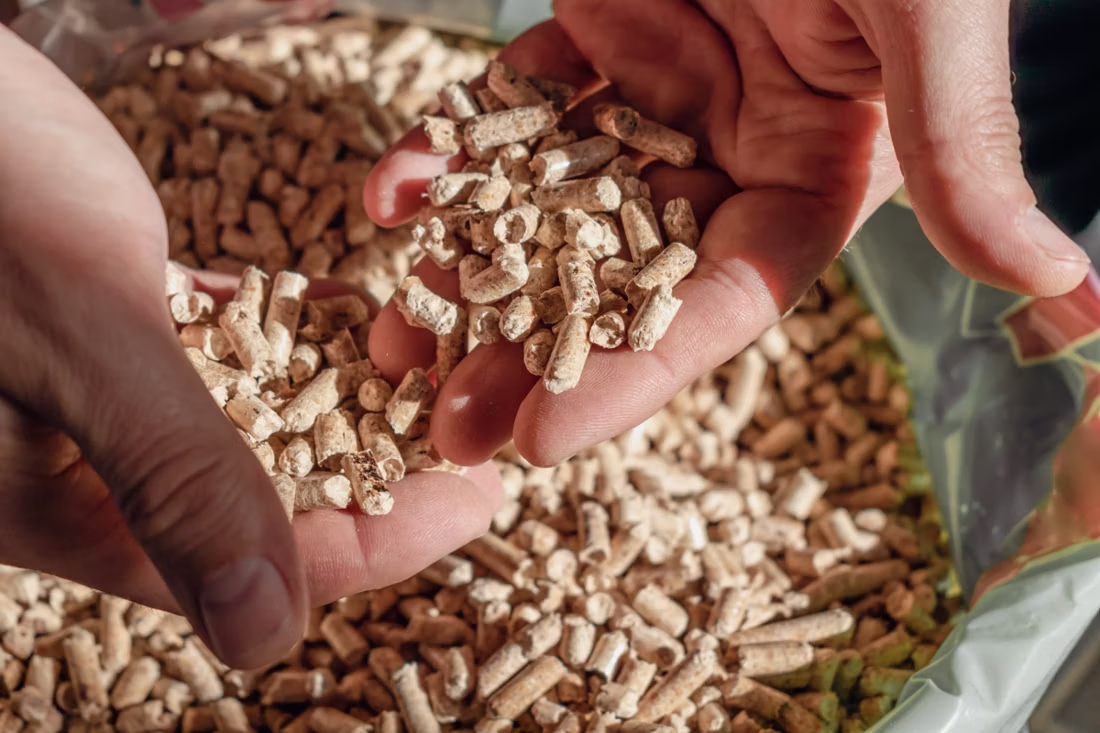
Regional brands like Lignetics and Indeck Energy Services supply much of northeast Kansas, and you'll typically find their bags at farm and hardware stores throughout the county as well as through hearth dealers who often sell pellets alongside stoves. Pellets are sold by the 40-pound bag or by the ton (a ton is roughly fifty 40-pound bags), and pricing in this part of the Midwest generally runs in the $250 to $325 per ton range depending on pellet quality and how far ahead of the season you buy. Buying a season's supply—typically 2 to 3 tons for a primary heat source—before the fall rush usually gets the best price.
How much maintenance does a pellet stove need?
Less than a wood stove, but it's not zero. Plan on emptying and vacuuming the ash pan and burn pot every few days during regular use, a deeper cleaning of the hopper, auger, and heat exchanger tubes every few weeks, and a full professional inspection and cleaning once a year—typically before the season starts in late summer or early fall. Neglecting the burn pot is the most common cause of poor performance and error codes, so staying on top of that weekly cleaning matters more than any other maintenance task.
What pellet stove brands are available near Atchison County?
Lignetics and Indeck Energy Services are the main regional pellet suppliers stocking fuel throughout northeast Kansas, and most local hearth dealers also carry stove lines from national manufacturers such as Harman, Englander, and US Stove. Availability varies by dealer, so it's worth asking about BTU output, hopper capacity, and auger reliability—hopper size in particular determines how often you'll need to reload during the coldest stretches of a Kansas winter.
Pellet stove vs. gas fireplace—which is right for my home?
Pellet stoves burn compressed wood fuel and offer a genuine flame with real heat output, but they need electricity and a fuel supply you have to manage. Gas fireplaces run on natural gas or propane, ignite instantly with a switch or remote, and require far less day-to-day attention—no bags to haul, no ash to empty. In parts of Atchison County without natural gas service, a gas option means running on propane with a tank on the property. If you want the ritual of tending a stove and don't mind buying and hauling pellet bags, pellet is the better fit. If hands-off convenience matters most, a gas insert or fireplace is usually the easier day-to-day experience.
How often does a pellet stove need cleaning?
A clean pellet stove is a happy pellet stove. Plan on cleaning the burn pot about once a week when you're burning regularly—ash and clinkers gum up the air holes just like a pellet barbecue. Most pellet stove problems trace back to skipped cleaning that nobody explained up front. Some designs make it easy with a trapdoor burn pot: pull a lever and the gunk drops into the ash pan.
What's the difference between an insert and a zero-clearance fireplace?
An insert is a fireplace that slides into a pre-existing wood-burning fireplace—if you don't have one, there's nothing to insert it into. A zero-clearance fireplace is built into a framed wall, which makes it the answer for remodels and new construction. Simple test: existing masonry fireplace means insert; blank or framed wall means zero-clearance.
How much should I budget for a fireplace?
For an average home—covering the fireplace, the vent pipe, and basic installation—a budget between $3,900 and $5,500 gives you a lot of options across wood, gas, and pellet. By the time you add finish work, gas line, and electrical, the average complete installation lands between $5,000 and $12,000 all-in. In a remodel or new build, a good rule is to put about 2.5% of the total project cost toward the fireplace.
What is an in-home preview and do I need one?
It's a visit where a hearth professional measures your space, confirms the model you picked actually works in your home, and walks the specs—framing, gas line, venting, finish work—before anything is ordered. Some details you just can't know until you see the house. Never make a down payment without one; it's the single most-skipped step that burns buyers.
Pellet Brands Stocked Around Atchison County
Manufacturers will point you to the nearest stocking dealer.
Find your pellet stove in Atchison County.
Tell us a bit about your home and we'll put together a free Project Guide & Parts List—the right pellet stove or insert for your space, the vent kit and parts needed, and a match with a trusted local dealer in Atchison County.
Find Your Fireplace →