
Find the right fireplace for your home in Atchison County, Kansas.
Wood, gas, pellet, and electric fireplace resources for every city and rural community in Atchison County—from the river town of Atchison to Effingham, Huron, Lancaster, and Muscotah. Find the right unit and connect with a trusted local hearth retailer.
Every Project Starts From One of These Five Situations
Missouri River bluffs, hedge-row firewood, and Kansas winters.
Atchison County sits along the bluffs of the Missouri River in northeast Kansas, in climate zone 4A with a long, cold heating season and average winter lows around 18°F—colder than Kansas City, milder than northern Plains cities like Fargo, ND or Bismarck, ND, but cold enough that most homes here run a heating appliance from November into March. The county's timber has shaped its wood-heat culture for generations: bottomland oak and hickory line the Missouri River corridor, and osage orange—the dense, thorny hedge tree planted across Kansas as windbreaks and fence lines in the 1800s—burns hotter and longer than almost any other firewood in the region. Wood heat here isn't a novelty; it's a practical extension of the landscape.
This hub covers hearth retailers, service technicians, and fuel suppliers across the whole county—the historic river town of Atchison (county seat and home to the Amelia Earhart Birthplace Museum), plus Effingham, Huron, Lancaster, Muscotah, Potter, and the farms and acreages in between. Pick your fuel below to see local dealers, typical installation costs, and the units that make sense for a Kansas winter—whether you're heating a farmhouse outside Muscotah or a bluff-top home in Atchison.
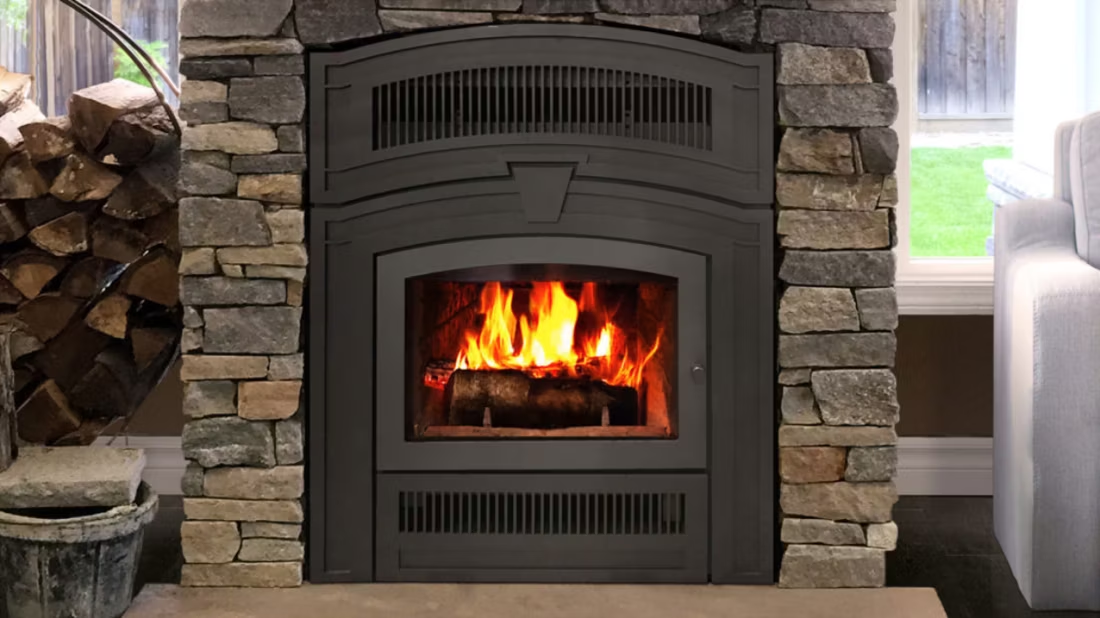
Four fuels. One honest answer for Atchison County.
Three steps. No salesperson until you're ready.
Tell us about your project
Your zip code, your situation, and the fuel you're leaning toward—or let the answers point you to one.
See what's actually available
The brands dealers within 100 miles genuinely carry—real options, never a catalog mirage.
Get your dealer & Project Guide
A trusted local dealer, plus the free Project Guide & Parts List that names every component of the job.
Frequently Asked Questions
Which fuel works best in Atchison County?
It depends on the home and how you use it. Wood is a strong fit here—bottomland oak and hickory are locally abundant, and osage orange, common in old hedgerows across the county, burns dense and hot for long overnight fires. Gas is the low-maintenance choice for homes in the city of Atchison with Kansas Gas Service natural gas hookups, or propane for rural properties off the gas main—instant heat with no wood-splitting required. Pellet stoves are a middle path: consistent heat without a woodpile, and Lignetics pellets are widely stocked in this part of Kansas. Electric fireplaces work well as supplemental heat in bedrooms or additions, but with average winter lows around 18°F and a long, cold heating season lasting from November into March, most Atchison County homes still lean on wood, gas, or pellet as their primary heat source.
Do I need a permit to install a fireplace in Atchison County?
In most cases, yes. New wood stoves, wood inserts, gas fireplaces, gas inserts, gas stoves, and pellet stoves typically require a building permit, and any new gas line work needs a licensed gas-fitter and separate gas permit. Wood-burning appliances sold and installed today must meet EPA 2020 NSPS emissions standards regardless of local air quality status. Within the city of Atchison, permits go through the city's building inspection department; in unincorporated parts of the county—around Effingham, Huron, Lancaster, or Muscotah—permits are handled through the Atchison County building office. Electric fireplaces usually don't need a permit unless the install involves new wiring or a dedicated circuit. Most local retailers pull the permit as part of the installation, so you generally don't have to file it yourself.
Are there wood-burning restrictions in Atchison County?
No—Atchison County has no air-quality non-attainment designation and no winter burn-ban or curtailment program, unlike some western states with inversion-prone basins. That means there's no seasonal restriction on when you can run a wood stove or fireplace here. The one rule that does apply everywhere is federal: any new wood stove or insert sold must be EPA 2020 NSPS-certified. Beyond that, burning oak, hickory, or well-seasoned osage orange in a modern EPA-certified stove is straightforward in this county—no advisory days to check, no voluntary curtailment notices to watch for.
Can one local hearth retailer handle all four fuel types?
Some can, though in a county this size—under 12,000 people—it's common for a single dealer to specialize in two or three fuels rather than stock all four. A retailer that carries wood and pellet will usually have working displays of both since the venting and clearances overlap; gas is often a separate specialty because of the required gas-line and venting work. If you're not sure which fuel fits your home, a multi-fuel dealer can walk you through wood versus pellet versus gas side by side. For fuel-specific dealer listings, check the county + fuel pages linked above.
How does service work in the rural parts of Atchison County?
Most chimney sweeps and gas/pellet technicians serving the county are based in or near Atchison and travel out to Effingham, Huron, Lancaster, Muscotah, and the farms in between. Expect a modest trip fee for calls well outside town—often $30-$60 depending on distance. Scheduling annual service in late summer or early fall, before the first cold snap, is easier than trying to book a mid-winter emergency visit. For rural homes running wood as a primary heat source, it's worth keeping a spare stovepipe thermometer and extra gasket material on hand between scheduled sweeps.
What's the typical cost range for fireplace installation across all fuel types in Atchison County?
Costs vary by fuel and by how much venting or gas-line work is involved. Wood stove or insert installation: roughly $3,500-$8,000 for a typical install, more if new chimney construction is needed. Gas fireplace, insert, or stove: roughly $4,000-$9,000 depending on whether a new gas line has to be run from Kansas Gas Service or a propane tank. Pellet stove or insert: roughly $3,800-$6,500 for most installs. Electric fireplace: $200-$2,500 for the unit itself, plus $300-$1,000 in labor for anything beyond a simple plug-in wall unit. For fuel-specific pricing detail, see the county + fuel pages above.
What is an in-home preview and do I need one?
It's a visit where a hearth professional measures your space, confirms the model you picked actually works in your home, and walks the specs—framing, gas line, venting, finish work—before anything is ordered. Some details you just can't know until you see the house. Never make a down payment without one; it's the single most-skipped step that burns buyers.
Does a fireplace add value to my home?
On average, a fireplace adds back to the home about the same amount you spent installing it. Add the monthly savings from heating the rooms you actually use instead of the whole house—often hundreds of dollars a year—and the value case is strong before you even count what a fire does for how your family uses the room.
Wood, gas, pellet, or electric—how do I choose?
Match the fuel to your life, not the other way around. Wood: lowest fuel cost and total power-outage independence, but you're hauling and stacking. Gas: press a button, set a thermostat, no maintenance to speak of. Pellet: wood economics with automatic feeding, in exchange for weekly cleaning and a need for electricity. Electric: plugs in anywhere with honest supplemental heat. Nobody regrets the fuel that fits how they actually live.
Can I install a fireplace myself?
If you're putting a fire in your house on purpose, it's best to work with an expert. Unless you're genuinely experienced in framing, gas line, vent pipe, and the national code on clearances to combustibles, have a professional do it—and ideally the same company that sells you the fireplace, so warranty, service, and liability all live under one roof.
Stove and Fireplace Dealers in Atchison County
Listings include WhyFire partner dealers, dealers we have verified as authorized for the brands we recommend, and established local businesses that carry hearth products. Every listing shows which one it is. The ones marked Preferred run on WhyFire's software, so they can show you real pricing and book your appointment right here. No manufacturer pays for placement. How we verify dealers →
Buck Stove & Spa
Alternative Heat Resource
Arnold Refrigeration
21st Century Chimney Sweep
Top Hat Chimney
Complete Home Concepts - Riverside
Get matched with a fireplace dealer in Atchison County.
Tell us about your fuel and your home, and we'll match you with a trusted local dealer and send a free Project Guide & Parts List—a plan for your fireplace project in Atchison County with the exact parts, including the vent kit, and our recommended local installer.
Find Your Fireplace →