
Thermostat-set heat for Wayne County's long winters.
With a long, demanding winter and lows averaging 13°F, Wayne County homes need heat that runs steady for months. Pellet stoves deliver that without the wood-splitting. We'll match you with a local dealer who can size and install one right.
Every Project Starts From One of These Five Situations
Set it, forget it, stay warm through a long southern-Iowa winter.
Wayne County sits in climate zone 5A in south-central Iowa, with just under 3,600 residents spread across a mostly rural, agricultural landscape centered on Corydon. Winters here run long and cold—the county's total heating demand puts it on par with places like Madison, WI, and average winter lows near 13°F mean a heat source needs to run reliably for weeks at a stretch, not just on the occasional cold snap.
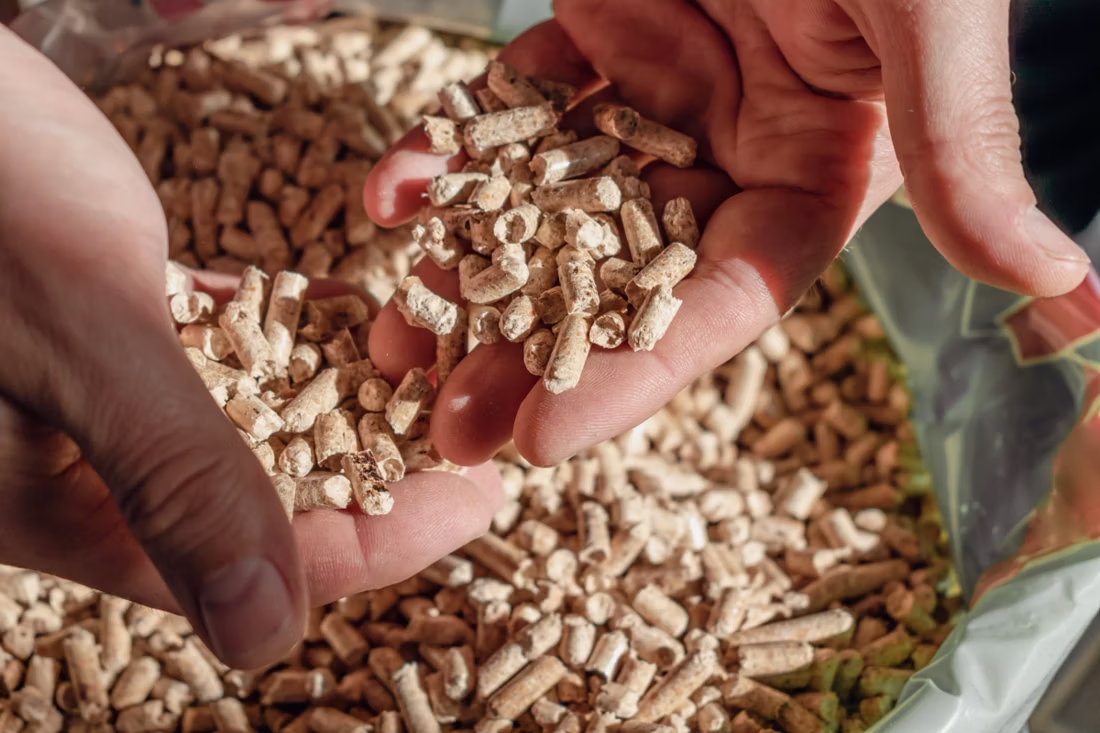
Plenty of Wayne County households already burn oak, hickory, maple, and walnut in wood stoves, but pellet stoves have carved out a real niche for homeowners who want consistent, thermostat-controlled heat without cutting and hauling cordwood. A pellet stove's auger-fed burn holds steady output for hours on a hopper of fuel, which matters when you're heating a farmhouse through a February stretch of single-digit nights. Regional pellet supply comes through brands like Lignetics and Indeck Energy Services, both of which distribute into this part of the Midwest, so fuel availability isn't the obstacle it can be in more remote regions.
Three steps. No salesperson until you're ready.
Tell us about your project
Your zip code, your situation, and the fuel you're leaning toward—or let the answers point you to one.
See what's actually available
The brands dealers within 100 miles genuinely carry—real options, never a catalog mirage.
Get your dealer & Project Guide
A trusted local dealer, plus the free Project Guide & Parts List that names every component of the job.
Frequently Asked Questions
How much does a pellet stove installation cost in Wayne County?
Pellet stove and insert installations in this part of Iowa typically run in the range most Midwest installers quote for a straightforward setup—factoring in the unit itself, venting through an exterior wall (pellet stoves don't need a masonry chimney), and any electrical work for the hopper's auger and blower. Rural Wayne County properties with longer driveways or older farmhouses sometimes see a modest travel or wiring surcharge. A local dealer can give you a firm number after seeing your home.
Do pellet stoves work as a primary heat source in a cold climate like Wayne County's?
Yes, and many Wayne County homeowners use them that way. With winter lows regularly near 13°F, the county sees heating demand comparable to Duluth, MN, in a typical season. A properly sized pellet stove can carry a well-insulated main living area through that kind of winter on its own, running for 12-24 hours per hopper load depending on the model and thermostat setting. Older farmhouses with poor insulation may still need a furnace as backup on the coldest nights—a local dealer will size the unit to your actual square footage and construction rather than guessing.
Where can I buy pellets in or near Wayne County?
Pellet supply in this part of southern Iowa comes largely through regional distributors like Lignetics and Indeck Energy Services, whose products show up at farm stores and hearth dealers across the Midwest. Feed stores, co-ops, and hardware retailers in and around Corydon often stock bagged pellets during heating season, and many pellet stove dealers sell fuel directly or can point you toward the nearest reliable supplier. Buying a season's worth in fall, before demand peaks, is common practice here.
What size pellet stove do I need for my Wayne County home?
Sizing depends on square footage, ceiling height, insulation quality, and whether the stove is your primary or supplemental heat. Given Wayne County's cold-climate heating load, don't undersize for the square footage alone—older uninsulated farmhouses common in this county often need to size up a step from what a newer, tighter home of the same footprint would require. A stove rated for 1,500-2,000 square feet in a well-sealed home might only cover 1,000-1,200 square feet in a drafty older farmhouse. A local dealer will walk your home and size it based on actual conditions, not a chart.
Do I need a permit to install a pellet stove in Wayne County?
Most rural areas of Wayne County outside Corydon city limits have minimal building permit requirements, but any installation involving venting through an exterior wall and electrical work for the stove should still follow manufacturer specifications and local code. If you're inside Corydon city limits, check with the city before installing. Most local dealers handle permitting and code compliance as part of the installation, so this typically isn't something you have to manage yourself.
Are pellet stoves affected by power outages?
Yes—this is the main tradeoff against wood stoves. Pellet stoves rely on an electric auger to feed fuel and a blower to distribute heat, so they stop working when the power goes out. For rural Wayne County, where winter storms can knock out power for hours or longer, some homeowners pair a pellet stove with a small battery backup or generator, or keep a wood stove as backup heat elsewhere in the house. If reliable off-grid heat during outages is your top priority, a wood stove burning local oak or hickory may be a better single option—talk to a local dealer about the tradeoffs for your situation.
How often does a pellet stove need maintenance?
Plan on cleaning the burn pot and ash removal every few days during heavy winter use, a deeper cleaning of the hopper and auger monthly, and a full annual service before each heating season—checking the exhaust blower, gaskets, and venting. Given how many hours a pellet stove runs during a Wayne County winter, staying on top of ash buildup keeps efficiency up and prevents the auger from jamming. Local dealers can walk you through the maintenance schedule specific to your model at installation.
What's the difference between a pellet stove and a pellet insert?
A pellet stove is a freestanding unit that sits on its own hearth pad and vents through an exterior wall or existing chimney—it can go almost anywhere with the right clearances. A pellet insert is built to slide into an existing masonry wood fireplace, converting an old open hearth into an efficient, thermostat-controlled heat source while reusing the existing chimney opening as the housing. For Wayne County homes with older masonry fireplaces already in place, an insert is often the simpler retrofit; homes without an existing fireplace typically go with a freestanding stove instead.
Pellet vs. wood stove—which is right for my Wayne County home?
Wood stoves burn local oak, hickory, maple, or walnut, work without electricity (a real advantage during rural power outages), and offer the lowest fuel cost if you have access to your own wood. Pellet stoves are easier to run day-to-day—load the hopper, set the thermostat, less ash and no splitting or stacking—and burn more consistently over long stretches, which suits Wayne County's extended cold season. The tradeoff is that pellet stoves need electricity to operate, so they're not a reliable backup during outages. Many households here run pellet for daily convenience and keep a wood stove or fireplace elsewhere in the house for backup. A local dealer can help you weigh both against your specific home and habits.
What's the difference between an insert and a zero-clearance fireplace?
An insert is a fireplace that slides into a pre-existing wood-burning fireplace—if you don't have one, there's nothing to insert it into. A zero-clearance fireplace is built into a framed wall, which makes it the answer for remodels and new construction. Simple test: existing masonry fireplace means insert; blank or framed wall means zero-clearance.
How often does a pellet stove need cleaning?
A clean pellet stove is a happy pellet stove. Plan on cleaning the burn pot about once a week when you're burning regularly—ash and clinkers gum up the air holes just like a pellet barbecue. Most pellet stove problems trace back to skipped cleaning that nobody explained up front. Some designs make it easy with a trapdoor burn pot: pull a lever and the gunk drops into the ash pan.
Can a fireplace actually lower my heating bill?
Yes—by creating a comfort zone. A furnace heats every square foot of the house just to warm the one room you're in; a gas fireplace on low burns roughly a sixth of the gas a typical furnace does. Set the furnace around 55–60 degrees as a baseline, then heat the rooms your family actually uses. Families who heat this way commonly save $20–$60 a month.
Does a fireplace add value to my home?
On average, a fireplace adds back to the home about the same amount you spent installing it. Add the monthly savings from heating the rooms you actually use instead of the whole house—often hundreds of dollars a year—and the value case is strong before you even count what a fire does for how your family uses the room.
Pellet Brands Stocked Around Wayne County
Manufacturers will point you to the nearest stocking dealer.
Find your pellet stove in Wayne County.
Tell us about your home and we'll match you with a trusted local dealer and send over your free Project Guide & Parts List—sized venting, the right hopper capacity, and a plan built for Wayne County's winters.
Find Your Fireplace →