
Supplemental warmth with no venting required for rural Wayne County homes.
With winters as cold and long as Fargo, ND's and lows averaging 13°F, Wayne County's small towns and scattered farmsteads need heat that works in any room, gas line or not. I match you with a trusted local dealer who knows what a real electric fireplace or insert can add to a rural Iowa home.
Every Project Starts From One of These Five Situations
Convenience heat for a county without natural gas mains.
Wayne County is one of Iowa's least populated counties, with roughly 3,590 residents spread across Corydon, Seymour, Allerton, Clio, and Millerton and a lot of open farmland in between. Climate zone 5A puts winters here in the same range as Fargo, ND—long, cold, and not forgiving of a room that heats slowly. Like much of rural southern Iowa, natural gas mains don't run to every farmstead or unincorporated crossroads, so many homes rely on propane, wood, or a mix of both for primary heat. That's exactly the gap an electric fireplace fills well: no gas line, no chimney, no combustion permit—just a dedicated circuit and a unit that can go into a bedroom, sunroom, or manufactured home addition that was never built with venting in mind.
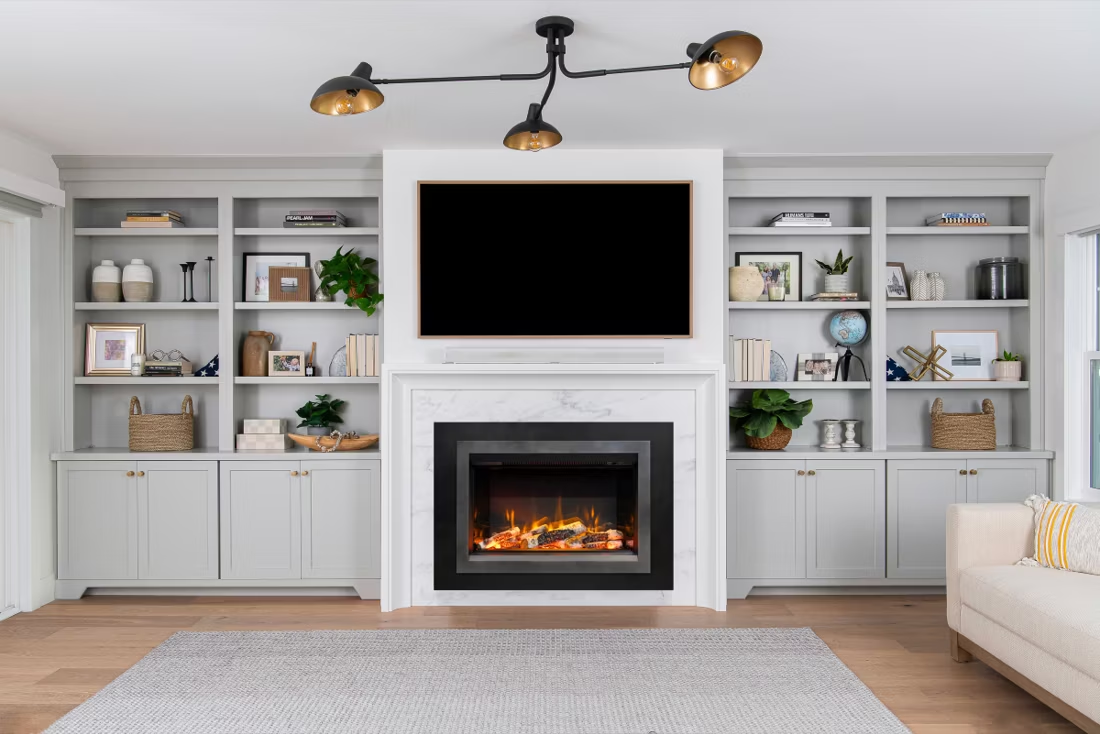
Electric fireplaces and inserts in Wayne County work best as zone heat and honest ambiance rather than a whole-house solution—at 13°F average winter lows, a 1,500-watt unit is going to warm the room it's in, not the farmhouse around it. Plenty of Wayne County households run one in a living room or den alongside a wood stove burning local oak, hickory, or walnut, or a propane furnace, for the coldest stretches. The tradeoff worth knowing upfront: unlike wood, an electric fireplace needs the grid to run, and rural electric cooperative outages aren't unheard of during a southern Iowa ice storm. A local dealer can help you figure out where electric heat makes sense in your home and where it doesn't.
Three steps. No salesperson until you're ready.
Tell us about your project
Your zip code, your situation, and the fuel you're leaning toward—or let the answers point you to one.
See what's actually available
The brands dealers within 100 miles genuinely carry—real options, never a catalog mirage.
Get your dealer & Project Guide
A trusted local dealer, plus the free Project Guide & Parts List that names every component of the job.
Frequently Asked Questions
How much does an electric fireplace installation cost in Wayne County?
Most electric fireplace and insert installations in Wayne County run somewhere between $300 and $2,000. A plug-in insert dropped into an existing masonry fireplace opening sits at the low end since there's no new wiring involved. A built-in wall unit for a remodel or a manufactured home addition costs more once an electrician runs a dedicated 120V or 240V circuit to the location. Because there's no venting, no chimney, and no gas line to run, electric installs are consistently the cheapest of the fuel types a local dealer will quote you, and turnaround is fast compared to a wood or gas project.
Do I need a permit to install an electric fireplace in Wayne County?
There's no combustion appliance permit involved since an electric fireplace doesn't burn anything or vent to the outside. Wayne County doesn't run a dedicated hearth permitting office the way larger counties do, but if the installation requires a new dedicated circuit, that electrical work should still go through a licensed electrician and get inspected per standard code. Most local dealers handle this as part of the installation quote so you're not left coordinating a separate electrician visit.
Can an electric fireplace heat my whole house through a Wayne County winter?
No, and any dealer being straight with you will say the same. With winters as cold and long as Fargo, ND's and lows averaging 13°F, a typical 1,500-watt electric fireplace is built to warm the single room it's installed in, not carry a whole farmhouse through January. Most Wayne County homeowners use electric units for supplemental heat in a den, bedroom, or add-on room while a propane furnace or wood stove handles the rest of the house. If whole-home heat is the goal, electric is the wrong tool—but for taking the chill off a room without running new gas line or venting, it's hard to beat.
What's the difference between an electric fireplace, insert, and stove?
An electric fireplace is typically a built-in unit framed into a wall or media console, common in new construction or remodels. An electric insert is sized to slide into an existing masonry fireplace opening, which is a popular option for older homes around Corydon and Seymour that already have a fireplace but no working chimney venting for wood. An electric stove is a freestanding cabinet-style unit that sits on the floor, useful in a manufactured home or a room without any existing fireplace footprint at all. All three plug into standard household power, so the right choice comes down to the room and whether you're working with an existing opening.
Will my electric fireplace still work during a power outage?
No—an electric fireplace needs grid power to run, full stop, which is worth planning around in a rural electric cooperative service area where ice storms and downed lines can mean an outage lasting hours or longer. This is the main reason many Wayne County households pair an electric unit for everyday convenience with a wood stove burning local oak, hickory, or walnut as true backup heat. If you're relying on a single heat source and storm outages are a real concern for your property, wood or a battery-backed propane appliance is a safer primary choice than electric alone.
Electric vs. wood or pellet—which makes more sense for my Wayne County home?
Wood, cut from the oak, hickory, maple, and walnut common to this part of Iowa, works without power and costs little if you're already set up to process your own firewood—a real advantage on a farm where outages happen. Pellet stoves, using regional brands like Lignetics or Indeck Energy Services, burn cleaner and need less daily tending than wood but still require electricity to run the auger and blower, same limitation as electric fireplaces. Electric fireplaces need no fuel storage at all—no cordwood stacked against the shed, no pellet bags in the garage—and install in a fraction of the time. For a home already heated by propane or wood where you just want ambiance and a bit of supplemental warmth in one room, electric is usually the simplest add.
What are the best uses for an electric fireplace in a rural county like this?
Electric fireplaces do particularly well in the situations common around Wayne County: manufactured and modular homes without an existing chimney, rental properties where a landlord doesn't want to maintain a combustion appliance, finished basements, and room additions built without a vent path in mind. Because there's no clearance-to-combustible chimney requirement and no gas line, they also work in older farmhouses where retrofitting real venting into a new room would be expensive. If the goal is a warm-looking focal point and a bit of real supplemental heat without a construction project, that's the sweet spot.
How much maintenance does an electric fireplace actually need?
Very little compared to wood or gas. There's no chimney to sweep and no gas line or pilot assembly to service—maintenance is mostly dusting the unit, occasionally vacuuming the vents on the heater fan, and replacing the LED light module years down the road if it dims. That low-maintenance profile is part of why electric units are popular in Wayne County rental properties and second homes where nobody's checking on the appliance regularly.
Are there rebates available for electric fireplaces in Wayne County?
Incentive programs for electric heating appliances vary by provider, so it's worth calling your rural electric cooperative directly to ask what's currently offered—some cooperatives run seasonal rebates on efficient electric heaters or off-peak equipment that a fireplace or insert may qualify for. There isn't a blanket county-wide rebate program for electric fireplaces the way some states offer for wood stove upgrades, so this is one to check case by case with your specific electric provider before you buy.
Can I put a TV above my fireplace?
Yes—with an asterisk. Fireplaces are hot and TVs don't like heat. Either put a mantel between them to deflect rising warmth, or choose a fireplace with heat-management technology that creates a cool zone on the wall above—the wall stays around 125 degrees, barely warm, while the room still gets full heat. If you like clean lines and don't want a mantel, heat management is the answer.
Does an electric fireplace need a vent or chimney?
No—that's its superpower. An electric fireplace needs a wall and an outlet, period. No vent pipe, no gas line, no clearances to design around, which is why it works in bedrooms, offices, apartments, and walls where venting a gas or wood unit would be impractical or impossible. Installation is typically the simplest and least expensive of any fireplace type.
How much should I budget for a fireplace?
For an average home—covering the fireplace, the vent pipe, and basic installation—a budget between $3,900 and $5,500 gives you a lot of options across wood, gas, and pellet. By the time you add finish work, gas line, and electrical, the average complete installation lands between $5,000 and $12,000 all-in. In a remodel or new build, a good rule is to put about 2.5% of the total project cost toward the fireplace.
What is an in-home preview and do I need one?
It's a visit where a hearth professional measures your space, confirms the model you picked actually works in your home, and walks the specs—framing, gas line, venting, finish work—before anything is ordered. Some details you just can't know until you see the house. Never make a down payment without one; it's the single most-skipped step that burns buyers.
Get your free Project Guide & Parts List for an electric fireplace in Wayne County.
Tell me about your home, the room you're heating, and whether you're working with an existing fireplace opening, and I'll match you with a trusted local dealer and send a free Project Guide & Parts List—the exact unit, circuit requirements, and recommended installer for your electric fireplace project.
Find Your Fireplace →