
Consistent, thermostat-controlled heat for Warren County winters.
With a heating season about as demanding as Madison, Wisconsin's and average winter lows near 12°F, Warren County homes need heat that runs steady for months, not just a few cold snaps. Find the right pellet stove or insert and connect with a trusted local dealer.
Every Project Starts From One of These Five Situations
Hardwood pellets, dialed-in convenience.
Warren County sits just south of the Des Moines metro, a mix of rolling farmland, small towns like Indianola, Norwalk, and Carlisle, and a growing number of newer subdivisions filling in along the commuter corridor. Winters here run long by Midwest standards—climate zone 5A, average lows around 12°F, and a heating season about as demanding as Madison, Wisconsin's, putting Warren County closer to a true northern winter than to a mild Plains one. That's a season where a set-it-and-forget-it heat source matters, especially for households where someone's commuting into Des Moines before sunrise.
Warren County has no air quality non-attainment issues and no wood-burning curtailment periods to work around, so a pellet stove here isn't fighting local restrictions the way it might in parts of the country with winter inversion problems—it's simply a cleaner-burning, thermostat-driven alternative to a wood stove. Regional pellet supply runs through brands like Lignetics and Indeck Energy Services, both of which serve the broader Midwest market, so bag pellets aren't hard to source locally or through nearby Des Moines-area retailers. For homeowners surrounded by the oak, hickory, maple, and walnut that make up the county's hardwoods, a pellet stove delivers a similar dense-hardwood heat output without the splitting, stacking, or chimney creosote that comes with cordwood.
Three steps. No salesperson until you're ready.
Tell us about your project
Your zip code, your situation, and the fuel you're leaning toward—or let the answers point you to one.
See what's actually available
The brands dealers within 100 miles genuinely carry—real options, never a catalog mirage.
Get your dealer & Project Guide
A trusted local dealer, plus the free Project Guide & Parts List that names every component of the job.
Frequently Asked Questions
How much does a pellet stove installation cost in Warren County?
Across central Iowa, a freestanding pellet stove installation typically runs in the range of $3,000 to $6,000, depending on the unit, hopper size, and whether the vent run through an exterior wall is straightforward or requires additional framing work. A pellet insert going into an existing masonry fireplace tends to run a bit higher, often $4,000 to $7,500, since it involves fitting the unit to the firebox opening and running a liner. Newer Norwalk and Carlisle subdivision homes with easy wall access for direct venting are usually on the lower end; older Indianola-area farmhouses with unusual fireplace dimensions or limited exterior wall clearance can push toward the higher end. A local dealer will give you a firm number after seeing the space.
What size pellet stove do I need for my Warren County home?
Sizing comes down to square footage, ceiling height, and how well-insulated the home is—and Warren County has a real mix of housing stock, from newer, tighter-built homes in Norwalk and Carlisle to older farmhouses outside Indianola with less insulation and more drafts. As a rough guide, smaller units (under 1,500 sq ft) suit a single room or open-concept living area, while larger units (2,000+ sq ft) can serve as a home's primary heat source in a well-insulated newer build. Given average winter lows around 12°F and a heating season that runs long, it's worth erring toward a unit with a larger hopper so you're not refilling constantly on the coldest nights. A local retailer can size this correctly during an in-home visit—that's the piece that's genuinely hard to get right from a chart alone.
Where can I find certified pellet stove installers near me?
Look for NFI (National Fireplace Institute)-certified technicians, which indicates formal training on pellet appliance venting, clearances, and electrical requirements—pellet units run on household power for the auger and blower, so the electrical hookup matters as much as the vent run. Hearth dealers serving the Indianola, Norwalk, and Carlisle area, along with several based in the greater Des Moines metro, cover most of Warren County. Since installation and sales are usually handled by the same company, you get a single point of contact for warranty service down the road—worth prioritizing over a big-box purchase with no local install support behind it.
What's the difference between a pellet stove and a pellet insert?
A pellet stove is a freestanding unit that vents directly through an exterior wall—no existing chimney required, which makes it a good fit for newer Warren County homes without a masonry fireplace already in place. A pellet insert is built to slide into an existing fireplace opening, using a liner run up the existing chimney (or, in some cases, through the wall behind it) to vent. For an older Indianola or rural county home with an existing wood fireplace that doesn't get much use, an insert converts that opening into an efficient, thermostat-controlled heat source without altering the room's layout.
Do I need a permit to install a pellet stove in Warren County?
Yes—a building permit is generally required for a new pellet stove or insert installation, whether that's through Warren County's building department for rural and unincorporated areas or through the local city building office in Indianola, Norwalk, or Carlisle. The permit process typically covers the vent penetration through the wall or chimney and confirms clearances to combustibles. Most established local dealers include permitting as part of the installation quote, so it's rarely something homeowners need to file themselves.
What's the best pellet stove for Warren County's climate?
With average winter lows around 12°F and a heating season stretching from roughly October through April, look for a unit with a large hopper capacity—60+ pounds if you want to go a full day or more between refills—and a variable-speed blower that can step down output on milder days without shutting off entirely. Since Warren County pellet supply runs through regional producers like Lignetics and Indeck Energy Services, it's worth confirming with your dealer which pellet brands are reliably stocked nearby before settling on a stove, since some units are pickier about pellet quality and ash content than others.
How often does a pellet stove need to be cleaned and serviced?
Ash removal from the burn pot is typically a weekly task during regular winter use, and most manufacturers recommend a deeper cleaning of the heat exchanger tubes and glass every few weeks depending on how many bags you're burning through. An annual professional service—checking the auger motor, exhaust blower, gaskets, and venting—is recommended before each heating season starts, similar to how a furnace gets an annual tune-up. Local hearth dealers in the Indianola and Des Moines metro area typically offer this service, and it's worth booking it in late summer before the first cold snap rather than waiting until December.
Where can I buy pellet fuel in Warren County?
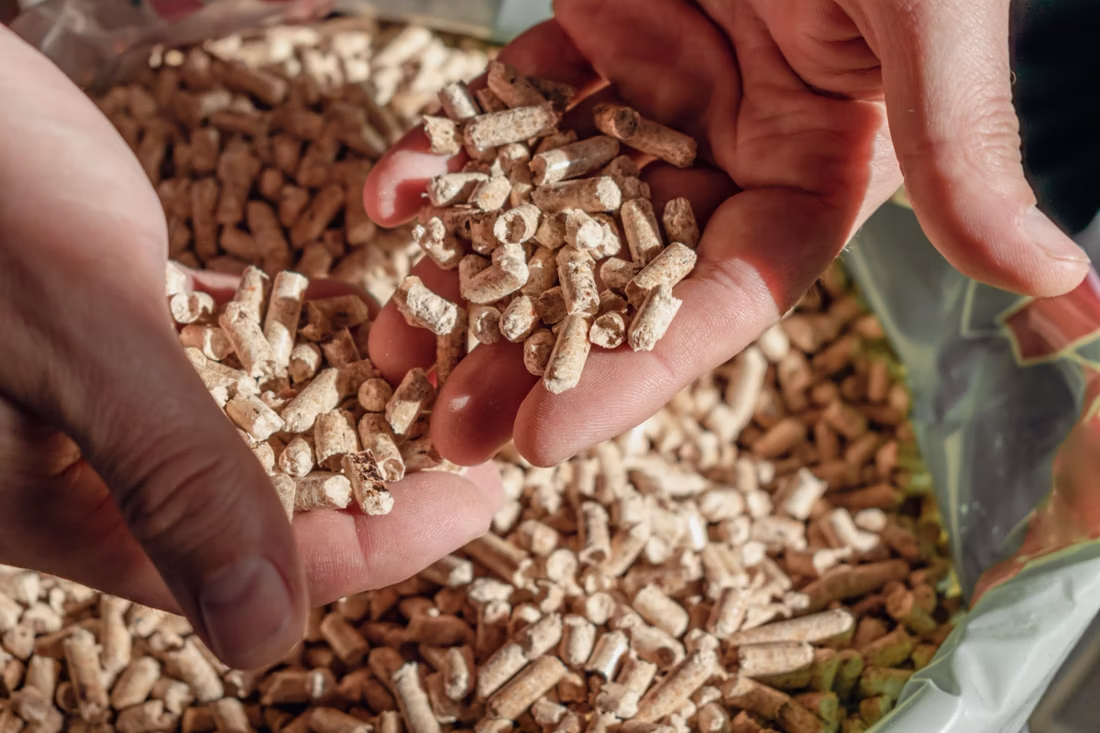
Pellet fuel in the Warren County area is generally available through hearth retailers and farm supply stores stocking regional brands like Lignetics and Indeck Energy Services, both of which supply the broader Midwest market. Bag pellets commonly run somewhere in the $200 to $300 per ton range depending on the season and how far ahead you buy—stocking up over the summer when demand is low is a common way local homeowners keep costs down. Buying by the pallet (roughly a ton) rather than individual bags is usually the more economical route if you have dry storage space in a garage or shed.
Pellet stove vs. wood stove—which is right for my Warren County home?
Wood stoves burn cordwood—plentiful here given the county's oak, hickory, maple, and walnut—and they'll keep running during a power outage, which matters when winter storms roll through central Iowa. Pellet stoves need household electricity to run the auger and blower, so they're not a backup heat source without a generator, but they offer thermostat-style convenience, longer unattended burn times, and less day-to-day mess than splitting and stacking wood. For a Warren County home where the priority is set-it-and-forget-it heat through a long winter, pellet usually wins; for a rural property where outage-proof backup heat matters more than convenience, wood is often the better call. Some homeowners in the county run both—pellet for daily use, wood as an outage backup.
Why is a fireplace insert so efficient?
An insert does two things: it seals the chimney completely, so you stop losing air you already paid to heat, and it radiates warmth into the room through the firebox and glass. Most add a heat-exchange fan that pulls cool room air underneath, wraps it around the hot firebox, and pushes it back out warm. Your home is more efficient before you've even lit the first fire.
What's the difference between an insert and a zero-clearance fireplace?
An insert is a fireplace that slides into a pre-existing wood-burning fireplace—if you don't have one, there's nothing to insert it into. A zero-clearance fireplace is built into a framed wall, which makes it the answer for remodels and new construction. Simple test: existing masonry fireplace means insert; blank or framed wall means zero-clearance.
Can I install a fireplace myself?
If you're putting a fire in your house on purpose, it's best to work with an expert. Unless you're genuinely experienced in framing, gas line, vent pipe, and the national code on clearances to combustibles, have a professional do it—and ideally the same company that sells you the fireplace, so warranty, service, and liability all live under one roof.
Can a fireplace actually lower my heating bill?
Yes—by creating a comfort zone. A furnace heats every square foot of the house just to warm the one room you're in; a gas fireplace on low burns roughly a sixth of the gas a typical furnace does. Set the furnace around 55–60 degrees as a baseline, then heat the rooms your family actually uses. Families who heat this way commonly save $20–$60 a month.
Pellet Brands Stocked Around Warren County
Manufacturers will point you to the nearest stocking dealer.
Find your pellet stove in Warren County.
Tell us a bit about your home and we'll put together a free Project Guide & Parts List—the right pellet stove or insert, the vent kit it needs, and a trusted local dealer to install it.
Find Your Fireplace →