
Add electric warmth to your Warren County home—no chimney required.
From Indianola to Norwalk to Carlisle, electric fireplaces give Warren County homeowners real ambiance and zone heat without venting, gas lines, or a masonry chimney. Find the right unit and connect with a trusted local dealer.
Every Project Starts From One of These Five Situations
Warm ambiance that plugs in—no venting, no mess.
Warren County sits in climate zone 5A with a long, cold heating season and average winter lows around 12°F—a real Midwest winter, though milder than the deep cold of places like Madison or Minneapolis further north. That kind of season means most Warren County homes lean on a furnace or heat pump for whole-home heat, with MidAmerican Energy serving as the primary electric utility across Indianola, Norwalk, Carlisle, and the surrounding townships. Electric fireplaces fit into that picture as a supplemental and aesthetic layer, not a replacement for the furnace.
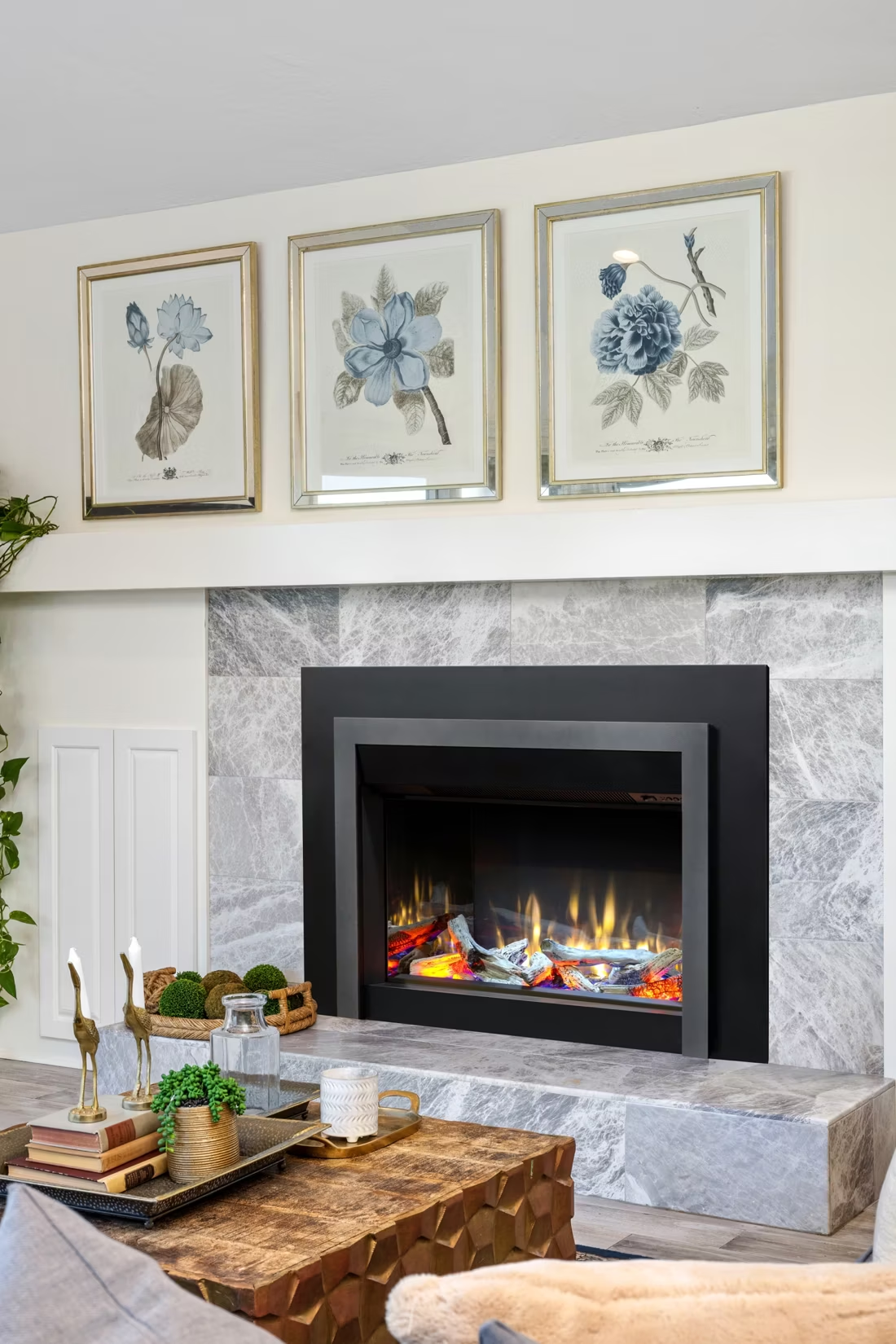
Where electric shines locally is flexibility: a finished basement rec room in a Norwalk subdivision, a condo in downtown Indianola with no chimney access, a home office addition in Carlisle where running gas line or a masonry flue isn't practical. Plug-in units need nothing more than an outlet; built-in models typically call for a dedicated 240V circuit run by a licensed electrician. Either way, there's no annual chimney sweep, no combustion byproducts, and no venting through the roof—which is part of why electric has become a common second or third hearth appliance in Warren County homes that already burn wood or gas elsewhere in the house.
Three steps. No salesperson until you're ready.
Tell us about your project
Your zip code, your situation, and the fuel you're leaning toward—or let the answers point you to one.
See what's actually available
The brands dealers within 100 miles genuinely carry—real options, never a catalog mirage.
Get your dealer & Project Guide
A trusted local dealer, plus the free Project Guide & Parts List that names every component of the job.
Frequently Asked Questions
How much does an electric fireplace installation cost in Warren County?
Plug-in electric inserts and freestanding units generally run $300 to $1,200 installed, since most just need a standard outlet and a mantel or surround to finish the look. Built-in electric fireplaces or larger linear units that require a dedicated 240V circuit run higher, typically $1,200 to $2,500, once electrician labor and any wall framing or trim carpentry are factored in. Costs stay lower than wood or gas installs across the board because there's no chimney, no venting, and no gas line work involved.
Can an electric fireplace heat my whole Warren County home?
No—and any dealer being straight with you will say the same. Most electric fireplaces top out around 5,000 to 9,000 BTU, enough to noticeably warm a single room (roughly 400 to 1,000 square feet) but nowhere near enough to carry a Warren County home through a long, cold winter with average lows around 12°F. Think of it as zone heat for a specific room—a finished basement, a converted sunroom, a bedroom—layered on top of your furnace, not a substitute for it.
Do I need a permit to install an electric fireplace in Warren County?
A plug-in unit that uses an existing outlet typically doesn't require a permit. A built-in electric fireplace that needs a new dedicated circuit does require an electrical permit, pulled through your city's building department if you're in Indianola, Norwalk, or Carlisle, or through the Warren County building office if you're in an unincorporated area. Most local dealers coordinate the electrician and the permit as part of the install, so you're not left tracking down inspections yourself.
What size electric fireplace do I need for my room?
Size to the room, not the wall. A 30 to 40-inch unit works well for a bedroom or home office up to around 400 square feet, while a 50 to 60-inch linear model can handle a basement rec room or open living space up to 800-1,000 square feet as supplemental heat. Ceiling height, how open the room is to adjoining spaces, and how much of the wall you want the fireplace to visually anchor all factor in—a local dealer can walk your space and recommend a size that looks right and puts out heat where you actually need it.
Electric vs. wood vs. gas—which is right for my Warren County home?
Wood remains a strong choice here given the oak, hickory, maple, and walnut that's regionally available for firewood, plus the ability to keep a room warm during a power outage—a real consideration when MidAmerican's grid takes a hit from an Iowa ice storm. Gas offers instant, consistent heat if you're set up for natural gas or propane, with higher output than electric. Electric wins on simplicity and cost: no fuel to buy or store, no venting, no chimney maintenance, and it's the easiest option for renters or condo owners in Indianola or Norwalk who can't modify a chimney. Many Warren County homes end up with more than one—wood or gas for real heat, electric for a bedroom or basement where convenience matters more than BTUs.
Will my electric fireplace work during a power outage?
No—this is the tradeoff worth knowing upfront. Electric fireplaces run entirely on household power, so when MidAmerican Energy service drops during a winter storm or high-wind event, the unit goes dark along with everything else. If backup heat during outages matters to you—and it's a real concern in rural parts of Warren County where restoration can take longer—a wood stove or a gas unit with battery-backed ignition is a better fit for that specific need. Electric is best thought of as everyday convenience heat, not storm-ready heat.
How much maintenance does an electric fireplace need?
Very little. There's no chimney to sweep, no ash to clean, and no annual gas line inspection. Maintenance is mostly dusting the unit, occasionally cleaning the glass front, and replacing an LED module or heating element years down the road if it fails—most units are rated for 10,000+ hours of LED life. That low-maintenance profile is a big part of why electric fireplaces show up in Warren County rental properties and vacation homes where nobody wants to manage seasonal upkeep.
Can I install an electric fireplace myself, or do I need a dealer?
A basic plug-in unit is genuinely DIY-friendly—set it in place, plug it in, done. Where it pays to work with a local dealer is sizing the unit to the room, choosing a model with a heater rated for your climate rather than a decorative-only unit, and handling any built-in installation that needs electrical work, framing, or a custom surround. A trusted Warren County dealer can also steer you away from big-box units that look fine in a showroom but underperform once they're heating an actual room through an Iowa winter.
What's the difference between an electric insert and an electric mantel package?
An electric insert is just the firebox—designed to slot into an existing fireplace opening, a wall cutout, or custom cabinetry, giving you full control over the surrounding finish. A mantel package pairs a smaller insert with a manufactured surround and shelf, ready to place against a wall with minimal work. For Warren County homes converting an old wood-burning fireplace that's no longer used, an insert into the existing opening is usually the cleaner upgrade. For a room with no fireplace at all—a basement, an addition, a bedroom—a mantel package is often the faster, more affordable route.
Can I put a TV above my fireplace?
Yes—with an asterisk. Fireplaces are hot and TVs don't like heat. Either put a mantel between them to deflect rising warmth, or choose a fireplace with heat-management technology that creates a cool zone on the wall above—the wall stays around 125 degrees, barely warm, while the room still gets full heat. If you like clean lines and don't want a mantel, heat management is the answer.
Do electric fireplaces actually produce heat?
Yes—most put out around 4,800–5,000 BTUs from a standard outlet, which comfortably warms a bedroom, office, or den as a comfort-zone heater. What they won't do is carry a whole house the way wood, gas, or pellet can. Think of electric as ambiance-first with honest supplemental heat: flames on with no heat in July, flames plus warmth in January.
What is an in-home preview and do I need one?
It's a visit where a hearth professional measures your space, confirms the model you picked actually works in your home, and walks the specs—framing, gas line, venting, finish work—before anything is ordered. Some details you just can't know until you see the house. Never make a down payment without one; it's the single most-skipped step that burns buyers.
Can I install a fireplace myself?
If you're putting a fire in your house on purpose, it's best to work with an expert. Unless you're genuinely experienced in framing, gas line, vent pipe, and the national code on clearances to combustibles, have a professional do it—and ideally the same company that sells you the fireplace, so warranty, service, and liability all live under one roof.
Find your electric fireplace in Warren County.
Tell us a bit about your room and how you want to use it, and we'll put together a free Project Guide & Parts List—the right unit, sizing, and electrical needs for your space—and match you with a trusted local dealer in Warren County.
Find Your Fireplace →