
Set-and-forget heat for Taylor County's farm country winters.
From Bedford to Clearfield to Gravity, Taylor County homes see long stretches of below-freezing weather. A pellet stove gives you thermostat-controlled heat without the daily wood-splitting—find the right unit and connect with a trusted local dealer.
Every Project Starts From One of These Five Situations
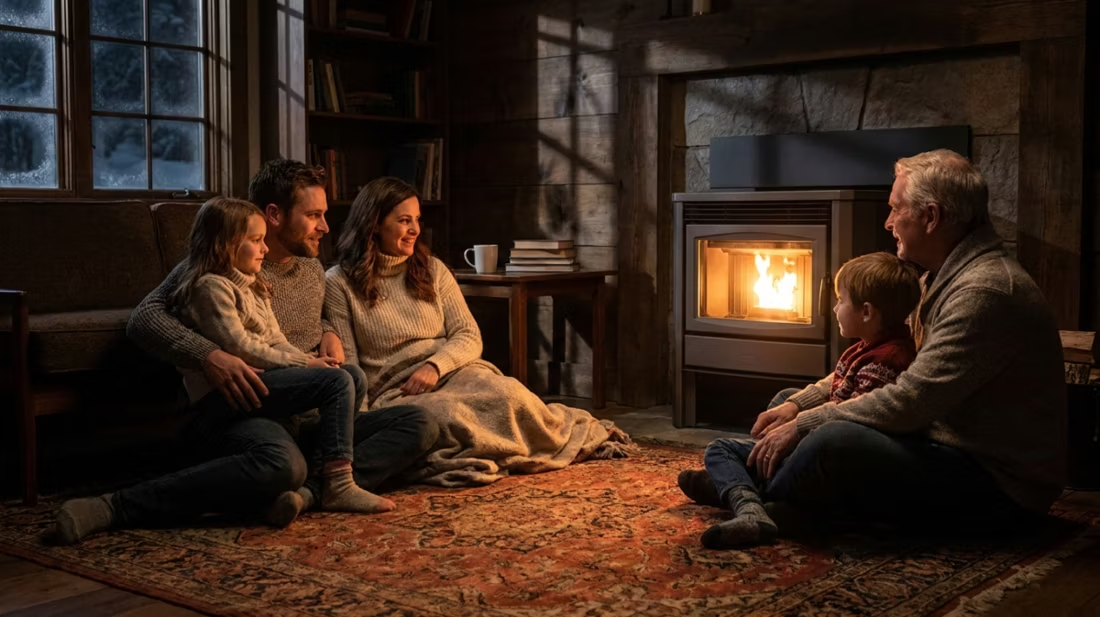
Consistent warmth without tending a fire all day.
Taylor County sits in southwest Iowa's corn and cattle country, with roughly 4,100 residents spread thin across Bedford (the county seat), Clearfield, Gravity, New Market, and the farmland between them. At climate zone 5A with winter lows averaging 12°F, the county sees a heating season on par with Buffalo, NY—long, steady cold rather than short deep-freeze snaps. For farm households already running propane tanks, grain bins, and bulk fuel deliveries, a hopper-fed pellet stove fits the existing rhythm of the place: fill it, set it, and let it run.
Taylor County has no air quality non-attainment issues or burn restrictions on the books, so pellet stoves and inserts run here without curtailment-period concerns the way they sometimes do in more urban counties. Regional pellet fuel comes through suppliers like Lignetics and Indeck Energy Services, both of which move hardwood and softwood pellets through Midwest distribution that reaches southwest Iowa farm supply and co-op outlets. Pellet heat trades a bit of self-sufficiency for convenience—the auger and blower need electricity—but for most Taylor County households with reliable rural electric service, that trade-off is an easy one for the ash-light, low-maintenance heat it delivers.
Three steps. No salesperson until you're ready.
Tell us about your project
Your zip code, your situation, and the fuel you're leaning toward—or let the answers point you to one.
See what's actually available
The brands dealers within 100 miles genuinely carry—real options, never a catalog mirage.
Get your dealer & Project Guide
A trusted local dealer, plus the free Project Guide & Parts List that names every component of the job.
Frequently Asked Questions
How much does a pellet stove installation cost in Taylor County?
Typical freestanding pellet stove installs run $2,500 to $6,000 depending on the unit, venting length, and whether you're running a new vent through an exterior wall or reusing an existing chimney chase. Pellet inserts that drop into an older masonry fireplace—more common in some of Taylor County's older farmhouses around Bedford and New Market—tend to land closer to $3,500 to $7,000 once a liner and venting adapter are factored in. Because Taylor County's population is small and spread out, full-service hearth dealers are more often based in nearby Creston, Iowa or Maryville, Missouri, and may add a modest travel charge for installs on outlying farms.
What size pellet stove do I need for my Taylor County home?
Sizing comes down to square footage, insulation, and ceiling height, but Taylor County's climate—winter lows averaging 12°F and a heating load comparable to Buffalo, NY—pushes most households toward the middle-to-large end of the sizing chart. A small unit (under 1,200 sq ft) suits a single living area or a well-insulated newer build; medium units (1,200–2,000 sq ft) cover most farmhouse main floors; larger units (2,000+ sq ft) are usually the right call for older, drafty two-story farmhouses common around Clearfield and Gravity. Hopper capacity matters here too—a 40 to 80-lb hopper means fewer refills during a busy chore schedule.
Where can I find pellet stove dealers near Taylor County?
With just over 4,100 residents spread across Bedford, Clearfield, Gravity, and New Market, Taylor County itself doesn't support a large number of full-service hearth showrooms. Most homeowners end up working with dealers based in Creston, Iowa to the north or Maryville, Missouri just across the state line to the south. Both routes are common, and either can typically serve Taylor County installs with a short travel charge. Our matching process accounts for this and connects you with whichever trusted dealer actually covers your specific address.
What's the difference between a pellet stove and a pellet insert?
A pellet stove is a freestanding unit that vents through a wall or existing chimney chase and can go almost anywhere with the right clearances—the more common choice in newer or manufactured homes without a masonry fireplace. A pellet insert is built to slide into an existing masonry firebox, converting an old open fireplace into a sealed, thermostat-controlled heat source using the chimney you already have. Older farmhouses in Taylor County with a working masonry fireplace are often better candidates for an insert; homes without one typically go with a freestanding stove instead.
Do I need a permit to install a pellet stove in Taylor County?
Requirements vary by whether you're inside a town like Bedford or in unincorporated Taylor County, so it's worth a quick call to your local building official before installation. Pellet stoves are generally simpler to permit than wood stoves since they're listed appliances—inspectors are mainly confirming clearances and correct venting rather than a full masonry review. Most dealers who handle the install will walk you through what's required for your specific address.
What's the best pellet stove for Taylor County's climate?
With a heating season on par with Buffalo, NY and winter lows that regularly sit around 12°F, look for a unit rated for continuous, high-output burns rather than one built mainly for occasional ambiance. A larger hopper (60 lb or more) is a real convenience during Taylor County's long stretches of sub-freezing weather, especially on farms where refilling the hopper competes with chores. As for fuel, most modern pellet stoves from major manufacturers burn either Lignetics or Indeck Energy Services pellets interchangeably—your local dealer can point you to whichever supplier is easiest to source near you.
Where can I buy pellet fuel in Taylor County?
Pellet fuel is typically sold in 40-lb bags through farm supply and co-op stores, with Lignetics and Indeck Energy Services both distributing into the southwest Iowa market. Some households buy by the pallet (roughly a ton) for a per-bag discount, similar to how propane or bulk feed gets purchased locally. Exact per-ton pricing shifts with the broader fuel oil and propane market, so it's worth checking current rates with whichever supplier serves Bedford or the nearest larger town before committing to a season's supply.
How much maintenance does a pellet stove need?
Plan on emptying the ash pan every few days to weekly depending on use, and a deeper cleaning of the burn pot, auger, and glass every couple of weeks during heavy winter operation. An annual professional service—checking the exhaust blower, gaskets, and hopper mechanism—keeps the unit running efficiently through Taylor County's long heating season. Compared to a wood stove and chimney, it's a lighter maintenance load overall, with no annual chimney sweep required.
Pellet vs. wood—which is right for my Taylor County home?
Taylor County has plenty of oak, hickory, maple, and walnut in local woodlots, and no air quality restrictions limiting wood burning, so self-sourced firewood is a real option for farms with their own timber. Wood also keeps working without electricity—a meaningful advantage during rural outages. Pellet stoves give up some of that off-grid resilience in exchange for automated, thermostat-controlled heat and far less daily tending—a trade many farm households are comfortable making since they often already run backup generators for other equipment. If your property has standing hardwood and you don't mind the labor, wood may cost less over time; if convenience and steady output matter more, pellet is usually the easier fit.
Why is a fireplace insert so efficient?
An insert does two things: it seals the chimney completely, so you stop losing air you already paid to heat, and it radiates warmth into the room through the firebox and glass. Most add a heat-exchange fan that pulls cool room air underneath, wraps it around the hot firebox, and pushes it back out warm. Your home is more efficient before you've even lit the first fire.
What do I measure to size a fireplace insert?
Four numbers tell you what fits: the front width, the front height, the back width, and the overall depth of your existing fireplace opening. Grab a tape measure, jot those down, and snap a photo of the wall—those two things do more to move your project forward than anything else you can do today.
What is an in-home preview and do I need one?
It's a visit where a hearth professional measures your space, confirms the model you picked actually works in your home, and walks the specs—framing, gas line, venting, finish work—before anything is ordered. Some details you just can't know until you see the house. Never make a down payment without one; it's the single most-skipped step that burns buyers.
How much should I budget for a fireplace?
For an average home—covering the fireplace, the vent pipe, and basic installation—a budget between $3,900 and $5,500 gives you a lot of options across wood, gas, and pellet. By the time you add finish work, gas line, and electrical, the average complete installation lands between $5,000 and $12,000 all-in. In a remodel or new build, a good rule is to put about 2.5% of the total project cost toward the fireplace.
Pellet Brands Stocked Around Taylor County
Manufacturers will point you to the nearest stocking dealer.
Find your pellet stove in Taylor County.
Tell us about your home and we'll match you with a trusted local dealer and send over a free Project Guide & Parts List—the exact parts, vent kit, and dealer recommendation for your pellet project in Taylor County.
Find Your Fireplace →