
Reliable heat for every farmhouse and town in Taylor County.
Wood, gas, pellet, and electric fireplace resources for Bedford, Clearfield, Conway, Gravity, and the rural stretches between—get matched with a trusted local dealer and a free Project Guide & Parts List.
Every Project Starts From One of These Five Situations
Southwest Iowa winters call for dependable, well-installed heat.
Taylor County sits in Iowa's Climate Zone 5A, with about 6,500 heating degree days a year and average winter lows around 12°F—comparable in severity to Madison, WI, though without the lake-effect snow. That's a long, real heating season, roughly October through April, where a fireplace or stove isn't decoration, it's part of the home's heat plan. The county's farm timber and windbreak stands of oak, hickory, maple, and walnut have supplied firewood here for generations, and that tradition still shapes how a lot of Taylor County households heat today.
There's no local air quality non-attainment status or burn-curtailment program here, which gives Taylor County homeowners more flexibility with wood-burning appliances than counties with inversion or smoke concerns. This hub rolls up hearth retailers, service technicians, and fuel suppliers covering the whole county—Bedford, Clearfield, Conway, Gravity, Sharpsburg, New Market, and the unincorporated farm country between them. Pick a fuel below for dealer lists, cost ranges, and the specifics for your project—Find My Fireplace doesn't sell or ship anything, we match you with the right local pro and hand you a free planning packet.
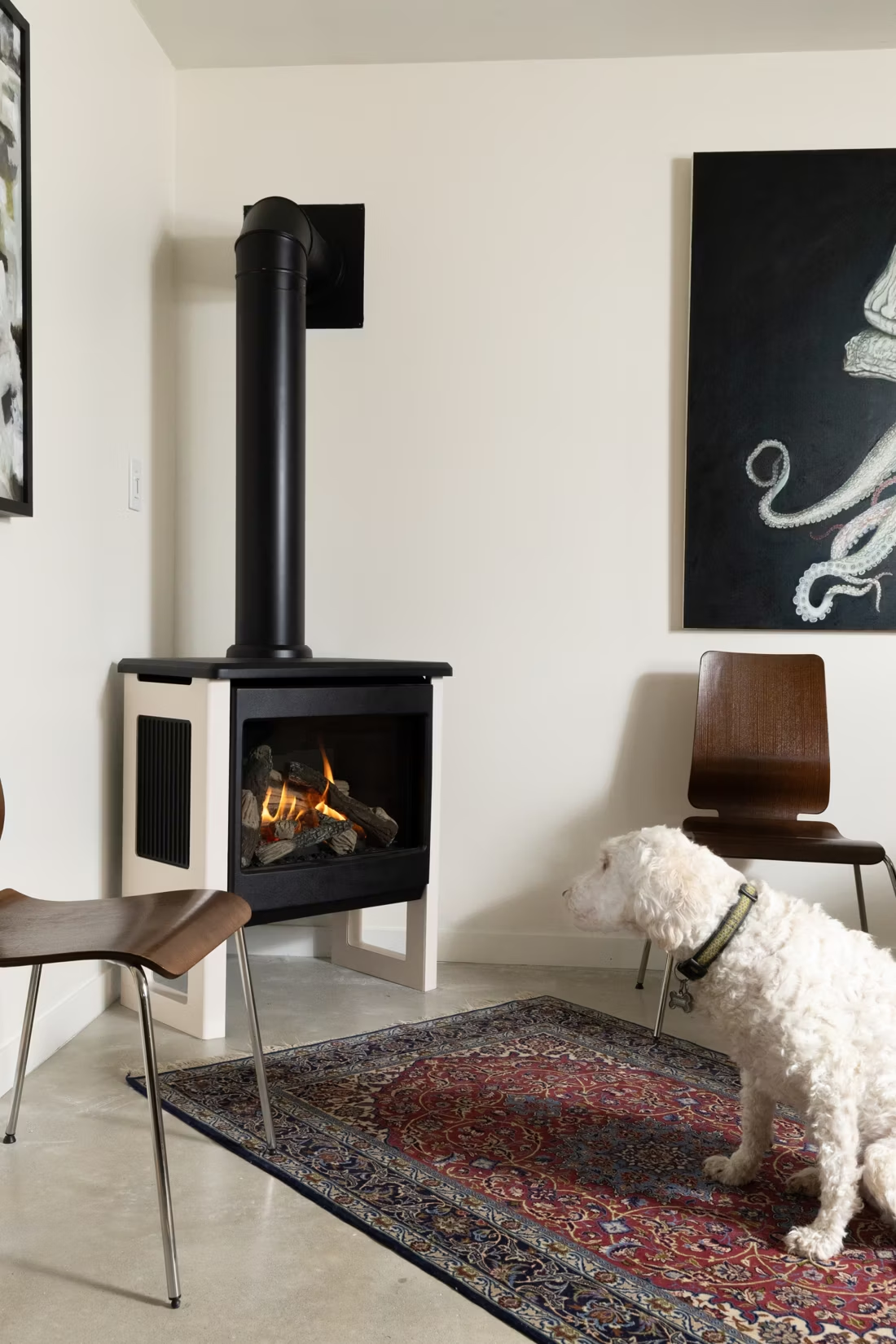
Four fuels. One honest answer for Taylor County.
Three steps. No salesperson until you're ready.
Tell us about your project
Your zip code, your situation, and the fuel you're leaning toward—or let the answers point you to one.
See what's actually available
The brands dealers within 100 miles genuinely carry—real options, never a catalog mirage.
Get your dealer & Project Guide
A trusted local dealer, plus the free Project Guide & Parts List that names every component of the job.
Frequently Asked Questions
Which fuel makes sense for a home in Taylor County?
It depends on the house and how you use it. Wood is the deep local tradition here—farm timber and windbreak stands of oak, hickory, and walnut have kept Taylor County households warm for decades, and a well-sized catalytic or non-cat stove can carry a farmhouse through a stretch of single-digit nights without running up a propane bill. Gas is the low-labor option, particularly for homes running on propane since natural gas mains are limited outside Bedford—no wood to split or stack, and it keeps working during a cold snap without you tending it. Pellet splits the difference: convenience closer to gas with the look and feel of a wood fire, and Lignetics product is reasonably accessible in this part of Iowa. Electric works well as a supplemental heater in a bedroom or den, but with 6,500-plus heating degree days here, it's not a realistic primary heat source. Plenty of Taylor County homes run wood or pellet as the main heater and lean on gas or electric for backup and secondary rooms.
Do I need a permit to install a fireplace or stove in Taylor County?
Generally, yes, for wood stoves, wood inserts, gas fireplaces, gas inserts, gas stoves, and pellet stoves—a building permit is typically required, and gas installations need a separate gas-line permit along with a licensed installer for the gas connection. Within Bedford city limits, permits run through the city; in unincorporated Taylor County, they go through the county's building permit process. Electric fireplaces usually don't need a permit unless it's a built-in unit requiring new wiring or a dedicated circuit. Most hearth retailers serving the county handle the permit paperwork as part of the installation, so it's rarely something a homeowner has to chase down alone.
Are there wood-burning restrictions in Taylor County?
No—Taylor County has no air quality non-attainment designation and no burn-curtailment program, unlike counties dealing with winter inversions or wildfire smoke. That gives homeowners here more day-to-day flexibility to burn wood as needed through the heating season. That said, a newer EPA-certified stove will still burn cleaner and use less wood per BTU than an older uncertified unit, which matters most in a county like this where a lot of houses are heating through genuinely cold winters—comparable to what you'd see in a place like Bismarck, ND—for six or seven months a year.
Can one hearth retailer near Taylor County handle all four fuel types?
Most retailers serving this part of southwest Iowa carry two or three fuel types rather than all four—wood and gas are the most common pairing, with pellet often available through the same dealer given regional supply from brands like Lignetics and Indeck Energy Services. Electric fireplaces are frequently sold by dealers who also carry one of the combustion fuels, but stocked displays vary by shop. Because Taylor County's population is under 4,200, dealers tend to be based in Bedford or in nearby larger towns like Creston or Mount Ayr and travel to install. If you want to compare fuel types side by side, it's worth asking a retailer directly which units they keep on the showroom floor versus what they can order and install.
How does fireplace service work for rural homes in Taylor County?
Technicians serving Taylor County typically travel from Bedford or from larger service hubs like Creston, covering the farm roads and smaller towns—Clearfield, Conway, Gravity, Sharpsburg, New Market—as part of their regular route. Rural calls may carry a modest travel charge depending on distance from town. Because the heating season here runs long, scheduling annual chimney sweeps or gas inspections in late summer or early fall—before the first cold snap arrives—gets you ahead of the rush that hits once temperatures drop and everyone wants service at once.
What does fireplace installation typically cost across fuel types in Taylor County?
Costs vary by fuel and by how much venting or gas-line work is involved. Wood stove or insert: roughly $4,000–$8,500 for a typical install, more if new chimney construction is needed. Gas fireplace, insert, or stove: roughly $4,000–$10,000, with propane conversions on the lower end when a line is already in place. Pellet stove or insert: roughly $4,000–$7,000 for most installs. Electric fireplace: $200–$3,000 for the unit itself, plus $300–$1,000 in labor unless it's a simple plug-and-play model. See the county + fuel pages above for retailer-specific pricing detail tied to your fuel choice.
Can I install a fireplace myself?
If you're putting a fire in your house on purpose, it's best to work with an expert. Unless you're genuinely experienced in framing, gas line, vent pipe, and the national code on clearances to combustibles, have a professional do it—and ideally the same company that sells you the fireplace, so warranty, service, and liability all live under one roof.
How much should I budget for a fireplace?
For an average home—covering the fireplace, the vent pipe, and basic installation—a budget between $3,900 and $5,500 gives you a lot of options across wood, gas, and pellet. By the time you add finish work, gas line, and electrical, the average complete installation lands between $5,000 and $12,000 all-in. In a remodel or new build, a good rule is to put about 2.5% of the total project cost toward the fireplace.
Does a fireplace add value to my home?
On average, a fireplace adds back to the home about the same amount you spent installing it. Add the monthly savings from heating the rooms you actually use instead of the whole house—often hundreds of dollars a year—and the value case is strong before you even count what a fire does for how your family uses the room.
Can a fireplace actually lower my heating bill?
Yes—by creating a comfort zone. A furnace heats every square foot of the house just to warm the one room you're in; a gas fireplace on low burns roughly a sixth of the gas a typical furnace does. Set the furnace around 55–60 degrees as a baseline, then heat the rooms your family actually uses. Families who heat this way commonly save $20–$60 a month.
Stove and Fireplace Dealers in Taylor County
Listings include WhyFire partner dealers, dealers we have verified as authorized for the brands we recommend, and established local businesses that carry hearth products. Every listing shows which one it is. The ones marked Preferred run on WhyFire's software, so they can show you real pricing and book your appointment right here. No manufacturer pays for placement. How we verify dealers →
Solar Systems Of Iowa
Steinhauser Woodworks
Alternative Heat Resource
Find your fireplace project in Taylor County.
Tell us your fuel and your town, and we'll match you with a trusted local dealer plus a free Project Guide & Parts List—the exact parts, vent kit included, for your home.'
Find Your Fireplace →