
Keep Your Family Warm and Safe—No Matter What
Story County winters are genuinely cold—a heating season about as long and demanding as Minneapolis or Madison's, with average lows near 11°F. But this is farmland, not forest, and most homes around Ames, Nevada, and Huxley heat with gas or electric. Wood still has a real place on rural acreages and as storm-outage backup—find out if it fits your home, and connect with a local dealer who installs it right.
Every Project Starts From One of These Five Situations
Farmland, not forest, shapes the fuel mix.
Story County is corn-and-soybean country. Outside of Ames—home to Iowa State University and the county's population center—the landscape is row crops broken by the Skunk River and Squaw Creek corridors and scattered farmstead windbreaks. That's also where the local hardwoods come from: oak, hickory, maple, and walnut, grown along riparian timber stands and shelterbelts rather than any expansive public forest. There's no BLM or National Forest land here, no Forest Service cutting-permit office, and no established self-cut firewood culture the way you'd find in the Mountain West or Pacific Northwest.
The cold is real—Story County's winters are long and demanding, with a heating season about as tough as Minneapolis's, and single-digit lows are routine in January. But the housing stock here is overwhelmingly served by natural gas furnaces (largely through Alliant Energy) and electric heat, including the municipally owned Ames Electric Services within city limits. That infrastructure is reliable and inexpensive enough that wood stoves end up as a secondary, lifestyle-driven choice rather than a primary heat source: a rural acreage with an existing woodlot along the Skunk River, a farmhouse that wants backup heat for the ice storms that occasionally take down power lines, or simply a homeowner who wants a real fire in one room. Story County also has no regional air-quality nonattainment designation, so unlike parts of the West, there are no winter burn curtailment periods to work around if you do decide to burn.
Three steps. No salesperson until you're ready.
Tell us about your project
Your zip code, your situation, and the fuel you're leaning toward—or let the answers point you to one.
See what's actually available
The brands dealers within 100 miles genuinely carry—real options, never a catalog mirage.
Get your dealer & Project Guide
A trusted local dealer, plus the free Project Guide & Parts List that names every component of the job.
Frequently Asked Questions
How much does a wood stove installation cost in Story County?
Because wood heat is a niche choice here rather than the regional norm, Story County supports fewer dedicated hearth dealers than you'd find in a heavily forested state, and some homeowners end up pulling quotes from installers based in Ames or the broader Des Moines metro. A typical fully vented wood stove installation—stove, hearth pad, and Class A chimney where one doesn't already exist—generally runs in line with broader Midwest averages, roughly $3,500 to $8,000 depending on whether existing masonry or chimney infrastructure can be reused. Get quotes from more than one installer, since the smaller local market here means pricing varies more than it would in a wood-heavy region.
Is wood heat actually practical in Story County, or is gas and electric the norm?
Gas and electric are the norm. Most Story County homes run on natural gas furnaces served by Alliant Energy, or electric heat—including through Ames Electric Services, the city's own municipal utility. Wood stoves are uncommon as a primary heat source in town. But on rural acreages outside Ames, Nevada, Huxley, and Story City—particularly properties with existing timber along the Skunk River or Squaw Creek—wood remains a legitimate option for supplemental heat, ice-storm backup, or a real fire in a farmhouse living room. It's worth being honest that it's a secondary system here, not a default one.
What wood species are actually available in Story County?
Oak, hickory, maple, and walnut are the common hardwoods locally, but they don't come from expansive public timberland the way they might in a forested state—they come from farmstead windbreaks, river-corridor stands along the Skunk River and Squaw Creek, and storm-damaged trees taken down after Iowa's summer wind events. Oak and hickory in particular burn hot and long once properly seasoned, and both are worth prioritizing if you're buying or cutting your own.
Do I need a permit to install a wood stove in Story County?
Yes—a building permit covering the appliance installation and any chimney or venting work is required, typically through Ames Building Safety Division within city limits, or the relevant town or county office for Nevada, Huxley, Story City, or rural addresses. Because Story County carries no regional air-quality nonattainment designation, there are no winter burn curtailment periods to navigate once the stove passes inspection—you're free to burn on your own schedule, which isn't the case in wood-heavy Western counties with inversion problems.
Where can I get firewood in Story County?
With no Forest Service or BLM cutting-permit system available in central Iowa, firewood here comes almost entirely from private sources: local sellers around Ames and Nevada offering seasoned oak and hickory by the rick or cord, tree services clearing storm damage, or landowners thinning windbreaks and river-corridor timber. Pricing tracks regional Midwest cordwood rates. Whatever the source, confirm the wood has been split and seasoned at least six to twelve months—unseasoned oak in particular burns poorly and builds creosote fast.
What size wood stove do I need for a Story County home?
Even as a supplemental system, sizing matters. With winter lows averaging 11°F and a heating season about as long and demanding as Minneapolis's, a stove that's too small won't keep up on the coldest nights, and one that's too large will smolder and creosote up fast. Small stoves suit a single farmhouse living room or finished basement; medium stoves can carry an open-concept main floor. Full whole-home sizing is rare in Story County since most homes already run gas or electric as primary heat, and the stove is there to supplement or back it up. A local dealer can size it correctly once they know your square footage and how much of the heating load you actually want the stove to carry.
Wood stove vs. wood insert—which fits my Story County home?
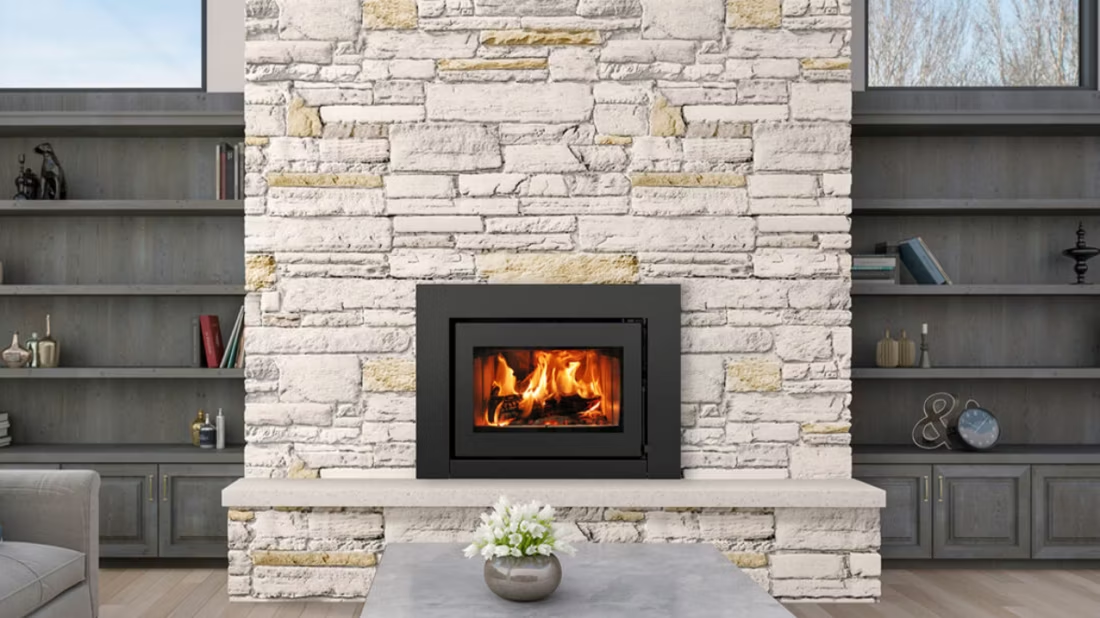
For the older farmhouses and in-town homes near Ames and Nevada with an existing masonry fireplace, an insert converts a drafty, inefficient hearth into a genuine heat source using the chimney you already have. For newer construction—which describes much of the housing built up around Ames in recent decades—there's usually no existing fireplace to work with, so a freestanding stove on a hearth pad is the more common route.
How often should my chimney be inspected in Story County?
The CSIA recommends an annual inspection for any wood-burning appliance, and that holds here even though usage is lighter than in wood-heavy regions. Because wood isn't most Story County households' daily heat source, it's easy to let the checkup slide—plan on a sweep and inspection each late summer or early fall before you start burning for the season, especially if the stove is doing double duty as your storm-outage backup.
Wood vs. gas or electric—which is right for my Story County home?
Gas and electric are the default across Story County—natural gas through Alliant Energy, or electric service that in Ames runs through the city's own municipal utility, Ames Electric Services. Both deliver thermostat-controlled, hands-off heat, which is why they're what nearly every home here is built around. Wood offers something different: heat that keeps working during an ice-storm power outage, the option to burn low-cost or free windfall from your own property if you're on an acreage, and radiant heat in a room central air never quite fills. For most Story County homeowners, gas or electric will stay primary. Wood is worth adding if you have rural timber access, want genuine outage backup, or simply want a real fire in one room of the house.
Why is a fireplace insert so efficient?
An insert does two things: it seals the chimney completely, so you stop losing air you already paid to heat, and it radiates warmth into the room through the firebox and glass. Most add a heat-exchange fan that pulls cool room air underneath, wraps it around the hot firebox, and pushes it back out warm. Your home is more efficient before you've even lit the first fire.
What's the difference between an insert and a zero-clearance fireplace?
An insert is a fireplace that slides into a pre-existing wood-burning fireplace—if you don't have one, there's nothing to insert it into. A zero-clearance fireplace is built into a framed wall, which makes it the answer for remodels and new construction. Simple test: existing masonry fireplace means insert; blank or framed wall means zero-clearance.
How much should I budget for a fireplace?
For an average home—covering the fireplace, the vent pipe, and basic installation—a budget between $3,900 and $5,500 gives you a lot of options across wood, gas, and pellet. By the time you add finish work, gas line, and electrical, the average complete installation lands between $5,000 and $12,000 all-in. In a remodel or new build, a good rule is to put about 2.5% of the total project cost toward the fireplace.
Can I install a fireplace myself?
If you're putting a fire in your house on purpose, it's best to work with an expert. Unless you're genuinely experienced in framing, gas line, vent pipe, and the national code on clearances to combustibles, have a professional do it—and ideally the same company that sells you the fireplace, so warranty, service, and liability all live under one roof.
Stove and Fireplace Dealers in Story County
Listings include WhyFire partner dealers, dealers we have verified as authorized for the brands we recommend, and established local businesses that carry hearth products. Every listing shows which one it is. The ones marked Preferred run on WhyFire's software, so they can show you real pricing and book your appointment right here. No manufacturer pays for placement. How we verify dealers →
Home Fires
Kohles And Bach
Metro Heating & Cooling
Fireplace Superstore
Fireplace Stone & Patio - Waukee
Kapaun & Brown, Inc
Hargrave Construction LLC
Reliable 1 Heating, Ac And Plumbing
Find your wood stove in Story County.
Tell us about your home and your reason for considering wood heat—backup power, a rural woodlot, or just a real fire in the living room—and we'll match you with a trusted local dealer serving Story County. You'll get a free Project Guide & Parts List: a plan for your wood project with the exact parts, including the vent kit, and our recommended local installer.
Find Your Fireplace →