
Find the right fireplace for your Story County home.
Fireplace resources for every city in Story County—from Ames and Iowa State University to Nevada, Story City, and the smaller towns along Highway 30. Find a trusted local dealer who can install what actually works in your house.
Every Project Starts From One of These Five Situations
Cold winters, gas-forward heating in central Iowa.
Story County sees a genuinely cold heating season—average winter lows around 11°F and a heating load closer to Madison, Wisconsin than to most of the Midwest. Oak, hickory, maple, and walnut grow throughout the county and were the traditional firewood species for generations of Story County farmhouses. But wood-burning fireplaces and stoves are uncommon as a primary heat source here today—the county's growth has been driven by Ames and Iowa State University, and most housing stock, new and old, was built around natural gas service rather than solid fuel. Pellet stoves are similarly rare in local homes: Lignetics and Indeck Energy Services both operate in the region, but that production skews toward industrial and commercial biomass markets rather than bags sold to homeowners running a residential pellet stove.
What you'll find on this hub: gas and electric hearth retailers, service technicians, and fuel suppliers serving every community in the county—Ames, Nevada, Story City, Huxley, Gilbert, Slater, Colo, Roland, Maxwell, Cambridge, Collins, McCallsburg, Zearing, Sheldahl, and Kelley. Pick your fuel below for local dealers, installation costs, and the resources that match your project. There's no air quality non-attainment designation here, so hearth choices come down to home layout, gas-line access, and budget rather than burn-day restrictions.
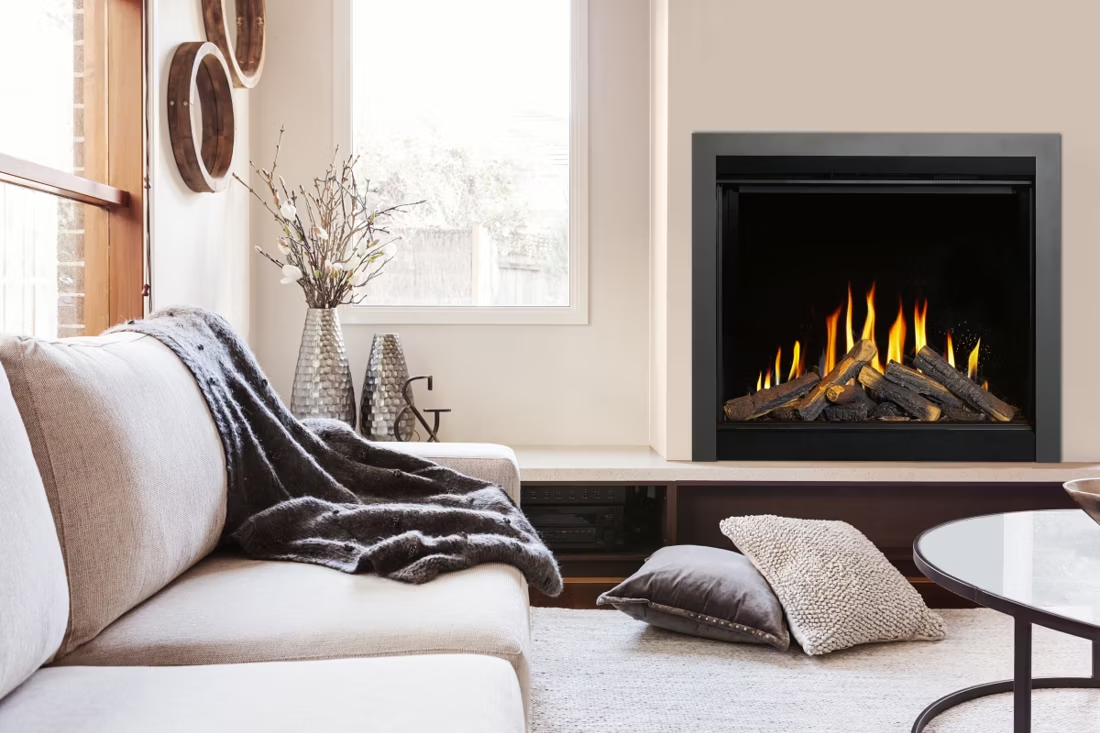
Four fuels. One honest answer for Story County.
Three steps. No salesperson until you're ready.
Tell us about your project
Your zip code, your situation, and the fuel you're leaning toward—or let the answers point you to one.
See what's actually available
The brands dealers within 100 miles genuinely carry—real options, never a catalog mirage.
Get your dealer & Project Guide
A trusted local dealer, plus the free Project Guide & Parts List that names every component of the job.
Frequently Asked Questions
Which fuel works best in Story County?
For most Story County homes, it's gas or electric, not wood or pellet. Even with oak, hickory, maple, and walnut all common in local woodlots, wood-burning fireplaces and stoves are the exception rather than the rule—new installs are rare, and most of the wood-burning fireplaces still in use are legacy units in older farmhouses outside Ames and Nevada. Pellet stoves are essentially absent from the residential market; Lignetics and Indeck Energy Services both have a regional presence, but that production is aimed at industrial and commercial biomass buyers, not homeowners running bags through a hopper. Gas fireplaces and inserts are the practical choice for most homes with natural gas service—instant heat, no woodpile, and straightforward maintenance. Electric fireplaces are common as a supplemental option, especially in the rental housing and apartments that make up a large share of Ames' Iowa State University-driven housing stock.
Do I need a permit to install a fireplace in Story County?
For gas fireplace, insert, or stove installations, yes—a building permit is typically required through the city (in Ames) or the Story County building department for unincorporated areas, and a separate gas-fitter must handle the gas line connection under its own permit. Electric fireplaces usually don't require a permit unless the install is a hardwired built-in unit that adds a new electrical circuit, which typically calls in a licensed electrician. Because new wood-burning installs are rare here, most retailers simply won't quote one, but if you're restoring an existing wood fireplace in an older farmhouse, that work still requires the same permitting and clearance review as any other solid-fuel appliance.
Are there air quality restrictions on burning in Story County?
No—Story County has no wood-smoke non-attainment designation and no winter burn curtailment program, unlike parts of the West with inversion-prone valleys. That's part of why the choice between gas and electric in this county comes down to home layout, gas-line access, and upfront cost rather than any burn-day restriction. General open-burning ordinances still apply to yard debris and outdoor fires, but they aren't aimed at hearth appliances.
Can one local hearth retailer handle both gas and electric?
Yes, and that's the norm here rather than the exception. Most Story County hearth retailers—concentrated in and around Ames—carry both gas fireplaces/inserts and electric units, since those two fuels cover the vast majority of local demand. Because wood and pellet interest is low, you won't find the same multi-fuel showroom depth you'd see in a county with heavier wood culture; instead, dealers put their floor space and expertise into gas venting options and electric insert/wall-mount lines, which makes them a solid one-stop comparison if you're deciding between the two.
How does service work in the smaller towns around Story County?
Most gas techs and electricians serving Story County are based in Ames and travel out to Nevada, Story City, Huxley, Gilbert, Slater, Colo, and the other smaller towns for scheduled service and installs. Expect a modest travel fee for the farther communities, and plan gas unit inspections for late summer or early fall before the long, cold winter season ramps up—mid-winter emergency calls are harder to schedule quickly. If you're one of the households outside Ames with an older wood-burning fireplace still in use, chimney service is worth booking early too, since fewer local techs specialize in that work now than in gas or electric.
What's the typical cost range across fuel types in Story County?
Gas fireplace, insert, or stove: roughly $4,000–$10,000 depending on venting type and whether new gas line work is needed; conversions using existing gas service land toward the lower end. Electric fireplace: $200–$3,000 for the unit itself, with $400–$1,200 in labor for anything beyond a plug-and-play install, which covers most wall-mount and insert placements. Wood and pellet installations are uncommon enough in Story County that most local retailers won't have a standard quote—if you're restoring an existing wood fireplace in an older farmhouse, expect costs closer to national averages for chimney relining and appliance replacement rather than a typical local price point.
How much should I budget for a fireplace?
For an average home—covering the fireplace, the vent pipe, and basic installation—a budget between $3,900 and $5,500 gives you a lot of options across wood, gas, and pellet. By the time you add finish work, gas line, and electrical, the average complete installation lands between $5,000 and $12,000 all-in. In a remodel or new build, a good rule is to put about 2.5% of the total project cost toward the fireplace.
Can a fireplace actually lower my heating bill?
Yes—by creating a comfort zone. A furnace heats every square foot of the house just to warm the one room you're in; a gas fireplace on low burns roughly a sixth of the gas a typical furnace does. Set the furnace around 55–60 degrees as a baseline, then heat the rooms your family actually uses. Families who heat this way commonly save $20–$60 a month.
Does a fireplace add value to my home?
On average, a fireplace adds back to the home about the same amount you spent installing it. Add the monthly savings from heating the rooms you actually use instead of the whole house—often hundreds of dollars a year—and the value case is strong before you even count what a fire does for how your family uses the room.
Should the dealer who sells my fireplace also install it?
Ideally, yes. A fireplace project involves vent pipe, gas line, electrical, and often tile or stone. Hire three or four separate trades and you own the liability and the game of telephone between them. One company selling and installing means one accountable party, start to finish—ask about factory training, on-time completion records, and what happens if an inspection fails.
Stove and Fireplace Dealers in Story County
Listings include WhyFire partner dealers, dealers we have verified as authorized for the brands we recommend, and established local businesses that carry hearth products. Every listing shows which one it is. The ones marked Preferred run on WhyFire's software, so they can show you real pricing and book your appointment right here. No manufacturer pays for placement. How we verify dealers →
Home Fires
Kohles And Bach
Metro Heating & Cooling
Fireplace Superstore
Fireplace Stone & Patio - Waukee
Kapaun & Brown, Inc
Hargrave Construction LLC
Reliable 1 Heating, Ac And Plumbing
Get matched with a fireplace dealer in Story County.
Tell us about your home and we'll match you with a trusted local dealer and send a free Project Guide & Parts List—the exact parts, including the vent kit, and the dealer we recommend for your Story County project.
Find Your Fireplace →