
Find a pellet stove built for Shelby County winters.
Thermostat-controlled heat for the long, cold stretches between Harlan and Elk Horn—no splitting, stacking, or babysitting a fire during calving or harvest. Find the right unit and get matched with a trusted local dealer.
Every Project Starts From One of These Five Situations
Consistent heat without the woodpile.
Shelby County sits in USDA climate zone 5A with roughly 6,566 heating degree days a year and winter lows averaging around 10°F—a cold-load profile close to what Madison, WI sees most winters, with the same string of single-digit nights from December through February. Farm windbreaks and timber lots across the county are full of oak, hickory, maple, and walnut, and plenty of Shelby County households still burn cordwood. But for families running a farm operation or a full-time job in town, a pellet stove offers something wood can't: load the hopper, set the thermostat, and walk away—heat that keeps running while you're out feeding cattle or hauling grain.
There are no air quality restrictions or burn curtailment periods listed for Shelby County, so pellet stoves here are chosen for convenience and efficiency rather than regulatory pressure. Regional pellet supply runs through established manufacturers like Lignetics and Indeck Energy Services, both of which distribute bagged hardwood and softwood pellets into western Iowa through farm supply and hardware outlets. A pellet stove vents through a small-diameter pipe rather than a full masonry chimney, which keeps installation simpler than a wood insert—and for rural acreages, a properly sized unit can carry a home through a stretch of sub-zero nights on a single hopper fill without anyone getting up at 2 a.m. to reload.
Three steps. No salesperson until you're ready.
Tell us about your project
Your zip code, your situation, and the fuel you're leaning toward—or let the answers point you to one.
See what's actually available
The brands dealers within 100 miles genuinely carry—real options, never a catalog mirage.
Get your dealer & Project Guide
A trusted local dealer, plus the free Project Guide & Parts List that names every component of the job.
Frequently Asked Questions
How much does a pellet stove installation cost in Shelby County?
Pellet stove installations typically run less than wood stove installs because the venting is smaller-diameter and doesn't require a full masonry chimney—most jobs land in the $3,000 to $6,000 range once the stove, hearth pad, wall or roof venting, and the dedicated electrical outlet for the hopper motor and blower are all accounted for. Costs run higher if you're adding a new electrical circuit to an older farmhouse or venting through a longer exterior wall run. Local dealers serving Shelby County will give you a firm number after seeing the install location—ask specifically whether the quote includes the vent kit, since that's a common add-on surprise.
What size pellet stove do I need for my Shelby County home?
Sizing depends on square footage, ceiling height, and how drafty the house is—older farmhouses with additions tacked on over the decades often need more capacity than the square footage alone suggests. As a rough guide for a climate with 6,566 heating degree days: a small unit (up to 1,000 sq ft) suits a single addition or shop space, a mid-size stove (1,000–1,800 sq ft) covers most main living areas, and a larger unit with a bigger hopper handles a full farmhouse or a home used for primary heat. Hopper capacity matters as much as BTU output out here—a 40-to-60-pound hopper means fewer reloads on the coldest nights when you'd rather not be out in the cold splitting wood or refilling a stove at midnight. A local dealer will size it based on an in-home look at your layout and insulation.
Where can I find pellet stove installers near me in Shelby County?
Look for installers with NFI (National Fireplace Institute) certification—it signals proper training on venting clearances and electrical hookup for the auger and blower motor, which is where most bad installs go wrong. Given Shelby County's spread-out geography, from Harlan down to Defiance and Panama, expect installers to cover the whole county but occasionally add a small travel charge for the more outlying farmsteads. The installer who sells you the stove will usually handle the permit and wiring together, which keeps warranty coverage clean if something needs service later.
What's the difference between a pellet stove, insert, and freestanding unit?
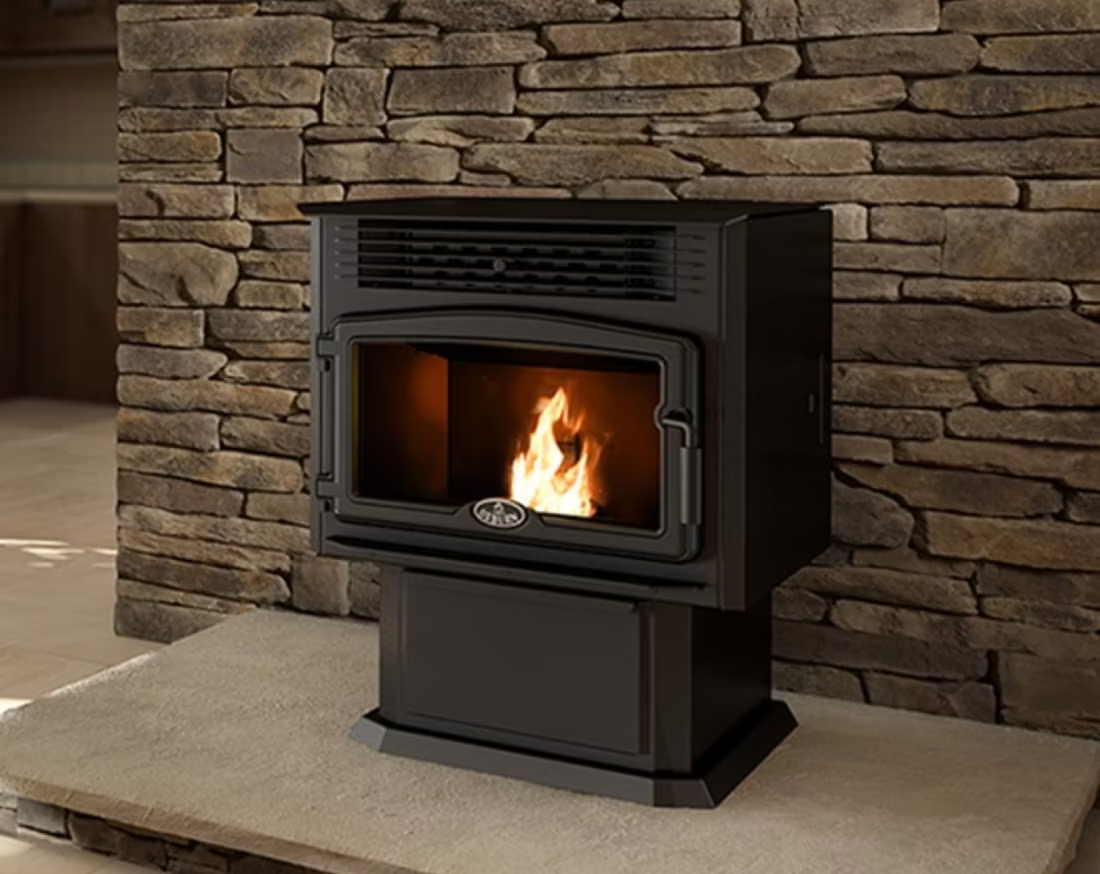
A pellet stove is a freestanding appliance that sits on a hearth pad and vents through a wall or roof—it can go almost anywhere in a room with the right clearances, which makes it a common choice for finished basements, additions, or shops on acreages. A pellet insert fits into an existing masonry fireplace opening, using the existing chimney chase (with a proper liner) as the vent path—a good option if your Shelby County home already has a fireplace you rarely use. Both burn the same bagged pellets and use the same hopper-and-auger system; the choice mostly comes down to whether you're starting from an empty wall or an existing hearth.
Do I need a permit to install a pellet stove in Shelby County?
Most jurisdictions require a building permit for a new pellet stove installation, covering the venting path and the electrical work for the hopper motor and igniter. In Shelby County, that permit is handled through the county building department for rural properties, or the applicable city office if you're inside Harlan or one of the smaller incorporated towns. Most local dealers pull the permit as part of the installation quote, so it's worth confirming that up front rather than assuming it's included.
What should I look for in a pellet stove for Shelby County's winters?
With winter lows averaging around 10°F and regular stretches well below zero, look for a stove with a large hopper—40 pounds or more—so it can run overnight without a reload, plus a reliable auto-ignition system so it lights itself back up if it runs empty while you're out doing chores. A thermostat-controlled model is worth the extra cost for farm families who aren't home to babysit the fire during calving, planting, or harvest. Pellet supply locally runs through Lignetics and Indeck Energy Services, both of which produce pellets suited to standard auger-fed stoves—ask your dealer whether your chosen stove has any brand-specific pellet preferences before you stock up for the season.
How often does a pellet stove need to be cleaned or serviced?
Pellet stoves need more frequent attention than wood stoves, just a different kind—ash needs to be emptied every few days to weekly depending on use, the burn pot should be cleaned weekly during heavy-use months, and the venting system and hopper should get a full inspection and cleaning at least once a year, typically before the season starts in the fall. Unlike wood-burning chimneys, there's no creosote risk, but a clogged auger or dirty burn pot will cause the stove to smoke back or shut down mid-cycle—annoying on a cold January night in Shelby County when you're relying on it for primary heat.
Where can I buy pellets locally in Shelby County?
Bagged pellets from regional producers like Lignetics and Indeck Energy Services are typically available through farm supply stores and hardware outlets serving western Iowa, and many dealers who sell the stoves also stock or special-order pellets by the pallet. Pricing varies by season and supplier—buying a full season's supply (roughly 100-150 bags for a primary-heat home) in late summer or early fall, before demand picks up, is the standard way to avoid mid-winter price spikes or stock-outs. Ask your local dealer whether they offer pallet delivery, since a full ton of pellets is awkward to haul in a pickup more than once.
Pellet stove vs. wood stove—which makes more sense in Shelby County?
Wood is essentially free if you're already managing a timber lot or windbreak of oak, hickory, or walnut on your own ground, and it works without electricity—a real advantage during an ice storm outage. Pellet stoves trade that self-sufficiency for convenience: no splitting, hauling, or stacking, consistent thermostat-controlled heat, and a cleaner burn with far less ash. The tradeoff is that pellet stoves need electricity to run the auger and blower, so they're not a backup option during a power outage unless paired with a generator or battery backup. For Shelby County households where someone has the time to process their own wood, wood often wins on cost. For farm families whose time is better spent on livestock and fieldwork than tending a stove, pellet is usually the better fit.
Why is my open fireplace making my house colder?
Open fireplaces suck—literally. As the fire burns, it consumes air your furnace already paid to heat and pulls it out through the chimney, so the house is actually colder after the fire goes out than before you lit it. An insert fixes this: it seals the chimney, puts fixed glass across the front, and turns that hole in your house into a real heat source.
How often does a pellet stove need cleaning?
A clean pellet stove is a happy pellet stove. Plan on cleaning the burn pot about once a week when you're burning regularly—ash and clinkers gum up the air holes just like a pellet barbecue. Most pellet stove problems trace back to skipped cleaning that nobody explained up front. Some designs make it easy with a trapdoor burn pot: pull a lever and the gunk drops into the ash pan.
How much should I budget for a fireplace?
For an average home—covering the fireplace, the vent pipe, and basic installation—a budget between $3,900 and $5,500 gives you a lot of options across wood, gas, and pellet. By the time you add finish work, gas line, and electrical, the average complete installation lands between $5,000 and $12,000 all-in. In a remodel or new build, a good rule is to put about 2.5% of the total project cost toward the fireplace.
Can I install a fireplace myself?
If you're putting a fire in your house on purpose, it's best to work with an expert. Unless you're genuinely experienced in framing, gas line, vent pipe, and the national code on clearances to combustibles, have a professional do it—and ideally the same company that sells you the fireplace, so warranty, service, and liability all live under one roof.
Pellet Brands Stocked Around Shelby County
Manufacturers will point you to the nearest stocking dealer.
Find your pellet stove in Shelby County.
Tell us a bit about your home and we'll match you with the right pellet stove or insert, plus a free Project Guide & Parts List—including the vent kit—and a trusted local dealer to install it.
Find Your Fireplace →